Do Whitening Toothpastes Abrade Tooth Enamel?
Do Whitening Toothpastes Abrade Tooth Enamel?
Short answer: It is not correct to say that all whitening toothpastes abrade tooth enamel. However, some whitening toothpastes may contain stronger abrasive particles than standard toothpastes to remove surface stains. When considering the product’s formula, the type and amount of abrasive particles, brushing pressure, frequency of use, the current condition of the tooth enamel, and the individual’s consumption of acidic foods and beverages, the risk of enamel abrasion can vary.
The use of whitening toothpastes is quite common among people who want to have white and bright teeth. These products, which can reduce superficial stains caused by coffee, tea, cigarettes, red wine, and some colored foods, may be seen as an alternative to professional whitening due to their practicality. However, there is an important distinction here: most whitening toothpastes do not work by the same mechanism as professional bleaching, which lightens the natural color of the tooth by several shades.
A significant portion of these products mechanically removes extrinsic stains adhered to the tooth surface, making teeth appear cleaner and brighter. Therefore, how the whitening effect is achieved is important in terms of the product’s abrasiveness.
Individuals with tooth sensitivity, gum recession, enamel erosion, or existing tooth wear, in particular, should be more careful when choosing a whitening toothpaste. Using an overly abrasive product in an attempt to improve tooth color can lead to undesirable long-term consequences.
How Do Whitening Toothpastes Work?
To understand the effect of whitening toothpastes, it is first necessary to distinguish the type of discoloration on the teeth. Color changes in teeth can basically be classified as extrinsic and intrinsic discolorations.
Extrinsic discolorations are stains formed on the tooth surface due to coffee, tea, smoking, certain spices, colored drinks, and plaque accumulation. Whitening toothpastes can be particularly effective on these types of superficial stains.
Intrinsic discolorations, on the other hand, stem from the natural color of the tooth’s enamel and dentin structure. Aging, certain medications, traumas, fluorosis, or changes occurring during tooth development can be examples of this.
A standard whitening toothpaste typically contains silica and similar abrasive particles that enhance surface cleaning. Some products may also contain low concentrations of peroxide, optical color correctors, or different chemical components aimed at reducing stain formation.
According to information published by the American Dental Association, whitening toothpastes primarily help with the mechanical removal of extrinsic surface stains. Although some formulas may contain small amounts of whitening chemical agents, toothpastes generally do not produce the deep color change provided by professional whitening treatments.
For more detailed information on lightening the actual tooth color with professional methods, you can visit Melsadent’s tooth whitening (bleaching) page.
Can Whitening Toothpaste Really Abrade Tooth Enamel?
Yes, it can abrade under some conditions. However, what’s important here is not just that the product says “whitening” on it. The abrasion potential depends on the properties, concentration, particle size, particle shape of the abrasive agents used, and how the teeth are brushed.
While tooth enamel is one of the hardest tissues in the human body, it does not mean that it is infinitely resistant to abrasion. Enamel cannot regenerate itself like living bone tissue. Significant enamel loss over time does not naturally recover.
A systematic review and meta-analysis published in 2022, which examined the effects of whitening toothpastes on tooth surface, revealed that different whitening toothpastes can exhibit variable effects on surface roughness and microhardness. You can access the research via PubMed.
Therefore, a generalization such as “all whitening toothpastes are harmful” is not scientifically accurate, nor is it true to say that “all whitening toothpastes cause no abrasion whatsoever.”
How Do Abrasive Substances Whiten Teeth?
Imagine that pigments remaining on the tooth surface after a cup of coffee adhere to the pellicle layer over time. Daily brushing can remove a significant portion of these accumulations. Abrasive particles found in whitening toothpastes, on the other hand, can help remove the stained layer by increasing surface cleaning power.
This process is, in a way, the cleaning and polishing of the tooth surface. However, stronger abrasiveness does not always mean better results.
Overuse of a highly abrasive product and brushing teeth with high pressure can increase surface loss, especially in sensitive areas.
Some common abrasive components found in whitening toothpastes include:
- Hydrated silica
- Calcium carbonate
- Dicalcium phosphate
- Sodium bicarbonate
- Alumina derivatives
- Different mineral-based cleaning particles
However, it is not always possible to understand the abrasiveness of a toothpaste solely from its ingredient list. Two different products using the same abrasive substance can exhibit quite different abrasiveness due to particle size and concentration.
What is the RDA Value?
One of the frequently encountered concepts when researching whitening toothpastes is the RDA, or Relative Dentin Abrasivity, value. In Turkish, it can be expressed as relative dentin abrasivity.
RDA was developed to evaluate the abrasive effect of a toothpaste on dentin using a standardized method.
The American Dental Association states that toothpastes with an RDA value of 250 or less are evaluated within the scope of relevant safety criteria. However, there is an important detail: the RDA value is not directly an “enamel abrasion value,” and it is not correct to definitively classify products as “safe” or “unsafe” using different RDA values below 250.
You can find a detailed scientific explanation of the RDA system in the American Dental Association’s toothpaste guide.
Therefore, instead of choosing toothpaste by looking at a single RDA number seen only on the packaging or shared online, one’s tooth and gum condition should also be evaluated.
Are RDA and Enamel Abrasion the Same Thing?
No. This point is particularly important.
RDA is primarily a measure that evaluates dentin abrasivity. Enamel and dentin have different structural properties. While enamel has an extremely high mineral content, dentin is softer and has a higher organic content.
Therefore, a product’s abrasive behavior on dentin may not be entirely the same as its behavior on enamel.
For enamel, different assessments such as REA (Relative Enamel Abrasivity) can also be used. Research indicates that significant differences can be found between the RDA and REA values of some toothpastes.
A study published in 2022 showed that the abrasion caused by toothpastes with different RDA and REA values on enamel and dentin varies. Therefore, it is more meaningful to consider the entire product formulation instead of evaluating toothpaste abrasivity with just a single number.
Is Every Whitening Toothpaste Equally Abrasive?
No. The abrasivity of whitening toothpastes can vary significantly among products.
A study published in 2024 investigated the relative dentin abrasivity of different whitening toothpastes. The study showed differences in the abrasivity values of products using different whitening systems, such as hydrogen peroxide and silica. Researchers reported that the amount of abrasive particles, in particular, was a significant factor. You can access the full study via PubMed Central.
This finding points to an important fact: a toothpaste being “whitening” does not, by itself, mean it is excessively abrasive. Likewise, it should not be assumed that a standard commercially available toothpaste will necessarily have very low abrasivity.
Do Whitening Toothpastes Really Whiten Teeth?
Yes, but what the word “whitening” means is important.
Whitening toothpastes can be particularly effective in reducing extrinsic stains. As discolorations caused by coffee, tea, and smoking are cleaned, the tooth surface can appear lighter, cleaner, and brighter.
In a recent systematic review and meta-analysis published in 2025, it was reported that whitening toothpastes may offer an advantage in reducing the area and intensity of extrinsic tooth stains compared to regular toothpastes. You can access the research via PubMed.
However, in cases where the goal is to lighten the natural color of the tooth by a few shades, whitening toothpaste and professional bleaching are not the same treatment.
For instance, if a person’s teeth genetically have a yellower dentin shade, completely removing surface stains will not change the natural underlying color of the teeth.
Can Whitening Toothpaste Be Used for Coffee and Tea Stains?
Consumption of coffee and tea is among the most common causes of extrinsic stains on the tooth surface. Some of these stains can be reduced with regular oral hygiene and appropriate toothpastes.
Whitening toothpastes can be helpful at this point. However, simply switching to a more abrasive toothpaste while continuing heavy coffee consumption will not solve the entire problem.
For controlling discoloration:
- Regular and proper tooth brushing,
- Cleaning between teeth,
- Water consumption after coffee and tea,
- Plaque and tartar control,
- Professional cleaning when necessary,
- Professional tooth whitening in suitable patients
should be evaluated together.
For detailed information about discolorations caused by coffee consumption, you can review the Melsadent content titled how can coffee drinkers keep their teeth white?
Does Brushing Too Hard Increase Risk?
Yes. Brushing technique is as important as the toothpaste content.
The idea that “if I brush harder, stains will come off faster” is incorrect. Applying excessive force to the toothbrush can contribute to mechanical trauma at the gum line, gum recession, and tooth surface abrasion over time.
Especially, the long-term use of a highly abrasive toothpaste with a hard-bristled toothbrush and under high pressure can create a risky combination.
Generally, a soft-bristled toothbrush and controlled pressure should be preferred. For individuals using electric toothbrushes, models with a pressure sensor can help reduce the habit of applying excessive force.
For detailed information regarding toothbrush and toothpaste selection, you can review Melsadent’s guide on how to choose a toothbrush and toothpaste.
Is Using Whitening Toothpaste After Acidic Drinks Harmful?
One of the important factors in terms of enamel erosion is the tooth surface’s exposure to acids.
Carbonated drinks, energy drinks, lemon-flavored drinks, fruit juices, and other acidic products can contribute to a temporary increase in the enamel surface’s sensitivity by lowering the pH level in the mouth.
Applying intense mechanical force and abrasive toothpaste immediately after the tooth surface has been softened by acid can lead to a combination of erosive and abrasive effects.
Scientific studies also show that the co-existence of erosion and mechanical abrasion can increase tooth tissue loss. It is especially important for individuals with enamel erosion not to use highly abrasive products uncontrolled.
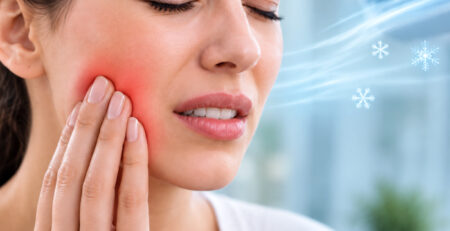
Does Whitening Toothpaste Cause Tooth Sensitivity?
It can in some individuals or make existing sensitivity more noticeable.
Tooth sensitivity is generally associated with the dentin layer having more contact with the external environment. Enamel loss, gum recession, or abrasions occurring in the cervical areas can lead to the exposure of dentinal tubules.
In this situation, cold water, hot coffee, sweet or acidic foods can cause a short-term sharp pang.
If the prolonged uncontrolled use of a highly abrasive product increases existing abrasion, the complaint of sensitivity may also become more pronounced.
If you experience pangs in your teeth, especially with cold or hot, it is important to determine the cause of the sensitivity rather than just changing your toothpaste. For detailed information, you can review Melsadent’s content on how to relieve tooth sensitivity.
Are Activated Charcoal Whitening Toothpastes Safe?
Toothpastes containing activated charcoal have become quite popular in recent years, especially on social media and the internet. These products are usually presented with the claim of providing a whiter appearance by removing surface stains on teeth.
However, the abrasiveness of products containing activated charcoal can vary according to the formulation. Just as it’s not possible to say that every charcoal-containing product is excessively abrasive, it also cannot be said that prolonged uncontrolled use is completely risk-free.
In laboratory studies evaluating the effects of different whitening toothpastes on dentin, it has been reported that some charcoal-containing products can produce a higher abrasive effect compared to other formulations.
Therefore, individuals, especially those with gum recession, exposed dentin surface, sensitivity, or erosion, should not choose active charcoal products merely because they are popular.
Does Brushing Teeth with Baking Soda Abrade Enamel?
Baking soda has a mechanical cleaning property that can remove surface stains and can be used in controlled formulations in some commercial toothpastes.
However, brushing teeth directly with baking soda powder at home for extended periods or with intense pressure is not the same as using a professionally formulated toothpaste.
The combined use of home remedies such as baking soda, lemon, vinegar, or similar methods to achieve whiter teeth can be particularly problematic. While acidic products soften the enamel, mechanical abrasives can increase surface loss.
Choosing safe methods for tooth whitening is important not only for the aesthetic results to be achieved but also for the protection of tooth tissues.
Does Whitening Toothpaste Whiten Zirconia and Veneers?
No. Whitening toothpaste does not change the fundamental color of zirconia, porcelain, ceramic, or composite restorations.
The toothpaste can only contribute to the removal of some external stains on the restoration surface. This does not mean that the restoration is truly whitened.
Furthermore, using excessive abrasive products on restoration surfaces can affect their surface gloss and smoothness. When the surface becomes rougher, it is also possible for plaque and pigment retention to be facilitated.
For more detailed information about color changes in zirconium restorations and the effects of whitening products, you can review the Melsadent content titled Does zirconium tooth turn yellow? Does its color change?
Who Might Be More at Risk from Whitening Toothpaste?
Whitening toothpastes do not carry the same risk profile for everyone. The needs of a person with healthy tooth enamel and good brushing habits differ from those with intense enamel wear.
Especially the following individuals should consult a dentist when choosing a product:
- Those with tooth sensitivity,
- Those with gum recession,
- Individuals with exposed tooth root surfaces,
- Those with enamel erosion,
- Those with tooth wear due to teeth clenching or grinding,
- Those who consume highly acidic beverages,
- Those with a habit of brushing too harshly,
- Those with numerous porcelain, zirconium, or composite restorations in their mouth,
- Those experiencing constant toothache/throbbing.
How Can You Tell if Your Tooth Enamel is Worn Down?
Enamel wear may not always be noticed by the individual in its early stages. As the process advances, some symptoms may appear.
Signs to look out for include:
- Increased sensitivity to hot and cold,
- Teeth starting to appear more yellow,
- Tooth surface appearing shinier or glass-like than before,
- Thinning of tooth edges,
- Occurrence of small cracks and fractures,
- Notch-like abrasions in areas close to the gum line,
- Shortening of tooth length over time
can be listed.
Interestingly, teeth appearing yellower can also be a result of enamel thinning. Enamel has a translucent structure, and beneath it is dentin, which is yellower in color. As the enamel thins, the color of the underlying dentin can become more prominent.
For this reason, using excessively abrasive products to whiten teeth can, in the long run, create a yellower appearance in some people, contrary to expectations.
Surface Stain or the Tooth’s True Color?
This is one of the most important questions to answer before purchasing whitening toothpaste.
If the discoloration is due to superficial stains caused by coffee, tea, smoking, or plaque, professional cleaning or an appropriate toothpaste can provide significant improvement.
However, if the color change originates from the dentin layer, aging, or the internal structure of the tooth, using a more abrasive toothpaste may not change the tooth’s base color to the desired level.
In this case, a professional whitening evaluation might be more appropriate.
To learn how the removal of tartar and surface stains affects tooth color, you can review Melsadent’s content on does whitening occur after tartar cleaning?
How to Protect Enamel While Using Whitening Toothpaste?
Individuals who wish to use whitening toothpaste can reduce the risk of unnecessary abrasion by paying attention to a few key points.
- Choose a soft-bristled toothbrush.
- Do not brush your teeth with excessive pressure.
- Follow the usage instructions on the product packaging.
- If sensitivity occurs, reconsider its use.
- Do not use more than one abrasive whitening method at the same time.
- Avoid uncontrolled home methods such as baking soda, lemon, and similar.
- Limit the consumption of highly acidic beverages.
- Choose a suitable fluoride-containing toothpaste.
- Do not neglect regular dental check-ups.
Most importantly, a “the more abrasion, the whiter the teeth” approach should not be adopted for teeth whitening.
Why is Fluoride Important in Whitening Toothpastes?
Fluoride is an important component in preventing tooth decay and supporting enamel remineralization. Toothpastes preferred for daily use should have protective properties against decay in addition to their whitening feature.
Focusing only on marketing phrases like “whitening”, “charcoal”, “natural”, or “removes stains quickly” is not sufficient for correct product selection.
The primary function of toothpaste is not solely aesthetic. Plaque control and decay prevention should be among the main goals of oral care.
How Long Does Whitening Toothpaste Take to Work?
The result varies depending on the product’s formula, the type of discoloration, the individual’s dietary habits, and the initial tooth color.
People with superficial coffee or tea stains may notice their teeth look cleaner and brighter after regular use. However, this change should not be confused with the multi-shade lightening that can be observed with professional whitening.
A toothpaste should not be expected to dramatically change the natural color of teeth after just a few days of use.
Can Whitening Toothpaste Be Used Every Day?
There is no single answer to this question that applies to everyone.
Some whitening toothpastes, developed for daily use and meeting safety standards, can be used according to manufacturer instructions. However, an individual’s enamel structure, gum condition, dentin sensitivity, and existing abrasions can affect the frequency of use.
It is not advisable to use products with high abrasiveness for extended periods without control.
If you have sensitivity or abrasion in your teeth, it would be more appropriate for a dentist to evaluate your condition instead of constantly switching between a whitening product and a sensitivity-relieving product on your own.
What Should I Do If My Teeth Ache While Using Whitening Toothpaste?
If sensitivity arises after starting a new whitening toothpaste, the method of use should first be evaluated.
Brushing too hard, using a hard-bristled toothbrush, and using different whitening products simultaneously can increase sensitivity.
If the complaint persists, a dental check-up is necessary. This is because sensitivity may not only be caused by toothpaste. Gum recession, decay, cracked teeth, abrasion, or problems with old restorations can also cause similar complaints.
Can Professional Teeth Cleaning Be More Effective Than Whitening Toothpaste?
If the main reason for teeth appearing dark is heavy tartar, plaque, or surface stains, professional cleaning can provide much more significant results than whitening toothpaste.
Tartar cannot be safely removed with a toothbrush or whitening toothpaste. It needs to be cleaned by a dentist using professional methods.
In necessary cases, the polishing process applied after cleaning can also help to remove some superficial discolorations and make the tooth surface appear smoother.
Whitening Toothpaste or Professional Whitening?
The two methods are not direct alternatives to each other.
Whitening toothpastes primarily help control extrinsic surface stains.
Professional teeth whitening, on the other hand, aims to lighten tooth color by several shades with peroxide-based whitening agents in suitable patients.
For an individual with coffee stains but who is satisfied with their natural tooth color, professional cleaning and proper oral hygiene may suffice. For someone who wishes to make their natural tooth color lighter, a bleaching assessment can be considered.
Therefore, the most appropriate method should be determined according to the cause of the discoloration.
What Do Scientific Studies Say About Whitening Toothpastes?
The current scientific literature should not be reduced to a single conclusion.
Research generally supports that whitening toothpastes can reduce extrinsic surface stains. However, the effects of different products on enamel and dentin can vary significantly depending on the formulation.
While some laboratory studies show that whitening products cause higher surface abrasion, other studies have reported that certain whitening formulations cause as much or less abrasion than standard toothpastes.
For example, some whitening toothpastes tested in a study on erosive enamel have been reported to show similar or lower abrasive values compared to traditional products. This result indicates that the simple generalization “whitening toothpaste equals high abrasiveness” is not correct.
In contrast, other studies evaluating different products reveal that some whitening formulations can cause significant enamel abrasion.
Consequently, product selection should be evaluated in conjunction with individual oral conditions.
What to Consider When Choosing Whitening Toothpaste?
When choosing a toothpaste, one should not only look at marketing terms like “extra white,” “diamond,” “charcoal,” “instant white” or similar phrases on the front packaging.
It would be more accurate to evaluate the following criteria together:
- Fluoride content,
- Whether the product is suitable for daily use,
- Abrasive properties,
- Whether the person has tooth sensitivity,
- Whether there is gum recession,
- Whether there is enamel erosion or abrasion,
- Fillings and crowns in the mouth,
- Whether the discoloration is superficial or intrinsic.
Using a product that suits the teeth’s needs is more important than using the strongest whitening product.
What is the Biggest Mistake Made When Using Whitening Toothpaste?
One of the most common mistakes is brushing teeth harder and for longer periods to achieve quick results.
The fact that whitening toothpaste mechanically removes stains can lead some people to think, “if I apply more pressure, it will whiten more.”
However, the purpose of brushing teeth is not to scratch the tooth surface. The goal is to effectively yet controllably remove the plaque layer.
Aggressive brushing can contribute to long-term tissue loss and sensitivity, especially at the gum margins.
Your Teeth Should Also Remain Healthy While Whitening
Whitening toothpastes can help reduce superficial stains when the right product is chosen and used with the correct technique. However, it should be remembered that not all whitening toothpastes have the same formulation or the same abrasiveness.
In protecting tooth enamel, not only the brand of the toothpaste or the whitening claim written on it matters; brushing pressure, the hardness of the toothbrush, acidic dietary habits, existing enamel wear, gum recession, and frequency of use are also determining factors.
It is important for individuals who experience sensitivity or notice wear on their teeth to seek a dental evaluation instead of opting for stronger whitening products.
The fundamental point to remember is this: a healthy smile consists not only of teeth that appear white, but also of optimally preserved enamel and healthy gums.
Frequently Asked Questions
Does whitening toothpaste thin the enamel?
Long-term, frequent, and aggressive brushing with some highly abrasive products can contribute to enamel wear. However, it is not correct to say that all whitening toothpastes thin the enamel. The risk varies depending on the product’s formulation and method of use.
Is it harmful to use whitening toothpaste every day?
Products formulated for daily use can be used according to manufacturer instructions. However, long-term use in individuals with tooth sensitivity, enamel erosion, or gum recession should be evaluated by a dentist.
Does whitening toothpaste really whiten teeth?
It mostly makes teeth appear cleaner and brighter by reducing surface stains. It should not be expected to lighten the internal color of the tooth by several shades, like professional bleaching.
Does whitening toothpaste whiten yellow teeth?
If the yellowness is due to surface stains, it can improve the appearance. If the yellowness is caused by the natural color of the dentin or internal discoloration, significant whitening may not be achieved with toothpaste alone.
Does whitening toothpaste cause sensitivity?
It can cause sensitivity in some individuals or increase existing sensitivity. Particular care should be taken in product selection for individuals with exposed dentin surfaces.
What should the RDA value be?
RDA is a standard measurement that evaluates dentin abrasivity. The ADA requires that the RDA value for toothpastes in its acceptance program be 250 or less. However, RDA values below 250 should not be used alone as a safety ranking for products in terms of enamel.
Does toothpaste with a high RDA value damage tooth enamel?
RDA does not directly measure enamel abrasivity. However, when factors such as high abrasivity, aggressive brushing, and erosion combine, the risk of tooth tissue loss may increase.
Does activated charcoal toothpaste abrade tooth enamel?
The abrasiveness of charcoal-containing products varies according to the formulation. Some studies have shown higher abrasion with certain charcoal products. Individuals with sensitivity or exposed dentin surfaces should be especially careful.
Is it safe to whiten teeth with baking soda?
Sodium bicarbonate used in a controlled manner in commercial toothpastes is not the same as aggressive brushing with direct baking soda powder at home. Especially, using baking soda with acids like lemon is not recommended.
Can teeth be whitened with lemon?
Since lemon is acidic, it can contribute to erosion on the enamel surface. Regularly rubbing teeth with lemon or using lemon and baking soda together to whiten teeth is not recommended.
Does whitening toothpaste whiten zirconium veneers?
No. It does not change the base color of zirconium. It can only help remove some superficial stains.
Does whitening toothpaste whiten fillings?
No. It does not whiten the existing main color of composite fillings. It can reduce some surface stains, but a color difference may occur between natural teeth and the filling.
If I brush my teeth harder, will they whiten faster?
No. Hard brushing does not healthily increase the whitening result and can increase the risk of gum recession and mechanical abrasion.
If tooth enamel wears away, does it regenerate?
Lost enamel tissue does not regrow like some other tissues in the body. Remineralization can be supported in early mineral losses, but significant enamel thickness that has been physically lost does not naturally regenerate.
Does enamel erosion make teeth yellow?
Yes. As the enamel thins, the yellower dentin underneath can become more noticeable. For this reason, uncontrolled abrasive whitening methods can even contribute to teeth appearing yellower in the long run.
What can be used instead of whitening toothpaste?
Depending on the need, standard fluoride toothpaste, sensitivity-reducing toothpaste, professional dental cleaning, or professional teeth whitening in suitable individuals can be considered. The most appropriate option should be determined based on the cause of the discoloration and the oral structure.
Is whitening toothpaste sufficient if I have coffee stains on my teeth?
It can be helpful for light surface stains. For heavy plaque, tartar, or permanent discolorations, professional cleaning may be more effective. If lightening the natural color of the tooth is desired, a professional bleaching assessment may be required.
Which is the safest whitening toothpaste?
There isn’t a single “safest” product for everyone. The appropriate product should be chosen based on individual factors such as tooth sensitivity, enamel structure, gum recession, restorations, and the cause of discoloration.
When should I consult a dentist?
If you notice persistent throbbing, significant sensitivity, gum recession, notching on the tooth surface, cracks, pain, or rapid color change while using whitening toothpaste, a dental examination is recommended. This way, the underlying cause can be determined instead of merely suppressing symptoms by changing products.