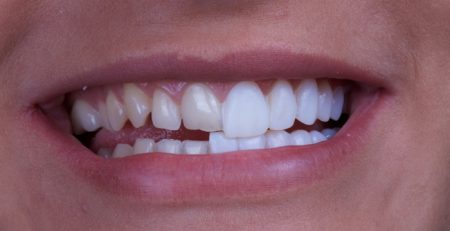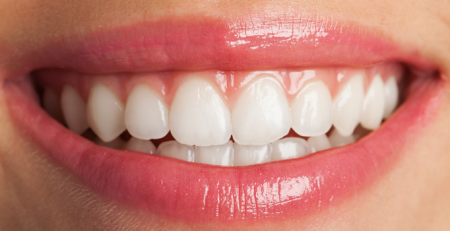
How is Tooth Length Determined in Smile Design?
How is Tooth Length Determined in Smile Design?
In smile design, tooth length is not determined by a single standard measurement or a specific millimeter value applicable to everyone. Ideal tooth length is individually planned by evaluating the person’s facial proportions, lip structure, smile line, existing tooth width, gum level, age, position of teeth in the mouth, bite relationship, and the person’s aesthetic expectations together.
Especially the two central incisors in the upper front region are one of the most important reference points in determining tooth length in smile design, as they form the center of the smile. However, not only the length of these teeth in millimeters but also the ratio between their width and length, and the visual harmony they create with other teeth, are important.
Therefore, it is not correct to answer the question “How many mm should front teeth be in smile design?” with a single universally applicable number. While longer front teeth may perfectly harmonize with the face in some individuals, the same length might appear artificial and disproportionate in another.
The main goal of the modern smile design approach is not to make the teeth as long or white as possible; but to create a natural balance between the teeth, gums, lips, and face.
Short Answer: How is the Ideal Tooth Length Calculated?
When determining the ideal tooth length in smile design, the following factors are fundamentally evaluated together:
- Current width and length of the upper front teeth
- Width/length ratio of the teeth
- Length and width of the face
- Facial midline
- Resting position of the lips
- Amount of tooth visible during smiling
- Upper and lower lip lines
- Gum levels
- Smile line and smile arc
- Position of the incisal edges of the front teeth
- Amount of tooth wear
- Occlusal relationship of the upper and lower jaws
- Tooth-lip relationship during speech
- Patient’s age and facial characteristics
- Form of existing teeth
- Patient’s expectation for a natural or more prominent smile
Therefore, determining tooth length in smile design is not just a measurement made with a ruler. It is a comprehensive planning process where aesthetic and functional parameters are analyzed together.
Why is the Length of the Front Teeth So Important in Smile Design?
When a person smiles, one of the first areas the eye focuses on is the two upper front incisors. These teeth are often considered the dominant teeth at the center of the smile composition in aesthetic dentistry.
When the front teeth are planned to be much shorter than they should be:
- The smile may appear older.
- The teeth may be perceived as square and flattened.
- The lip-tooth relationship may weaken.
- The smile line may not be sufficiently defined.
- The natural hierarchy between it and the adjacent teeth may be lost.
Conversely, designing the front teeth excessively long can also lead to:
- Teeth looking artificial,
- Disproportion between the face and the teeth,
- Speech functions being affected,
- Premature contacts during occlusion,
- Loss of the natural character of the smile
can occur.
Therefore, the aim in successful esthetic dentistry planning is not to create the longest possible tooth, but to find the correct length according to the individual’s anatomy.
What Should Be the Ideal Length of Upper Front Teeth in mm?
In the esthetic dentistry literature, there are studies where values around 10-11 mm are used as a starting reference for the clinical crown length of upper central incisors. However, this value is not a fixed measurement that should be applied to everyone.
Tooth dimensions can naturally vary among populations and individuals. Scientific studies have shown that factors such as gender, genetic structure, facial proportions, ethnic characteristics, tooth wear, and measurement method can influence tooth width and length.
Therefore, a central incisor with a length of, for example, 10.5 mm may appear perfectly natural in one person, while it might be perceived as too long or too short on another person’s face.
What is truly important is not just the millimeter value, but the visual relationship between the width and length of the tooth.
A systematic review and meta-analysis published in the Journal of Esthetic and Restorative Dentistry shows that the width and length values of maxillary central incisors can be affected by various factors and may differ among different populations.
Therefore, personalized planning is much more important than fixed measurements.
What is the Width/Length Ratio of Teeth?
In smile design, not only the length of the teeth but also the ratio of their width to their length is evaluated. This is called the width/length ratio.
For example, if the width of an anterior tooth is 8 mm and its length is 10 mm, the width/length ratio is approximately 80 percent.
In aesthetic dentistry literature, ratios in the approximate range of 75-85 percent for central incisors are frequently discussed. However, there are different results among studies regarding which ratio is the most aesthetic.
A study published in the British Dental Journal has shown that changes in the width-to-height ratio of central incisors can affect the aesthetic perception of a smile.
In other studies, it is seen that different width/length ratios can be perceived as aesthetic differently by individuals.
Therefore, the dentist’s goal, instead of blindly reaching a mathematical figure, is to create a tooth form that is harmonious with the face.
Is the Golden Ratio Used in Smile Design?
One of the most frequently encountered concepts when it comes to smile design is the golden ratio.
The golden ratio is based on an approximate value of 1.618 and was previously suggested as an aesthetic guide for planning the apparent widths of the maxillary anterior teeth relative to each other.
However, today it is known that the golden ratio is not a universally applicable aesthetic rule.
In a study published in the Journal of Esthetic and Restorative Dentistry, it has been shown that the classic golden ratio is not consistently found in individuals with an aesthetic smile.
More comprehensive scientific evaluations also yield similar results.
A systematic review titled Mathematical Tooth Proportions: A Systematic Review reports that mathematical proportions in natural teeth vary significantly and that no single mathematical formula can reliably predict aesthetic success.
Therefore, in modern smile design, the golden ratio can be used as a reference point but is not a mandatory rule.
Natural smiles do not always have to be mathematically perfect.
In fact, some minor asymmetries and individual variations can make a smile look more natural.
Does Face Shape Affect Tooth Length?
Yes. Face shape is one of the important references in determining tooth length and form in smile design.
While longer and more elegant tooth forms may appear harmonious with the face in an individual with a long and slender face structure, different width-to-length ratios may be preferred for wider facial features.
However, even here, a definitive formula like “long face = long teeth” is not used.
During evaluation:
- face length,
- face width,
- jawline,
- lip position,
- relationship between nose and chin,
- facial midline
are analyzed together.
The goal is not to make the teeth beautiful on their own, but to ensure the teeth look natural within the entire face.
How Does Lip Structure Determine Tooth Length?
In smile design, lips are one of the most important structures that determine how long the teeth should appear.
Teeth are not evaluated only when the mouth is open. The amount of tooth visible in the resting position of the lips and during smiling is also examined.
Especially the upper lip’s:
- length,
- thickness,
- amount of movement,
- level of elevation during smiling
can significantly change the apparent tooth length.
Teeth of the same length can appear completely different in two different individuals due to their lip structures.
For this reason, in digital planning, not only intraoral photographs but also facial photographs and, if necessary, recordings showing the person’s speech and smile movements are evaluated.
How Does the Smile Line Affect Tooth Length?
The smile line refers to the visual relationship between the incisal edges of the upper front teeth and the superior border of the lower lip.
In many smiles considered natural and aesthetic, the curve formed by the incisal edges of the upper front teeth shows a certain degree of harmony with the curvature of the lower lip.
This relationship is also called the smile arc.
A systematic literature review on the smile line shows that the concept of the smile line is one of the valid parameters that can be used in aesthetic smile evaluation.
For example, if the two front incisors are shortened excessively, the smile arc may flatten. If the teeth are lengthened excessively, the relationship with the lip and function may be impaired.
Therefore, the incisal edge position is one of the important stages of digital or clinical smile design.
Does the Gum Level Change the Length of the Teeth?
Yes. The visible length of a tooth is not determined solely by the tooth tissue. The point where the gum begins also directly affects the clinically visible tooth length.
For example, even if the actual anatomical lengths of two teeth are the same, if one tooth’s gum level is lower, that tooth may appear shorter.
Therefore, in smile design:
- gum levels,
- gingival symmetry,
- gingival zenith points,
- amount of gum visible during smiling
are evaluated in detail.
In some cases, the source of the aesthetic problem is not short teeth, but gums covering too much of the tooth surface.
In such cases, instead of unnecessarily lengthening the teeth with crowns or laminate veneers, a periodontal evaluation may be required first.
Can Teeth Appear Longer with Gum Contouring?
Yes, in suitable cases.
As a result of gum level adjustment, a larger portion of the tooth may become visible, and the clinical crown may be perceived as longer.
However, how much the gum can be contoured is not solely determined by aesthetic expectations. The health of the periodontal tissues surrounding the tooth, bone level, and biological limits must be evaluated.
Therefore, it should not be forgotten that smile design does not consist solely of porcelain or veneer applications.
A successful outcome may require the combined planning of aesthetic, restorative, orthodontic, and periodontal approaches when necessary.
Do Teeth Appear Shorter as We Age?
In some individuals, wear and tear can occur on the incisal edges of the front teeth as they age. As a result, teeth may appear shorter and flatter over time.
At the same time, age-related changes in lip tissues and facial muscles can also affect the amount of upper tooth visible at rest.
Therefore, a smile design created for a young person does not necessarily have to be planned with the same aesthetic parameters as one for an older individual.
If teeth appear too short, the cause is first investigated.
The problem:
- tooth wear,
- teeth clenching or grinding,
- malocclusion,
- gum level,
- structural shortness of the teeth
can be caused by different factors.
Is Tooth Length Planned Differently for Women and Men?
In the past, it was a more common approach in aesthetic dentistry to categorize tooth forms distinctly as “feminine” or “masculine”. Today, however, personalized facial analysis and individual expectations are much more prominent.
Although some differences in the actual width and length values of teeth among different groups can be detected in scientific research, it is not correct to determine tooth length based solely on gender.
What is more important is the individual’s:
- facial anatomy,
- lip structure,
- existing teeth,
- age,
- smile dynamics
and desired appearance.
Modern aesthetic dentistry focuses not on fitting an individual into a pre-made smile template, but on creating a smile that suits the individual’s own face.
Why is Tooth Length Checked During Speaking?
Tooth length is not determined solely for looking good in photographs.
Especially the position of the incisal edges of the upper front teeth has functional importance for the pronunciation of certain sounds and the relationship formed with the lower lip.
For this reason, during treatment planning, the dentist may ask the individual to say certain words or evaluate the tooth-lip relationship during speech.
For example, the sounds “F” and “V” can provide important phonetic information regarding the position of the front teeth.
These evaluations help prevent overly long or incorrectly positioned restorations that might look aesthetically pleasing but cause discomfort during speech.
If there is a Malocclusion, Can Teeth Be Lengthened as Desired?
No.
One of the most important principles in smile design is the simultaneous preservation of aesthetics and function.
It is not enough for the teeth to look good only in a frontal photograph. The patient should be able to:
- chew comfortably,
- should be able to speak,
- should be able to move their jaw normally
and the restorations should not be subjected to excessive force.
Especially in individuals with teeth clenching, teeth grinding, or significant bite problems, how much the incisal edges can be extended should be evaluated separately.
In some patients, correcting tooth positions with orthodontic treatment before aesthetic restoration may be a more conservative and appropriate approach.
Can Tooth Length Be Seen in Advance with Digital Smile Design?
One of the most important advantages of modern digital technologies is that the treatment plan can be evaluated in more detail.
Digital dentistry applications, intraoral scans, photographic records, and digital planning tools can be used to analyze a person’s existing teeth.
During planning, for example:
- central incisors can be slightly lengthened,
- the proportions of the lateral incisors can be changed,
- the smile line can be adjusted,
- gum levels can be analyzed,
- the relationship between the teeth and the face can be compared.
Thanks to this method, treatment can proceed based on a design evaluated according to the individual’s face, not just estimated measurements.
Can the Length of Teeth Be Tried Before Treatment with a Mock-Up?
In many aesthetic cases, the design prepared digitally or in a laboratory environment can be temporarily tried in the mouth. This application is generally associated with the mock-up approach.
The significant advantage of the mock-up is that it allows the teeth to be evaluated not only on screen but directly on the person’s face.
When the patient looks in the mirror:
- Do the teeth seem too long for me?
- Does my smile look natural?
- Am I comfortable when speaking?
- Do the front teeth suit my face?
- Do I want a softer or more defined tooth shape?
can be evaluated before the final stage of treatment.
This stage also provides important clinical information to the dentist.
How is Tooth Length Determined When Laminate Veneers are Made?
Laminate veneer tooth restoration is one of the methods used especially for the aesthetic arrangement of form, color, size, and some minor positional problems in the anterior teeth.
In laminate planning, tooth length is not determined by randomly adding to the existing tooth.
First of all:
- existing tooth tissue,
- tooth width,
- gum line level,
- incisal edge position,
- occlusal relationship,
- dimensions of adjacent teeth
are evaluated.
Then, the position of the new tooth form to be created within the face and smile is planned.
The aim is to achieve an aesthetic and functional result by preserving the natural tooth tissue as much as possible.
Can Short Teeth Be Lengthened with Bonding?
In suitable cases, small changes in shape and length can be made using composite bonding.
For example, reshaping a slightly worn incisal edge or aesthetically arranging a tooth that appears short compared to adjacent teeth can be achieved with composite materials in some cases.
Melsadent’s composite aesthetic filling and bonding content also explains that the method can be used for the aesthetic arrangement of tooth form.
However, whether bonding, laminate veneer, or another restorative application is more suitable should be determined based on the existing structure of the tooth.
Should Tooth Color and Tooth Length Be Planned Together?
Yes. In smile design, tooth length, shape, and color are not entirely independent of each other.
Restorations that are too long, too white, and have identical surfaces may not look natural, even if they are technically well-done.
Therefore, color selection is also evaluated together with tooth form.
Natural teeth have light translucency, surface characteristics, and color distribution. Aesthetic restorations are also aimed to have a character suitable for the person’s face.
In cases where only the color of natural teeth is problematic and no shape change is needed, more conservative options such as professional teeth whitening can be considered instead of restorative procedures.
Are All Teeth Made the Same Length in Smile Design?
No. This can be one of the most significant mistakes that can make a smile look artificial.
The central incisors, lateral incisors, and canine teeth in the upper anterior region are not the same length and form.
In a natural smile, teeth have different functions and visual characteristics.
Especially central incisors often appear more dominant in the center of the smile. The incisal edges of lateral incisors may be positioned at slightly different levels, and canine teeth form the transition of the smile composition to the lateral regions.
These differences give the smile depth and natural character.
Making all teeth the same length, width, and shape can create a “monolithic” or artificial appearance.
Should Very Short Teeth Always Be Lengthened?
No. First, the reason why the teeth appear short must be determined.
Possible reasons for short tooth appearance include:
- natural anatomical structure,
- tooth wear,
- teeth clenching and grinding,
- gingival level being too low,
- incorrect tooth position,
- occlusal relationships,
- lip structure
can be found.
Lengthening teeth merely by adding restorative material without determining the cause may not always be the right solution.
Can Very Long Teeth Be Shortened?
In some cases, minimal reshaping can be done on the incisal edges of the teeth. However, it is not correct to excessively abrade healthy natural tooth tissue solely for aesthetic reasons.
The reason teeth appear long is sometimes not the actual tooth length, but rather:
- gum recession,
- the shortness of adjacent teeth,
- the lip line,
- the forward-tilted position of the teeth
can be the reason.
Therefore, the source of the problem should first be identified, and then the most conservative treatment should be planned.
How Should Natural Smile Design Be?
The aim of a natural smile design is not for the person opposite to think at first glance that “veneers have been done,” but rather for the teeth to appear harmonious with the person’s face.
In a successful design:
- the length of the front teeth is harmonious with the face,
- the width-to-length ratios of the teeth are balanced,
- the smile line is harmonious with the lips,
- the gum levels appear natural,
- all teeth are not exactly the same shape,
- the color selection is harmonious with the face and natural teeth,
- function is preserved,
- a smile appropriate for the person’s character is achieved.
Melsadent’s smile design and aesthetic dentistry content also emphasizes that the form, size, color, alignment of teeth, gum level, lips, and face should be evaluated together.
How Does the Tooth Length Determination Process Proceed in Smile Design?
While it varies from person to person, the process can generally proceed as follows:
- Oral and dental examination: Caries, gum problems, existing restorations, and general oral health are evaluated.
- Photography and digital recording: Facial, smile, and intraoral images can be taken.
- Dental measurements: The current width and length of the anterior teeth are examined.
- Facial analysis: The facial midline, lips, and jaw relationship are evaluated.
- Smile line analysis: The relationship of the anterior teeth with the lower lip is examined.
- Gum analysis: Gingival levels and symmetry are evaluated.
- Function analysis: Occlusion and jaw movements are checked.
- Phonetic evaluation: The relationship of the incisal edges with the lips during speech is evaluated.
- Digital design: In suitable cases, different tooth lengths are compared digitally.
- Mock-up or trial: The planned appearance can be tried in the mouth.
- Final treatment: Based on the patient’s needs, bonding, laminate veneer, zirconium, orthodontics, gum recontouring, or other treatments can be applied.
Thanks to this approach, instead of the tooth length being determined randomly, it emerges as a result of many different parameters.
Is there an “Ideal” Single Tooth Length in Smile Design?
No.
This is one of the most important points highlighted by scientific literature today.
a systematic review evaluating the golden percentage approach in natural maxillary anterior teeth reports that a single mathematical ratio cannot be used to determine smile design in all individuals.
Similarly, other systematic studies evaluating tooth ratios also show significant individual differences in natural tooth dimensions.
Therefore, smile design:
“The central incisor will be 10.5 mm, the lateral incisor will be this much, and the same design will be used for everyone”
is not a standard procedure carried out in this manner.
The correct approach is to individually evaluate the relationship between the face, lips, gums, teeth, and function.
Why Should Tooth Length Be Personalized in Smile Design?
Because just as everyone’s face in the world is not the same, neither is their natural tooth structure.
Applying the same smile design to different individuals can result in;
- teeth incompatible with the face,
- overly long or short anterior teeth,
- unnatural symmetry,
- a smile line incompatible with the lips,
- a smile character that does not belong to the individual
being created.
The most important principle of modern smile design is not to apply a standard “Hollywood Smile” template to everyone, but to create a balanced and natural result within the individual’s own facial anatomy.
Frequently Asked Questions About Tooth Length in Smile Design
How many mm should the anterior teeth be in smile design?
Although reference values of approximately 10-11 mm are mentioned in the literature for maxillary central incisors, there is no fixed ideal length applicable to everyone. Tooth width, facial proportions, lip structure, gum level, and occlusion should be evaluated together.
Are all teeth made the same length in smile design?
No. The natural form and positions of central incisors, lateral incisors, and canine teeth are different from each other. Designing all of them to be the same length can make the smile look artificial.
Is the golden ratio essential in smile design?
No. The golden ratio is one of the references that can be used in aesthetic planning, but scientific studies show that the golden ratio is not found in all natural and aesthetic smiles.
Do longer teeth provide a more beautiful smile?
Not always. Teeth that are too long can appear mismatched with the face and look artificial. What is important is determining the appropriate length for the person’s face, lips, and other teeth.
Can short front teeth be lengthened with laminate veneer?
In suitable cases, changes can be made to the tooth form and visible length using laminate veneer. However, the reason why the teeth appear short must first be determined.
Can short teeth be lengthened with bonding?
In suitable cases, small changes in size and shape can be made with composite bonding. The amount that can be applied varies according to the tooth structure and bite relationship.
If the gum is cut, will the teeth appear longer?
In suitable periodontal conditions, regulating the gum level can increase the clinically visible tooth surface. However, the suitability of the procedure must be determined after evaluating the gum and bone levels.
Can I see the tooth length beforehand in digital smile design?
Thanks to digital planning systems, different tooth forms and sizes can be evaluated before treatment. In suitable cases, the planned design can also be tried out in the mouth with a mock-up application.
Can the front two teeth be a bit longer than the side teeth?
Yes. In natural smiles, it is common for the upper central incisors to be more dominant in the center of the smile. However, the amount of difference is determined on a case-by-case basis.
Why do teeth appear shorter with age?
Wear and tear on the incisal edges of teeth, teeth clenching or grinding, and age-related changes in lip tissues can contribute to teeth appearing shorter.
Is smile design only about changing the length of teeth?
No. In smile design, the length, width, shape, color, and alignment of the teeth, along with the gums, lips, smile line, and facial proportions, are evaluated.
Can ideal tooth length be determined from a photograph?
Photographs can provide important data, but they are not sufficient on their own. Intraoral examination, tooth measurements, bite and periodontal evaluation are also part of the planning.
Ideal Tooth Length Is More About Harmony with the Face Than Mathematics
One of the most common mistakes made when determining tooth length in smile design is to think that there is a single ideal measurement that can be applied to everyone.
In reality, successful smile design is as much about how a tooth looks on a person’s face as it is about how many millimeters long that tooth is.
The width-to-length ratios of the upper front teeth, the resting and smiling positions of the lips, gum levels, smile line, bite, phonetic characteristics, and the individual’s aesthetic expectations should be evaluated together.
The golden ratio, width/length ratios, and various mathematical measurements are valuable guides that aid in planning; however, none of them replace a personalized clinical evaluation.
Therefore, in a natural smile design, the fundamental question is not only “How many millimeters long should the tooth be?”
The real question is:
“What tooth length creates the most natural and functional result for this person’s face, lips, gums, and smile character?” it should be.
To learn more detailed information about smile aesthetics at Melsadent Oral and Dental Health Polyclinic, you can review the Smile Design, Aesthetic Dentistry and Digital Dentistry pages.
Scientific Sources
- Mathematical Tooth Proportions: A Systematic Review – Journal of Prosthodontics
- Evaluation of Influence Factors on the Width, Length, and Width-to-Length Ratio of the Maxillary Central Incisor: A Systematic Review and Meta-analysis
- The Influence of Maxillary Central Incisor Height-to-Width Ratio on Perceived Smile Aesthetics – British Dental Journal
- Evaluation of Golden Proportion in Individuals with an Esthetic Smile
- Evaluation of Golden Percentage in Natural Maxillary Anterior Teeth Width: A Systematic Review
- Is the Smile Line a Valid Parameter for Esthetic Evaluation? A Systematic Literature Review
- Principles of Smile Design – Journal of Conservative Dentistry