Why Does a White Pimple-like Bump Appear on the Gums?
Why Does a White Blister-like Pimple Appear on the Gums?
Noticing a white blister-like pimple on the gums is a condition that most people initially don’t pay attention to, and sometimes even mistake for a normal mouth sore. However, especially if the blister is located near the root of a tooth, grows and shrinks from time to time, discharges liquid or pus when pressed, or reappears after disappearing for a few days, there might be an underlying tooth or gum infection.
Short answer: One of the most important causes of a white blister resembling a pimple on the gums is a sinus tract that allows an abscess formed at the apex of an infected tooth to drain into the mouth. In common parlance, this is sometimes called a “gum pimple”, “gum fistula”, or “pus sac”. In dentistry, the term parulis may also be used for this blister-like drainage area.
However, not every white blister is a tooth root abscess. Periodontal abscesses, foreign bodies embedded in the gums, traumatic irritation, mouth ulcers, and rarer oral lesions can also present similar appearances. Therefore, it is not correct to make a definitive diagnosis based solely on the appearance of the blister.
If there is a recurring blister in the same area, it is important not to postpone a dentist’s examination, even if there is no pain. This is because in chronic dental infections, the drainage of an abscess outwards can reduce pressure, meaning the person may not feel severe pain. The absence of pain does not mean there is no infection.
What Could a Pimple-Like Blister on the Gum Actually Be?
A small, white or yellow-tipped blister seen on the gum is often not a “pimple” in the true sense. Unlike pimples that form on the skin, this structure in the mouth is, in some cases, a drainage point where a deeper infection opens to the outside.
When the pulp tissue inside the tooth loses its vitality due to deep decay, cracks, fractures, or trauma, a bacterial infection can develop in the root canal. When the infection progresses to the surrounding tissues at the tip of the tooth root, an apical abscess can form. As pus accumulates, pressure builds up in the surrounding tissues.
In some infections, pus can create its easiest exit route, reaching the inside of the mouth through bone and soft tissues. Thus, a small hole, white spot, or pimple-like blister may appear on the gum.
In the definition used by the American Association of Endodontists, chronic apical abscess is described as a condition associated with pulpal infection and necrosis, often causing little or no discomfort, and where intermittent drainage of pus from an associated sinus tract may be observed.
This situation shows why the thought “it’s not important since my tooth doesn’t hurt” can be misleading.
What Are the Most Common Causes of a White Blister on the Gum?
There can be several different causes for white or yellowish blisters seen on the gums. The location, duration, presence or absence of pain, whether pus is present, and the condition of adjacent teeth are important for differential diagnosis.
- Tooth root infection and chronic apical abscess: Can occur after deep decay, trauma, or pulp necrosis.
- Sinus tract or parulis: It is a small exit point where the infection at the root tip drains into the mouth.
- Periodontal abscess: It is a localized infection and accumulation of pus developing in the gum pocket.
- Gingival abscess: It can develop in superficial tissues due to causes such as a food particle or another foreign object embedding in the gum.
- Traumatic lesion: Factors such as hard food, sharp tooth edges, or dentures can irritate the tissue.
- Canker sore-like oral lesions: They are usually in the form of a painful sore, white-yellow in the center with a red border, rather than a blister.
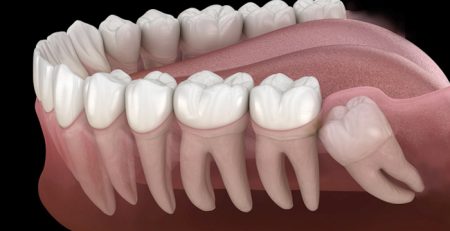
- Wisdom tooth pericoronal infections: Inflammation and swelling can occur, especially around partially erupted teeth.
- Rarer oral mucosa lesions: Lesions that do not heal for a long time or have an unexplained cause require professional evaluation.
1. Tooth Root Infection and Abscess
One of the important causes of pimple-like bumps on the gums is an infection at the tip of the tooth root. As a result of the pulp tissue in the center of the tooth becoming infected by bacteria and losing its vitality over time, microorganisms can spread along the root canal.
When the infection reaches the surrounding tissues from the root tip, apical periodontitis and an abscess can develop. Deep cavities are among the most common causes of this process. Furthermore, pulp necrosis and root tip infection can be observed years later in a tooth that has previously suffered trauma but appears completely sound from the outside.
Melsadent’s When Does a Decayed Tooth Require Root Canal Treatment? content also states that if deep decay progresses to pulp necrosis, swelling, pus discharge, bad taste, and abscess may occur on the gum.
Therefore, not seeing a large cavity next to the blister does not completely rule out the possibility of infection.
2. What is a Gum Fistula or Sinus Tract?
The formation often referred to as a “gum fistula” by the public is, in most cases, a sinus tract formed by chronic infection. The infection can start from the root tip, progress within the surrounding bone and soft tissues, and create a drainage pathway opening into the mouth.
The exit point of the sinus tract in the mouth can appear as a small reddish-white blister, a yellow-tipped pimple, or a swelling with a small hole in its center.
Pus may occasionally drain from the blister. When pus drains, the patient might think their pain has subsided because the pressure is reduced. However, as long as the root canal, which is the actual source of the infection, is not treated, the sinus tract can re-form.
Therefore, a gum blister that appears, bursts, disappears, and then reappears over weeks or months should be especially evaluated.
3. Does a Periodontal Abscess Cause a Blister on the Gum?
Yes. The source of a blister on the gum is not always the nerve tissue inside the tooth. Sometimes, the infection originates from the periodontal tissues surrounding the tooth.
A periodontal abscess can develop due to localized pus accumulation within a periodontal pocket. While more common in individuals with advanced gum disease, it can also occur in other situations due to certain local causes.
In a periodontal abscess, significant swelling, redness, tenderness, discomfort during chewing, bad taste, pus discharge, and in some cases, tooth mobility may be observed.
According to periodontal care recommendations published in PubMed Central, a periodontal abscess is defined as a localized accumulation of pus developing in the gingival wall of a periodontal pocket or sulcus, which can lead to rapid periodontal tissue damage.
For detailed information on the diagnosis and treatment of gum-related diseases, Melsadent’s Gum Treatment (Periodontology) page can be reviewed.
4. How to Differentiate Between Canker Sore and Gum Abscess?
Canker sores and abscesses are sometimes confused by patients. However, their appearance and symptoms are generally different.
A canker sore typically appears as an ulcer with a depressed surface, a white or yellowish center, and a red border. It can cause significant burning and pain when touched or while eating. They are usually found on more mobile oral tissues such as the inner lips, inner cheeks, and tongue.
A parulis, on the other hand, which is associated with a dental abscess, typically appears as a raised structure and is often located in the region associated with the root of a specific tooth. It may have a small white or yellowish spot in its center, and pus may discharge from it occasionally.
However, visual assessment alone does not provide a definitive diagnosis. When necessary, the vitality of the affected tooth, its periodontal tissues, and radiographic imaging should be evaluated.
Is a White Bump on the Gums Important if it Doesn’t Hurt?
Yes, it can be important even if there is no pain.
One of the important characteristics of chronic apical abscesses is that they can cause less pain compared to acute infections. This is because the pressure created by the infection can be discharged through a sinus tract.
Therefore, the person may not experience any symptoms other than a small blister. In fact, the affected tooth may not hurt with cold or hot. This could be because, in some cases, the dental pulp is no longer vital.
Melsadent’s Can Oral Health Be Impaired While Teeth Look Healthy? guide also points out that some periapical infections may not be noticeably apparent externally in early or chronic stages.
Therefore, pain is not the sole criterion for assessing the severity of a tooth infection.
What Does Pus Coming From a Blister on the Gum Mean?
The discharge of a white, yellow, or foul-tasting fluid from the blister increases the likelihood of infection and drainage. Pus is an inflammatory fluid containing microorganisms, immune cells, and tissue debris.
When an abscess drains by itself, the blister may shrink, and pain can significantly decrease. However, this does not mean that the source of the infection has been eliminated.
Melsadent’s Can a Dental Abscess Go Away on Its Own? content also explains that the drainage of an abscess does not signify permanent healing and that the underlying source must be treated.
Should a White Pimple on the Gum Be Popped?
No. An abscess or pimple-like blister on the gum should not be punctured with a needle, cut, or squeezed to be popped at home.
Draining the fluid inside the blister may provide temporary relief, but it does not eliminate the actual source of the infection. Furthermore, unsterile interventions can damage surrounding tissues and lead to the development of new infections.
In necessary cases, the drainage procedure is performed by a dentist under controlled and sterile conditions. Subsequently, root canal treatment, periodontal treatment, or another dental intervention is planned according to the origin of the infection.
The Bubble on the Gum Popped and Disappeared: Is the Problem Gone?
No, it doesn’t necessarily mean it’s gone.
This situation is especially misleading in chronic apical abscesses. When the bubble bursts, pus may drain out, and the tissue may temporarily flatten. No symptoms may be observed for a few days.
However, if the infected root canal or periodontal pocket is not treated, the bacterial source continues. After some time, pus may accumulate again, and a new bubble may appear in the same area.
The recurrence of the bubble is an important sign of an underlying chronic infection.
Why Might a Tooth Not Hurt Even With a Bubble on the Gum?
The absence of tooth pain can be explained by two important mechanisms.
Firstly, the tooth’s pulp might have completely lost its vitality due to infection. Such a tooth may not respond normally to hot or cold stimuli.
Secondly, if the abscess forms a sinus tract and drains regularly, high pressure may not build up in the surrounding tissues. For this reason, instead of the intense throbbing seen in an acute abscess, a small and recurring bubble may be observed.
Since this condition is painless, it can sometimes be delayed for months. However, changes caused by chronic infection in the bone tissue can be seen on a radiograph.
How to Determine Which Tooth is Causing the White Bubble on the Gum?
The tooth directly opposite the bubble may not always be the source of the infection. The sinus tract can advance through surrounding tissues and open into the mouth at some distance from the infected tooth.
Therefore, the dentist does not merely look at the spot where the bubble is located. All adjacent teeth are evaluated.
The following evaluations can be utilized during the examination:
- Checking for decay, fractures, cracks, or discoloration in the teeth
- Evaluation of gums and periodontal pockets
- Tooth percussion and palpation tests
- Cold, hot, or electrical pulp tests
- Periapical X-ray
- Different radiographs or three-dimensional imaging in selected cases deemed necessary
- Professional clinical tests to determine the source of the sinus tract
In the literature, it has been reported that in some cases, the sinus tract can be traced with a sterile material to determine which root area it reaches on the radiograph.
Accurate diagnosis is important because the treatment for a tooth root infection and a periodontal abscess is not the same.
Is Root Canal Treatment Necessary for a Tooth Root Infection?
If the cause of the bubble is an infected and necrotic tooth pulp, root canal treatment is one of the important treatment options, provided the tooth can be saved.
The goal of root canal treatment is to remove microorganisms and necrotic tissues from the infected root canal system, clean, shape, and properly fill the canals.
When the source of the infection is eliminated, the sinus tract and the bubble on the gum also enter the healing process in most cases.
Detailed information about the endodontic treatment process applied to infected or damaged teeth can be found on Melsadent’s Root Canal Treatment (Endodontics) page.
Can a Bubble Appear on a Tooth That Has Previously Undergone Root Canal Treatment?
Yes. It is possible for a gum blister to appear on a tooth that has previously undergone root canal treatment.
Possible reasons for this include ongoing or re-developing infection in the root canal system, missed canal anatomy, bacterial leakage from the restoration, root fracture, or other endodontic-periodontal problems.
In such a case, the idea that “this tooth has already had root canal treatment, it cannot form an abscess” is not correct. The tooth needs to be re-evaluated clinically and radiographically.
In suitable cases, root canal retreatment, endodontic surgery, or different treatment options can be considered. The tooth’s restorability is determined by the remaining tooth structure, periodontal status, presence of cracks or fractures, and the characteristics of the infection.
How Is a Periodontal Abscess Treated?
If the source of the blister is periodontal tissues, the goal of treatment is to control the infection within the periodontal pocket and ensure drainage.
Treatment may include cleaning the periodontal pocket, removing dental plaque and bacterial buildup, root surface debridement, drainage if necessary, and more advanced periodontal procedures.
Early evaluation of a periodontal abscess is important because acute periodontal infections can quickly lead to damage in the surrounding supporting tissues.
The treatment plan should not only focus on draining the blister but also on determining why the abscess occurred.
Do Antibiotics Cure a White Blister on the Gums?
Antibiotics are not automatically necessary for every dental abscess and do not eliminate the dental source of the infection on their own.
The clinical guidelines of the American Association of Endodontists state that in individuals with good general health, the presence of only a localized sinus tract or parulis is not sufficient on its own for routine systemic antibiotic use. The primary approach is to dentally treat the source of the infection.
Conversely, in cases where there is fever, malaise, rapidly spreading swelling, cellulitis, swollen lymph nodes, or certain immune system problems, systemic antibiotics may be required after a physician’s assessment.
Antibiotics should not be started on one’s own, old antibiotics kept at home should not be used, and another person’s prescription should not be followed. The physician should decide on the need for medication by evaluating the patient’s general health condition and the spread of the infection.
What Can Be Done at Home for a White Blister on the Gum?
Methods that can be applied at home do not treat the source of the infection. However, they can help prevent irritation of the area until your dental appointment.
Do not squeeze or puncture the blister. Maintain gentle oral hygiene instead of completely avoiding brushing the area. Do not irritate the blister with very hard, sharp, or excessively hot foods. Do not use antibiotics or other medications without a doctor’s recommendation.
Methods like mouthwashes or salt water rinses may provide temporary relief for some individuals; however, they do not eliminate infection in the root canal or periodontal tissues.
Even if the blister shrinks, it does not make a dental check-up unnecessary.
When is a White Blister on the Gum an Emergency?
A small and localized gum blister does not always require an emergency hospital visit. However, odontogenic infections can spread to surrounding tissues in some cases.
If any of the following symptoms are present, professional medical evaluation should be sought without delay:
- Rapidly increasing swelling in the face or neck
- Fever and significant weakness
- Difficulty swallowing
- Difficulty breathing
- Significant difficulty opening the mouth
- Swelling spreading to the area around the eye or neck
- Rapidly worsening pain and swelling
- Symptoms of infection accompanied by a medical condition affecting the immune system
Infections, especially those involving difficulty breathing or swallowing, should not be delayed.
When Should You See a Dentist If a White Blister Doesn’t Go Away?
If an abscess or sinus tract is suspected, seeking a dental evaluation is a more appropriate approach than waiting for the blister to go away after a certain period.
Blisters that recur in the same area, drain pus, or are located over the root of a tooth, in particular, should be evaluated promptly.
Other white, red, or ulcerative lesions in the mouth with an unknown cause should also be evaluated if they do not heal within approximately two weeks. Intraoral changes accompanied by symptoms such as continuous growth, hardening, spontaneous bleeding, or unexplained numbness should not be neglected.
What Can Happen If a Gum Blister Is Not Treated?
The outcome depends on the true cause of the blister. If an infection-related sinus tract is not treated, the blister may close and reopen from time to time. During this time, the chronic inflammatory process around the root can continue.
When dental abscesses are not properly treated, complications such as the spread of infection to surrounding tissues, involvement of bone tissue, or the development of a larger abscess or cellulitis are possible.
In periodontal abscesses, rapid loss of periodontal tissues supporting the tooth may be observed.
Therefore, the aim is not only to eliminate the visible blister, but to diagnose and treat the underlying disease causing the blister.
What Does It Mean If a Pimple on the Gum Appears Repeatedly?
Recurrent gum pimples are a particularly noteworthy symptom for chronic dental infections.
If a blister swells within a few days, then drains, disappears completely, and reappears at the same spot weeks later, it could be consistent with a chronic infection involving a sinus tract.
This condition can persist painlessly for months. Some patients only describe an occasional bad taste in their mouth.
Instead of merely attempting to suppress recurrent blisters with mouthwash or antibiotics, it is necessary to determine which tooth or periodontal area is the source.
Can Children Get Pimple-Like Blisters on Their Gums?
Yes. When there is deep decay or infection in primary (baby) teeth, children can also develop a pimple-like drainage point on their gums.
The absence of pain in a child does not mean the problem is insignificant. Since the roots of primary teeth are in close proximity to developing permanent teeth, infections should be evaluated by a pediatric dentist.
The treatment option is determined by evaluating the child’s age, the duration the affected primary tooth needs to remain in the mouth, the state of the infection, the tooth’s restorability, and permanent tooth development.
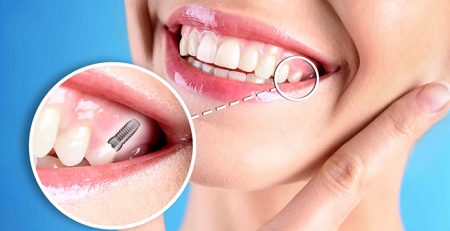
Is It Normal for a White Blister to Appear Next to an Implant?
New swelling, pus, or recurrent blisters developing on the gum around an implant should not be considered normal.
Inflammation and infection can occur in the tissues around an implant. Additionally, a root infection of a natural tooth adjacent to the implant can also cause swelling in the area.
Therefore, if there is pus, bleeding, a bad taste, or recurrent swelling around the implant, it must be determined whether the problem truly originates from the implant, an adjacent tooth, or superficial soft tissues.
Is an X-ray Needed for the Diagnosis of a Gum Blister?
Radiographic evaluation is one of the important parts of the diagnosis in many tooth-related infections.
With periapical X-rays, the roots of the affected tooth, bone changes occurring at the root tip, the condition of previous root canal treatment, the depth of the decay, and surrounding structures can be evaluated.
However, X-rays alone are not always sufficient. They should be interpreted in conjunction with clinical examination, pulp tests, and periodontal evaluation.
In some complex cases, three-dimensional imaging methods may be required. Instead of routinely applying advanced imaging to every patient, the decision is made based on clinical necessity.
How is a White Blister Like a Pimple on the Gums Treated?
Treatment is determined not by the blister itself, but by its cause.
If there is a tooth root infection: Root canal treatment or, in necessary cases, retreatment of root canal therapy may be considered for savable teeth.
If there is a periodontal abscess: Cleaning of the periodontal pocket, drainage, and necessary gum treatments can be applied.
If the tooth is unrestorable: Extraction may be considered based on clinical evaluation.
If there is a foreign body or superficial gingival abscess: The infection can be controlled by removing the local cause in the area.
If there is another oral mucosal lesion: Follow-up, different dental evaluations, or referrals to relevant specialties may be made based on the characteristics of the lesion, if necessary.
Therefore, it is not correct to decide on a treatment based on a photo seen on the internet or an approach like “white bubble = definite root canal treatment”.
Evaluation for White Bubble on Gums at Melsadent
To determine the cause of a recurring pimple-like bubble on the gum, not only the visible swelling but also the neighboring teeth and periodontal tissues need to be evaluated together.
At Melsadent Oral and Dental Health Polyclinic, clinical examination, necessary pulp tests, and appropriate radiographic evaluations can determine whether the bubble is related to the tooth root, periodontal tissues, or a different intraoral structure.
If a tooth root infection is suspected, endodontic treatment options are evaluated; if a gum-related infection is suspected, periodontal treatment options are considered.
Especially, it is not right to wait for a gum bubble that repeatedly appears at the same spot, discharges pus, or has not healed for a long time, to cause pain.
Frequently Asked Questions
What causes a white bubble like a pimple on the gum?
One of the most important causes is chronic abscess and sinus tract due to tooth root infection. Periodontal abscess, superficial gum infection, trauma, and different intraoral lesions can also create a similar appearance.
Is the white pimple on the gum an abscess?
It can be, but not every white bubble is an abscess. A definitive differentiation requires evaluation of the teeth, gums, and radiographs if necessary.
Is a gum pimple dangerous if it doesn’t cause pain?
Being painless does not rule out infection. Especially when chronic apical abscesses drain through a sinus tract, they may cause very little pain or be completely painless.
Can I pop a pimple on my gum?
No. It is not recommended to squeeze, pierce, or cut it at home. The source of the infection should be professionally identified.
My pain went away after the blister popped. Has the tooth healed?
Not necessarily. The drainage of pus can relieve pressure, but the infection in the root canal or periodontal tissues may persist.
Will a white blister on the gum go away on its own?
It may temporarily shrink or disappear. If the source of the infection is not eliminated, it may reappear.
Does a gum pimple require root canal treatment?
If the cause of the blister is the root canal of a necrotic and infected tooth, root canal treatment may be necessary. However, different treatments are applied for periodontal abscesses. First, the source needs to be determined.
Can a blister form on a tooth that has previously undergone root canal treatment?
Yes. A blister can occur on a root-canal-treated tooth due to persistent or redeveloping infection, an overlooked canal, leakage, a crack, or other problems.
Should I use antibiotics for a gum blister?
Antibiotics are not always necessary for every local dental infection. The primary source of the dental infection needs to be treated. A dentist or physician should decide on the necessity of antibiotics.
If the blister disappears after using antibiotics, does that mean it’s treated?
No. The temporary reduction of symptoms does not mean that the infected root canal or periodontal pocket has been cleaned. If the source treatment is not performed, the problem may recur.
Is it normal to have a bad taste from a white blister on the gum?
Bad taste or a pus-like fluid discharge may be associated with active drainage and increases the likelihood of infection. Dental evaluation is required.
Which tooth causes a pimple on the gum?
It is not always caused by the tooth directly opposite. Since the sinus tract can travel through tissues, a different neighboring tooth may be the source. Pulp tests and radiography help in this differentiation.
Can a tooth that does not appear to have decay form an abscess?
Yes. Pulp necrosis and root tip infection can develop in a tooth without obvious external decay due to trauma, cracks, old restorations, or past pulp damage.
Are a periodontal abscess and a tooth root abscess the same thing?
No. A root tip abscess is often associated with infection in the dental pulp and root canal. A periodontal abscess, on the other hand, develops in the periodontal tissues surrounding the tooth and within the pocket. Their treatments can also differ.
If a gum blister doesn’t go away within how many days should one see a doctor?
If an abscess or sinus tract is suspected, it is recommended to seek a dental evaluation instead of waiting for days for it to pass. Intraoral lesions of unknown cause that do not heal for longer than approximately two weeks should also be evaluated.
What should I do if my face swells?
If a gum blister is accompanied by rapidly increasing facial or neck swelling, fever, difficulty swallowing, difficulty opening the mouth, or breathing problems, immediate professional evaluation should be sought.
Can a white pimple form on children’s gums?
Yes. A sinus tract and blister can form, especially around infected primary teeth. Even if there is no pain, it should be evaluated by a pediatric dentist.
What should be done if a white blister appears next to the implant?
Pus, swelling, or recurring blisters around the implant should not be considered normal. The tissues surrounding the implant and adjacent natural teeth should be evaluated together.
Scientific Resources
1. American Association of Endodontists – Consensus Conference Recommended Diagnostic Terminology
Definitions of chronic apical abscess, acute apical abscess, pulp necrosis, and apical periodontal diseases:
American Association of Endodontists – Diagnostic Terminology
2. Siqueira JF Jr, Rôças IN. Microbiology and Treatment of Acute Apical Abscesses
Comprehensive scientific review on the microbiology, formation, and treatment approach of apical abscesses:
PubMed Central – Microbiology and Treatment of Acute Apical Abscesses
3. ISP Good Clinical Practice Recommendations for Gum Care
Scientific guide on the clinical features of periodontal abscesses, periodontal pocket relationship, and tissue damage:
PubMed Central – Good Clinical Practice Recommendations for Gum Care
4. American Association of Endodontists – Endodontics: Colleagues for Excellence, Antibiotic Use
Clinical information on whether systemic antibiotics are necessary in endodontic infections:
American Association of Endodontists – Antibiotic Use in Endodontics
5. Cutaneous Sinus Tracts of Odontogenic Origin
Case and literature review on the formation of sinus tracts related to dental abscesses and the dental treatment of the source of infection:
PubMed Central – Cutaneous Sinus Tracts of Odontogenic Origin