Digital Approaches in Orthodontics Clear Aligners and Planning
Discover digital approaches in orthodontics with clear aligners and advanced digital planning. Learn how modern orthodontic treatments offer comfort, aesthetics, and predictable results at Melsadent.
What are digital approaches in orthodontics? Learn detailed information about a more comfortable and aesthetic orthodontic treatment with clear aligners and digital planning at Melsadent.
Digital Approaches in Orthodontics: Clear Aligners and Planning
Orthodontic treatments have undergone a major transformation in recent years thanks to advancing digital technologies. Modern solutions that replace traditional metal braces offer significant advantages to patients in terms of both aesthetics and comfort. In particular, clear aligners and digital orthodontic planning make it possible to achieve more predictable, faster, and personalized results in the treatment of dental crowding and jaw misalignments.
As Melsadent Oral and Dental Health Polyclinic, in this article we discuss in detail clear aligner systems and digital planning processes that form the foundation of digital approaches in orthodontics.
The Importance of Digitalization in Orthodontics
Digital technologies have made orthodontic treatment more controlled and transparent for both dentists and patients. While traditional methods relied largely on clinical experience, digital systems allow:
– The treatment process to be simulated in advance
– Tooth movements to be planned step by step
– Outcomes to become more predictable
– Treatment duration to be optimized
– These advancements significantly increase patient satisfaction and treatment success.
What Are Clear Aligners?
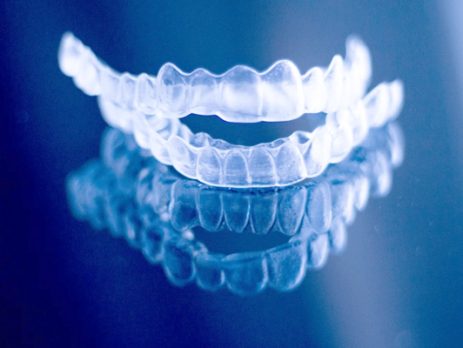
Clear aligners are transparent orthodontic appliances that are custom-made to move teeth in a specific sequence. The aligners are replaced at regular intervals according to the treatment plan, and each aligner moves the teeth from their previous position to the next target position.
Key features of clear aligners include:
– Nearly invisible structure
– Removability
– No metal wires or brackets
– Easy adaptation to daily life
– Thanks to these features, clear aligners are frequently preferred, especially by adult and adolescent patients with aesthetic concerns.
How Is Digital Orthodontic Planning Performed?
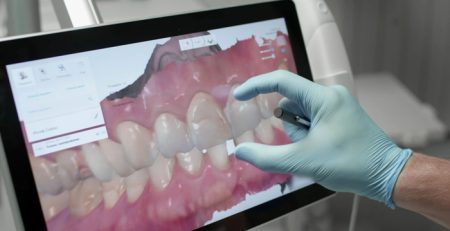
Digital planning is the most important stage of clear aligner treatment. This process is carried out using advanced software and three-dimensional imaging technologies.
1. Intraoral Digital Scanning
With digital scanners that replace traditional impression trays, the patient’s teeth are scanned three-dimensionally with high precision. This method is:
– More comfortable
– Minimizes measurement errors
– Provides fast and accurate data
2. 3D Modeling and Analysis
The data obtained after digital scanning is converted into a 3D model in a computer environment. Through this model:
– The current position of the teeth is analyzed
– The degree of crowding is determined
– Jaw relationships are evaluated
– This stage forms the basis for creating a personalized treatment plan.
3. Treatment Simulation
Thanks to digital planning software, the movement of the teeth from the beginning to the end of treatment is visually simulated. The patient can see the expected smile before the treatment is completed.
This situation:
– Increases the patient’s confidence in the treatment
– Strengthens motivation
– Helps set realistic expectations
4. Production of Clear Aligners
Based on the approved digital plan, custom clear aligners are produced. Each aligner is designed to perform a specific tooth movement.
Advantages of Clear Aligners
Clear aligners, when combined with digital planning, offer many advantages:
Aesthetic Advantage
Since aligners are nearly invisible, they go unnoticed in daily life. This provides great comfort, especially in professional and social settings.
Comfort and Hygiene
Because aligners are removable:
– They can be taken out while eating
– Tooth brushing and flossing become easier
– Better oral hygiene can be maintained
– Irritation and sores commonly seen with metal braces are very rare with clear aligners.
Fewer Clinical Visits
Since the treatment process is planned in advance through digital planning, follow-up appointments can be less frequent. This provides a significant advantage for patients in terms of time management.
Who Is It Suitable For?
Clear aligners are highly effective in cases such as:
– Mild to moderate dental crowding
– Tooth gaps (diastema)
– Certain bite disorders
– However, suitability for each patient should be determined through a detailed orthodontic evaluation.
Psychological Effects of Digital Orthodontics
Digital orthodontics and clear aligner treatment also increase patients’ psychological comfort. Being able to see the treatment process in advance and straighten teeth without aesthetic concerns positively affects self-confidence.
More Predictable Results with Digital Orthodontics
Digital approaches in orthodontics, with clear aligners and advanced planning methods, offer successful results both aesthetically and functionally. Digital orthodontics provides a shorter, more controlled, and more comfortable process with a personalized treatment approach.
Melsadent Oral and Dental Health Polyclinic closely follows innovations in digital orthodontics and offers modern, reliable, and effective clear aligner treatments to its patients.