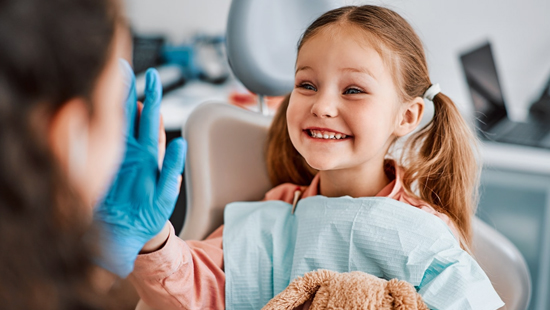
Pediatric dentistry (pedodontics) aims to protect our young patients’ oral health while turning dental care into a fun experience. Melsadent’s expert pediatric dentistry team uses special communication techniques and modern treatment methods to ensure a fear-free and comfortable treatment process for children. It supports long-term oral health development through early cavity prevention, proper brushing habits, baby tooth care, and preventive applications.
MELSADENT
All dental and gum problems seen in adults can also occur in children. Pedodontics is the branch of dentistry that treats oral and dental health issues in children aged 0–14. Pediatric dentists emphasize that baby teeth should not be neglected, as they directly affect the development of permanent teeth and the child’s physical growth.
The first stage of an oral examination begins with visual and manual evaluation, but this alone is never sufficient. Our greatest aid in diagnosis is intraoral X-rays. If a problem is related to a single tooth, small periapical X-rays are taken. For widespread issues or when bone structures need to be examined, panoramic X-rays showing the entire mouth are used.
Pediatric Dentistry Treatments
- Preventive treatments: fluoride application, fissure sealants
- Children’s cavity treatments: fillings, root canal therapy
- Treatment of dental trauma
- Space maintainers and pediatric prosthetics after tooth loss
- Dental care under sedation or general anesthesia for anxious or special-needs children
Children’s Oral and Dental Health
Today, baby tooth decay is often underestimated. However, the health of permanent teeth depends on healthy baby teeth. Preventing dental problems early is easier and less costly than treating them later. Please schedule regular dental check-ups for both yourself and your child.
Many dentists focus only on patients’ complaints, but in pediatric dentistry, motivating the child toward the dentist, clinic, and treatment is even more important. A child without dental fear will naturally accept treatment more easily.
Therefore, except in emergency situations, the first appointment is a familiarization and motivation session. Procedures and tools are explained in a playful way. Both the child and parents are informed thoroughly.
We would also like to remind parents of some important points:
- Schedule the first dental visit when your child turns one year old
- Avoid frightening language about dentists at home
- Follow the dietary recommendations provided by your pediatric dentist
- Turn daily brushing into a fun family activity
- Remember: if you don’t brush regularly, your child won’t develop this habit either
Early Childhood Caries (Baby Bottle Tooth Decay)
It is defined as one or more cavities in baby teeth in children aged six and under. It is a serious disease caused by frequent exposure of teeth to sugary liquids such as milk, formula, honey, molasses, and fruit juices.
When babies sleep with a bottle, sugary liquids coat the teeth and cause early decay, especially in the upper and lower front teeth. Therefore, do not allow your child to fall asleep with milk or juice in a bottle. Transition to using a cup as early as possible. Never dip pacifiers in honey, molasses, or sugar.
If breastfeeding, avoid letting your baby nurse continuously. After each feeding, gently clean your baby’s teeth using a clean gauze or soft cloth.