




How to Prevent Aligner Odor? Clear Aligner Cleaning Guide
The Right Ways to Prevent Aligner Odor
One of the most uncomfortable situations that can be encountered while using clear aligners is the bad odor felt on the aligner or inside the mouth after some time. Especially since aligners remain on the teeth for a large part of the day, saliva, bacteria, food residues, and dental plaque inside the mouth constantly come into contact with the clear aligner surface. When proper oral hygiene and aligner cleaning are not performed, these accumulations can eventually turn into a noticeable odor.
However, clear aligners smelling is not a natural and unavoidable part of the treatment. In most cases, the problem arises from insufficient cleaning of the aligner, reinserting the aligner without brushing teeth, using incorrect cleaning products, a dirty aligner case, or another existing oral problem.
Therefore, instead of just rinsing the aligner, both oral hygiene and the daily care of the aligner must be addressed together.
In the clear aligner treatments performed by Melsadent Oral and Dental Health Polyclinic, it is also taken into consideration that the success of the treatment depends not only on tooth movements, but also on the oral and aligner hygiene maintained throughout the treatment.
In this guide, we will discuss in detail why aligner odor occurs, how clear aligners should be cleaned, which practices should be avoided, and when bad odor may require a dentist’s evaluation.
Why Do Clear Aligners Smell?
Since clear aligners remain in the mouth for a long time, they are in constant contact with saliva and oral microorganisms. If the aligner is reinserted without sufficient cleaning after being removed, a thin biofilm layer can form on its surface over time.
Biofilm is an organized microbial structure formed by microorganisms adhering to a surface. Similar to dental plaque that forms on teeth, microbial accumulation can also occur on the surface of orthodontic aligners.
The main reasons for bad odor on clear aligners are:
Food debris getting stuck between teeth: If the aligner is worn after eating without cleaning the teeth, food residues can become trapped between the aligner and the tooth.
Formation of bacterial biofilm: If the aligner surface is not cleaned regularly, the thin layer formed by microorganisms can increase over time.
Accumulation of salivary proteins: Organic substances and minerals in saliva can adhere to the aligner surface.
Insufficient brushing of teeth: Placing a clean aligner on dirty teeth can also lead to odor formation in a short time.
Uncleaned tongue surface: The bacterial layer on the tongue surface is one of the important sources of bad breath.
Dirty aligner case: Placing a cleaned aligner in a case covered with bacteria can reduce the effectiveness of the cleaning performed for hygiene.
Leaving the aligner in a humid and closed environment for a long time: Storing unused aligners in inappropriate conditions can facilitate the formation of bad odors.
Therefore, the approach “My aligner smells, I should use a stronger cleaner” is not always correct. The real task is to identify the source of the odor and correct the entire daily care routine.
Is the Real Source of Aligner Odor the Aligner or the Mouth?
A significant portion of clear aligner users believe that bad odor directly originates from the aligner itself. However, in some cases, the real problem lies within the mouth.
Important sources of bad breath include the microbial layer on the tongue, dental plaque, gum diseases, and food debris remaining in the mouth. Scientific literature also shows that tongue coating is one of the important sources of intra-oral bad breath.
For detailed information on this topic, Melsadent’s How to Get Rid of Bad Breath? guide can be reviewed.
If bad odor reappears shortly after cleaning your aligner, it is important to consider the following situations:
Food remaining between teeth,
uncleaned tongue surface,
gum bleeding,
calculus accumulation,
cavities,
dry mouth,
insufficient water intake,
smoking and tobacco products,
prolonged fasting,
some systemic or gastrointestinal conditions.
Therefore, assuming that bad odor originates solely from the surface of the aligner may not be correct.
Why is Oral Hygiene More Important When Using Clear Aligners?
Clear aligners cover a large portion of the teeth. This feature is necessary for orthodontic movement, but it can cause the tooth surface to be somewhat separated from the natural cleaning effect of saliva.
For example, if an aligner is placed immediately after consuming a sugary or acidic drink without cleaning the teeth, the residue of the drink can remain between the tooth and the aligner for a longer period.
Therefore, the fundamental principle during clear aligner treatment is this:
Clean aligners should be placed on clean teeth.
No matter how well the aligner is cleaned, if there is bacterial plaque and food residue on the teeth, the odor problem may persist.
The removability of clear aligners can facilitate the maintenance of oral hygiene. However, this advantage only applies to individuals who perform regular and proper care.
Those who are curious about how clear aligner treatment is applied can also review Melsadent’s content on Clear Aligner Treatment.
What Should Be Done After Every Meal to Prevent Aligner Odor?
One of the most effective habits in preventing aligner odor is the post-meal care routine.
Clear aligners must be removed while eating. After the meal is completed, teeth should be brushed if possible, and any food remaining between the teeth should be removed.
The ideal sequence is generally as follows:
Remove the aligner.
Place the aligner in its clean case.
Eat your meal.
Rinse your mouth with water.
Brush your teeth at the appropriate time.
Clean between your teeth with dental floss or an interdental cleaning product recommended by your dentist.
Rinse the aligner with water or clean it using the recommended method, then reinsert it.
Cleaning between teeth is especially important after consuming foods like meat, fibrous vegetables, nuts, and foods that easily get stuck between teeth.
When a small piece of food remains between the teeth under the aligner for hours, it can create an unfavorable environment for bad odor, as well as tooth decay and gum problems.
Should Clear Aligners Be Rinsed with Water?
Yes. The aligner can be rinsed with clean water at an appropriate temperature every time it is removed.
However, rinsing with water alone may not always be sufficient to completely remove the biofilm layer that can form on the surface over time.
An invisible layer can form on the aligner during daily use. Therefore, the cleaning method recommended by your dentist or the aligner manufacturer should be applied regularly.
The important point here is that the water should not be too hot.
Since clear aligners are made from thermoplastic materials, excessively hot water can negatively affect the material’s structure or shape.
Therefore, using boiling or very hot water is not correct.
Can Clear Aligners Be Brushed?
Many clear aligners can be gently cleaned mechanically with the help of a soft brush. However, it is important to consider the product used and the manufacturer’s instructions for the aligner.
Harsh brushing or using abrasive products can create microscopic scratches on the aligner’s surface.
These scratches can not only make the aligners appear duller but also alter their surface adhesion.
Therefore, when cleaning aligners:
Prefer a soft-bristled brush.
Do not apply excessive pressure.
Clean both the inner and outer surfaces of the aligner.
Do not forget the edge areas.
Rinse thoroughly with plenty of water after cleaning.
Avoid abrasive products that could damage the aligner.
If the clear aligner system you are using has specific care instructions, follow those instructions first.
Can Clear Aligners Be Cleaned with Toothpaste?
Toothpaste is developed for cleaning tooth enamel. Some toothpastes may contain abrasive particles that help remove stains.
Therefore, not every toothpaste is suitable for cleaning clear aligners.
An abrasive toothpaste can cause microscopic scratches on the aligner over time. This can lead to a decrease in transparency and the aligner becoming dull.
It is not recommended to use pastes, especially “whitening” or highly abrasive ones, indiscriminately on the aligner.
Regarding which product you should use to clean your clear aligner, the recommendations of your treating dentist and the aligner system you are using should be taken as a basis.
Can Aligner Cleaning Tablets Be Used?
Suitable cleaning products specifically designed for clear aligners or orthodontic appliances can be used in some cases.
Scientific studies show that different cleaning solutions can exhibit varying levels of effectiveness in reducing microorganisms on the aligner surface. However, it has also been shown that prolonged or incorrect use of some chemical products can affect the color or surface properties of the aligner material.
Therefore, the idea that “a stronger chemical provides better cleaning” is not correct.
It is important that the product used is compatible with clear aligners.
Academic source: Cleaning solutions for orthodontic clear aligners: a microbiological and colorimetric analysis.
Another recent study evaluated the effectiveness of different techniques such as mechanical brushing, cleaning solutions, and ultrasonic methods in biofilm removal: Effects of cleaning methods on the removal efficacy of Streptococcus mutans biofilm and material properties of thermoplastic aligner materials.
Therefore, if cleaning tablets or solutions are to be used, their duration of use, concentration, and frequency must comply with the product’s instructions.
Is It Correct to Clean Aligners with Hot Water?
No. It is not correct to use hot or boiling water with the idea that it will better disinfect the clear aligner.
Most clear aligners are made from thermoplastic materials that can be shaped by heat.
High temperature can cause deformation in the material. Even a very small change in the shape of the aligner can affect its fit on the teeth.
Therefore, using water close to room temperature or lukewarm water is a safer approach for aligner cleaning.
If you think the aligner’s shape has changed, it has loosened, or it doesn’t fit as before, do not attempt to adjust it yourself. Consult the doctor managing your treatment.
Can You Drink Coffee or Tea with Clear Aligners?
Caution should be exercised when consuming beverages other than water while wearing clear aligners.
Beverages like coffee and tea can cause discoloration on the aligners. Sugary drinks, on the other hand, can get trapped between the aligner and the tooth, creating a suitable environment for bacteria.
Acidic beverages can also prolong the exposure time of tooth enamel to acid.
Therefore, generally the safest habit is to drink only water while wearing clear aligners. If coffee, tea, or other beverages are to be consumed, it is important to remove the aligner and ensure oral hygiene afterward.
Furthermore, it should be remembered that hot beverages may not be suitable for the material structure of the aligner.
Does Odor Occur if You Eat with Clear Aligners?
The vast majority of clear aligners are designed to be removed during meals.
Eating with aligners can lead to food accumulation under or on the surface of the aligner, causing discoloration and odor formation.
Additionally, mechanical forces generated during chewing can cause scratches or deformation on the surface of the aligner.
Therefore, unless your doctor provides different instructions, removing the aligner before meals is the most appropriate approach.
Why Is Wrapping Your Aligner in a Napkin Wrong?
One of the common mistakes made by aligner users is wrapping the aligner in a napkin during meals.
This habit has two significant disadvantages.
Firstly, hygiene. A napkin does not guarantee hygienic storage of the aligner.
Secondly, there is the risk of accidentally discarding the aligners with the trash.
When not in use, clear aligners must be stored in their own clean box, preferably one that allows air circulation.
Especially regarding how to maintain your aligners while traveling, you can benefit from the Can You Go on Vacation with Clear Aligners? Usage Recommendations guide.
How Important is the Aligner Box?
It is very important.
Placing an aligner you carefully clean every day into a box that hasn’t been washed for weeks breaks the hygiene chain.
Saliva residues, moisture, and microorganisms can accumulate inside the aligner box. Therefore, the box should also be cleaned regularly and allowed to dry completely.
The aligner box:
Wash it regularly.
Do not let water accumulate inside.
Do not let it come into contact with dirty surfaces.
Do not leave it closed and continuously damp.
If significant dirt or deformation occurs, replace it with a new one.
Clean aligner + dirty box is not proper care.
Why Might Your Aligner Smell More When You Wake Up in the Morning?
Reduced saliva flow during sleep slows down the natural cleaning mechanism inside the mouth.
For this reason, it is quite common for bad breath to be more noticeable in the mornings.
For individuals using clear aligners, regular morning care is important because the aligner covers the teeth throughout the night.
As part of your morning routine:
Remove the aligner.
Clean the aligner.
Brush your teeth.
Clean between your teeth if necessary.
Gently clean your tongue surface.
Rinse your mouth with water.
Reinsert the clean aligner.
This few-minute routine can significantly help control aligner odor.
Does Tongue Cleaning Reduce Aligner Odor?
Yes, tongue cleaning can be beneficial, especially if the microbial layer on the tongue surface plays a role in the source of bad odor.
Bacteria, dead cells, and food debris can accumulate on the tongue. This layer can contribute to the formation of volatile sulfur compounds associated with bad breath.
This relationship has been extensively studied in the scientific literature: Tongue coating: its characteristics and role in intra-oral halitosis and general health – a review.
Excessive pressure should not be applied when cleaning the tongue. The back areas of the tongue, in particular, can be gently cleaned with the help of a tongue scraper or an appropriate brush.
Can Dental Calculus Cause Plaque Odor?
Yes. It is important to remember that bad breath is not always caused by clear aligners.
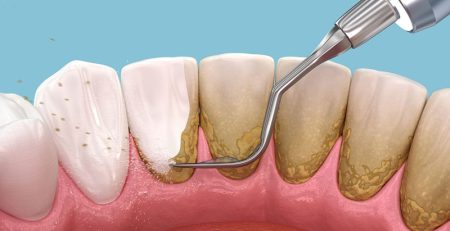
Bacterial plaque that remains on the tooth surface for a long time can mineralize and turn into dental calculus (tartar). The surface of dental calculus can create a suitable area for new bacterial plaque to attach and, along with gum inflammation, can contribute to bad breath.
Dental calculus cannot be removed by brushing at home.
For detailed information on this topic, you can review Melsadent’s Why Should Dental Calculus Be Cleaned? content.
If bad breath persists despite regularly cleaning your plaque, it may be beneficial to have your dental calculus and gum health evaluated during a professional oral and dental examination.
Do Clear Aligners Accumulate Bacteria?
To a certain extent, microbial attachment can occur on almost any surface placed in the mouth.
There are scientific studies showing that biofilm can also form on the surfaces of clear aligners.
This does not mean that clear aligners are unhealthy. What is truly important is regular oral and aligner hygiene.
In studies comparing clear aligners with traditional fixed orthodontic appliances, it has been reported that removable aligners can provide advantages in terms of some periodontal indicators due to their ability to facilitate the maintenance of oral hygiene.
However, this advantage largely depends on the individual’s adherence to daily oral hygiene.
A systematic review published in the European Journal of Orthodontics in 2026 also reported that some periodontal parameters might be better in clear aligner users compared to fixed appliances, but it was emphasized that the current evidence has low or very low certainty, and the outcome largely depends on user compliance.
Academic source: Impact of clear aligners and conventional fixed orthodontic appliances on oral hygiene and periodontal health.
Another systematic review evaluating the effect of clear aligners on the oral microbiome also stated that easier maintenance of hygiene might be associated with positive outcomes in terms of plaque and gingival indices.
Academic source: Impact of Clear Aligners on the Oral Microbiome: A Systematic Review of Current Evidence.
What is the White Layer on the Inner Surface of the Aligner?
Over time, a whitish or matte layer may be observed on the clear aligner.
This appearance may be related to the accumulation of minerals, proteins, and microbial biofilm from saliva on the surface.
This layer can become more prominent, especially if the aligner is not cleaned regularly.
It is not advisable to try to scrape off the layer with a hard object or use abrasive chemicals.
If the layer does not disappear despite cleaning, it would be appropriate to show your aligner to your doctor at your check-up appointment.
Can Aligners Be Cleaned with Vinegar or Baking Soda?
Vinegar, baking soda, or various household solutions might be suggested online for cleaning clear aligners.
While some substances have been investigated in laboratory studies, a substance’s ability to reduce bacteria does not mean it is safe for daily and unlimited use for every aligner material.
Different chemicals can affect the aligner’s:
transparency,
its color,
surface roughness,
mechanical properties
and the material’s behavior over time.
Therefore, instead of strong homemade mixtures, the manufacturer’s recommendations for the aligner system used and your dentist’s advice should be followed.
Should Aligners Be Cleaned with Bleach or Strong Disinfectants?
Household bleach, strong chemical disinfectants, or cleaning products not intended for oral use should not be used haphazardly for clear aligner care.
The unconscious use of a chemical at home, which has been studied in specific concentrations in a laboratory setting, is not the same thing.
Incorrect concentration, insufficient rinsing, or prolonged exposure of the material to chemicals can damage the aligner surface and create risks for oral tissues.
Therefore, for aligner cleaning, only choose products specifically designed for this purpose and approved by your dentist.
Does Mouthwash Solve Aligner Odor?
Mouthwash can support oral hygiene in some individuals, but it is not the fundamental solution for aligner odor.
Masking bad odor solely with aromatic mouthwash may not eliminate the root problem.
If biofilm is present on the aligner surface, mechanical or appropriate chemical cleaning is required. If there are food particles between the teeth, these must be removed. If tartar is present, professional cleaning may be necessary.
Additionally, some colored mouthwashes can cause clear aligners to stain.
Therefore, mouthwash use should be planned according to personal needs and with the recommendation of a dentist.
Does Smoking Cause Odor and Yellowing in Clear Aligners?
Cigarettes and other tobacco products can contribute to bad breath and surface staining.
Clear aligners can also change color and retain undesirable odors when they come into contact with tobacco products.
Furthermore, smoking is associated with numerous negative effects on oral and gum health.
Avoiding tobacco use throughout clear aligner treatment is the most appropriate approach for both the aesthetic appearance of the aligners and oral health.
Can Dry Mouth Increase Aligner Odor?
Saliva is not just a fluid that moistens the inside of the mouth. It helps balance the oral environment, remove food debris, and buffer acids.
In dry mouth, this natural cleaning mechanism can weaken.
Insufficient water intake, certain medications, mouth breathing, smoking, and various health conditions can be associated with dry mouth.
Consuming sufficient water while using clear aligners can help maintain oral comfort.
In cases of prolonged or significant dry mouth, it is important to evaluate the cause.
What are the Most Common Mistakes Made Regarding Aligner Odor?
Some incorrect practices by users trying to prevent aligner odor can further exacerbate the problem.
The most common mistakes are:
cleaning the aligner only in the morning,
inserting the aligner without cleaning teeth after meals,
storing the aligner in a napkin,
not cleaning the aligner case,
putting the aligner in hot water,
brushing vigorously with a hard-bristled brush,
using abrasive toothpaste,
trying to suppress bad odor solely with mouthwash,
consuming colored and sugary drinks while wearing aligners,
scraping off deposits on the aligner surface with sharp objects,
trying every chemical mixture seen on the internet on the aligner.
The correct approach is not aggressive cleaning, but regular and material-appropriate cleaning.
What Should the Daily Clear Aligner Cleaning Routine Be?
A practical daily care routine can largely keep aligner odor under control.
Morning:
Remove the aligner.
Clean and rinse properly.
Brush your teeth.
Gently clean your tongue surface.
Insert the clean aligner.
After meals during the day:
Store the aligner in its case during meals.
Rinse your mouth with water.
Brush your teeth and clean between them if possible.
Rinse the aligner and put it back on.
Evening:
Brush your teeth thoroughly.
Floss or perform appropriate interdental care.
Clean the aligner thoroughly using the method recommended by the manufacturer and your dentist.
Make sure the aligner case is also clean and dry.
A simple but regular care routine is much more valuable than aggressive cleaning done occasionally.
Why is Regular Use of Clear Aligners Important?
The success of clear aligner treatment depends not only on aligner cleanliness but also on the recommended usage duration.
Constantly removing aligners and keeping them out for extended periods can affect the treatment plan.
Therefore, instead of removing aligners for longer than necessary during cleaning, it is more appropriate to establish a quick, regular, and correct routine.
You can examine the role of digital planning and aligners in the treatment process in more detail in Melsadent’s Digital Approaches in Orthodontics: Clear Aligners and Planning content.
Why Might an Older Aligner Smell More Than a New One?
The longer an aligner is used in the mouth, the more its contact time with saliva, biofilm, and environmental factors increases.
Therefore, aligners nearing the end of their usage period may show more dullness or odor compared to the first day.
However, if a noticeable odor develops in a very short time, it is not correct to blame only the age of the aligner.
The daily care routine, dental hygiene, and cleanliness of the aligner case should be reviewed.
If the aligner needs to be used for longer than planned, it is more appropriate to act according to your orthodontist’s guidance rather than making this decision on your own.
What to Do if Aligner Odor is Accompanied by Gum Bleeding?
If bad breath is accompanied by gum bleeding, swelling, redness, or sensitivity, the problem may not be solely plaque removal.
These symptoms may be a sign of gingival inflammation or periodontal problems.
The ability to brush teeth comfortably during clear aligner treatment is a significant advantage. However, being removable alone does not guarantee good oral hygiene.
Regular brushing, interdental cleaning, and professional check-ups should be maintained.
If gum bleeding persists, a dental examination should not be postponed.
When Is Persistent Plaque Odor Significant?
If bad breath persists despite proper oral care and plaque removal, another source within the mouth may be present.
A dental evaluation may be particularly beneficial in the following situations:
Persistent bad breath,
gum bleeding,
gum swelling,
tartar buildup,
toothache,
suspected tooth decay,
persistent bad taste under the aligner,
significant dry mouth,
persistent heavy buildup on the aligner,
change in the aligner’s shape,
the aligner not fitting the teeth as before.
The goal is not merely to suppress the odor, but to identify its source.
Why Are Professional Check-ups Important in Clear Aligner Treatment?
While clear aligner treatment is a modern orthodontic method that can be planned digitally, regular clinical evaluation is still important.
During check-ups, not only tooth movement is evaluated.
The dentist can, if necessary, evaluate:
gum health,
dental plaque buildup,
tartar formation,
caries risk,
the fit of the aligners to the teeth,
attachment areas,
and overall oral hygiene.
Thus, problems that could lead to aligner odor can be detected at an earlier stage.
For more information about the situations in which clear aligners can be used and how the treatment process progresses, you can read the Melsadent content titled What is Wireless Orthodontics (Clear Aligner)? Advantages and Treatment Process.
The Golden Rules for Preventing Aligner Odor
To prevent clear aligner odor, there is no need for very complex methods. The most effective approach is to establish a regular hygiene system.
The basic rules can be summarized as follows:
Always place a clean aligner on clean teeth.
Remove the aligner during meals.
Place the aligner in its clean case, not on a napkin.
Rinse the aligner with appropriate water every time you remove it.
Clean the aligner surface daily using an appropriate method.
Do not use very hot water.
Avoid abrasive products.
Clean the aligner case regularly.
Brush your teeth effectively at least twice a day.
Do not neglect interdental cleaning.
Clean your tongue surface.
Drink enough water.
Avoid consuming sugary and colored drinks with your aligners in.
Stay away from cigarettes and tobacco products.
Do not miss your regular dental check-ups.
These habits not only help reduce aligner odor but also contribute to maintaining oral and dental health throughout the treatment.
Frequently Asked Questions
Why does my clear aligner smell bad?
The most common reasons are the accumulation of bacteria and biofilm on the aligner, placing the aligner without cleaning teeth after eating, bacteria on the tongue surface, and a dirty aligner case. Tartar and gum problems can also contribute to bad breath.
Is clear aligner odor normal?
A slight odor may develop in an aligner that has been used for a long time, but a distinct and persistent bad odor should not be considered normal and ignored. The care routine should be reviewed, and if the problem persists, a dentist should be consulted.
Should I clean my aligners every day?
Yes. It is good hygiene to clean clear aligners daily and rinse them when removed during the day.
Can clear aligners be brushed with toothpaste?
Not all toothpastes are suitable. Abrasive and whitening toothpastes, in particular, can scratch the aligner surface. Cleaning methods appropriate for the aligner system used should be preferred.
Can aligners be washed with hot water?
No. Very hot or boiling water can deform the thermoplastic material. Water at an appropriate temperature should be used.
Can I use an aligner cleaning tablet?
Products specified as suitable for use with clear aligners can be used according to the manufacturer’s instructions and your doctor’s recommendations.
Is it correct to put the aligner in vinegar?
Although some solutions have been studied in scientific research, using vinegar at home is not a standard recommendation for every aligner material. It is safer to follow the care instructions of the aligner manufacturer and your doctor.
Can aligners be cleaned with baking soda?
Randomly used abrasive substances can damage the aligner surface. Therefore, applications not recommended by the manufacturer should be avoided.
What happens if I drink coffee with my aligners in?
Coffee can cause the aligner to stain and retain odors. Additionally, hot beverages may not be suitable for the aligner material. Generally, it is safer not to consume beverages other than water while wearing aligners.
Can one eat with aligners?
The vast majority of clear orthodontic aligners should be removed during meals. If there is a different instruction specific to your treatment, follow your orthodontist’s recommendation.
Should the aligner case also be cleaned?
Yes. A dirty aligner case can cause the clean aligner to come into contact with microorganisms again. The case should be washed and dried regularly.
Why do aligners smell more in the morning?
Reduced saliva flow during sleep can contribute to more pronounced bacterial activity and morning bad breath.
Does cleaning the tongue help with aligner odor?
Yes. The microbial layer on the tongue is one of the significant sources of bad breath. Gentle and regular tongue cleaning can help control bad breath.
Does dental calculus cause aligners to smell bad?
Dental calculus and gum inflammation can contribute to bad breath. If bad breath persists despite the aligner being clean, a periodontal evaluation may be necessary.
Is it normal for a white layer to form on aligners?
Saliva minerals, organic matter, and biofilm can form a whitish layer on aligners over time. Regular cleaning is important. If there’s persistent heavy buildup, it’s recommended to show it to your dentist.
How can clear aligner yellowing be prevented?
Reducing contact with coffee, tea, cigarettes, and coloring beverages, performing regular cleaning, and storing the aligner properly can help reduce discoloration.
Does mouthwash eliminate aligner odor?
Mouthwash can temporarily reduce odor but does not solely remove biofilm or food debris between teeth. The primary solution is effective mechanical oral and aligner cleaning.
Is cleaning aligners at night sufficient?
Thorough cleaning of the aligner in the evening is important, but attention should also be paid to aligner and oral hygiene after meals during the day.
Can aligner odor be a sign of tooth decay?
Aligner odor alone does not necessarily mean there is tooth decay. However, if there is a persistent bad taste, localized odor, sensitivity, or pain, a dental examination is required.
What should I do if aligner odor doesn’t go away?
If bad breath persists despite properly cleaning your aligner and aligner case, regularly brushing your teeth, and cleaning between your teeth, a dental examination is recommended to identify possible causes within the mouth.
Clear Aligner and Oral Hygiene Assessment at Melsadent
In clear aligner treatment, maintaining oral and dental health throughout the treatment is as important as the aesthetic appearance.
Proper use of aligners, regular cleaning, effective cleaning of teeth and interdental spaces, tongue care, and not missing check-ups can help prevent the bad breath problem.
No matter how much you clean your aligners, if there is an active gum problem, calculus, decay, or significant bacterial buildup in your mouth, the odor may not completely disappear.
Therefore, in cases of persistently recurring clear aligner odor, identifying the source of the problem is a more appropriate approach than just trying different cleaning products.
At Melsadent Oral and Dental Health Polyclinic, clear aligner treatment, oral hygiene, and orthodontic check-ups are planned with personalized assessment. Receiving a professional evaluation for issues related to odor, aligner fit, or oral hygiene that arise during treatment supports both more comfortable use of the aligners and the preservation of oral health.