Why Does Dental Calculus Reappear Quickly? 10 Important Reasons
Only a few weeks or months after having dental tartar cleaning, noticing a yellowish, brownish, or hard layer on the teeth again brings the same question to many people’s minds: Why does dental tartar reappear quickly? Professional dental tartar cleaning removes existing hardened deposits; however, it does not permanently stop new plaque formation in the mouth. For this reason, after dental tartar cleaning, oral hygiene habits, saliva composition, tooth alignment, and some individual factors can significantly affect the rate of new tartar formation.
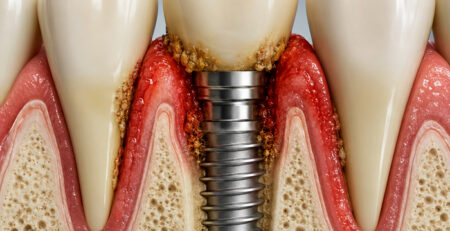
Dental tartar is not merely an aesthetic problem. Hardened layers accumulating along the gumline and between the teeth can create rough surfaces where bacterial plaque can adhere. This condition is important for the development of gum redness, swelling, bleeding, bad breath, and periodontal problems. Therefore, understanding why dental tartar reappears quickly in some individuals is important not only for having cleaner-looking teeth but also for maintaining long-term oral and dental health.
In this guide, we will address in detail the most frequently asked questions such as why dental calculus forms quickly, why dental calculus reappears after cleaning, does saliva structure affect dental calculus formation, and how can dental calculus formation be slowed down.
What is Dental Calculus and How Does It Form?
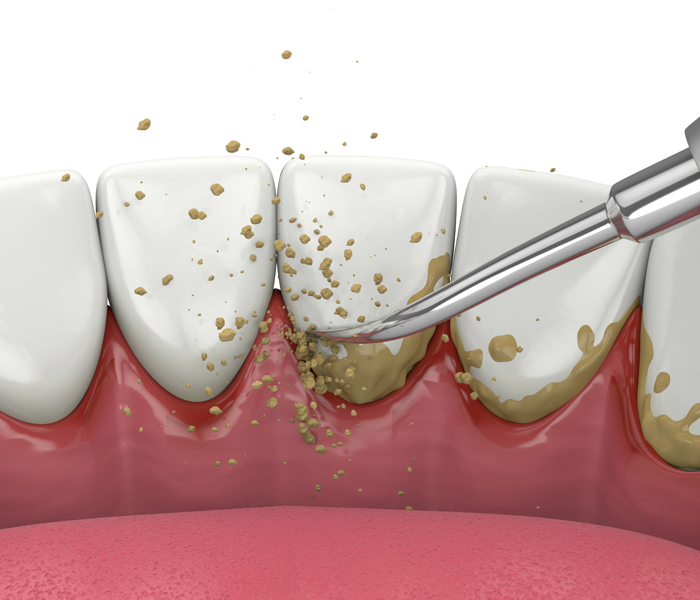
To understand the formation of dental calculus, it is first necessary to know the difference between dental plaque and dental calculus. Dental plaque is a sticky biofilm layer that can continuously form on tooth surfaces. Bacteria in the mouth, saliva components, and food debris play a role in the formation of this structure.
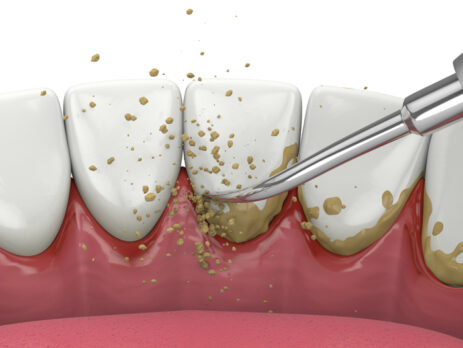
When plaque is not removed regularly and effectively, it can mineralize over time due to the effect of minerals in saliva and gingival sulcus fluid. Thus, the initially soft plaque can turn into a hard structure that cannot be easily removed with a toothbrush. This hardened accumulation is called dental calculus or tartar.
Scientific research on the biological mechanisms and influencing factors of dental calculus formation shows that mineral components, especially calcium and phosphate, play an important role in plaque mineralization. Detailed scientific evaluations on this subject can be found in the dental calculus review published on PubMed and the current academic review on dental calculus formation and prevention.
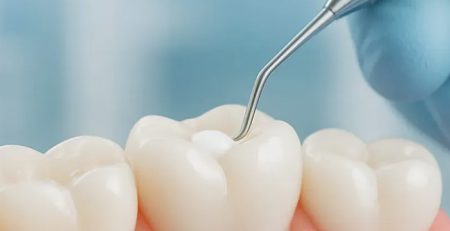
Once hardened, dental calculus may not be completely removed by normal brushing or flossing alone. Therefore, professional cleaning may be necessary. For more detailed information on why dental calculus cleaning is important, you can review our content titled Why Should Dental Calculus Be Cleaned?
Why Does Dental Calculus Recur So Quickly?
Dental calculus cleaning removes existing deposits; however, it is not a permanent procedure that prevents an individual from forming plaque again. As biofilm formation continues in the mouth, plaque can reaccumulate over time on cleaned tooth surfaces. If this plaque is not effectively removed, it can mineralize and turn back into dental calculus.
While this process progresses more slowly in some individuals, dental calculus can become noticeable much faster in others. This is not due to a single factor. Many factors such as saliva’s mineral content, salivary flow characteristics, oral hygiene, tooth position, smoking, and hard-to-clean areas can affect the rate of dental calculus formation.
1. Insufficient Removal of Dental Plaque
The formation of dental calculus is mostly based on the mineralization of dental plaque. Even if tooth surfaces are cleaned after a professional cleaning, new plaque formation begins again. If this plaque is not regularly removed with daily oral care, the hardening process can develop.
Especially brushing teeth only quickly and superficially, not adequately cleaning the gum line, or neglecting the hard-to-reach surfaces of back teeth can accelerate plaque accumulation.
Therefore, the idea of “My teeth have been cleaned, I won’t have problems for a long time” after a dental scaling is incorrect. Professional cleaning does not replace daily oral care; on the contrary, it provides a clean start for an effective oral care routine.
2. Failure to Clean Between Teeth
A toothbrush can clean a significant portion of the visible surfaces of the teeth; however, it may not be sufficient on its own in the narrow areas between two teeth. Plaque accumulated in these areas can mineralize over time and contribute to calculus formation, especially in regions close to the gum line.
The failure to use dental floss or appropriate interdental cleaning tools can be one of the reasons why new calculus buildup is noticed sooner after a professional scaling. Interdental cleaning can become even more important, especially for individuals with crowded teeth, around bridges or certain prosthetic restorations, and for those requiring periodontal care.
3. Saliva Structure and Mineral Content
For individuals who say, “I brush my teeth regularly, but I still develop calculus very quickly,” one of the factors to consider is saliva. Saliva is an extremely important and protective fluid for oral health; however, it also contains minerals such as calcium and phosphate. These minerals can play a role in the mineralization process of dental plaque under suitable conditions.
Scientific research examines that the rate of dental calculus formation can vary among individuals, and that the composition and various biological characteristics of saliva can play a role in this variation. For a recent study comparing individuals who form calculus quickly and slowly, refer to the academic work titled Dental Calculus Formation Rate: The Role of Salivary Properties.
Therefore, even if two people brush their teeth in a similar manner, they may not form calculus at the same rate. Individual biological differences are one of the factors explaining why calculus formation tendency can vary from person to person.
4. Why Does Calculus Form Faster Behind the Lower Front Teeth?
One of the areas where calculus is most frequently noticed is the lingual (tongue-facing) back surfaces of the lower front teeth. A significant reason for this is their proximity to the regions where the ducts of the major salivary glands open into the mouth. When plaque is not adequately removed from these areas, mineralization and the formation of hard deposits can be more easily observed.
Similarly, some buccal (cheek-facing) surfaces of the upper back teeth may also be prone to calculus accumulation due to their proximity to the areas where salivary gland ducts open.
If you notice a hard layer, especially behind your lower front teeth, shortly after a calculus cleaning, this does not necessarily mean that the cleaning was unsuccessful. Localized plaque accumulation and factors related to saliva can contribute to new calculus formation.
5. Incorrect or Insufficient Brushing Technique
Brushing your teeth twice a day is important; however, not only the frequency of brushing but also the brushing technique and reaching all surfaces are crucial. Some people may clean the visible surfaces of their front teeth well but fail to adequately clean the gum line, back molars, or the back surfaces of the lower front teeth.
Brushing for too short a time, consistently missing the same areas, or not using the toothbrush effectively can make plaque control difficult. As a result, plaque may remain in some areas continuously and become mineralized over time.
If tartar constantly forms in the same areas, it may be beneficial to ask your dentist to evaluate your personal brushing technique. The problem is sometimes not so much the frequency of brushing, but rather certain areas being repeatedly missed every day.
6. Crooked or Crowded Teeth
Crooked teeth and narrow gaps between teeth can make plaque control difficult. In areas where teeth overlap, the bristles of a toothbrush may not be able to adequately reach all surfaces. Similarly, flossing can become more challenging for some individuals.
In these hard-to-clean areas, plaque can remain for longer periods, accelerating tartar formation. For this reason, even individuals who believe they maintain regular oral hygiene may experience continuous tartar buildup around specific teeth.
In such a situation, instead of merely getting a tartar cleaning, it might be a more appropriate approach to evaluate why the areas where tartar formation continuously recurs cannot be cleaned.
7. Smoking and Tobacco Products
The use of cigarettes and other tobacco products is a significant risk factor for oral and dental health. Tobacco use can lead to staining on tooth surfaces and may also have negative effects on periodontal tissues.
In individuals who smoke, tartar buildup may appear darker and more prominent. Furthermore, the ability of smoking to mask some symptoms of gum diseases can cause individuals to notice the problem late. Therefore, regular dental check-ups are particularly important for individuals who smoke.
8. Gum Problems and Subgingival Accumulations
Tartar does not only form on the visible surfaces of the teeth. Hard deposits can also be found below the gum line. Especially in cases where periodontal pockets are present, it can be difficult for a person to effectively clean these areas at home.
Tartar remaining under the gum line may require professional periodontal evaluation and appropriate treatment. It is discussed in scientific literature that calculus that is insufficiently removed or located in hard-to-reach areas may play a role in the persistence of periodontal inflammation. For an academic evaluation on the subject, you can review the PubMed publication titled Calculus as a Risk Factor for Periodontal Disease.
If symptoms such as gum bleeding, swelling, recession, bad breath, or tooth mobility are present along with tartar, a superficial cleaning alone may not be sufficient. A detailed evaluation of gum health may be necessary.
9. Relaxing the Oral Care Routine After Cleaning
Immediately after a professional dental scaling, teeth may feel smoother and cleaner. This situation can lead some people to unconsciously relax their oral care routine. However, the period after dental scaling is crucial for keeping new plaque accumulation under control.
Dental scaling removes existing hard deposits; however, bacterial biofilm formation in the mouth continues. Therefore, if regular brushing and interdental cleaning are neglected, new deposits can redevelop.
10. Individual Tendency to Rapidly Form Tartar
The rate of tartar formation is not the same for everyone. In some individuals, despite good oral hygiene, tartar accumulation may be observed faster than in others. Saliva characteristics, mineral balance, regional conditions within the mouth, the anatomical structure of the teeth, and personal plaque control can play a role in this difference.
Therefore, it may not always be accurate to set a single, universally applicable period, such as “Everyone should have their teeth cleaned every six months.” The interval for check-ups and professional care should be planned according to the individual’s oral and dental health status and the dentist’s evaluation.
Is it Normal for Tartar to Reform 1 Month After Cleaning?
It may be possible for some individuals to notice new hard deposits shortly after a dental cleaning. However, not every yellow or dark-colored area observed should necessarily be considered newly formed tartar. Surface stains, plaque accumulation, or hard deposits remaining in a hard-to-reach area can also create a similar appearance.
If significant hardness, gum bleeding, or heavy accumulation is noticed a few weeks after cleaning, a dental check-up would be appropriate. By evaluating the reason for rapid recurrence, oral care technique, interdental cleaning, and the frequency of professional care can be planned specifically for the individual.
Does Tartar Cleaning Increase Tartar?
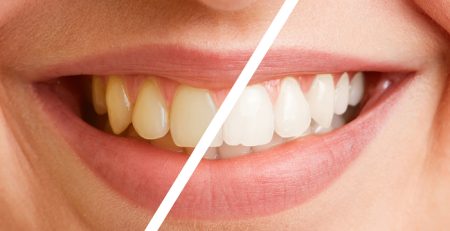
No. The idea that professional dental cleaning increases tartar is not correct. Since tooth surfaces become cleaner after cleaning, an individual may more easily notice newly formed plaque or small deposits. This situation can lead to the perception of “more tartar formed after cleaning.”
Furthermore, in individuals who have had extensive calculus for a long time, natural spaces between teeth may become more noticeable after the calculus is cleaned. These spaces do not form due to the cleaning procedure; they may become apparent as the areas previously occupied by accumulated calculus are revealed.
Why Might Teeth Feel Rough After Dental Calculus Cleaning?
After professional cleaning, a temporarily different surface sensation may occur in some areas. This could be due to the tooth surface structure, restorations, exposed root surfaces, or the person’s tongue adjusting to the new surface sensation.
However, if a hard and sharp protrusion is felt in a specific area, it should be shown to the dentist during a check-up. If deemed necessary, the area can be re-evaluated.
How to Slow Down Dental Calculus Formation?
Completely and permanently stopping dental calculus formation may not always be possible; however, effective control of dental plaque can help reduce the risk of new calculus formation.
- Brush your teeth at least twice a day using the correct technique.
- Do not neglect the gumline and back teeth.
- Clean between your teeth with dental floss or appropriate interdental cleaning tools recommended by your dentist.
- Pay special attention to cleaning the back surfaces of your lower front teeth.
- Replace your toothbrush at regular intervals.
- Avoid cigarettes and tobacco products.
- Do not miss the check-up intervals recommended by your dentist.
- Do not ignore symptoms like gum bleeding or persistent bad breath.
- Do not attempt to scrape off dental calculus at home with sharp or cutting tools.
The main goal of reducing tartar formation is its regular removal before plaque hardens. Hardened tartar, however, needs to be cleaned using professional methods.
Is it Possible to Clean Tartar at Home?
It may not be possible to safely and effectively remove hardened tartar completely at home with a toothbrush, dental floss, or various pointed instruments. Especially metal scrapers or uncontrolled abrasive methods suggested online can damage the gums and lead to trauma on tooth surfaces.
The fundamental practice to be done at home is not to try to scrape off tartar, but to effectively control new dental plaque accumulation. Evaluating existing hardened deposits and professionally removing them when necessary is a safer approach.
How Often Should Tartar Cleaning Be Done?
It is not appropriate to determine a single valid time interval for tartar cleaning that applies to everyone. In some individuals, tartar forms more slowly, while in others, significant deposits can develop in a shorter period.
The following factors can be evaluated when determining the frequency of check-ups:
- Rate of tartar formation,
- Gum health,
- History of periodontal disease,
- Smoking,
- Alignment of teeth,
- Quality of daily oral hygiene,
- Existing restorations and prostheses,
- Personal risk factors.
To get more detailed information about the current processes of tartar cleaning, you can review our content on 2026 Tartar Cleaning Prices and Tartar Cleaning.
What Happens If Tartar Is Not Cleaned?
Since the surface of tartar can exhibit a rough structure, it can create an environment where new plaque accumulation can adhere. The continuous accumulation of plaque and tartar at the gum line may be associated with inflammation in the gum tissues.
Over time, gum redness, swelling, and bleeding during brushing may be observed. In individuals predisposed to periodontal disease, more advanced gum and supporting tissue problems may develop. For this reason, tartar should not be evaluated solely from an aesthetic perspective.
If symptoms such as gum bleeding, persistent bad breath, gum recession, or loose teeth are present, professional evaluation should not be delayed.
Is Rapid Tartar Formation a Symptom of Disease?
Rapid tartar formation alone is not a definitive indicator of a specific disease. Individual saliva characteristics, oral hygiene, tooth alignment, and regional factors can affect the rate of tartar formation.
However, if accompanied by symptoms such as dry mouth, significant changes in saliva composition, gum bleeding, swelling, or other oral symptoms, a dental evaluation is important. If necessary, the person’s general health status can also be taken into consideration.
What Should Be Considered After Tartar Cleaning?
After professional tartar cleaning, the aim is to control new plaque accumulation as effectively as possible. For this, a regular oral care routine should be established, and areas where heavy tartar previously accumulated should be cleaned carefully.
If tartar continuously re-forms at the same spot, it may be beneficial to get specific care recommendations for that area. For example, depending on the position of the teeth, a different interdental cleaning method might be recommended instead of classic dental floss. The most appropriate method should be determined according to the individual’s oral structure.
Why Does Tartar Seem Non-Existent in Some People?
It is normal for calculus formation to vary from person to person. In some individuals, mineralization may be slower or daily plaque control may be more effective. In others, faster accumulation may be observed, particularly in certain anatomical regions.
However, the absence of visible calculus does not necessarily mean there is no plaque in the mouth or that gum health is flawless. Accumulations under the gum line may not always be visible to the person. Therefore, observation in a mirror alone cannot replace a professional dental examination.
Frequently Asked Questions
Why does calculus form so quickly?
Factors such as insufficient removal of dental plaque, the mineral content and properties of saliva, crowded teeth, failure to clean between teeth, smoking, and personal predisposition can play a role in the rapid formation of calculus. The reason for rapid formation can vary from person to person.
Is it normal for calculus to reform after a cleaning?
Yes. Calculus cleaning removes existing hardened deposits; however, it does not permanently prevent new plaque formation. If plaque re-accumulates, it can mineralize over time to form new calculus.
Can calculus reform in 1 month?
Rapid plaque and calculus accumulation can be observed in some individuals. However, not every hardness or color change noticed within a month is necessarily calculus. A professional evaluation can determine whether it is new calculus, plaque, or a surface stain.
Does a lot of calculus formation mean teeth are not brushed well?
Not always. Insufficient plaque control is an important factor; however, saliva characteristics, tooth alignment, and individual biological differences can also affect the rate of tartar formation. Therefore, oral hygiene habits and personal risk factors should be evaluated together.
Does an electric toothbrush prevent tartar formation?
Electric toothbrushes can help control plaque when used correctly. However, no toothbrush removes hardened tartar like professional cleaning does. Additionally, it is important to clean between teeth using appropriate methods.
Does tartar cleaning damage tooth enamel?
Professionally performed tartar cleaning, using appropriate devices and techniques, is not a procedure aimed at scraping tooth enamel. The purpose of the procedure is to remove hard deposits adhered to the tooth surface. The treatment method is planned according to the individual’s oral and dental health status.
Does tartar cause bad breath?
Tartar and the bacterial plaque accumulated on it can contribute to bad breath. However, bad breath can also have different causes such as gum diseases, cavities, tongue coating, and dry mouth. It is important to determine the cause of persistent bad breath.
How often should tartar cleaning be done?
There is no fixed period applicable to everyone. The frequency of professional care should be determined by the dentist based on the individual’s tartar formation rate, gum health, and personal risk factors.
Can I scrape off tartar myself?
Attempting to scrape off tartar at home with sharp or metal instruments can damage gums and oral tissues. It is safer to remove hardened tartar using professional methods.
Can tartar re-formation be completely prevented after cleaning?
It may not be possible for every individual to completely and permanently prevent the formation of dental calculus. However, effective plaque control, regular interdental cleaning, and personalized professional check-ups can help reduce the rate of formation.
What Should You Do If Your Dental Calculus Keeps Reoccurring?
If you notice a re-accumulation shortly after a dental calculus cleaning, it is important to evaluate why you rapidly form dental calculus rather than just having another cleaning. Your toothbrushing technique, interdental cleaning, tooth alignment, gum health, and areas with heavy calculus accumulation can be examined together.
During an oral and dental examination at Melsadent Oral and Dental Health Polyclinic, the intensity of dental calculus and plaque accumulation, gum health, and personal care needs can be assessed. If deemed necessary, professional dental calculus cleaning and personalized oral care recommendations can be planned.
Remember: Dental calculus cleaning removes existing accumulations; one of the most important steps in slowing down new dental calculus formation is the regular and effective control of daily dental plaque. If your dental calculus repeatedly forms quickly, you can schedule a dental check-up to identify your personal risk factors.
This content has been prepared for general informational purposes. A dental examination is required for diagnosis and treatment.