Why Do Teeth Appear Gappy After Dental Calculus Cleaning?
After a dental calculus cleaning, seeing gaps between your teeth that you hadn’t noticed before can be surprising and even alarming. Many people in this situation ask questions like “Did tartar removal spread my teeth apart?”, “Are the gaps between my teeth permanent?”, or “Were my teeth damaged during the cleaning?” However, in most cases, tartar removal does not create new gaps between teeth. The spaces visible after cleaning are related to the uncovering of areas that previously existed but were hidden by tartar buildup, swollen gums, or dense plaque layers.
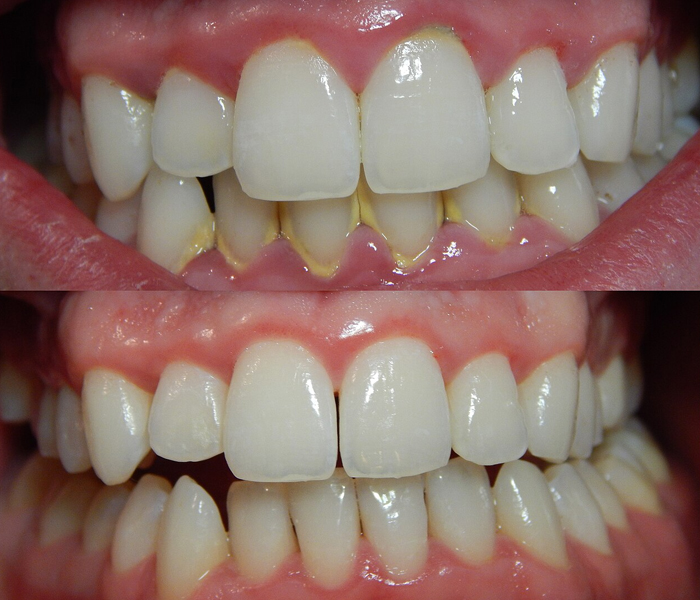
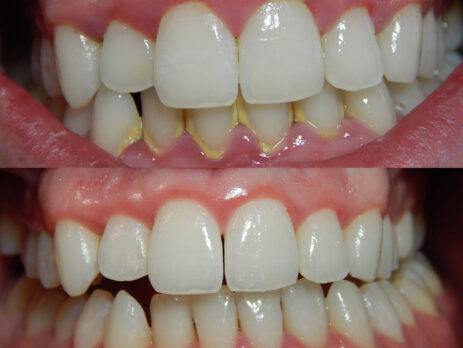
Especially in individuals who haven’t had a professional dental cleaning for a long time, tartar can accumulate densely enough to fill the spaces between teeth and along the gum margins. When these hard deposits are cleaned away, the true anatomical boundaries of the teeth become visible again. If there is accompanying gum recession or loss of periodontal supporting tissues, the gaps between the teeth may become more noticeably apparent.
Therefore, teeth appearing spaced out after tartar removal does not always mean the procedure has damaged the teeth. On the contrary, in some individuals, this appearance can reveal an existing gum problem that has long been concealed by tartar.
Why Do Teeth Appear Spaced Out After Tartar Cleaning?
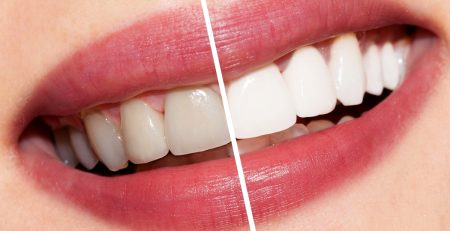
The most common reason for teeth appearing spaced out after tartar cleaning is the removal of hardened tartar buildup that filled the gaps between teeth. Tartar forms when bacterial plaque hardens with minerals found in saliva. Over time, it can accumulate in large amounts, especially on the back surfaces of the lower front teeth and around the gum line.
When there is advanced buildup, tartar may not only cover the tooth surface; it can also fill the spaces between adjacent teeth. This makes the teeth appear closer together than they actually are. When these accumulations are removed during professional cleaning, the pre-existing natural or disease-related gaps become visible.
In short, in most cases, tartar cleaning does not separate teeth; it reveals the areas that tartar was hiding.
For more detailed information on how tartar forms, why it needs to be cleaned, and the importance of professional cleaning, you can review our content titled why should tartar cleaning be done?
Can Tartar Fill the Gaps Between Teeth?
Yes. Especially dense tartar accumulations that are not cleaned for a long time can partially or largely fill the gaps between teeth. This sometimes creates the impression that the teeth are in close contact with each other. However, this visible “fullness” might not be healthy tooth tissue or gum, but rather mineralized bacterial plaque.
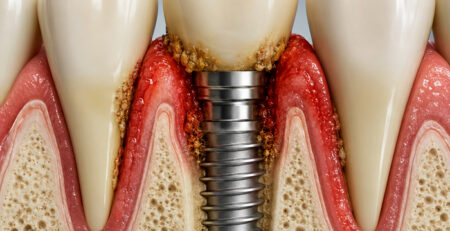
The surface of dental calculus (tartar) is rough and can facilitate the attachment of new bacterial plaque. Therefore, it is incorrect to think that dental calculus acts as a kind of natural filling between teeth. On the contrary, the prolonged presence of these deposits in the mouth can create an unfavorable environment for gingivitis and periodontal disease.
The size of the gap that appears after dental calculus removal can vary from person to person. While only a small gap may be noticed in some individuals, more pronounced triangular spaces can be observed in those with advanced periodontal issues.
Does Dental Calculus Cleaning Really Separate Teeth?
No, professional dental calculus cleaning performed with the correct technique does not separate healthy teeth. The position of the teeth within the jawbone is determined by periodontal ligaments and surrounding supporting tissues. The removal of dental calculus from the tooth surface is not a procedure that causes teeth to physically shift.
However, after cleaning, teeth may appear more separated due to the following reasons:
- Removal of dental calculus that filled the spaces between teeth,
- Shrinking of swollen gums due to inflammation as they heal,
- Pre-existing gum recession becoming visible,
- Presence of bone and supporting tissue loss due to periodontal disease,
- Cleaning of natural anatomical spaces between teeth.
Therefore, the perception that “Dental calculus cleaning created gaps between my teeth” often stems not from the procedure itself, but from the dental calculus masking the true oral structure before cleaning.
What Are the Black Triangles Seen After Cleaning?
After dental calculus cleaning, dark triangular spaces may be noticed, especially between the front teeth. These are often referred to as “black triangles” by the public. In dentistry, this appearance is related to the gum tissue, specifically the interdental papilla, not completely filling the relevant area between the teeth.
Under normal conditions, the area below the contact point of the teeth is filled with gum tissue. However, due to factors such as gum recession, periodontal bone loss, or the shape or position of the teeth, this tissue may not completely fill the area. If there is heavy dental calculus buildup, the gap may not be visible for a while. When the dental calculus is removed, the black triangle may become more prominent.
The presence of black triangles is not always solely an aesthetic problem. In some patients, this appearance may require an evaluation of the periodontal tissues. A detailed periodontal examination is particularly important if accompanied by bleeding gums, mobile teeth, bad breath, or significant gum recession.
When Gum Swelling Decreases, Teeth May Appear More Spaced Out
In individuals with gum inflammation, the gums may be red, sensitive, prone to bleeding, and swollen. This swelling can make the spaces between the teeth appear fuller than they are. When inflammation begins to be controlled after dental calculus and bacterial plaque are removed, the edema in the gum tissue may decrease.
During this healing process, as the gums become firmer and healthier in appearance, some areas previously covered by swollen tissue may become exposed. The patient may interpret this as “My teeth have become spaced out.”
Actually, this situation can be a result of the reduction of inflammatory swelling in the gum tissue in some cases. However, it is only possible to evaluate through clinical examination whether the resulting gap is a normal anatomical area or a finding related to periodontal tissue loss.
If Gum Recession is Present, Gaps May Be More Prominent
Gum recession is the condition where the gum margin shifts towards the tooth root, resulting in the root surface becoming more visible. Gum recession can be observed in a single tooth or multiple teeth. Incorrect and aggressive brushing habits, periodontal diseases, tooth position, and various anatomical factors can be associated with this condition.
Calculus accumulations can partially cover areas with gum recession. After cleaning, when the accumulations are removed, it is possible for the tooth to appear longer or for the gap between the teeth to become more prominent.
Therefore, every gap noticed after cleaning should not be evaluated solely from an aesthetic perspective. Evaluating gum health, periodontal pocket depths, and bone support if necessary, can be important. You can find detailed information about the gum treatment and periodontology approaches applied at Melsadent on our relevant page.
Can Periodontal Disease Create Gaps Between Teeth?
Yes. Advanced periodontal diseases can affect not only the gums but also the supporting tissues surrounding the teeth and the alveolar bone. When loss develops in the supporting tissues, the gum level may change, and the papillary tissue between the teeth may decrease. As a result, more prominent gaps may be observed between the teeth.
In some cases where periodontal disease progresses, tooth mobility and positional changes may also occur. In this situation, it is possible for teeth to actually move apart. However, such a change is not a result of simple dental calculus cleaning; it may be related to the underlying periodontal disease.
The relationship between dental calculus and biofilm accumulations and periodontal inflammation has long been investigated in the scientific literature. A review of scaling and root planing published on PubMed addresses the fundamental role of removing subgingival calculus and biofilm in periodontal treatment. Furthermore, an academic publication examining the role of dental calculus in periodontal disease evaluates the importance of dental calculus and its inadequate removal in terms of periodontal inflammation.
Are Gaps Permanent After Dental Calculus Cleaning?
The answer to this question depends on the cause of the gap. Since not every interdental space is formed by the same mechanism, providing a single answer is not appropriate.
If the appearance resulted from the removal of dental calculus: The anatomical space already present between the teeth has become visible. In this case, the gap may not be expected to close completely on its own.
If the appearance is related to changes in gum inflammation: Gum tissues may reshape during the healing process. Time may be needed for the tissues to heal to evaluate the final appearance.
If there is periodontal tissue or bone loss: The permanence of the gaps may depend on the degree of the disease and the existing tissue support. In this case, a periodontal evaluation is required.
If the position or shape of the teeth is affected: Orthodontic or restorative options can be evaluated based on aesthetic expectations.
Therefore, instead of drawing a definitive conclusion based on the image seen in the mirror immediately after cleaning, the condition of the gum tissues and the true cause of the gap should be evaluated.
Do Teeth Return to Their Old State After Tartar Cleaning?
The phrase “return to their old state” should be carefully considered here. If the old appearance was due to a heavy build-up of tartar filling the spaces between the teeth, it is not desirable for this appearance to return. The re-accumulation of tartar closing the gaps does not mean that oral health has improved.
The goal is not for the spaces between the teeth to be refilled with tartar; it is for the gum tissues to become healthy and for new plaque accumulation to be kept under control.
After cleaning, some changes in appearance may occur as the gum tissues heal. However, whether significant gaps due to periodontal tissue loss will completely close on their own is individual to each person.
Does Gum Recession Occur After Tartar Cleaning?
A wrong cause-and-effect relationship is often established between tartar cleaning and gum recession. Especially in individuals with severe tartar and gum inflammation, the gums may be swollen before the procedure. When the gum tissue becomes firmer after cleaning and the reduction of inflammation, previously existing tissue loss may become more visible.
For this reason, the patient may think that gum recession occurred due to cleaning. However, in some cases, recession or periodontal support loss might have started earlier but gone unnoticed due to swelling and tartar.
Of course, every patient is different. A clinical examination is necessary to determine the true cause of changes in gum level.
Why Might Sensitivity Occur After Dental Scaling?
After cleaning, some individuals may experience temporary sensitivity to cold, hot, or air exposure. Sensitivity may be felt more prominently, especially when root surfaces covered with tartar are exposed or when gum recession is present.
This sensitivity may decrease over time in most people. However, if there is severe, prolonged, or localized pain in a single tooth, it should be evaluated whether a different dental problem exists.
For more information on how dental scaling is performed and the procedure process, you can review our content titled 2026 dental scaling and application process.
Does Dental Scaling Harm Tooth Enamel?
The purpose of dental scaling performed under professional conditions and with appropriate technique is not to abrade the tooth enamel, but to remove plaque and mineralized tartar deposits adhered to the tooth surface. Ultrasonic devices and hand instruments, when necessary, are applied in a controlled manner according to clinical need.
The different sensation of tooth surfaces after cleaning is often related to the removal of rough tartar that previously covered the surface. Especially individuals with significant tartar may feel the shape of their teeth or the spaces between them more clearly for the first time after the procedure.
It is also explained in the scientific assessment published by NCBI that the scaling procedure in professional dental cleaning aims to remove plaque and tartar from tooth surfaces.
How Are Gaps That Appear After Dental Scaling Closed?
First, it should be noted that not every gap needs to be closed. Natural cleaning spaces between teeth or small gaps that do not pose a health problem might only be an aesthetic difference.
If the gap is prominent and aesthetically bothersome to the person, the treatment option can be determined based on the cause of the gap. Possible approaches may include:
- Controlling periodontal disease,
- Re-evaluation of gum health,
- Orthodontic treatment in appropriate cases,
- Aesthetic restorative procedures when tooth shapes are suitable,
- Periodontal aesthetic approaches in selected cases.
However, focusing solely on closing the aesthetic appearance in a person with active gum disease may not be appropriate. First, the health of the gums and supporting tissues should be evaluated.
Do Gaps Between Teeth Accumulate More Food After Cleaning?
Some people may think that food debris accumulates more between teeth after dental calculus cleaning. This feeling can arise especially when an area previously filled with calculus is exposed. If there is significant periodontal tissue loss or large gaps between the teeth, food accumulation can indeed increase.
In this case, the appropriate oral hygiene method should be determined according to the individual. In addition to standard tooth brushing, dental floss or an appropriately sized interdental brush may be recommended. Since choosing the wrong size interdental brush can cause trauma to the gums, it may be beneficial to seek professional advice, especially for prominent periodontal gaps.
Does the Re-formation of Dental Calculus Close Gaps?
The re-formation of tartar may visually fill some gaps; however, this is not a healthy or desired outcome. Even if tartar accumulates between teeth and closes the gap, bacterial plaque buildup and gum inflammation can continue underneath.
Therefore, the re-accumulation of tartar should not be allowed with the thought of “Will the gap close?”. The goal is not to preserve tartar, but to properly clean the spaces between teeth by maintaining gum health.
One of the current scientific assessments examining the formation of dental calculus and its relationship with oral health, an academic review on dental calculus formation and prevention, discusses the mechanisms of tartar formation and its clinical significance in detail.
What to Pay Attention to After Tartar Removal?
Maintaining regular oral hygiene after cleaning is important for controlling the formation of new plaque and tartar. While your dentist’s personal recommendations are paramount, the following points can generally be observed:
- Teeth should be brushed regularly and with the correct technique.
- Cleaning between teeth should not be neglected.
- Dental floss or interdental brushes should be used according to personal needs.
- If gum bleeding persists, follow-up examinations should not be missed.
- Individuals prone to heavy tartar formation should maintain regular professional check-ups.
- The negative effects of smoking and tobacco products on oral and gum health should be taken into consideration.
It should be remembered that the goal after tartar removal is not to refill the resulting gap with more tartar, but to keep the area clean and healthy.
When Should You Consult a Dentist?
Small gaps seen after dental calculus cleaning do not always mean an urgent problem. However, a dental examination is important if one or more of the following symptoms are present:
- Tooth mobility or looseness,
- Persistent or worsening gum bleeding,
- Significant gum recession,
- Rapidly increasing gaps between teeth,
- Persistent bad breath,
- Pain or discomfort during chewing,
- Swelling or discharge in the gum area,
- Prolonged and severe tooth sensitivity.
These symptoms may require a more detailed evaluation of the periodontal tissues.
How is the Appearance of Gaps After Dental Calculus Cleaning Evaluated?
It is not always possible to definitively determine the cause of the gap that appears after cleaning just by looking in a mirror. During a dental evaluation, the condition of the gum tissues, the position of the teeth, periodontal pocket depths, tooth mobility, and radiographic findings (if deemed necessary) can be evaluated together.
This way, it can be more accurately understood whether the appearance is due solely to the cleaned calculus, gum recession, periodontal support loss, or the natural anatomy of the teeth.
Should You Be Concerned if Your Teeth Appear Gappy After Dental Calculus Cleaning?
In most cases, gappy teeth appearance after dental calculus cleaning does not mean that the teeth were damaged during the cleaning. Heavy calculus accumulation can hide existing gaps between teeth for a long time. When these accumulations are removed, the true tooth and gum anatomy becomes clearer.
However, if significant gaps are accompanied by gum recession, bleeding, mobility, or other periodontal symptoms, a professional evaluation should be done. Because what is important is not only the aesthetic appearance of the gap, but the health of the supporting tissues surrounding the teeth.
At Melsadent Oral and Dental Health Polyclinic, evaluations for dental calculus accumulation, gum health, and periodontal problems can be planned according to individual oral and dental structure. You can apply for a dental examination to learn the reason for the gaps you noticed after dental calculus cleaning and to evaluate your gum health.
Frequently Asked Questions
Is it normal for teeth to appear spaced out after dental calculus cleaning?
Yes, it is possible for teeth to appear more spaced out after cleaning, especially in individuals with heavy dental calculus accumulation. The main reason for this is often the removal of dental calculus that filled the spaces between teeth, making previously hidden gaps visible.
Does dental calculus cleaning create gaps between teeth?
Professionally performed dental calculus cleaning, when applied correctly, does not physically separate teeth. The cleaning removes hard deposits from the tooth surface. The visible gaps are usually areas that existed previously.
Do gaps that form after dental calculus cleaning close?
It depends on the cause of the gap. The reduction of inflammation in gum tissues and the healing process can alter the appearance. However, gaps due to periodontal tissue loss or the anatomical structure of the teeth may not completely close on their own.
Why do black triangles form after dental calculus cleaning?
The appearance of a black triangle can occur because the gum tissue between the teeth does not completely fill the area. Gum recession, loss of periodontal support, tooth shape, and the position of the teeth can be influential in this appearance. If dental calculus previously covered this area, the black triangle may be noticed for the first time after cleaning.
Does dental calculus cleaning cause gum recession?
After cleaning, pre-existing gum recession may become more visible. Furthermore, the healing and tightening of inflamed and swollen gums can lead to a more noticeably different gum level. Each case should be evaluated separately.
Why do teeth appear longer after dental calculus cleaning?
As a result of gum recession or the healing of swollen gums, a larger portion of the tooth surface may become visible. Additionally, the removal of dense dental calculus from the gum line can make the true boundaries of the teeth more apparent.
Is it normal for food to get stuck between teeth after dental calculus cleaning?
Food accumulation may be more noticeable, especially when a large area previously filled with dental calculus is cleaned. You can receive personalized recommendations from your dentist regarding the use of appropriate dental floss or interdental brushes.
Do teeth become loose after dental calculus cleaning?
Teeth with healthy supporting tissues are not expected to become loose due to professional dental calculus cleaning. However, teeth with reduced bone support due to advanced periodontal disease may feel more mobile after the removal of the dense calculus surrounding them. In such a case, a periodontal evaluation is important.
Are fillings done for spaces created after dental calculus cleaning?
Not every gap can be closed with a filling. First, the cause of the gap must be determined. If there is periodontal disease, gum health should first be brought under control. Afterwards, orthodontic or restorative aesthetic options can be evaluated in suitable cases.
How often should dental calculus cleaning be done?
There isn’t a single cleaning interval that applies to everyone. The frequency of control and professional cleaning should be determined individually based on factors such as the rate of calculus formation, oral hygiene, gum health, smoking, and periodontal risk.
Does dental calculus reappear after cleaning?
Yes. If bacterial plaque is not regularly removed, it can remineralize over time and turn into dental calculus. Regular oral care and personalized professional check-ups can help control new accumulations.
Teeth Didn’t Become Gapped, Most of the Time the True Appearance Was Revealed
The most common explanation for teeth appearing gapped after dental calculus cleaning is that existing gaps previously covered by calculus become visible. Professional cleaning is not a procedure that separates teeth. However, noticeable gaps appearing after cleaning can sometimes be related to gum recession or loss in periodontal supporting tissues.
Therefore, instead of viewing newly noticed tooth gaps merely as an aesthetic change, it is important to address them from the perspective of gum health as well. Regular professional check-ups, effective oral hygiene, and periodontal treatment when necessary can help preserve the long-term health of the teeth and their surrounding supporting tissues.
Note: This content has been prepared for general informational purposes and does not substitute for personal examination, diagnosis, or treatment. If you notice significant gaps between your teeth, gum recession, bleeding, pain, or tooth mobility after a dental calculus cleaning, it is recommended to consult a dentist for evaluation.