




Does Zirconium Teeth Cause Odor? Causes and Solutions
Do Zirconium Teeth Cause Odor?
The question, Do zirconium teeth cause odor? is one of the most frequently researched topics by people who have had or are considering having a zirconium crown. The short answer is: A properly planned zirconium crown that fits the tooth well and is regularly cleaned is not expected to cause bad odor on its own. Zirconium is a ceramic-based restorative material used in dentistry and is not considered a direct source of bad breath.
However, the accumulation of bacterial plaque and food debris around the zirconium crown, the development of gum inflammation, insufficient adaptation of the crown margin to the natural tooth, decay forming under the crown, or the inability to clean under restorations, especially those in the form of bridges, can cause bad odor.
Therefore, when dealing with an odor that starts after a zirconium tooth procedure or is thought to originate from a specific crown area, it is not correct to focus only on the material of the crown. What truly needs to be evaluated is; the gum tissue around the zirconium, the crown-tooth junction line, the natural tooth under the crown, and oral hygiene.
Those who want to get detailed information about the features of zirconium treatment can review Melsadent’s zirconium crown treatment page.
Why Does Zirconium Itself Not Usually Cause Odor?
Zirconium veneers are ceramic restorations that can be produced using CAD/CAM technologies in modern dentistry. When the material’s surface is properly processed and polished, a very smooth structure can be achieved. However, there is an important distinction here: a material having a smooth surface does not mean that bacterial plaque will never form in the mouth.
Biofilm can form over time on almost all surfaces in the mouth, including natural teeth, fillings, implant-supported restorations, and veneers. Biofilm is an organized bacterial community formed by microorganisms. If regular oral hygiene is not maintained, this layer can thicken and contribute to gum problems.
Scientific studies examining biofilm formation on restorative materials show that the surfaces of restorations in the mouth are not entirely independent of microbial biofilm formation. A comprehensive evaluation on the subject can be found in the scientific publication titled Biofilms on Restorative Materials.
Therefore, in a significant portion of situations perceived as “zirconium causing odor,” the problem may not stem from the zirconium material itself, but rather from biological or mechanical conditions developing around the restoration.
Why Does a Zirconium Tooth Cause Odor?
There isn’t a single reason for experiencing bad odor in the area of a zirconium crown. The age of the crown, oral hygiene, gum health, the marginal fit of the crown, the condition of the natural tooth, and the individual’s saliva amount should be evaluated together.
The most common possible reasons are:
- Accumulation of bacterial plaque at the crown margin
- Food impaction between teeth
- Gum inflammation or periodontal disease
- Marginal discrepancy or gap at the crown margin
- Development of decay in the natural tooth under the crown
- Insufficient cleaning under bridges
- Calculus formation
- Dry mouth and decreased saliva production
- Presence of a thick bacterial coating on the tongue
- Problems with the cementation or retention of the crown
1. Accumulation of Bacterial Plaque at the Crown Margin
The area where the zirconium crown meets the natural tooth is one of the areas that requires special attention in oral care. If the toothbrush cannot adequately clean this area, plaque can start to accumulate.
As a result of the metabolic activities of bacteria within plaque, various compounds associated with bad odor can emerge. Volatile sulfur compounds, particularly those formed from the breakdown of proteins by bacteria, are one of the significant mechanisms of bad breath.
Therefore, having a crown does not mean reducing daily oral care; on the contrary, it requires more careful cleaning of the crown-gum junction areas.
2. Food Impaction Between Zirconium Teeth
“Food constantly gets stuck between my zirconium teeth, and then an odor forms” – this complaint must be evaluated. Insufficient contact point between two teeth, an inappropriate anatomical form of the crown, or small changes in tooth position over time can cause food impaction.
When food debris remains between teeth for a long time, it is broken down by bacteria. As a result, bad taste, odor, gum sensitivity, and sometimes bleeding may occur.
Using dental floss is an important aid in cleaning these areas. For the correct technique, you can review our guide on how to use dental floss.
3. Gum Inflammation Around Zirconium Crowns
If the gum around a zirconium crown becomes red, swollen, sensitive, or bleeds easily, it may indicate gingivitis, i.e., gum inflammation.
One of the most important causes of gum inflammation is plaque accumulation. If plaque is not controlled, inflammation can develop in the gum tissue. Inflamed gum tissues and periodontal pockets can also contribute to the development of bad breath.
Scientific studies evaluating the relationship between halitosis and periodontal disease show a correlation between periodontitis and bad breath. In this regard, a systematic review and meta-analysis examining the relationship between halitosis and periodontitis can be reviewed as a scientific source.
If you notice bleeding or swelling around your zirconium, you can also read Melsadent’s detailed content about gum inflammation.
4. Can there be an odor if the edge of the Zirconium Veneer does not fit the tooth perfectly?
Yes. In fixed prosthetic restorations, it is extremely important for the veneer edge to adapt properly to the natural tooth tissue. The formation of an area difficult to clean or a marginal gap between the veneer and the tooth can facilitate the retention of plaque and food debris in the area.
In scientific evaluations on fixed prostheses and periodontal health, it is emphasized that the marginal fit of restorations is important for periodontal tissues and plaque control. For a detailed scientific evaluation on this topic, refer to the study titled Fixed Prosthetic Restorations and Periodontal Health.
However, it is not possible for a person to definitively determine the marginal discrepancy of a veneer simply by looking in a mirror. Clinical examination and, if necessary, radiographic evaluation are required.
5. Does it cause an odor if the tooth under the Zirconium Veneer decays?
Zirconium itself does not decay like natural teeth. However, the natural tooth tissue under the zirconium crown can decay.
Especially in cases of plaque accumulation at the veneer-tooth junction line, inadequate oral hygiene, or deterioration of the marginal integrity of the restoration over time, there may be a possibility of secondary caries development.
When decay under the veneer progresses, in addition to bad taste and odor, sensitivity to hot and cold, pain during chewing, or spontaneously starting toothache may be observed. However, some decays can progress for a long time without causing significant pain.
Systematic studies evaluating the long-term clinical outcomes of zirconia restorations also report that problems such as secondary caries can be observed among biological complications. For a current assessment, the study Clinical outcomes of zirconia dental restorations can be reviewed.
If there is also pain or sensitivity under the veneer, our content Why does pain occur under a dental veneer? provides more detailed information on the subject.
6. Why Does Odor Come from Under a Zirconia Bridge?
Cleaning zirconia bridges is slightly different compared to individual crowns. There might be an area under the bridge body where there is no natural tooth, and it might not be possible to pass classic dental floss through this region.
If food debris accumulating under the bridge is not sufficiently removed, bad odor can develop over time. Therefore, bridge users can use bridge floss, super floss, appropriate interdental brushes, or oral irrigators as recommended by their dentist.
Especially in complaints such as “I brush my teeth, but there’s still an odor coming from under the bridge,” professional evaluation is important. Insufficient cleaning space under the bridge or a problem with the bridge’s relationship to the tissue might not be solvable at home simply by brushing more.
7. Can Tartar Cause Odor Around Zirconia?
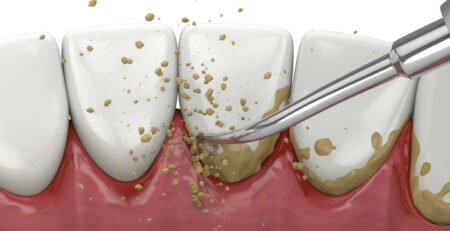
Plaque accumulated on the tooth surface can mineralize over time and turn into tartar. Tartar can create a rough surface, especially at the gum line, facilitating plaque retention.
Even if the zirconium veneer itself does not decay, dental calculus can form on the surrounding natural tooth surfaces and along the gum line. This can be accompanied by gum bleeding, redness, and bad odor.
You can get detailed information about the formation of dental calculus and the importance of professional cleaning from our article Why Should Dental Calculus Cleaning Be Done?
8. Does Dry Mouth Cause Odor in Zirconium Teeth?
Sometimes, while the patient thinks the odor is due to the zirconium veneer, the real reason might be dry mouth. Saliva helps remove food debris from the mouth, keep tissues moist, and balance the oral ecosystem.
With a decrease in saliva quantity, the bacterial density in the mouth and the effect of odor-causing compounds can increase. Insufficient fluid intake, mouth breathing, certain medications, and different health conditions can contribute to dry mouth.
Therefore, if a person with multiple zirconium veneers experiences a general bad odor throughout the mouth, not only the veneers but also the saliva quantity and the overall oral environment should be evaluated.
9. Bacteria on the Tongue Can Be Mistaken for Zirconium Odor
The source of bad breath is not always the teeth. A dense bacterial layer can form on the tongue, especially on its posterior surface. This layer can play an important role in bad breath.
Scientific literature on bad breath indicates that microbial activity in the mouth, especially the tongue coating, is important in the development of halitosis. Periodontal diseases may also accompany this condition.
Therefore, if a person with a zirconium veneer experiences bad breath, it does not automatically mean that “the zirconium has deteriorated”. The source of the odor should be determined through a detailed oral examination.
For other causes of bad breath and solution methods, you can review our guide on how to get rid of bad breath?
Do Newly Made Zirconium Teeth Cause Odor?
The presence of a persistent and noticeable bad odor from a newly made zirconium veneer should not be considered normal. Although different sensations may occur in the first few days due to the person getting used to the new restoration, a continuous bad taste or an odor coming from around a specific tooth should be investigated.
Especially after a new veneer, if food gets stuck between teeth more than before, if dental floss constantly shreds, if there is gum bleeding, if the veneer feels loose, or if a bad taste comes from around the veneer, it is advisable to schedule a check-up appointment.
These symptoms may require evaluation in terms of contact point, veneer margin, bonding, or gum relationship.
What Does It Mean If an Old Zirconium Veneer Starts to Cause Odor Later?
If a bad odor starts to develop later in a zirconium veneer that has been used without problems for years, it could be a sign of a newly developing problem.
Possibilities such as newly occurring plaque and tartar accumulation around the veneer, gum recession, changes in the veneer margin, deterioration in the adhesive bond, or secondary decay in the natural tooth should be evaluated.
If you think there is a change in the appearance of your zirconium veneer, our article on do zirconium teeth yellow? also contains useful information about the long-term care of restorations.
How Is Odor Coming From a Zirconium Tooth Detected?
It is not always possible for a person to definitively determine the region from which bad breath originates on their own. However, the continuous formation of a bad taste around a specific crown, noticing a distinct bad odor on dental floss after use, or bleeding and food impaction occurring in the same area may suggest that the problem is localized.
During a dental examination, the gum tissues around the zirconium crown, periodontal pockets, contact points, and crown margins are checked. If deemed necessary, the natural tooth and root area beneath the crown can be evaluated using radiographic images.
How to Get Rid of Zirconium Tooth Odor?
The treatment for bad odor around a zirconium crown depends on the true cause of the smell. Simply suppressing the odor with mouthwash often does not provide a permanent solution.
If the problem is plaque and food accumulation, oral hygiene technique may need to be improved. If there is tartar and gingivitis, professional dental scaling and periodontal care may be necessary. If there is a problem with the contact point or marginal fit of the crown, correction or, in some cases, replacement of the restoration may be considered.
If decay is detected in the natural tooth beneath the crown, the zirconium restoration may need to be removed. Depending on the condition of the tooth, cavity treatment, filling, root canal treatment, or a new restoration may be planned.
Therefore, an effective approach should be not to conceal the odor with perfumed mouthwash or oral spray, but to determine the underlying cause of the odor.
How Should Zirconium Crowns Be Cleaned?
The care of zirconium teeth is largely similar to the care of natural teeth. Teeth should be brushed regularly with the correct technique, and especially the areas between the crowns should be cleaned.
It is important to perform daily interdental cleaning between single crowns where dental floss can be used. For bridge restorations, special products that can reach under the bridge may be necessary. Which product to use may vary depending on the design of the restoration and the individual’s gum structure.
Instead of very hard toothbrushes or abrasive products used uncontrollably, it is more appropriate to prefer the oral care methods recommended by the dentist.
Furthermore, brushing only the front surfaces of the veneers is not enough. The gum line and back surfaces should also be carefully cleaned.
Can an Oral Irrigator be Used with Zirconia Veneers?
Oral irrigators can be one of the auxiliary oral care products, especially under bridges and in areas where traditional dental floss is difficult to use. However, the use of an oral irrigator does not mean it replaces a toothbrush and necessary interdental care for every patient.
It would be healthier for individuals with bridges or numerous zirconia veneers to learn the appropriate cleaning method for their restorations from their dentist.
Does Mouthwash Eliminate Zirconia Tooth Odor?
Mouthwash can provide temporary freshness, but it does not solve the problem on its own if there is decay, gum disease, tartar, or food accumulation under the veneer.
Continuously masking the odor with mouthwash can delay the diagnosis of the underlying problem. Especially if there is a persistent local bad odor that does not improve within a few days or constantly recurs, a dental examination is a more appropriate approach.
Does a Zirconia Veneer Need to be Replaced?
Not every zirconia veneer that develops an odor needs to be replaced. If the problem is caused only by plaque or tartar accumulation, professional cleaning and appropriate oral care may be sufficient.
Conversely, if a significant discrepancy is detected at the edge of the crown, decay under the crown requiring treatment, a fracture, mobility, or another problem affecting the function of the restoration, the replacement of the crown may become necessary.
Therefore, the decision to replace zirconium should not be made based solely on the finding of ‘odor present.’ First, the true source of the problem must be identified.
What Symptoms Should Be Paid Attention to Along with Zirconium Tooth Odor?
The presence of certain symptoms accompanying bad odor increases the need for clinical evaluation. If there is persistent gum bleeding, swelling, a bad taste, food impaction, pain, sensitivity, or a feeling of mobility in the crown, it is recommended not to delay a check-up.
Especially if there are symptoms such as severe pain starting at night, facial swelling, pus discharge from the gums, or fever, the situation should not be regarded merely as a simple bad breath problem.
Why Are Regular Check-ups Important for Zirconium Crowns?
Although zirconium is a durable restorative material, natural tooth tissue is still present underneath it, and live gum tissues surround it. Therefore, the durability of a zirconium crown does not eliminate the need for maintenance and check-ups.
During regular check-ups, not only the appearance of the crown is evaluated, but also gum health, crown margins, occlusal relationships, interproximal surfaces, and the underlying tooth tissues.
Gum problems or minor restorative issues detected early can be managed without requiring more extensive treatments.
How Are Zirconium Tooth and Odor Complaints Evaluated at Melsadent?
When there is a complaint of odor around a zirconia crown, it is not enough to just look at the surface of the crown. During the evaluation at Melsadent Oral and Dental Health Polyclinic, the gum tissues around the crown, interproximal areas, the crown’s margin with the natural tooth, and the patient’s general oral hygiene are evaluated together.
In necessary cases, radiographic examinations can be used to check the natural tooth beneath the crown and the surrounding root. This way, it can be determined whether the problem is caused solely by a lack of cleaning, or by decay, gum disease, or another condition related to the restoration.
Especially with complaints such as “bad odor coming from my zirconia tooth”, “bad taste coming from between the crown”, “my gums are bleeding next to the zirconia”, it is important not to postpone addressing the problem for a long time.
Does Zirconia Tooth Cause Odor? Brief Summary
A well-made and properly cleaned zirconia crown is not expected to produce a bad odor from its own material. If there is an odor, the surrounding biofilm and plaque accumulation, food impaction, gum inflammation, periodontal problems, tartar, incompatibility at the crown margin, or problems developing in the natural tooth beneath the crown should mostly be investigated.
Therefore, when a bad odor is encountered after a zirconia crown, the first solution should not be merely using a stronger mouthwash. The source of the odor must be determined, and a cause-specific treatment should be planned.
If you notice a persistent bad odor, bad taste, bleeding, or food accumulation around your zirconia crown, you can make an examination appointment via Melsadent Oral and Dental Health Polyclinic and ensure that your crowns are professionally evaluated.
Frequently Asked Questions
Does the zirconium tooth itself smell?
Under normal conditions, no. The zirconium ceramic material itself is not expected to produce a bad odor. The odor usually originates from bacterial plaque around the crown, food debris, gum disease, or problems related to the underlying natural tooth.
Why does a bad odor come from under a zirconium tooth?
Plaque accumulation at the crown margin, gum inflammation, problems at the crown-tooth interface, secondary decay, or degradation of the adhesive bond are among the possible reasons. The exact cause should be determined by a clinical examination.
Is it normal for a newly placed zirconium crown to smell?
A persistent and noticeable bad odor should not be considered a normal condition. Especially if the odor is accompanied by food impaction, gum bleeding, a bad taste, or pain, it would be appropriate to have the crown checked.
Does food getting stuck between zirconium teeth cause odor?
Yes. Regular food impaction between crowns and insufficient cleaning of debris can increase bacterial activity, contributing to bad odor and gum problems.
How is the underside of a zirconium bridge cleaned?
Depending on the bridge’s design, interdental floss, super floss, interdental brushes, or oral irrigators can be used for cleaning under the bridge. It is beneficial for the most suitable cleaning method to be demonstrated by the dentist who performed or is checking the restoration.
Does decay under a crown cause bad breath?
Decay under or at the margin of a crown can contribute to a bad taste and bad breath. However, the presence of decay cannot be definitively determined by odor alone; examination and, if necessary, radiographic inspection are required.
Does zirconium gum bleeding cause odor?
More than the bleeding itself, the gingivitis and bacterial plaque that cause the bleeding can be associated with bad breath. The area around the veneer that bleeds regularly should be evaluated by a dentist.
Is it normal for dental floss to smell bad when I pass it through zirconium?
If dental floss consistently smells bad after passing through a specific veneer, it might indicate plaque or food accumulation in that area. If the same situation recurs constantly, the contact point and gum health should be checked.
Does mouthwash completely eliminate the smell from a zirconium veneer?
Mouthwash can provide temporary freshness, but it doesn’t eliminate underlying causes such as calculus, gingivitis, decay, or restoration incompatibility. In cases of persistent odor, the root cause must be identified.
Can a zirconium veneer be removed and cleaned?
It is not always necessary to remove the veneer for every odor complaint. Firstly, professional cleaning and clinical evaluation are performed. If a problem requiring treatment under the veneer or a significant incompatibility in the restoration is detected, its removal may be considered.
Can calculus form under zirconium veneers?
Calculus primarily forms on natural tooth surfaces and around the gums where plaque is present. Plaque and mineralized deposits can also occur along the gum line around zirconium veneers. Regular professional check-ups are therefore important.
When should one see a dentist for zirconium tooth odor?
It is recommended to consult a dentist for odor complaints that do not improve within a few days, consistently originate from the same area, or are accompanied by gum bleeding, swelling, pain, bad taste, food impaction, or a feeling of movement in the veneer.
Does a zirconium veneer cause odor when its lifespan ends?
The decision that “zirconium restorations have reached the end of their lifespan” is not made based solely on their age. If changes occur over the years in the gums, natural teeth, or restoration margins, plaque accumulation and odor may arise. The decision to replace the crown is made by evaluating the clinical situation.
Does getting a zirconium crown increase bad breath?
Zirconium restorations that are properly planned and regularly cleaned are not expected to increase bad breath. However, if bad breath has other causes, such as pre-existing gum disease, heavy plaque, tongue coating, or dry mouth, simply getting zirconium restorations will not eliminate these problems.
Is gum treatment necessary before getting zirconium teeth?
For individuals with gum disease or heavy dental calculus, it is important to evaluate periodontal health before prosthetic treatment. Healthy gum tissues form an important foundation for the correct planning, cleanability, and long-term follow-up of restorations.