




What Causes White Coating on the Tongue? How to Get Rid of It?
What Causes a White Coating on the Tongue?
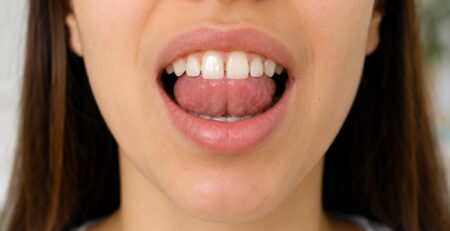
A white coating on the tongue can be caused by dead cells, bacteria, saliva components, and food debris accumulating on the tongue’s surface, or it may be associated with conditions such as dry mouth, inadequate oral hygiene, smoking, certain medications, or oral candidiasis. In most people, a thin white tongue coating, especially visible in the morning, is temporary and harmless. However, if the whiteness persists for a long time, if redness or bleeding occurs underneath when wiped, if it cannot be wiped off at all, or if it is accompanied by pain, burning, sores, or difficulty swallowing, professional evaluation may be required.
Therefore, there isn’t a single answer to the question “why is my tongue white?” It is important for differential diagnosis to consider whether the whiteness affects the entire tongue or only a specific area, whether the coating can be cleaned off, how long it has been present, and if other symptoms accompany it.
It can be normal for a thin layer to form on the surface of the tongue from time to time. The upper surface of the tongue is not completely smooth; it contains numerous small structures called papillae. Bacteria, shed epithelial cells, and various debris can accumulate between these anatomical structures. The tongue coating, defined as “tongue coating” in scientific literature, is a biofilm structure that can consist of microorganisms, epithelial cells, and organic materials. You can access scientific evaluations examining the relationship between tongue coating and bad breath from the comprehensive review on PubMed.
Is a White Coating on the Tongue Always a Sign of Illness?
No. The presence of a white coating on the tongue does not alone indicate an illness. Especially a thin white or yellowish layer noticed after waking up in the morning, which diminishes after tongue cleaning and water consumption, is often related to the accumulation that forms on the tongue’s surface overnight.
Reduced saliva production during sleep can decrease the tongue’s self-cleaning capacity. Mouth breathing or nasal congestion can also increase dry mouth, making the coating appear more prominent in the morning.
Melsadent’s guide Why Does Dry Mouth Occur While Sleeping at Night? discusses in detail the causes of nocturnal dry mouth and its effects on oral health.
However, if the white coating does not disappear during the day, remains in the same area for weeks, or cannot be removed from the surface, it should not be considered a “normal tongue coating.”
What Are the Most Common Causes of a White Coating on the Tongue?
White tongue can have many different causes. The most common situations include:
- Accumulation of bacteria and cells on the tongue surface
- Insufficient cleaning of the tongue
- Dry mouth and decreased saliva production
- Insufficient fluid intake
- Mouth breathing at night
- Smoking and other tobacco products
- Oral candidiasis, i.e., oral thrush
- Recent antibiotic use
- Use of inhaled corticosteroids
- Improperly cleaned removable dentures
- Elongation of tongue papillae and hairy tongue appearance
- Certain oral mucosal diseases
- Non-scrapable white lesions such as leukoplakia
- Inflammatory diseases such as oral lichen planus
To differentiate these causes, not only the color of the tongue but also the structure of the whiteness and accompanying symptoms are utilized.
Accumulation of Bacteria and Biofilm on the Tongue Surface
The tongue is one of the largest surfaces where microorganisms can settle in the mouth. Especially the posterior part of the tongue, due to its corrugated and textured structure, provides a suitable environment for the accumulation of bacteria, food debris, and shed cells.
Over time, these substances can form a whitish or yellowish layer on the tongue. Recent scientific studies consider the tongue coating to be a complex microbial biofilm rather than a simple food residue. You can access the current scientific review published on the formation, structure, and related factors of the tongue coating via PubMed.
The coating can thicken, especially if regular oral hygiene is not maintained. However, brushing the tongue too harshly is also not correct. Cleaning should be done gently to avoid irritation, sensitivity, and burning in the tongue tissue.
Why Is My Tongue White When I Wake Up in the Morning?
One of the most important reasons for the white tongue coating seen in the morning is the reduced salivary flow during sleep. Saliva not only moistens the inside of the mouth; it is also a natural cleaning mechanism that helps remove food debris and microorganisms.
When saliva production decreases at night, accumulations on the tongue surface can become more visible. Sleeping with an open mouth, nasal congestion, snoring, and insufficient fluid intake can make the condition more pronounced.
If the whiteness that appears in the morning significantly reduces after drinking water, brushing teeth, and gently cleaning the tongue, it is generally considered a superficial tongue coating. In contrast, white areas that remain unchanged throughout the day or gradually thicken need to be evaluated.
Does Dry Mouth Cause the Tongue to Turn White?
Yes. Dry mouth can contribute to a white or yellowish coating becoming more prominent on the tongue. When the amount of saliva decreases, the natural cleaning mechanism inside the mouth weakens. As a result, cells, bacteria, and debris can more easily accumulate on the tongue surface.
Dry mouth is not only caused by insufficient water intake. Some medications, mouth breathing, nasal congestion, smoking, various systemic diseases, and conditions affecting the salivary glands can also cause dryness.
If the white tongue is accompanied by persistent dry mouth, sticky saliva, frequent need to drink water at night, or intense bad breath in the morning, the cause of the dry mouth should also be investigated instead of just cleaning the tongue.
Can a White Coating on the Tongue Be a Symptom of Oral Thrush?
Yes, one of the possible causes of a white coating on the tongue is oral candidiasis. However, there is an important distinction: Not every white tongue appearance is a fungal infection.
Oral candidiasis mostly occurs due to the excessive proliferation of Candida species inside the mouth. Especially in pseudomembranous candidiasis, creamy white plaques may be observed on the tongue, inner surface of the cheeks, or palate. When these plaques are wiped away in some cases, they may leave a red and sensitive surface underneath.
Detailed scientific information about the clinical features and evaluation of oral candidiasis can be accessed from the NCBI Bookshelf Oral Candidiasis source.
Factors that may increase the risk of oral thrush include recent antibiotic use, certain diseases or treatments affecting the immune system, dry mouth, diabetes, the use of removable dentures, and inhaled corticosteroids.
However, it is not appropriate to diagnose Candida solely by looking at the white coating on the tongue or to use antifungal medications without supervision. A dentist or relevant healthcare professional evaluates both the appearance inside the mouth and the patient’s medical history.
Why Might the Tongue Turn White After Antibiotic Use?
Antibiotics are important medications for treating specific bacterial infections. However, in some individuals, they can alter the microbial balance within the mouth. Since this change can facilitate the overgrowth of Candida species, white plaques in the mouth or changes on the tongue may be observed after antibiotic use.
Not every white tongue that appears during antibiotic use means candidiasis. However, if burning, sensitivity inside the mouth, taste alteration, or widespread white plaques are present along with the whiteness, professional evaluation would be appropriate.
You should not self-adjust the duration or dosage of the antibiotic prescribed by the doctor due to changes in your tongue.
Can Asthma Inhalers Cause White Tongue?
Inhaler medications, especially those containing corticosteroids, can affect the local defense mechanisms within the mouth, thereby increasing the risk of oral candidiasis in some individuals. For this reason, individuals who use inhalers and subsequently notice white plaques on their tongue or palate should have their condition evaluated.
Since how oral care should be performed after inhaler use may vary depending on the medication and device used, the recommendations of the physician or pharmacist should be followed.
Why Are White Tongue and Bad Breath Seen Together?
There is a strong relationship between tongue coating and bad breath. Bacteria accumulated especially on the back part of the tongue can contribute to the formation of malodorous volatile compounds by breaking down proteins.
Scientific research indicates tongue coating as one of the significant factors contributing to intraoral bad breath. You can access the academic review examining the relationship between tongue coating and bad breath on PubMed.
However, the tongue is not the sole cause of bad breath. Dental calculus, gum diseases, cavities, inadequately cleaned dentures, dry mouth, and some extraoral factors can also be effective.
You can also review Melsadent’s content on the causes of bad breath and what can be done about it, titled How to Get Rid of Bad Breath?.
What Does It Mean If White Coating and Burning Occur Together on the Tongue?
If a white coating on the tongue is accompanied by a burning sensation, the assessment becomes a bit more critical. The burning sensation can be associated with infections like oral candidiasis, as well as dry mouth, mechanical or chemical irritation, and various oral mucosa problems.
Especially, brushing too hard during tongue cleaning, using abrasive products, or applying substances that irritate the oral tissue can increase the burning sensation.
Detailed information about the possible causes of tongue burning can be obtained from Melsadent’s guide titled What Causes Tongue Burning? What is Burning Mouth Syndrome?.
Why Might Cracks and a White Coating on the Tongue Be Seen Together?
In a fissured or cracked tongue structure, grooves of various depths are found on the upper surface of the tongue. Since cells, bacteria, and food debris can accumulate within these grooves, the tongue surface may appear whiter or yellowish in some individuals.
However, a fissured tongue and oral candidiasis are not the same condition. The presence of cracks alone does not mean there is a fungal infection.
You can review Melsadent’s content titled What Causes Cracks on the Tongue? for information on the causes of cracks on the tongue surface and when an evaluation is necessary.
What Does It Mean If the White Coating on the Tongue Wipes Off?
Whether the white area disappears when gently cleaned is one of the clues used in clinical evaluation. However, a diagnosis cannot be made based solely on this feature.
The normal tongue coating is usually superficial and can be reduced with gentle cleaning. White plaques in pseudomembranous candidiasis can also be wiped away in some cases, revealing a red surface underneath.
Therefore, it is not correct to interpret it as “if it wipes away, it’s definitely fungus” or “if it doesn’t wipe away, it’s definitely a serious disease”. You can access the scientific evaluation addressing the classification of oral white lesions according to their clinical appearance from the study Oral White Lesions: An Updated Clinical Diagnostic Decision Tree.
What to Do If the White Area on the Tongue Does Not Wipe Away?
If a white area located on or at the edge of the tongue does not disappear at all despite gentle cleaning, it is important to have a professional examination. This is because the causes of white lesions that do not wipe away can be different from a superficial tongue coating.
These may include keratoses due to mechanical irritation, oral lichen planus, leukoplakia, and other oral mucosal diseases. The presence of any of these terms does not mean ‘cancer is present’. However, it is especially important to determine the cause of localized, non-wiping white areas that persist for weeks.
Distinguishing between white lesions in the mouth cannot be reliably done solely with internet photos. Many features such as the lesion’s location, surface structure, borders, the person’s smoking and medication history, and accompanying pain or ulceration are evaluated together.
Is Leukoplakia on the Tongue the Same as a Normal White Coating?
No. While “white tongue coating” generally refers to a superficial accumulation affecting a large part of the tongue, leukoplakia is a white lesion evaluated clinically differently.
Leukoplakia can often appear as a localized white area that cannot be easily wiped off the surface. However, not every non-wipeable white area seen in the mouth is leukoplakia. There are many different conditions that can create a similar appearance.
Therefore, it is important to have an oral examination rather than self-diagnosing, especially for white lesions that persist in the same area for a long time.
Can Oral Lichen Planus Cause White Patches on the Tongue?
Oral lichen planus is a chronic inflammatory disease that can affect the oral mucosa. In some types, white lines, web-like appearances, or plaque-like areas may appear on the inner surface of the cheeks, tongue, or gums.
The clinical appearance of oral lichen planus can vary from person to person. While some patients experience no pain, burning or sensitivity may be observed in erosive types. Therefore, examination is important for persistent and unusual white lesions. A recent systematic review evaluating the clinical characteristics of oral lichen planus can be reviewed on PubMed.
Can Hairy Tongue Appear White?
Yes. When the filiform papillae on the dorsal surface of the tongue become longer than normal and do not shed sufficiently, it can lead to the appearance known as “hairy tongue.” Despite the word “hairy” in its name, there is no actual hair formation.
Keratin, microorganisms, and various debris can accumulate between the elongated papillae. The tongue may appear white, yellow, brown, or even nearly black.
Smoking, poor oral hygiene, and some other factors can be associated with this appearance. In cases of persistent or prominent color changes, an oral examination is recommended to confirm the diagnosis.
Can Smoking Cause White Tongue?
Cigarettes and other tobacco products can cause various changes in oral tissues. Tobacco use can increase accumulation and discoloration on the tongue’s surface, as well as affect dry mouth.
More importantly, with long-term tobacco use, white, red, or mixed-color lesions in the mouth that cannot be wiped away need to be professionally evaluated.
Particularly, it is not correct to ignore white areas that have persisted for weeks and are located in a single region by simply saying ‘it’s caused by smoking’.
Can Drinking Little Water Whiten the Tongue?
Insufficient fluid intake can increase dry mouth and contribute to the layer on the tongue’s surface appearing more prominent. However, it is not correct to explain intense tongue whitening that has persisted for a long time solely by drinking little water.
Even if water intake is increased and oral hygiene is maintained, if the white appearance persists, other causes should also be considered.
How to Clean the White Layer on the Tongue?
The main goal for a superficial tongue coating is to reduce accumulation without irritating the tongue. It is important that oral care covers not only the tongue but also the teeth, spaces between teeth, and the gum line.
In general oral care, the following points can be considered:
- Teeth should be brushed regularly with the appropriate technique.
- The spaces between teeth should be cleaned with dental floss or another interdental cleaning method suitable for the individual.
- The tongue surface can be gently cleaned from back to front with a soft tongue cleaner.
- No pressure should be applied on the tongue to the extent that it causes bleeding.
- Attention should be paid to adequate fluid intake.
- Smoking and tobacco products should be avoided.
- Removable dentures should be cleaned regularly.
- If there is persistent dry mouth, the cause should be investigated.
For proper cleaning of interdental spaces, you can use Melsadent’s How to Use Dental Floss? guide.
Systematic studies evaluating the effect of tongue cleaning on bad breath and tongue coating have reported that mechanical tongue cleaning, when added to toothbrushing, can reduce tongue coating and some indicators of bad breath. A systematic review on this topic was published in PubMed.
Is Scraping Your Tongue Every Day Harmful?
The basic principle when cleaning the tongue is gentle mechanical cleaning, not force. Pressing the tongue cleaner too hard or repeatedly scraping the same area can cause irritation to the tongue papillae and mucosa.
If bleeding, significant pain, persistent sensitivity, or burning occurs on the tongue after cleaning, the intensity of the application should be reduced, and if the discomfort continues, a dentist should be consulted.
If the white coating is not removed, continuing to scrape harder is not a solution. Especially if there is a real mucosal lesion, mechanical trauma can make the condition more bothersome.
Are Baking Soda, Lemon, or Vinegar Used for White Tongue Coating?
On social media, the use of baking soda, lemon, vinegar, or various chemical mixtures may be suggested to remove the white coating on the tongue. However, applying acidic, concentrated, or abrasive substances to the oral mucosa in an uncontrolled manner can cause irritation.
Especially if the cause of the white coating is unknown, it is a safer approach to determine the cause rather than attempting to “burn,” scrape, or chemically remove the layer.
Altering the appearance of persistent white lesions with home remedies can also make professional evaluation difficult.
When Should White Patches on the Tongue Be Shown to a Dentist?
A thin, temporary, and easily cleanable tongue coating is usually not an urgent problem. However, it is advisable to have it evaluated by a dentist or relevant healthcare professional in the following situations:
- If the white patch persists for more than two weeks
- If the white area cannot be wiped away at all
- If there is a persistent white plaque only on a specific part of the tongue
- If the white patch is growing or spreading
- If there is a wound or ulcer on the tongue
- If there is pain or a constant burning sensation
- If the lesion bleeds easily
- If there is difficulty swallowing or pain during swallowing
- If unexplained swelling or hardness is felt
- If white and red areas are seen together
- If there is prolonged smoking or tobacco use
- If there is a disease or treatment affecting the immune system
The presence of these symptoms does not necessarily mean there is a serious illness. However, evaluating persistent oral lesions is important for early diagnosis when necessary.
How is a White Coating on the Tongue Diagnosed?
The evaluation usually begins by listening to the person’s complaints and health history. It may be inquired how long the whiteness has been present, whether antibiotics have been used recently, other medications used, smoking habits, dry mouth, denture use, systemic diseases, and accompanying symptoms.
Subsequently, the tongue and oral mucosa are clinically examined. It is evaluated whether the white area is widespread or localized, whether it separates from the surface, whether there is redness underneath it, and the characteristics of its borders and surface texture.
Most superficial tongue coatings can be understood through clinical evaluation alone. However, in some cases, microbiological examinations may be required to confirm a fungal infection, or different diagnostic methods may be needed to evaluate persistent mucosal lesions.
The necessity of any examination should be decided based on the findings of the physical examination.
What Does the White Coating on the Tongue Say About Oral Health?
The appearance of the tongue can provide some clues about the conditions within the mouth, but it is not a definitive test that indicates overall health status on its own.
For example, a thick tongue coating may be associated with insufficient oral hygiene or dry mouth. However, since a similar appearance can arise from different causes, vitamin deficiency, infection, or systemic disease should not be diagnosed solely based on tongue color.
A significant portion of the ‘understand all diseases from tongue color’ charts found on the internet are not scientific diagnostic methods.
Frequently Asked Questions
What causes white coating on the tongue?
The white coating on the tongue most commonly consists of bacteria, dead cells, saliva components, and food debris accumulated on the tongue surface. Dry mouth, poor oral hygiene, smoking, antibiotics, inhaled corticosteroids, oral candidiasis, and some oral mucosal diseases can also cause a white appearance.
How does a white coating on the tongue go away?
For whiteness due to superficial accumulation, regular tooth brushing, interdental cleaning, gentle tongue cleaning, and adequate fluid intake can help. However, if the whiteness persists for a long time or cannot be cleaned, its cause must first be determined.
Is it normal for the tongue to be white in the morning?
It is common to see a thin white coating in the mornings. Reduced saliva production and dry mouth during sleep can increase accumulation. If the coating disappears after oral care, it is often considered superficial accumulation.
Is a white tongue a symptom of fungus?
Sometimes it can be, but not every white tongue is oral candidiasis. Candidiasis can manifest as white plaques, burning, sensitivity, or altered taste. A dental examination is required for a definitive assessment.
How is fungus on the tongue diagnosed?
In pseudomembranous candidiasis, cream-colored or white plaques may be observed, and when some plaques are wiped away, a red surface may appear underneath. However, this characteristic alone is not sufficient for diagnosis.
Is whiteness on the tongue dangerous if it doesn’t wipe off?
Whiteness that does not wipe off does not necessarily mean it is a dangerous condition. However, since leukoplakia, oral lichen planus, irritation-induced keratoses, and other mucosal diseases can form white lesions that do not wipe off, localized areas that persist for longer than a few weeks should be examined.
Does dry mouth make the tongue white?
Yes. A decrease in saliva production can hinder the tongue’s natural self-cleaning, facilitating the accumulation of bacteria and cellular debris on the tongue’s surface.
Does drinking little water cause a white coating on the tongue?
Insufficient fluid intake can increase dry mouth, making an existing tongue coating more prominent. However, persistent whiteness should not be attributed solely to lack of water.
Does white coating on the tongue cause bad breath?
A thick biofilm on the tongue can contribute to bad breath. The tongue coating is an important habitat for bacteria that can play a role in the formation of foul-smelling volatile compounds in the mouth.
Is white tongue after antibiotics normal?
Antibiotics can affect the oral flora and may facilitate the proliferation of oral Candida in some individuals. If burning or sensitivity develops along with white patches after antibiotics, an evaluation would be appropriate.
Is it correct to clean the tongue with a toothbrush?
The tongue can be gently cleaned with a soft brush or tongue cleaners designed for this purpose. Applying too much pressure, scraping the tongue excessively, or causing it to bleed is not correct.
Why does a white coating appear on the tongue in children?
In children, various reasons such as milk or food residues, dry mouth, or oral candidiasis can also lead to a white appearance. Especially in infants and young children, a pediatrician or dentist should be consulted for a proper evaluation of the cause of persistent white patches.
Can white tongue and burning tongue occur together?
Yes. Burning can occur along with a white appearance in cases of oral candidiasis, dry mouth, irritation, and certain mucosal conditions. If the burning has been ongoing for a long time, it should not be attributed solely to the tongue coating.
My tongue is white but I have no pain, should I see a doctor?
If the whiteness disappears with daily oral care and no other symptoms are present, urgent evaluation is usually not necessary. However, if the same white area persists for more than two weeks, cannot be wiped away, or gradually changes, it is advisable to have it examined even if there is no pain.
Do Not Ignore Whiteness on the Tongue, Determine the Cause Correctly
The white coating on the tongue is often a temporary biofilm layer consisting of bacteria, dead cells, salivary components, and food debris accumulated on the tongue surface. It may be more noticeable, especially in the mornings, and can be reduced with proper oral hygiene.
However, it is not correct to regard every white tongue appearance solely as a hygiene problem. Dry mouth, antibiotic use, inhaled medications, oral candidiasis, hairy tongue, oral lichen planus, and various white oral lesions can cause similar appearances.
Professional evaluation is important, especially if the whiteness cannot be removed from the surface, lasts longer than a few weeks, is found only in a specific area, or is accompanied by pain, burning, sores, bleeding, or difficulty swallowing.
To determine the cause of whiteness on the tongue, clinical evaluation of the oral and tongue tissues is a more accurate approach than self-diagnosing by looking at images online or using uncontrolled medication.
At Melsadent Oral and Dental Health Polyclinic, the oral, dental, gum, and tongue tissues can be evaluated together to investigate the possible causes of the white appearance in the mouth, and appropriate treatment or referral to the relevant medical specialty can be planned when necessary.
Note: This content has been prepared for general informational purposes. It does not replace diagnosis or personalized treatment recommendations.