Why Do Teeth Darken Behind? Causes and Effective Solutions
What Causes Darkening Behind Teeth? Most Common Causes and Effective Solutions
Darkening behind teeth is a condition many people notice but don’t fully understand the reason for. Yellow, brown, or dark-colored accumulations seen especially on the inner surfaces of teeth, in the back regions, or near the gum line; can sometimes be a simple surface stain, and sometimes an early sign of tartar, plaque accumulation, gum problems, or decay. Therefore, the term “darkening” alone is not sufficient; the cause of the appearance must be evaluated correctly.
We address in detail the causes of darkening behind teeth, what can be done at home, when professional cleaning is necessary, and in which symptoms you should consult Melsadent. Also, for more information on tartar and gum health, you can browse these pages: What is Tartar, How Does It Form and How is It Cleaned?, Why Should Tartar Be Cleaned?, and Prevention and Treatment Methods for Gum Diseases.
What is Darkening Behind Teeth?
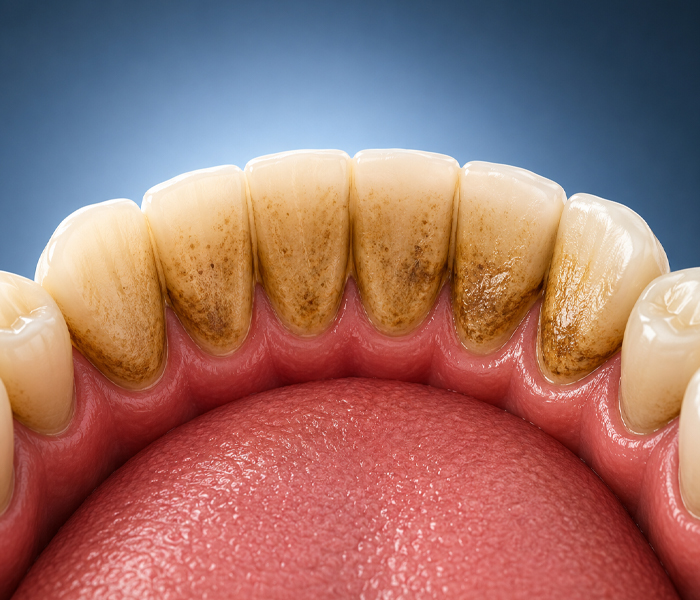
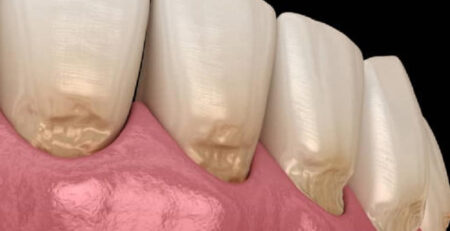
Darkening behind the teeth is a discoloration that occurs on the teeth, particularly on the tongue side, on their posterior surfaces, or in areas close to the gum line. This discoloration sometimes appears on a single tooth and sometimes affects multiple teeth. Its appearance can be in the form of a thin brown layer, a blackish line, yellowish-brown accumulation, or dark staining.
The important point here is this: Not every darkening is the same. Some darkenings are merely superficial extrinsic stains. Others might be hardened calculus (tartar). In rarer cases, cavities, enamel defects, margins of old restorations, or gum disease can also cause this appearance. Academic publications state that extrinsic stains can form in superficial layers accumulated on the tooth surface; and that ‘black stain’ is considered a specific type of extrinsic staining. Therefore, the treatment approach varies depending on the source of the appearance.
What Causes Darkening on the Back Surfaces of Teeth?
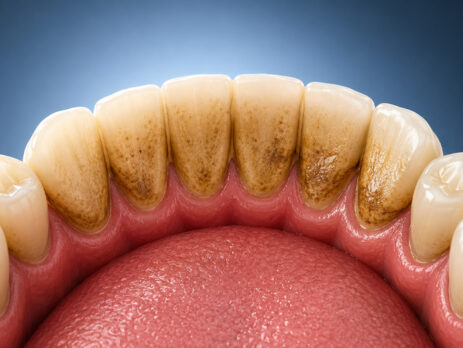
One of the most common causes is inadequate plaque removal. The posterior surfaces of teeth, especially the inner surfaces in the lower anterior region, are areas that are difficult for the toothbrush to reach. Bacterial plaque accumulates in these areas; over time, it mineralizes and can turn into calculus (tartar). Melsadent’s content on dental calculus also emphasizes that calculus can be observed particularly at the gum margins and on the posterior surfaces of teeth, and can harden to an extent that it cannot be removed by brushing.
Another important reason is extrinsic staining caused by tea, coffee, cigarettes, and colored foods. These types of stains often do not signify a disease on their own; however, they can become permanent if not cleaned. Dark-colored accumulations may be more prominent on the posterior surfaces, especially in individuals who smoke. Some mouthwashes, especially with long-term and incorrect use, can increase surface staining. In academic literature, products containing chlorhexidine have been shown to be associated with both staining and calculus formation.
Another possible reason for the darkening may be a gum problem. In gum diseases, due to increased plaque and calculus accumulation, discoloration, sensitivity, and bleeding may be observed in the neck region of the teeth. Melsadent’s gum diseases page also states that calculus accumulation plays an important role in the development of gingivitis and periodontitis. Therefore, if darkening is accompanied by gum bleeding, swelling, or bad breath, the condition may not only be aesthetic but periodontal.
Sometimes, darkening is caused by decay. Especially in posterior teeth, early decay can initially be perceived as a dark line or spot. If the surface has become rough, and is accompanied by food trapping, sensitivity, pain from cold, or bad breath, the likelihood of decay increases. In teeth that have previously been filled, discoloration may occur at the edge of the filling. A clinical examination is required to clarify this distinction.
Calculus, Stain, or Decay?
These three conditions are often confused. However, the treatment methods are entirely different. A superficial stain can be removed with professional polishing. Calculus, on the other hand, can only be removed by professional cleaning performed by a dentist. If there is decay, a filling or another restorative treatment is required. To make this distinction, visual assessment, probing, and, if necessary, radiographic examination are performed.
Dental calculus is usually hard, rough, and practically stuck to the tooth surface. It cannot be removed with a brush. Stains, on the other hand, appear more like a discoloration on the surface. In the case of decay, the surface integrity may be compromised, pitting may occur, and sensitivity may be present. Melsadent’s content on dental calculus clearly states that hard deposits that cannot be cleaned at home must be removed with professional tools.
Black lines or pinpoint dark deposits, known as black stains, can also be observed in some patients. Academic reviews state that this condition is a type of extrinsic staining, primarily appearing on certain tooth surfaces and in areas close to the gum line. This needs to be distinguished from classic dental decay.
What Can Be Done at Home?
The first step that can be taken at home is to strengthen correct and regular oral hygiene. Teeth should be brushed carefully at least twice a day, especially before going to bed at night. Dental floss and interdental brushes are very important for posterior surfaces that the toothbrush cannot reach. Tongue cleaning should also not be neglected; because the bacterial load accumulated in the posterior regions can sometimes increase bad breath and discoloration.
Frequent consumption of sugary and acidic drinks can facilitate plaque adhesion on the tooth surface. Smoking also negatively affects both gum health and discoloration. Home care does not remove existing dental calculus; however, it reduces the rate of new accumulations. Therefore, good care is not a substitute for treatment but rather a complement to it.
Care should be taken with at-home whitening products. Melsadent’s teeth whitening page states that gels overflowing onto the gums can cause irritation and that it is safer to perform the application under the guidance of a dentist. If the darkening is caused by tartar rather than a stain, whitening products will not solve the problem; in fact, they can cause sensitivity. Therefore, a correct diagnosis is needed first, followed by the correct method. For detailed information, you can review the Teeth Whitening (Bleaching) page.
Which Treatments Are Applied in the Clinic?
If the cause of the darkening is plaque and tartar, the first option is professional dental calculus cleaning. Hard accumulations are removed with ultrasonic devices, and then the surface is smoothed by polishing. This procedure not only corrects the aesthetic appearance but also supports gum health. Melsadent’s relevant content also emphasizes that cleaning tartar reduces the risk of gum inflammation.
If the darkening is a superficial external stain, appropriate polishing of the tooth surface and additional cleaning procedures may be applied if necessary. Professional cleaning is usually effective for stains caused by smoking, coffee, and tea. However, if the discoloration has progressed into the enamel, teeth whitening or aesthetic restorative solutions may become necessary. At this point, the Aesthetic Dentistry page can also guide you.
If decay is detected, a filling, inlay-onlay, or another restorative treatment is planned. If gum disease is detected, periodontal treatment is required. Thanks to the relevant branches listed on Melsadent’s Our Treatments page, the appropriate treatment protocol is determined. Especially in advanced gum problems, periodontology support is crucial.
When Should You See a Dentist Without Delay?
If darkening is accompanied by gum bleeding, bad breath, swelling, sensitivity, pain, bad taste, loose teeth, or discomfort when chewing, you should not wait. Similarly, sudden dark discoloration on a single tooth is also important. It could be a cavity, enamel crack, or an old filling problem.
If you notice a hard, brown, or nearly black accumulation, especially on the back surface of your lower front teeth, it is highly likely to be dental calculus (tartar). Attempting to scrape it off at home can damage tooth enamel. Therefore, professional evaluation is the safest approach. Melsadent’s pages on dental calculus and gum diseases emphasize the importance of addressing such accumulations without delay.
How Does the Evaluation Process Work at Melsadent?
At Melsadent, the source of the darkening is evaluated in the first stage. During this evaluation, it is examined whether the appearance is due to dental calculus, a stain, a cavity, or a gum-related problem. If necessary, professional cleaning, polishing, whitening, restorative treatment, or a periodontal approach is planned. This way, not only is the appearance corrected, but long-term oral health is also protected.
Especially in patients with aesthetic concerns, teeth whitening or smile aesthetics options may also be considered after the darkening is cleaned. However, the fundamental order here is: first, the cause is identified, then treatment is planned. A permanent solution is aimed for instead of a superficial one.
Frequently Asked Questions
What causes darkening behind the teeth?
The most common causes are plaque accumulation, dental calculus formation, extrinsic staining, smoking, tea and coffee consumption, cavities, and gum diseases. The appearance and hardness of the darkening provide important clues about its cause.
Can the black-brown layer behind the teeth be dental calculus (tartar)?
Yes. Especially if there is a hard and rough layer close to the gum line, there is a high probability of it being dental calculus (tartar). Dental calculus cannot be removed at home with a toothbrush and requires professional cleaning.
How can one tell if this discoloration is tooth decay or a stain?
If the surface is rough, sensitive, and pitted, the probability of decay increases. If it is hard, adhesive, and rough, it might be dental calculus (tartar). If it is only a color change, it could be a superficial stain. A dental examination is required for a definitive diagnosis.
Can I clean it at home with baking soda or a hard brush?
No. Harsh scrubbing can lead to enamel abrasion and gum irritation. If the discoloration is dental calculus, it cannot be removed at home; if it is a stain, incorrect methods can make it more prominent.
Does teeth whitening completely remove discoloration?
Not always. If the problem is a superficial stain, whitening or professional polishing can help. However, if there is dental calculus, decay, or a gum problem, these must be treated first.
How long should I wait if there is discoloration on the back surface of my teeth?
Do not wait if there is pain, bleeding, bad odor, sensitivity, or gum swelling. Even if these symptoms are absent, if the discoloration has been present for a long time, planning an examination is the most appropriate approach.
Does discoloration behind the teeth recur?
Yes, it can recur if oral hygiene is insufficient. Regular brushing, flossing, interdental cleaning, professional dental calculus removal, and regular check-ups reduce this risk.
Which department should I consult at Melsadent?
Firstly, a general examination will be conducted, and if deemed necessary, dental calculus removal, periodontology, or aesthetic dentistry planning will be performed. Referrals to the relevant specialty will be provided based on treatment needs.
Darkening behind the teeth, while it may seem like a simple discoloration, can have various underlying causes such as tartar, plaque, cavities, gum disease, or extrinsic stains. Therefore, the most accurate approach is to clarify the cause and plan the appropriate treatment. Both aesthetic appearance and oral health can be maintained through regular oral care, professional cleaning, and timely dental check-ups. If the darkening has been present for a long time, or if it is accompanied by bleeding, sensitivity, bad breath, or pain, seeking a professional evaluation from Melsadent is the safest course of action.
Among the resources; academic reviews addressing the mechanisms of extrinsic and intrinsic tooth discolorations, publications on black stain, and studies demonstrating the relationship between chlorhexidine use and stain/calculus, provide a strong scientific basis for this topic. Melsadent’s content on tartar, gum health, and whitening also supports the clinical approach.
Black staining overview,
Black stain and dental caries review,
Mechanisms of stain formation,
Chlorhexidine staining and calculus.