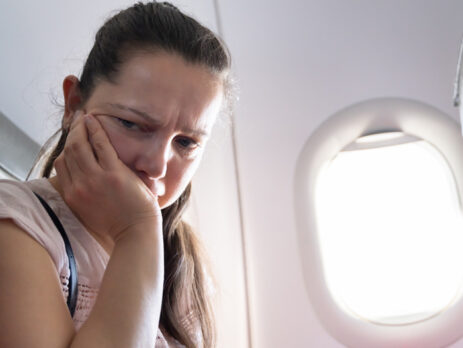
Why Does Toothache Occur on a Plane? What is Barodontalgia?
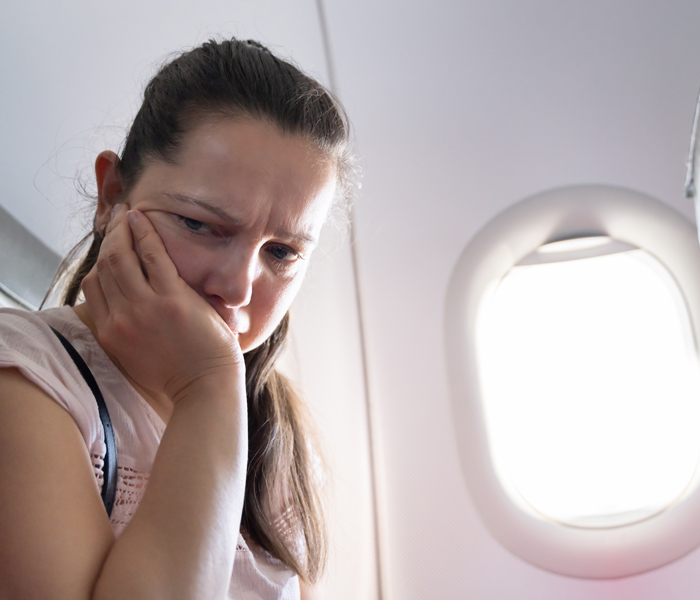
Sudden toothache that starts during air travel or when the plane ascends and descends is a situation many passengers don’t expect but can be quite bothersome. A tooth that shows no symptoms on the ground can start throbbing, aching, or experiencing sharp pain during flight due to changes in cabin pressure. Especially if there is decay, pulp inflammation, root tip infection, a problematic filling, or some recent dental treatments, pressure changes can make the existing problem more pronounced.
Toothache that occurs due to changes in pressure is referred to as barodontalgia or aerodontalgia in medical and dental literature. Barodontalgia is often not a new dental disease on its own. Rather, it is the manifestation of an existing dental or surrounding tissue problem that has not yet caused significant complaints, presenting as pain during pressure changes.
Short answer: Toothache during air travel can occur due to changes in cabin pressure, which can exacerbate issues like cavities, pulp inflammation, root tip infection, leaking or problematic fillings, and some sinus problems. Severe or recurrent toothache that starts during a flight should be evaluated by a dentist, as it may indicate an underlying problem.
What Causes Toothache During Air Travel?
As an airplane ascends, the external atmospheric pressure decreases. Although passenger airplane cabins are pressurized, the pressure inside the cabin is not exactly the same as sea-level pressure, and pressure changes occur especially during takeoff and landing. A healthy tooth is usually unaffected by these changes. However, if there is an existing disease, inflammation, or a pressure difference in a closed area within or around the tooth, pain may arise.
In scientific literature, toothache related to pressure changes is defined as barodontalgia. Barodontalgia can be seen in situations involving changes in ambient pressure, such as flying, diving, and similar conditions. Academic studies on the subject show that this pain is often associated with underlying dental pathologies. Detailed scientific evaluations regarding barodontalgia can be accessed in the barodontalgia review published on PubMed.
The main conditions that can cause toothache during a flight are:
- Tooth decay
- Inflammation of the tooth nerve, i.e., pulpitis
- Loss of vitality of the tooth pulp
- Root tip infection or apical periodontitis
- Old, broken, cracked, or leaking fillings
- Ongoing decay under a filling or restoration
- Incomplete or unsuccessful root canal treatment
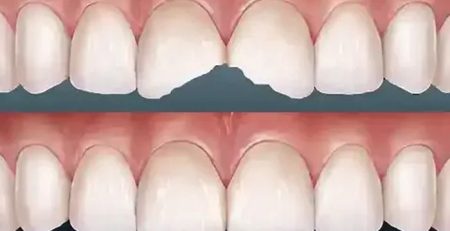
- Tooth cracks and fractures
- Periodontal diseases and deep gum pockets
- Sinus-related pain radiating to upper jaw teeth
Therefore, dismissing toothache that starts on a plane simply by saying “it’s the pressure” might not be accurate. Pressure changes are often not the primary cause of the pain, but rather a trigger that reveals an existing problem.
What is Barodontalgia?
Barodontalgia refers to pain in the teeth and surrounding tissues that arises or intensifies with environmental pressure changes. “Baro” means pressure, and “odontalgia” means toothache. Therefore, the concept can simply be explained as “toothache due to pressure change.”
Barodontalgia is particularly seen:
- In airplane passengers,
- In pilots and flight crews,
- In divers,
- In individuals exposed to pressure chamber applications
However, not everyone who travels by plane is expected to experience toothache. Healthy teeth generally tolerate cabin pressure changes during normal commercial flights without problems.
In a published scientific case and literature review on the causes and clinical features of barodontalgia, it was reported that severe pain can develop during flight in a tooth that previously showed no symptoms. The academic publication on this topic can be accessed via PubMed Central.
How Does Airplane Pressure Affect Teeth?
Pressure changes during flight are more pronounced, especially during takeoff and landing. Air-filled cavities in the body try to adapt to these changes. A similar mechanism underlies the feeling of ear blockage or pressure in the sinuses.
The tooth itself is not normally an air-filled structure. However, decay, faulty restorations, certain root canal treatment problems, or pathological conditions around the tooth can create sensitivity to pressure changes. As a result, a previously unnoticed problem can turn into pain during flight.
An important point is this: Air travel usually does not suddenly make a healthy tooth sick. Pain that appears during flight can be a sign of a pre-existing problem. Therefore, a detailed dental examination is important, especially if there is recurrent pain in the same tooth during every flight.
Why Might a Decayed Tooth Hurt More on a Plane?
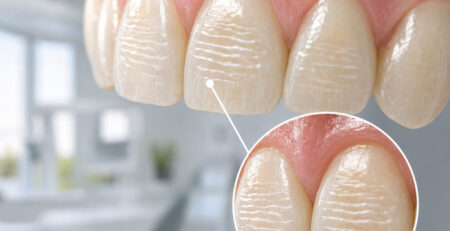
Dental decay may not always cause pain in its initial stages. However, as the decay deepens, it approaches the living tissue inside the tooth, which is the pulp. The pulp is a structure rich in nerves and blood vessels. An inflamed or sensitive pulp can cause more pain during pressure changes.
Especially:
- Prolonged pain with hot and cold,
- Throbbing pain starting at night,
- Spontaneous toothache,
- Sensitivity during chewing
if symptoms such as these are present, a dental check-up before the flight is recommended. For more detailed information on the causes, symptoms, and treatment process of dental decay, you can review Melsadent’s useful information and oral health content.
Can Tooth Nerve Inflammation Trigger Pain During Flight?
Yes. Inflammation of the nerve-blood vessel tissue of the tooth, called the pulp, can be one of the significant causes of tooth pain that occurs during flight. This condition, known as pulpitis, can develop due to deep cavities, trauma, cracks, or restoration problems.
Pain in advanced pulp damage:
- It can start spontaneously,
- It can be throbbing,
- It can increase at night,
- It can persist for a long time after hot or cold stimulation,
- It can become more pronounced with pressure changes during flight.
If the damage to the tooth nerve is irreversible, root canal treatment may be necessary. However, the required treatment can only be determined after a clinical examination and, if necessary, radiographic evaluation.
Does a Root-Canaled Tooth Hurt on a Plane?
It is not expected for a successfully completed root-canaled tooth with healthy surrounding tissues to hurt during flight. However, if there is an ongoing or recurring infection in a root-canaled tooth, a lesion at the root tip, restoration leakage, or another problem, pain may be felt during pressure changes.
If your root-canaled tooth hurts on a plane, the following possibilities should be considered:
- Ongoing infection at the root tip,
- Missed or insufficiently cleaned canal,
- Crack or fracture in the tooth,
- Leakage in the coronal restoration,
- Infection in the gum and surrounding tissues,
- Referred pain from an adjacent tooth.
Therefore, the idea that “there is no nerve in a root canal treated tooth, it won’t hurt” is not entirely true. Even if the nerve tissue inside the tooth has been removed, the tissues around the root are alive, and pain can occur in cases of infection or inflammation.
Why Does a Filled Tooth Hurt on a Plane?
It is possible for a filled tooth to hurt on a plane, especially if there is an ongoing problem under the filling. Secondary decay can develop in old restorations or those with compromised marginal integrity. Pulp sensitivity may occur after deep fillings, or a previously unnoticed crack might be present in the tooth.
The following conditions may be investigated in a filled tooth that hurts during a flight:
- Decay under the filling,
- Leakage at the filling margin,
- Pulp inflammation due to deep decay,
- Tooth crack,
- Trauma caused by a high filling,
- Problem developing at the root apex or surrounding tissues.
The fact that pain only appears on a plane does not mean the tooth is healthy. Dental check-ups should not be neglected, especially if the same tooth repeatedly hurts on different flights.
Can Sinusitis Feel Like a Toothache on a Plane?
Yes. Especially the roots of the molar and premolar teeth in the upper jaw can be anatomically close to the maxillary sinuses. When there is an infection, edema, or pressure equalization problem in the sinuses, the pain experienced during a flight can feel as if it originates from the upper jaw teeth.
Distinguishing between sinus-related pain and actual toothache is not always easy. In sinus-related problems, you might experience:
- Widespread sensitivity in multiple upper jaw teeth,
- Nasal congestion,
- Feeling of fullness or pressure in the face,
- Pain increasing when bending forward,
- Headache
may be accompanied by such symptoms. Academic studies state that maxillary sinus problems should be evaluated in the differential diagnosis of some cases of pressure-related dental pain. A scientific review on the differential diagnosis of dental pain related to flight and pressure changes can be accessed via PubMed.
Does Toothache on a Plane Occur Most Often During Takeoff or Landing?
Toothache can occur during both ascent and descent. The stage at which the pain begins can vary depending on the type of underlying problem. However, it is not possible to make a definitive diagnosis based solely on whether the pain appears during takeoff or landing.
The following information is important in a dental evaluation:
- Did the pain start during takeoff?
- Did it worsen during landing?
- Did it continue while the plane was at cruising altitude?
- Did it completely subside after landing?
- Is there also sensitivity to hot, cold, or chewing on the ground?
- Did the same tooth ache on previous flights?
This information, along with clinical examination and imaging findings, can help determine the source of the pain.
How to Relieve Toothache on a Plane?
The permanent solution for toothache that begins during a flight is to identify the true cause of the pain and provide appropriate dental treatment. Methods that can be applied on the plane can only provide temporary relief.
The following precautions can be considered during the flight:
- Avoid chewing hard foods on the painful side,
- Avoid extremely hot or extremely cold food and drinks,
- If food is stuck between teeth, gently clean the area,
- If the person has no medical condition preventing their use and it has been previously approved by a physician, medications should only be taken as directed by the usage instructions.
Aspirin or any other medication should not be placed directly on the tooth. Such applications can cause chemical irritation in the soft tissues inside the mouth. Furthermore, pain relievers do not treat the underlying decay, infection, or pulp problem; they can only temporarily alleviate the symptoms.
What to Do If You Have a Toothache Before a Flight?
If you have an active toothache before a flight, the most appropriate approach is to schedule a dental check-up before your trip, if possible. Especially if you are going on a long-term or international journey, the exacerbation of an existing dental problem during travel can cause significant discomfort.
Pre-flight evaluation is particularly important if any of the following symptoms are present:
- Severe and throbbing toothache,
- Swelling in the face or gums,
- Pain that wakes you up at night,
- Severe sensitivity when biting,
- Pain that lasts for a long time after hot or cold,
- Fracture or crack in the tooth,
- Lost filling or crown,
- Bad taste in the mouth or pus discharge.
These symptoms may be associated with conditions requiring treatment, such as decay, pulp inflammation, or infection.
Can You Fly Immediately After Dental Treatment?
There is no single answer to this question. The appropriate time to fly can vary depending on the type of procedure performed, the extent of the treatment, whether there are complications, and the patient’s clinical condition.
A simple procedure and a surgical dental treatment should not be evaluated in the same way. Especially:
- Tooth extraction,
- Implant surgery,
- Surgical procedures involving the sinus area,
- Extensive oral surgery,
- Treatments where complications have developed
after which the travel plan should be evaluated on a case-by-case basis.
An academic review published on the timing between dental treatments and air travel emphasizes that flight planning after various dental procedures should be evaluated according to the treatment performed. You can access the scientific publication on the subject from the dental tourism, barotrauma, and barodontalgia study in PubMed Central.
If you have recently had dental treatment, the most accurate answer to the question “How many days after can I fly?” can be given by the dentist who performed the procedure.
Is It Safe to Fly After Tooth Extraction?
After tooth extraction, the flight plan should be evaluated based on the difficulty of the extraction, the position of the extracted tooth, whether a surgical procedure was performed, and the healing status. Especially since the roots of the upper back teeth can be close to the sinus floor, special sinus-related situations may arise in some extractions.
If you have recently had a tooth extraction, it is safer to make your flight decision based on the recommendation of the dentist who examined you and performed the procedure, rather than on a general time frame found online.
Can One Fly After Implant Treatment?
The appropriate time to fly after dental implant treatment depends on the scope of the surgical procedure performed. A standard implant application is not evaluated in the same way as a procedure where sinus lifting or advanced bone surgery is performed simultaneously.
Additional evaluation regarding pressure changes may be required, especially after surgical procedures involving the sinus area. Therefore, if you have a flight planned immediately after an implant operation, it is important to share this with your dentist before treatment.
What Can Be Done to Prevent Toothache During Flight?
The most effective way to reduce the risk of barodontalgia is to detect and treat existing dental problems before travel. Especially frequent flyers, pilots, and passengers embarking on long-term travel should not neglect regular dental check-ups.
The following precautions may be helpful before a flight:
- Not postponing active toothache,
- Treating cavities in a timely manner,
- Having old and problematic fillings checked,
- Evaluating recurring pain in root-canal-treated teeth,
- Not neglecting fallen fillings or crowns,
- Maintaining regular oral and dental health check-ups.
Systematic reviews on flight-related barodontalgia indicate that pressure-triggered toothache is a clinical condition that should be considered in flight personnel and divers. You can access the systematic review on the subject via PubMed.
Why Does a Toothache in an Airplane Go Away After Landing?
The reduction of pain that started during the flight after landing may be related to the change in ambient pressure. However, the pain subsiding does not mean that the underlying problem has disappeared.
For example, in a tooth:
- Deep cavity,
- Pulp inflammation,
- Root tip problem,
- Restoration leakage
can be present and this condition may only manifest under specific pressure conditions. Therefore, it is important for individuals who experience severe pain on a plane but feel relief after landing to also consider a dental check-up.
Is Toothache on a Plane Dangerous?
Not every toothache that occurs during a flight signifies an urgent and dangerous condition. However, severe, recurrent, or pain accompanied by other symptoms may indicate an underlying infection or an advanced dental problem.
Professional evaluation is required without delay, especially if the following symptoms are present:
- Rapidly increasing swelling in the face,
- Difficulty breathing or swallowing,
- Swelling in the tooth or facial area accompanied by high fever,
- Uncontrolled bleeding,
- Serious tooth or jaw injury due to trauma.
These symptoms should be evaluated differently from routine flight-induced tooth sensitivity.
What to Do If Toothache Persists After a Flight?
If the pain persists after landing, especially if it doesn’t decrease within a few hours or gradually intensifies, a dental examination is recommended. To determine the source of the pain, clinical examination, cold or vitality tests, percussion evaluation, and dental radiographs may be used if necessary.
Treatment may vary depending on the cause of the pain. For example:
- Restorative treatment if there is decay,
- Root canal treatment if the pulp is irreversibly damaged,
- Replacement of the filling if there is a restoration problem,
- Dental treatment addressing the source if there is an infection,
- Relevant medical evaluation if a sinus-related problem is suspected
may be necessary.
For a proper evaluation of toothache that starts during a flight, you can get information about oral and dental health services through Melsadent Oral and Dental Health Polyclinic.
Is it necessary to have a dental check-up before boarding a plane?
It is not necessary to have a dental check-up before every flight. However, if you are going on a long trip, haven’t seen a dentist for a long time, or have an existing dental problem, a pre-travel check-up can be beneficial.
Specifically, the following individuals can benefit from a pre-flight dental check-up:
- Those with active toothache,
- Those with sensitivity to cold and hot,
- Those who have previously experienced toothache on a plane,
- Those with a broken tooth or a fallen filling,
- Those who have recently undergone extensive dental treatment,
- Individuals who will stay abroad for a long time,
- Frequent flyers and flight personnel.
Regular check-ups not only help reduce the risk of pain that may develop during a flight but also contribute to the early detection of asymptomatic dental problems.
Frequently Asked Questions About Toothache During Air Travel
Why does toothache occur on a plane?
Toothache on a plane can occur when changes in cabin pressure trigger an existing dental problem. Deep decay, pulp inflammation, root tip infection, problematic fillings, or some sinus problems can cause pain during a flight.
What is barodontalgia?
Barodontalgia is tooth and surrounding tissue pain that occurs or intensifies during environmental pressure changes. It can be seen during air travel and diving.
Does a healthy tooth ache on a plane?
A completely healthy tooth is not expected to ache during a normal flight. If there is recurring tooth pain during the flight, an underlying cavity, pulp problem, restoration issue, or another dental reason should be investigated.
How to relieve toothache on a plane?
Avoiding chewing on the painful side and refraining from excessively hot or cold foods during the flight may provide temporary relief. However, the permanent solution is for a dentist to determine the cause of the pain and apply the necessary treatment.
Why does toothache occur when a plane takes off?
Changes in ambient pressure during takeoff can cause an existing tooth or surrounding tissue problem to manifest as pain. If the pain recurs on every flight, a dental examination is recommended.
Why does toothache worsen when a plane lands?
Changes in cabin pressure during landing can trigger pain in a pressure-sensitive tooth or sinus area. The pain appearing only during landing does not, by itself, provide a definitive diagnosis.
Does a decayed tooth ache more on a plane?
Especially deep cavities that have started to affect the tooth’s pulp tissue can cause more pronounced pain during a flight. However, not every decayed tooth may ache on a plane.
Does a root-canal-treated tooth ache on a plane?
A successfully and problem-free root-canal-treated tooth is not expected to ache during a flight. However, if there is an infection at the root tip, a crack in the tooth, or a restoration problem, pain may occur.
Does a filling fall out due to pressure on a plane?
A solid and properly done filling is not expected to fall out due to a normal commercial flight. However, a restoration that was previously loose, fractured, or had compromised marginal integrity may cause problems.
When can one fly after dental treatment?
The appropriate duration varies depending on the treatment performed. A simple filling, surgical tooth extraction, implant, or an operation involving the sinus region are not evaluated in the same way. The most accurate timing should be determined by the dentist performing the procedure.
If toothache goes away after getting off the plane, is it necessary to see a dentist?
If the pain is severe or recurs on different flights, a dental check-up is recommended even if it completely subsides after landing. Pressure changes may have caused a dental problem to emerge that had not previously shown symptoms.
Is it possible to prevent toothache on a plane?
While it may not be possible to completely prevent every case, regular dental check-ups, early treatment of cavities, evaluation of problematic fillings, and treating active toothache before a flight can reduce the risk.
Conclusion: Do Not Ignore Toothache That Starts on a Plane
Toothache that starts during air travel could be barodontalgia, associated with changes in cabin pressure. However, barodontalgia is often not an independent disease on its own; it is the manifestation of an existing condition, such as cavities, pulp inflammation, root tip infection, restoration problems, or certain sinus discomforts, made apparent by pressure changes.
If you experience tooth pain during a flight, especially if the pain recurs on different journeys, it is important to identify the source of the problem rather than merely suppressing the symptoms with painkillers. The pain subsiding after you get off the plane may also not mean that the tooth is entirely healthy.
If you have an active toothache before your flight or experience recurrent toothaches during plane journeys, you can contact Melsadent Oral and Dental Health Polyclinic for a detailed oral and dental examination; and ensure the condition of your teeth and existing restorations is evaluated.
This content has been prepared for general informational purposes and does not substitute for personal diagnosis or treatment recommendations. Since the cause of toothache can vary from person to person, a dental examination is necessary for an accurate diagnosis and appropriate treatment.