How Is Gum Recession Treated? Does Gum Tissue Grow Back?
The gradual recession of gums over time, teeth appearing longer than they are, exposure of tooth roots, or the development of tooth sensitivity are among the most common signs of gum recession. Although many people view this condition as merely an aesthetic problem, gum recession can be a sign of underlying periodontal diseases, incorrect oral hygiene habits, or problems in the supporting tissues surrounding the teeth.
The answer to the question, How is gum recession treated? varies depending on the cause and extent of the loss. While eliminating the cause and professional periodontal treatments may be sufficient in the early stages, advanced cases may involve gum grafts, connective tissue grafts, flap surgery, or regenerative periodontal procedures. Therefore, the most crucial step in treatment is to determine not just the visible outcome, but the underlying cause of gum recession.
In this article, we will thoroughly cover all important points of interest, from the causes of gum recession to treatment options, from gum grafting to the healing process.
What is Gum Recession?
Gum recession is the condition where the gum tissue surrounding the teeth moves away from its normal position, partially or completely exposing the tooth root surface. This condition is often referred to as gum recession. However, in some patients, the problem may not be limited to a change in gum level; loss can also occur in the periodontal tissues supporting the tooth and in the jaw bone.
Gum tissue is an important barrier that protects tooth roots. As a result of the reduction of this tissue, the root surface can become more vulnerable to external factors. Sensitivity to hot, cold, sweet, or sour foods may develop. In advanced cases, aesthetic problems, root surface decay, and loss in the supporting tissues of the teeth may be observed.
If you notice a change in your gum level, you can also review our content titled how to stop gum recession? for more detailed information on the subject.
What Are the Symptoms of Gum Recession?
Gum recession does not always occur suddenly. Since it often progresses slowly, a person may not notice the changes in the initial stages. Regular dental check-ups are therefore important.
The main symptoms that may be observed in gum recession are:
- Teeth appearing longer than before,
- Tooth roots becoming visible,
- Sensitivity to hot and cold foods,
- Bleeding while brushing or flossing,
- Redness or swelling in the gums,
- A feeling of space between the tooth and the gum,
- Formation of black triangular spaces between the teeth,
- Bad breath,
- In advanced cases, loosening of teeth,
- Asymmetry and aesthetic impairment in the gum line.
The presence of one or more of these symptoms does not necessarily mean severe gum recession. However, early evaluation is important to prevent the progression of the problem and to determine the appropriate treatment option.
What Causes Gum Recession?
There isn’t a single cause for gum recession. While periodontal diseases are prominent in some individuals, incorrect brushing habits or anatomical factors may be influential in others. For treatment to be successful, the underlying cause must first be correctly identified.
1. Gum Diseases
One of the significant causes of gum recession is periodontal diseases. Bacterial plaque and tartar accumulating around the teeth can cause inflammation in the gum tissues. When untreated periodontal disease progresses, it can affect the supporting tissues and bone surrounding the tooth.
In this case, not only a change in gum level but also periodontal pocket formation and bone loss can be observed. Therefore, for individuals with active gum disease, an aesthetic procedure aimed solely at covering the receded area may not be sufficient. First, the infection needs to be brought under control.
2. Brushing Teeth Too Hard
The idea that brushing teeth harder provides better cleaning is incorrect. Using hard-bristled toothbrushes or brushing teeth with excessive pressure can damage gum tissue over time.
Especially in individuals with a thin gum structure, traumatic brushing can contribute to the development or progression of gum recession. Therefore, learning the correct brushing technique is an important part of the treatment.
3. Genetic and Anatomical Factors
Some people may have a naturally thinner gum structure. In individuals with a thin periodontal phenotype, the risk of developing gum recession may be higher under certain clinical conditions.
Anatomical features such as the tooth’s position within the jaw bone, gum thickness, the location of muscle attachments called frenula, and bone structure can also affect gum levels.
4. Teeth Clenching and Traumatic Forces
Teeth clenching or grinding habits can create excessive force on the teeth and surrounding tissues. Teeth clenching is not the direct cause of every gum recession; however, excessive and uncontrolled forces should be considered when evaluating existing periodontal problems.
5. Orthodontic Factors
Moving teeth without considering the anatomical limits of the jaw bone can affect the risk of gum recession, especially in individuals with a thin gum structure. Therefore, evaluation of periodontal tissues before orthodontic treatment is important.
6. Smoking and Tobacco Use
Smoking can negatively affect the health of periodontal tissues and reduce their healing capacity. Furthermore, because it can suppress the typical bleeding symptoms of gum disease in some individuals, the disease may be noticed later.
How Is Gum Loss Treated?
Gum loss treatment is not applied in the same way for every patient. When preparing a treatment plan, the depth and width of gum recession, the condition of the root surface, the level of interdental tissues, bone support, gum thickness, oral hygiene, and the patient’s expectations are evaluated together.
Generally, the treatment process consists of the stages of eliminating the cause, controlling the active disease, and, where necessary, functionally or aesthetically reconstructing the lost tissue.
1. Professional Dental Tartar Removal and Periodontal Treatment
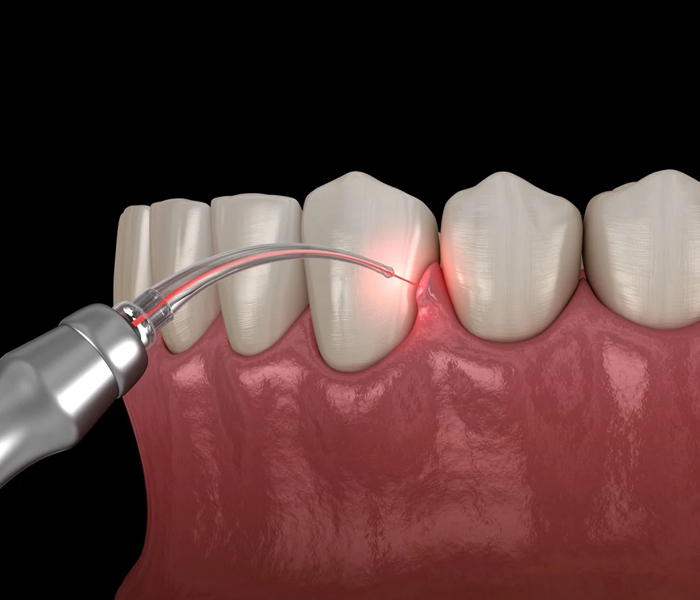
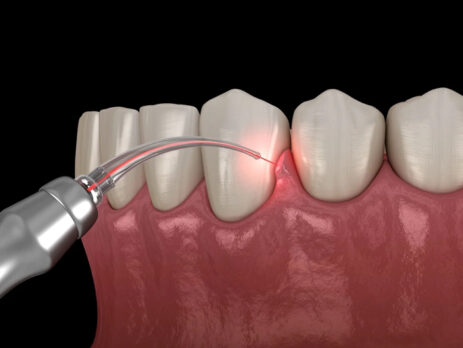
If bacterial plaque, dental calculus (tartar), or active periodontal disease is behind gum recession, the primary goal is to control the infection. Periodontal treatments such as professional dental cleaning, dental calculus (tartar) removal, and root surface debridement in necessary cases can be applied.
These procedures can help the existing gum tissue become healthier. However, there is an important point: it is not expected that lost gum tissue will spontaneously return to its original level solely with dental calculus (tartar) removal in every case. The primary goal of treatment is primarily to stop the progression of the disease and create a healthy oral environment.
2. Correction of Incorrect Brushing Habits
If gum recession is due to mechanical trauma, the continuation of an incorrect brushing technique can negatively affect the long-term success of the treatment. Therefore, the patient should be taught the appropriate toothbrush selection and correct brushing technique.
Generally, it is recommended to use a soft-bristled toothbrush and avoid excessive pressure. Electric toothbrushes with pressure sensors can help some individuals control the habit of applying excessive force.
3. Gum Graft
One of the most frequently considered surgical options for advanced or specific types of gum recession is gum graft procedures. The aim of this treatment is to increase the thickness of the gum tissue in the receded area, cover the exposed root surface in suitable cases, and support the long-term stability of the region.
Graft material can be taken from the patient’s own palate, or different biomaterials can be considered depending on the case characteristics. Which method will be used is determined by the type of recession, the number of teeth to be treated, and the characteristics of the existing tissues.
Scientific studies on periodontal plastic surgery and root surface coverage methods show that connective tissue grafts and various flap techniques are effective options in suitable cases. For detailed scientific evaluations on the subject, you can review the periodontal plastic surgery review published on PubMed.
4. Connective Tissue Graft
Connective tissue graft is one of the commonly used methods in the surgical treatment of gum recession. Generally, connective tissue taken from the palate area is placed in the area of recession and covered with an appropriate surgical technique.
Among the aims of this method are:
- Covering of exposed root surfaces in suitable cases,
- Thickening of gingival tissue,
- Improvement of the aesthetic appearance of the gum line,
- Helping to reduce root sensitivity,
- Increasing the long-term durability of the tissue
may be included.
Systematic reviews evaluating the use of connective tissue grafts with different root coverage techniques show that the method is an important treatment option in periodontal plastic surgery. For scientific details, you can access the systematic review comparing connective tissue grafts and root coverage methods.
5. Coronally Advanced Flap Technique
The coronally advanced flap is one of the surgical methods used in suitable cases of gingival recession. In this technique, the existing gingival tissue is surgically prepared and positioned towards the crown of the tooth to cover the exposed root surface.
The method can be applied alone, or used in conjunction with a connective tissue graft or certain biological materials. The success of the treatment depends on the classification of the recession, the condition of the interdental supporting tissues, the gingival thickness, and the patient’s healing capacity.
Systematic studies published on coronally advanced flaps and combined treatments show that different outcomes can be achieved depending on patient and defect characteristics. One of the academic evaluations related to this topic can be accessed via PubMed.
6. Tunnel Technique
The tunnel technique is one of the microsurgical approaches that can be evaluated in suitable cases, especially those with multiple adjacent teeth suffering from gingival recession. An area is prepared beneath the gingival tissue and graft material is placed in this region.
One of the important features of the technique is that it allows for the preservation of the integrity of papilla tissues in some cases. However, not every gingival recession is suitable for the tunnel technique. The selection of the surgical method should be made based on the results of a periodontal examination.
7. Free Gingival Graft
A free gingival graft can be considered in specific cases, especially when keratinized gingival tissue is insufficient. In this method, a thin piece of tissue, usually taken from the palate, is placed in the required area.
The primary goal is not always solely aesthetic root coverage. In some patients, the main objective is to create a more resilient and adequately wide gingival tissue.
8. Regenerative Periodontal Treatments
If gum loss is accompanied by loss of periodontal supporting tissues and bone, regenerative periodontal treatments may be considered in selected cases. The aim of these treatments is to support the partial regeneration of lost periodontal tissues.
Depending on the characteristics of the case, bone grafts, membranes, or various biological materials may be used. However, not every bone loss can be treated in the same way, and whether regeneration is possible depends on the anatomical structure of the defect.
For detailed information on applications aimed at increasing bone volume, you can review our content on bone powder and bone graft application.
Does Gum Loss Correct Itself?
This is one of the most frequently asked questions by patients. Truly lost and receded gum tissue does not return to its original level spontaneously in most cases. However, this does not mean that nothing can be done.
In the early stages, progression can be controlled by eliminating the cause, maintaining proper oral hygiene, and applying necessary periodontal treatments. In suitable cases, periodontal plastic surgery methods can aim to cover exposed root surfaces and thicken gum tissue.
The amount of root coverage that treatment can provide is not the same for every patient. Especially in advanced cases where bone and soft tissue support between teeth has been lost, complete root coverage may not always be possible. Therefore, early diagnosis is important.
Can Gum Loss Be Fully Recovered?
Whether gum recession can be fully recovered depends on the type of recession and the condition of the surrounding tissues. In some localized and suitable cases, highly successful results can be achieved with surgical root coverage procedures. However, in cases with advanced periodontal tissue and bone loss, the goal of treatment may be the control of the disease, preservation of tissues, and maintenance of function, rather than full anatomical recovery.
Therefore, it is not correct to think that a single treatment method seen on the internet will yield the same result for everyone. Periodontal treatment should be planned individually.
What to Do If There is Bone Loss in Gum Recession?
If gum recession is accompanied by jaw bone loss, it may change the treatment plan. First, the cause and nature of the bone loss should be determined. Bone loss due to periodontitis and volume loss developing after tooth extraction are not evaluated in the same way.
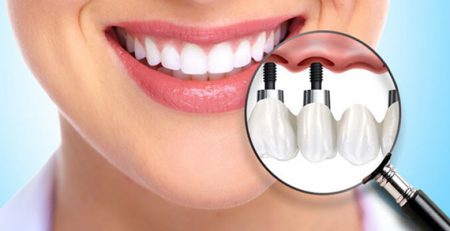
In suitable cases, periodontal surgery, regenerative procedures, or bone graft applications can be considered. Advanced bone loss is particularly important if implant treatment is planned in the future.
For information on methods used when the jaw bone is insufficient, you can read our guide titled What is a bone graft application?
What Happens If Gum Recession is Not Treated?
Not treating gum recession does not lead to the same outcome in every patient. However, if the underlying cause persists, the recession may progress. Exposed root surfaces may be more vulnerable to sensitivity, abrasion, and root decay.
In cases with active periodontal disease, an untreated process can lead to more severe loss of supporting tissue. In advanced periodontal disease, the bone support around the teeth may decrease, and tooth mobility can develop.
Therefore, gum recession should not be evaluated solely from an aesthetic perspective. Especially if there is bleeding, bad breath, loose teeth, or rapidly progressing recession, a periodontal examination should not be delayed.
Is Gum Recession Treatment Painful?
Non-surgical periodontal procedures and surgical applications like gum grafts can be performed under local anesthesia when necessary. Therefore, pain control is ensured during the procedure.
After surgery, some sensitivity, slight swelling, or discomfort may be felt for a few days. Especially in graft procedures where tissue is taken from the palate, temporary sensitivity may occur in the donor area. The healing process varies according to the method applied and individual factors.
What is the Healing Process Like After a Gum Graft?
The first few days after a gum graft are important for healing. The patient must follow the care recommendations given by the dentist. Protecting the surgical area from direct trauma, refraining from brushing the area for the recommended period, and proper nutrition support the healing process.
Generally, it is advisable to pay attention to the following points:
- Not touching the surgical area with your tongue or finger,
- Avoiding very hot and hard foods in the first few days,
- Using the medications prescribed by the dentist as directed,
- Avoiding cigarettes and tobacco products,
- Not missing control appointments,
- Caring for the surgical area as recommended by the dentist.
While the initial healing of the tissues may occur within a few weeks, final tissue maturation can take longer.
Can Gum Recession Be Treated at Home?
It is not anatomically possible to restore gum recession using at-home herbal products, mouthwashes, or toothpastes. Saline solutions, herbal mixtures, or similar methods do not regenerate lost gum tissue.
However, proper oral hygiene is crucial for maintaining the success of the treatment. The most appropriate practices that can be done at home are; brushing teeth with the correct technique, cleaning between teeth, and maintaining regular professional check-ups.
What Can Be Done to Prevent Gum Recession?
While it may not be possible to prevent all causes of gum recession, some precautions can be taken to reduce the risk:
- Brush your teeth without applying excessive force.
- Use a toothbrush of appropriate hardness.
- Clean between your teeth regularly.
- Do not neglect the formation of dental plaque and signs of periodontal disease.
- Stay away from cigarettes and tobacco products.
- If you have complaints of teeth clenching or grinding, consult a dentist.
- Do not miss regular dental check-ups.
- Evaluate signs of gum bleeding and recession at an early stage.
How is the Appropriate Treatment Method for Gum Recession Determined?
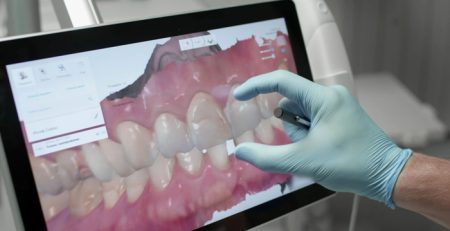
The correct treatment method is not determined solely by measuring gum recession in millimeters. During a periodontal examination, the thickness of the gum tissue, the amount of keratinized tissue, interdental supporting tissues, periodontal pocket depths, plaque control, and, if necessary, radiographic findings are evaluated together.
Scientific literature also emphasizes the importance of recession characteristics, available soft tissue amount, and anatomical factors in the selection of root surface coverage treatment. You can access an academic review comprehensively evaluating treatment options for gingival recession via NCBI/PMC.
Gum Recession Treatment at Melsadent
The first step in treating gum recession is to accurately determine the cause of the problem. At Melsadent Oral and Dental Health Polyclinic, following clinical and, if necessary, radiographic evaluations, a personalized treatment plan can be created by assessing the degree of gingival recession, the condition of periodontal tissues, and accompanying risk factors.
The treatment plan may include professional periodontal care, oral hygiene education, scaling and root planing, or surgical periodontal methods in appropriate cases. The goal is not only to improve aesthetic appearance but also to maintain the long-term health of the tissues surrounding the teeth.
If you notice that your gums are receding, your teeth appear longer, or you experience sensitivity in your tooth roots, it is important to undergo an early dental evaluation.
Frequently Asked Questions
Can gum tissue grow back?
Lost gum tissue typically does not return to its original position on its own in most cases. However, in suitable patients, it may be possible to cover exposed root surfaces and thicken the tissue using gum grafts and various periodontal plastic surgery techniques.
How to stop gum recession?
First, the cause of the recession should be determined. If periodontal disease is present, it should be treated, incorrect brushing habits should be corrected, and oral hygiene should be brought under control. Surgical treatments can be applied in necessary cases.
What helps with gum recession?
There is no single home product that can reverse gum recession on its own. Proper oral care and professional periodontal treatment can help preserve existing tissues. Treatment should be planned according to the cause of the recession.
Is gum grafting a definitive solution?
Gum grafting is a successful treatment option in appropriate cases; however, not every gum recession can be closed to the same extent. Results can be affected by factors such as the type of recession, bone support, gum structure, smoking, and oral hygiene.
Does gum recession cause tooth loss?
Superficial gum recession alone does not necessarily mean tooth loss. However, if gum recession is accompanied by advanced periodontitis and significant bone loss, tooth support may decrease, and the risk of tooth loss may increase in untreated advanced cases.
At what ages is gum recession seen?
Gum recession can be seen at any age. Although its incidence may increase with age, it can also develop in young individuals due to incorrect brushing, thin gum structure, anatomical factors, or periodontal problems.
How long does a gum graft take to heal?
Initial soft tissue healing usually occurs within a few weeks. However, complete maturation of the tissue may take longer. The definitive healing time depends on the surgical technique applied and the patient’s individual characteristics.
Does receded gum tissue grow back?
Gum tissue does not spontaneously grow back to its original level like a simple wound on the skin closing. In suitable cases, the goal may be to cover the root surface and increase tissue thickness using surgical periodontal methods.
Which doctor should be consulted for gum recession?
Individuals experiencing gum recession can consult a dentist. In cases of advanced periodontal problems or those requiring surgery, an evaluation in the field of periodontology may be necessary.
When should a dentist be consulted for gum recession?
When tooth roots start to become visible, teeth appear elongated, sensitivity, gum bleeding, bad breath, or tooth looseness is noticed, evaluation should not be delayed. Early diagnosis is important for preserving existing tissues and reducing the need for more extensive treatments.
Important: This content has been prepared for general informational purposes. The cause of gum recession and the applicable treatment method may vary from person to person. A dental examination is necessary for a definitive diagnosis and a personalized treatment plan.