



How to Clean Under a Dental Bridge?
How to Clean Under a Bridge Tooth?
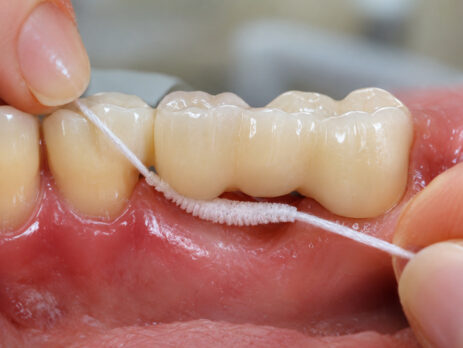
How to clean under a bridge tooth? Food debris and bacterial plaque accumulated under fixed dental bridges cannot always be removed with a regular toothbrush. For this reason, special dental floss, floss threaders, or appropriately sized interdental brushes that can reach under the bridge can be used. Proper cleaning helps protect gum health and reduces the risk of problems that may arise in the natural teeth supporting the bridge.
Individuals using dental bridges need to clean not only the visible tooth surfaces but also under the artificial tooth and around the abutment teeth. So, which products should be used, how should cleaning be done, and what should be paid attention to?
Why Should Under a Bridge Tooth Be Cleaned Regularly?
Fixed dental bridges consist of artificial teeth placed to replace missing teeth and the abutments that support them. The part of the bridge that fills the missing tooth space is called a pontic. This part does not extend into the gum like a natural tooth root.
Bacterial plaque can accumulate in areas where the pontic touches or is close to the gum. Insufficient cleaning of the area can lead to gum redness, bleeding, bad breath, and inflammation in the surrounding tissues.
Furthermore, there is a risk of cavities developing at the margins of the natural teeth supporting the bridge. Therefore, it is as important to have knowledge about dental prostheses as it is to correctly apply their daily care.
Is Special Dental Floss Needed for a Bridge Tooth?
For most fixed bridges, it is beneficial to use a special dental floss or floss threader to clean under the artificial tooth. Regular dental floss may not be able to pass up and down between the connected bridge parts.
The main products that can be used for this purpose are:
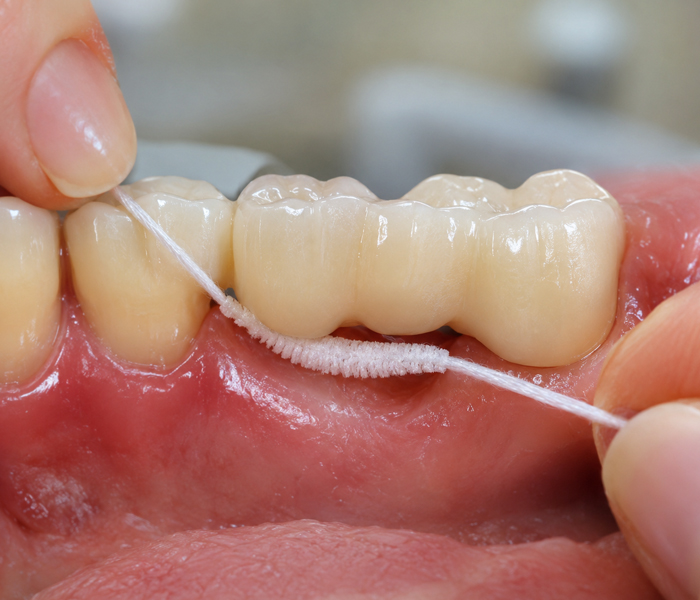
- Superfloss: It is a special dental floss that makes it easier to reach under the bridge thanks to its stiffened end and spongy section.
- Floss threader: It is a device that helps to pass regular dental floss through the gap under the bridge.
- Interdental brush: It helps clean the side surfaces of the abutment teeth and around the bridge in areas where there is sufficient space.
- Oral irrigator: It helps remove food debris in hard-to-reach areas by using pressurized water.
Since the design of every bridge is not the same, the most suitable cleaning tool should be determined by the dentist’s assessment.
How to Clean Under a Bridge with Special Dental Floss?
Cleaning with Superfloss or a floss threader can become a part of daily oral hygiene once the correct technique is learned.
- Clean your hands: Wash your hands before starting the procedure and ensure adequate lighting.
- Prepare the floss: If you are using Superfloss, prepare its stiffened end; if you are using regular dental floss, prepare the floss threader.
- Insert under the bridge: Gently pass the floss through the appropriate opening between the artificial tooth and the gum. Do not force it if there is resistance.
- Clean the underside: Remove debris by moving the spongy section or dental floss back and forth in a controlled manner.
- Pay attention to the abutment teeth: Gently clean the lateral surfaces that the floss can reach and the gum line.
- Remove the floss from the side: Avoid harsh pulling motions that could snag on the bridge connection.
- Complete the process: Clean other accessible areas and rinse your mouth with water.
During cleaning, avoid actions that could cut or bleed the gums or apply pressure to the prosthesis. For general usage techniques, you can also review our article titled how to use dental floss.
Can Bridge Underside Cleaning Be Done with an Interdental Brush?
Yes. If there is sufficient clearance under the bridge, an appropriately sized interdental brush can be used. The brush helps reduce plaque buildup around the lateral surfaces of the abutment teeth and the bridge connections.
However, forcing large brushes into narrow spaces can damage the gums. Conversely, very small brushes may not make sufficient contact with the surfaces.
It is recommended that the correct brush diameter be determined by a dentist. Some patients may require different sized brushes for different areas.
Does a Water Flosser Clean Food Debris Under the Bridge?
Water flossers can facilitate the removal of loose food debris, especially in hard-to-reach areas, thanks to their water jet. Their use can also be practical for individuals with limited dexterity.
However, an oral irrigator may not fully replace mechanical plaque cleaning in every patient. The adequacy of care around the bridge depends more on whether the area can truly be cleaned, rather than on the device used.
The American Dental Association (ADA) considers regular cleaning between teeth as one of the fundamental components of oral health. It emphasizes that the method to be used should be chosen according to the individual’s oral structure.
What Happens If Under the Bridge Is Not Cleaned?
Bacterial plaque accumulating under the bridge can negatively affect the health of surrounding soft tissues over time. Specifically, the following symptoms may appear:
- Recurrent gum bleeding around the bridge
- Persistent bad taste or odor in the mouth
- Redness, swelling, and tenderness in the gums
- Cavities or gum problems around the abutment teeth
- Discomfort and food impaction when eating
These symptoms may not only be caused by inadequate cleaning. Misalignment of the bridge, cavities in the abutment tooth, or a different gum problem may also be present. For detailed information, you can read our content on prevention and treatment methods for gum diseases.
Common Mistakes in Bridge Dental Care
The most common mistake is brushing only the front and chewing surfaces of the bridge. This approach can lead to plaque remaining in hard-to-reach areas under the prosthesis.
Another mistake is trying to remove stuck food with toothpicks, needles, or sharp metal tools. Such practices can injure the gums and damage the prosthesis.
It is also not enough to clean only when food gets stuck. Bacterial plaque can form even when there are no visible food residues.
How Many Times a Day Should Bridge Teeth Be Cleaned?
In general, it is recommended to brush teeth twice a day with fluoride toothpaste and to clean between teeth, including under the bridge, at least once a day.
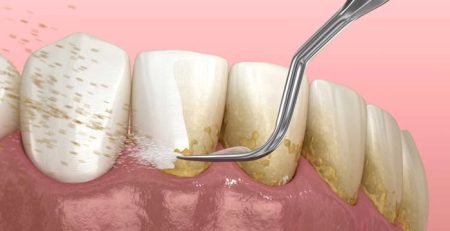
Detailed care performed before bedtime is an easy option to incorporate into the daily routine. If tartar has formed around the bridge, it is not possible to remove it with dental floss at home. In such cases, professional dental scaling may be necessary.
In Which Cases Should a Dentist Be Consulted?
If there is constant bleeding, pain, bad odor, or snagging of the floss during cleaning, a dental evaluation is recommended. Movement or breakage of the bridge, or swelling developing around it, are also situations that require examination.
If the floss does not pass under the bridge at all, alternative cleaning methods suitable for the prosthesis’s design should be learned instead of forcing it. Regular check-ups allow the condition of the abutment teeth and surrounding tissues to be evaluated.
Frequently Asked Questions
Is it normal for food to get stuck under a bridge tooth?
Food particles may accumulate under the artificial tooth from time to time. However, if there is constant, significant impaction in the same area, the design of the bridge and its relationship with the gum should be checked.
Can under a bridge be cleaned with regular dental floss?
Yes, regular dental floss can be used with the help of a suitable floss threader. However, special flosses with a spongy section might be more practical for some bridges.
Is it normal for bleeding to occur when cleaning under a bridge?
Bleeding can be associated with gingivitis or aggressive cleaning motions. Recurrent or persistent bleeding should be evaluated by a dentist.
How can bad breath/odor under a dental bridge be eliminated?
Firstly, regular removal of bacterial plaque in the area is necessary. If the odor persists, cavities in abutment teeth, gum disease, or prosthesis incompatibility should be investigated.
Is an electric toothbrush sufficient for bridge cleaning?
Electric toothbrushes can be used for cleaning the outer surfaces of the bridge. However, an additional interdental cleaning tool may be needed for the area under the artificial tooth.
Can a dental bridge be cleaned daily with a water flosser?
It can be used for daily maintenance with an appropriate pressure setting. However, whether it is sufficient on its own should be evaluated based on the bridge design and the individual’s oral health.
What should be done if the area under the bridge cannot be cleaned at all?
Do not force floss or a brush through. The dentist should evaluate the bridge’s undersurface, gum contact, and alternative cleaning tools that can be used.
What Do Scientific Studies Say About Bridge Cleaning?
In a clinical study examining oral tissues under fixed bridges, regular dental floss use was reported to be associated with lower bacterial accumulation and healthier surrounding tissues.
In another study conducted with 200 patients using fixed dental prostheses, statistically significant relationships were found between the frequency of interdental cleaning and indicators of plaque and gum health.
A scientific review evaluating the relationship between fixed prostheses and periodontal health emphasizes the importance of bridge design, cleanability, and regular check-ups for long-term success.
Proper Care is Important for a Healthy Bridge
The long-term healthy use of fixed bridges depends not only on the quality of the prosthesis but also on daily care habits and the protection of the abutment teeth. Correct use of special dental floss, floss threaders, or interdental brushes can support plaque control in hard-to-reach areas.
At Melsadent Oral and Dental Health Polyclinic, the condition of bridge prostheses, abutment teeth, and gum health can be evaluated together. By making an appointment at our clinic in Tuzla, you can get information about appropriate care methods for your existing bridge.