



What is the 6-Year Molar? Don’t Confuse it with a Milk Tooth | Melsadent
Have you noticed a new tooth erupting in your child’s mouth, just behind the last baby tooth? Many parents assume this tooth will also fall out over time. However, this molar, which emerges around the age of 6, is one of the first permanent teeth expected to remain in the mouth for life.
The 6-year molar is the first permanent large molar that erupts directly, without replacing any baby tooth. Neglecting its care, mistaking it for a baby tooth, can lead to the progression of cavities and early tooth loss. Therefore, it is important for parents to know the tooth’s position, eruption time, and protection methods.
What is the 6-Year Molar? Why is it Important?
The first permanent molars, commonly known as 6-year molars, are important chewing teeth that take their place in the mouth during childhood. There are a total of four, one on the right and left sides of both the upper and lower jaws.
The most important feature of these teeth is that they erupt without waiting for any baby tooth to fall out. They emerge in a new position, right behind the existing baby teeth.
First permanent molars help in grinding food and play an important role in the occlusal relationship of permanent teeth. Their healthy preservation supports the child’s oral and dental health in later years.
a review of tooth eruption published on NCBI Bookshelf, explains that these teeth emerge around the age of 6 and are positioned behind the second primary molars.
When Does the 6-Year Molar Erupt?
The first permanent molars usually start to erupt around 6-7 years of age. However, it is possible for them to emerge earlier or later in some children. Tooth development does not have to follow the same timeline in every child.
Most often, the molars in the lower jaw are noticed first. However, the eruption order can show individual differences. It may also take time for the tooth to become fully visible.
This period marks the beginning of the mixed dentition stage, where primary (baby) teeth and permanent teeth are present together. For details on developmental oral care for children, you can review our guide on oral and dental health care in children aged 7-15.
How to Distinguish a 6-Year Molar from a Baby Tooth?
The easiest way to distinguish between the two types of teeth is to pay attention to their position in the mouth. The first permanent molar emerges at the very back of the row of baby teeth.
- Location: It is located behind the last baby molar.
- Eruption pattern: Another tooth does not need to fall out for it to emerge.
- Appearance: It usually has a wide chewing surface and prominent grooves.
- Color: It may appear slightly more yellowish compared to baby teeth.
- Permanence: It is not expected to fall out on its own during normal tooth exfoliation.
It is not always possible to make a definitive decision based on appearance alone. A dentist can determine the type of tooth through a clinical examination and, if necessary, imaging methods.
What Happens If a 6-Year Molar is Mistaken for a Baby Tooth?
The biggest risk is that parents may disregard cavities or other problems, thinking this tooth will change later. However, the protection of permanent molars requires care from childhood.
The following problems may occur as a result of misjudgment:
- Cavities in the initial stage may not be noticed.
- Toothache and difficulty chewing may develop.
- Fillings or root canal treatment may be required for advanced cavities.
- Permanent tooth loss may occur due to severe damage.
- Changes in the position of adjacent teeth may occur after tooth loss.
Important: A decayed tooth should not be decided to be extracted by assuming it is a primary tooth. First, it should be evaluated whether it is a permanent tooth and if it can be preserved with treatment.
If the 6-Year Molar is Accidentally Extracted, Will it Grow Back?
No. When the first permanent molar is extracted, there is no other permanent tooth that will erupt in its place in the same location.
Early loss can lead to adjacent teeth shifting into the gap, changes in the bite alignment, or the need for orthodontic treatment. However, the outcomes depend on the child’s age, jaw, and the development of other permanent teeth.
A systematic review published in the European Journal of Orthodontics reveals that spontaneous closure of the space after extraction of the first permanent molar differs, especially in the upper and lower jaws.
Therefore, even when extraction becomes necessary, it should be evaluated with an individualized and comprehensive treatment plan.
Why Do First Permanent Molars Decay Easily?
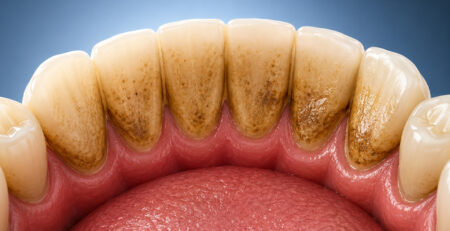
Newly erupted permanent molars may have deep grooves on their chewing surfaces. Food debris and bacterial plaque easily accumulate in these areas.
Additionally, when the tooth first erupts into the mouth, its chewing surface may be lower than other teeth. This makes it difficult for the toothbrush to make sufficient contact with the relevant area.
Insufficient cleaning, frequent sugar consumption, and not taking appropriate protective measures against caries risk can also exacerbate the problem. Enamel development disorders observed in some children can make the tooth more vulnerable to sensitivity and decay.
What Should Be Done to Protect 6-Year Molars?
Proper oral care habits should be established early on to support the healthy maintenance of permanent molars.
- Regular brushing: Teeth should be brushed at least twice a day for approximately two minutes. The chewing surfaces of the back molars should be cleaned particularly well.
- Fluoride toothpaste: Fluoride toothpaste appropriate for the child’s age and needs should be used, and brushing should be supervised by a parent.
- Control of sugar consumption: Frequent consumption of sugary foods and drinks throughout the day should be limited.
- Fissure sealant: If deemed appropriate by the dentist, a protective sealant can be applied to the grooves of the permanent molars.
- Regular check-ups: Tooth eruption, enamel structure, and caries risk should be evaluated at regular intervals.
A systematic review published by Cochrane demonstrates that resin-based fissure sealants are effective in protecting permanent molars from decay in children and adolescents.
Additionally, the joint clinical guideline of the AAPD and the American Dental Association recommends evaluating these protective applications on appropriate teeth.
To learn detailed information about fluoride, you can read our article on the safety of fluoride application in children.
Which Symptoms Require a Dentist Visit?
Examination is recommended if pain during chewing, cold sensitivity, brown spots, noticeable enamel fracture, or food accumulation is observed in a newly erupted molar tooth.
If severe pain, swelling in the gums or face, fever, or difficulty opening the mouth is present, evaluation should not be delayed.
Even if the tooth has not yet decayed, a check-up during the eruption period helps in planning preventive applications.
How is Children’s Permanent Tooth Development Evaluated at Melsadent?
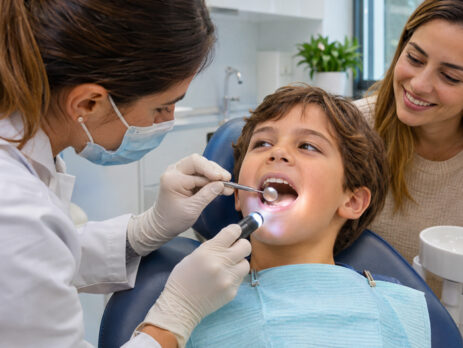
At Melsadent Oral and Dental Health Polyclinic, serving in Tuzla, Istanbul, children’s tooth development, existing caries risk, and oral hygiene habits can be evaluated within the scope of pedodontics.
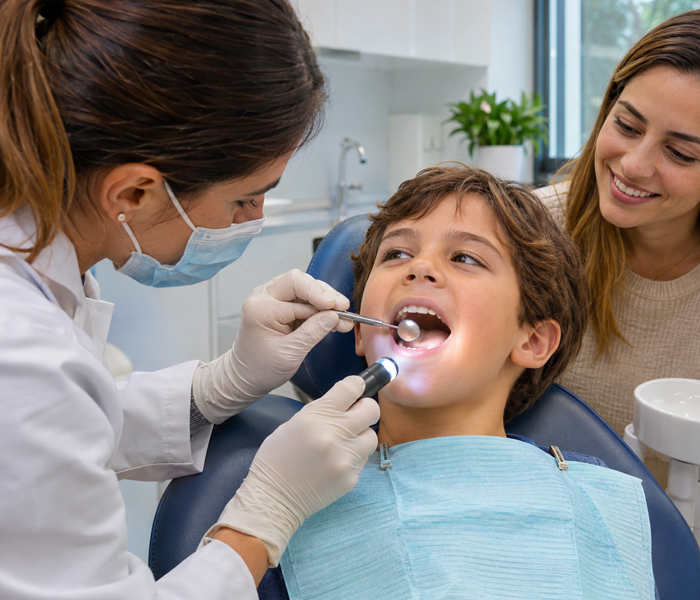
During the examination, the condition of newly erupted molar teeth is checked, and if necessary, preventive or therapeutic options are planned.
If you are not sure whether your child’s back teeth are permanent, you can review our services on our Melsadent Pediatric Dentistry (Pedodontics) page.
Frequently Asked Questions
Is the 6-year molar a primary tooth?
No. The first permanent molar is a permanent tooth. It does not replace any primary (milk) tooth and is expected to remain in the mouth throughout life under normal conditions.
Does the 6-year molar cause pain during eruption?
Slight gum sensitivity or discomfort may be felt during eruption. However, severe pain, swelling, and fever should not be attributed solely to tooth eruption.
How many permanent molars erupt at the age of 6?
There are a total of four first permanent molars. Two of them are in the upper jaw, and two are in the lower jaw. Not all of them necessarily erupt at the same time.
If a 6-year molar decays, does it need to be extracted?
No. Depending on the depth of the decay and the condition of the tooth, fillings, root canal treatment, or other conservative approaches may be considered. Extraction is not always the first option.
When is a fissure sealant applied to a 6-year molar?
It can be done when the chewing surface of the tooth has erupted sufficiently for the application and when the dentist deems it necessary. The timing is determined by the tooth’s development and the risk of decay.
Is it normal for a permanent tooth to erupt behind a primary (milk) tooth before it falls out?
For first permanent molars, this is an expected development. However, the eruption of a permanent tooth behind the front teeth is evaluated differently. For details, you can review our article on permanent tooth eruption before primary tooth loss.
What should be done if the 6-year molar has not erupted?
Small variations in eruption time can be normal. If the tooth does not appear for a long time, there is a unilateral delay, or other developmental problems are present, a pediatric dentistry examination is recommended.
It is Important to Protect Permanent Teeth at an Early Age
Children’s first permanent molars take their place directly in the mouth, unlike milk teeth. Therefore, when a new tooth is noticed in the back region, it should not be thought of as temporary.
With proper brushing, appropriate preventive measures, and regular dental check-ups, the risk of decay can be reduced. Early awareness is an important step in maintaining permanent teeth healthily for many years.
This content has been prepared for general informational purposes. The type of tooth, its eruption status, and the need for treatment can only be assessed through a clinical examination.