



What Happens If a Dental Filling Stays High?
What Happens If a Tooth Filling Stays High? How to Tell?
After getting a tooth filling, do you feel one of your teeth touching before the others when you close your mouth? Pressure, especially when eating, pain during chewing, or teeth not closing completely, may suggest that the filling is high.
Short answer: A high filling occurs when the chewing surface of the restored tooth makes contact with the opposing tooth earlier or more than normal. This can cause sensitivity when biting, discomfort in the tissues around the tooth, and difficulty chewing. In most cases, the problem can be resolved with a controlled bite adjustment performed by a dentist. However, not all post-filling pain is caused by a height problem.
What is a High Tooth Filling?
In filling treatment, after the decayed or damaged tooth tissue is cleaned, the resulting cavity is filled with an appropriate restorative material. During the procedure, it is important to preserve the natural shape of the tooth and its contact relationship with the teeth in the opposing jaw.
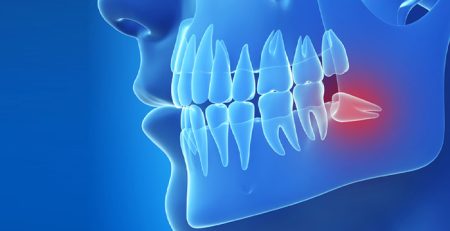
When the filling material creates more volume than necessary on the chewing surface, premature contact can occur during biting. If the filled tooth touches before the other teeth have fully met, it can lead to a concentration of force in a specific area.
This situation can be felt more prominently, especially in the back molars. To learn in which situations filling and crowning applications are preferred, you can review our guide on the differences between filling and crowning.
How to Tell If a Tooth Filling Is High?
After a filling, one or more of the following symptoms may appear:
- Premature tooth contact: You might feel the filled tooth touching other teeth before them when you close your mouth.
- Pain when biting: Pressure or a dull ache may occur at a specific point, especially when chewing hard foods.
- Feeling of foreignness in the bite: You might notice that your teeth don’t close as comfortably as before.
- Unilateral chewing: You might unconsciously start using the other side to avoid discomfort.
- Pressure sensitivity in the tooth: Discomfort may occur when force is applied to the tooth or when teeth are clenched.
- Jaw muscle fatigue: A change in bite can strain the chewing muscles in some individuals.
- Difference when biting: You might feel that the filled area carries more load than usual while eating.
Although these symptoms increase the suspicion of a high restoration, they are not sufficient for a definitive diagnosis. Cracked teeth, pulp problems, and issues in gum tissues can also lead to similar complaints.
Why Does a Tooth Hurt When Biting After a Filling?
During chewing, the forces generated are normally distributed among different teeth and supporting tissues. However, in case of bite disharmony, excessive pressure may be placed on a specific tooth.
The periodontal ligament surrounding the tooth root is a tissue sensitive to chewing forces. Excessive mechanical loading can create sensitivity in this area. Especially pain that begins immediately after a filling and becomes more pronounced with biting may require bite adjustment.
However, sensitivity after filling can also be related to deep decay, involvement of the internal tissues of the tooth, characteristics of the restoration, or existing cracks. To learn the different reasons in detail, you can read our content about the causes of toothache when chewing.
What Happens If a High Filling Is Not Corrected?
Continued premature contact can lead to discomfort during chewing and recurrent pressure sensitivity in some patients. The effect of prolonged or intense loading varies according to the individual’s occlusal characteristics, teeth grinding habits, and existing dental health.
Possible problems include:
- Ongoing discomfort during chewing,
- Sensitivity in the tissues supporting the tooth,
- Strain in the jaw muscles,
- Increased loading along with existing teeth grinding habits,
- Risk of wear or damage to the restoration under improper forces.
However, it cannot be said that a high filling will necessarily cause a tooth fracture, temporomandibular joint disorder, or root canal treatment. Such outcomes should not be solely attributed to occlusal height.
Will a High Filling Correct Itself?
In some minor occlusal discrepancies, adaptation or habituation may be observed over time. However, it is not correct to assume that the filling will necessarily wear down to an ideal level.
In a small-scale clinical study published in the Journal of Dentistry in 2016, occlusal adaptation was observed over time in certain crown restorations that were intentionally prepared with a high occlusion. However, this research does not indicate that routine composite fillings should be left unchecked.
If there is a particularly noticeable premature contact, persistent pain, or difficulty chewing, a dentist should be consulted instead of waiting for it to resolve on its own.
How Is a High Dental Filling Corrected?
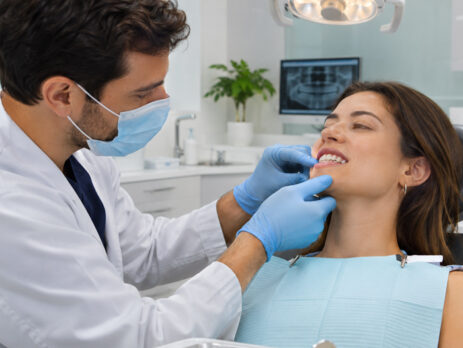
Checking the occlusal height usually begins with a brief and conservative assessment. The dentist first listens to the patient’s complaints and examines the filled tooth.
Then, auxiliary materials such as colored articulation paper can be used to examine the points where the teeth contact each other. The distribution of contacts is evaluated while the patient closes their mouth and mimics chewing movements.
If excessive height is indeed detected, only the necessary parts of the filling material are corrected in a controlled manner. Afterwards, the surface is repolished, and the occlusion is checked again.
Important: Not every colored contact mark indicates excessive pressure. Therefore, arbitrary grinding should not be performed merely by looking at the size of the mark. Over-correction, this time, can lead to insufficient tooth contact.
What is the Difference Between Post-Filling Sensitivity and a High Filling?
Short-term sensitivity to hot or cold after a filling is not always related to occlusal height. Especially after deep cavity treatments, the inner tissues of the tooth may remain sensitive for some time.
In the case of a high occlusion, the complaint mostly becomes noticeable during tooth contact, biting, or chewing. However, both conditions can be present simultaneously.
A randomized clinical study published in the journal Operative Dentistry in 2022 showed that sensitivity observed after composite restorations can decrease over time. Nevertheless, for pain that is increasing, spontaneously appearing, or long-lasting, further evaluation is required.
Regarding methods that can be applied in cases where pulp tissue is affected, you can get information from our root canal treatment page.
What to Do at Home in Case of Bite Discomfort After a Filling?
First of all, do not try to test the height by constantly applying pressure to the filled area. Repeated biting attempts, especially with hard foods, can increase sensitivity.
Softer foods can be preferred until the examination. Chewing should be avoided before the effect of the anesthetic injection has completely worn off. Daily oral hygiene should be maintained according to the dentist’s recommendations.
It is not safe to file the filling at home, scrape it with sharp objects, or try to abrade it yourself. These interventions can damage the filling surface and natural tooth tissue.
When Should a Dentist Be Consulted?
If your tooth makes premature contact noticeably after the anesthetic wears off, especially if it hurts when biting or if you cannot eat normally, contact the dentist who performed the treatment as soon as possible.
Intensifying throbbing, spontaneous pain, prolonged hot-cold sensitivity, fever, or gum swelling may indicate different problems and should be evaluated without delay. If there is rapidly increasing facial swelling, difficulty swallowing, or breathing, emergency medical services should be contacted.
What Does Scientific Research Say?
In restorative dentistry, research is being conducted on both post-filling sensitivity and the accurate determination of occlusal contacts. The findings support that complaints should not be attributed to a single cause and that action should be taken based on clinical evaluation.
Academic publications on the subject:
- Gerasimidou et al. (2016), Journal of Dentistry: Effect of Placing Intentionally High Restorations – Clinical research examining occlusal adaptation in intentionally over-prepared crowns.
- Operative Dentistry (2022): Postoperative Sensitivity of Composite Replacement of Amalgam Restoration – Randomized clinical study evaluating postoperative sensitivity after composite restoration.
- Rovira-Lastra et al. (2026), Diagnostics: Clinical Strategies to Improve the Accuracy of Articulating Paper – Study investigating the accuracy of detecting occlusal contacts with articulating paper.
Frequently Asked Questions
Does a high dental filling cause pain?
Yes. Due to premature contact, pain or pressure may be felt during chewing. However, an examination is necessary to determine the exact cause of the pain.
How long does it take for a high filling to resolve?
There is no fixed time for every patient. In cases of significant occlusal discrepancy, a dental check-up is recommended instead of waiting. The reduction in sensitivity after the necessary adjustment may vary from person to person.
Is adjusting a high filling painful?
Small adjustments made only on the surface of the filling material are generally well tolerated. The dentist determines the appropriate approach based on the degree of sensitivity.
Does a high filling damage the tooth nerve?
A high filling does not directly mean nerve damage. However, if there are deep cavities, pulp inflammation, or other issues, these need to be evaluated separately.
Does pain continue after the filling is adjusted?
While sensitivity immediately decreases in some patients, tissue recovery may take time in others. If the pain persists, increases, or new symptoms are added, a re-check is necessary.
Can a high filling reoccur?
In a newly placed filling, height is mostly related to the initial shape and occlusal relationship. Subsequent differences in contact may be related to tooth movements, wear, or other restoration changes.
Occlusion Check After Filling at Melsadent
The success of a filling treatment is not limited to merely cleaning the decay and aesthetically completing the tooth. It is also important that the restoration is compatible with daily chewing functions.
At Melsadent Oral and Dental Health Polyclinic, serving in Tuzla, post-filling pain and occlusion complaints can be evaluated taking into account the current condition of the tooth and chewing relationships. If necessary, occlusion adjustment or different treatment options can be planned.
Remember: If you feel that your teeth are not biting together properly after a filling, do not consider this normal and wait for a long time. Early check-up facilitates the determination of the cause of discomfort and the planning of appropriate intervention.
For detailed information and appointments, you can contact Melsadent Oral and Dental Health Polyclinic.