Filling or Veneer? Which is the Most Suitable Treatment to Save Your Tooth?
Filling or Veneer? Which is the Most Appropriate Treatment to Save Your Tooth?
One of the most frequently asked questions by patients experiencing tooth decay, broken teeth, cracked teeth, or aesthetic problems is, “Is a filling or a veneer better?” In fact, the answer to this question depends entirely on the extent of the damage to the tooth, aesthetic expectations, and the current condition of the tooth.
Filling or Veneer?
One of the most frequently asked questions by patients experiencing tooth decay, broken teeth, cracked teeth, or aesthetic problems is, “Is a filling or a veneer better?” In fact, the answer to this question depends entirely on the extent of the damage to the tooth, aesthetic expectations, and the current condition of the tooth.
While dental fillings are generally sufficient for small and medium-level cavities, veneer treatment can provide longer-lasting results for teeth with advanced material loss. Especially in anterior tooth aesthetics, veneer applications can yield more natural and aesthetic results.
Melsadent Oral and Dental Health Polyclinic experts determine the most appropriate treatment method by analyzing the patient’s oral structure in detail.
What is a Dental Filling?
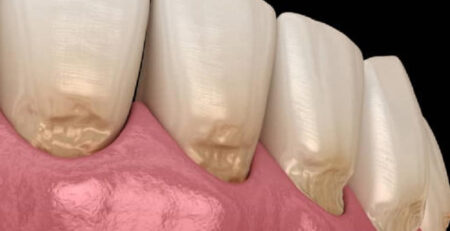
Dental filling is the process of filling the cavity formed after cleaning decayed, broken, or worn tooth tissue with special filling materials. Today, the most commonly used types of fillings are composite fillings and porcelain inlay/onlay fillings.
Filling treatment is a minimally invasive method that preserves natural tooth tissue as much as possible. Especially in cases of early diagnosed cavities, a large part of the tooth can be preserved.
Thanks to the aesthetic composite fillings applied at Melsadent, natural-looking results in tooth color are achieved.
Related content:
Detailed information about dental fillings and aesthetic dental treatments
What is a Dental Crown?
Dental crowning is the process of reducing teeth that have experienced significant substance loss and completely covering them with porcelain, zirconium, or Emax materials. Crown treatment provides strong results both aesthetically and functionally.
Crown treatments are particularly preferred for large fractures, teeth weakened after root canal treatment, or advanced discoloration.
Most preferred types of crowns:
- Zirconium crown
- Emax crown
- Metal-supported porcelain crown
- Laminate veneer
Related content:
What is the Difference Between Filling and Crown?
The main difference between a filling and a crown is the amount of damage to the tooth. While a filling only repairs the damaged area, a crown protects the entire tooth.
| Feature | Filling | Crown |
|---|---|---|
| Application Area | Small-Medium Cavities | Major Damage |
| Tooth Reduction | Minimum | More |
| Aesthetics | Good | Very High |
| Durability | Medium-High | High |
| Lifespan | 5-10 Years | 10-20 Years |
| Cost | More Economical | Higher |
In Which Cases Are Fillings Done?
Filling treatment may be sufficient in the following cases:
- Small and medium-sized cavities
- Initial stage fractures
- Interdental cavities
- Replacement of old fillings
- Aesthetic bonding applications
In cavities intervened early, tooth loss can be prevented thanks to fillings. Therefore, regular dental check-ups are very important.
Related content:
Symptoms and treatments of tooth decay
In Which Cases Are Crowns/Veneers Done?
Crown/Veneer treatment is generally preferred in the following cases:
- Teeth with significant substance loss
- Weak teeth that have undergone root canal treatment
- Advanced stage fractured teeth
- Teeth experiencing discoloration problems
- Teeth with shape deformities
- Aesthetic smile design needs
Especially in teeth exposed to intense chewing forces in the posterior regions, crowns/veneers can be more durable.
Veneers are recommended for teeth with a high risk of fracture after root canal treatment.
Academic source:
Full-Coverage Restorations and Tooth Survival
Which is Better Aesthetically?
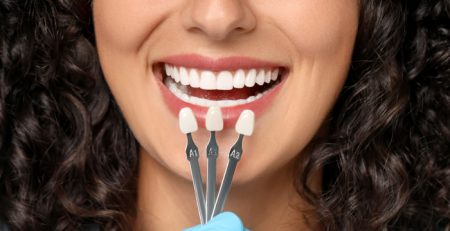
Although modern composite fillings yield quite successful results when evaluated aesthetically, Emax and zirconium veneers can provide a much more natural appearance, especially for front teeth.
Thanks to veneer treatments:
- Tooth color can be changed
- Tooth shape can be redesigned
- Smile symmetry can be created
- Hollywood Smile design can be performed
For this reason, veneer treatments are more frequently preferred in patients with high aesthetic expectations.
Scientific source:
Esthetic Outcomes of Ceramic Restorations
Durability Comparison
Veneers are generally more durable than fillings. This is because they encase the entire tooth, providing protection. Especially in individuals who clench their teeth at night, large fillings can fracture over time.
However, a well-made composite filling can also be used without problems for many years. Important factors here are:
- Patient’s oral hygiene
- Teeth grinding habit
- Diet
- Quality of clinician’s application

Academic source:
Longevity of Dental Restorations
Comparison in Terms of Price
Dental filling prices are generally more economical than veneer treatments. This is because the procedure time is shorter and the amount of material used is less.
Veneer prices, on the other hand, may vary depending on the material used:
- Zirconium veneer
- Emax veneer
- Laminate veneer
- Metal-supported porcelain
However, decisions should not be made solely based on price. A long-lasting and correct treatment choice can prevent additional costs that may arise in the future.
Melsadent Experts’ Recommendation
At Melsadent Oral and Dental Health Polyclinic, patient-specific digital analyses are performed to create the most accurate treatment plan. While a filling may be sufficient for some patients, in certain cases, veneer treatment might be more advantageous for the long-term preservation of the tooth.
Especially aesthetic expectations, the existing strength of the tooth, and chewing forces should be evaluated together.
After a detailed examination, the most suitable treatment method for you can be determined.
Frequently Asked Questions
Is a filling or a veneer more long-lasting?
Generally, veneers are more long-lasting. However, quality fillings done for small cavities can also be used for many years.
Does every carious tooth require a veneer?
No. For small and medium-sized cavities, a filling is usually sufficient.
Is a filling sufficient after root canal treatment?
If there is significant loss of tooth structure, a veneer may be recommended. This is because root canal treated teeth become more fragile.
Is filling or veneering more aesthetic for front teeth?
Composite fillings are successful for small restorations. However, for advanced aesthetic expectations, Emax veneers can provide a more natural result.
Does a veneer harm the tooth?
With proper planning and expert application, veneers can protect the tooth. However, a certain amount of tooth reduction is required during the procedure.
Can decay reoccur after a filling?
Yes. If oral hygiene is not maintained, decay can reoccur around the edges of the filling.