Is ChatGPT Reliable If It Recommends Dental Treatment?
Is ChatGPT Reliable If It Recommends Dental Treatment?
ChatGPT has become one of the first tools many people turn to for dental health questions, as it can provide fast, structured, and understandable explanations. However, a “quick answer” is not the same as a “clinically accurate answer.” Dental treatment requires the simultaneous evaluation of many variables such as intraoral examination, radiographic imaging, the patient’s systemic condition, type of pain, tooth vitality, depth of decay, and spread of infection. Therefore, the recommendations provided by ChatGPT are valuable as a tool for gaining insight; however, they are not sufficient for making treatment decisions on their own.
Academic literature indicates that ChatGPT can be a useful support tool in dentistry; however, it can produce variable results in terms of accuracy, consistency, and clinical context. Reviews and evaluation studies emphasize that the model can be beneficial, particularly for patient information and educational content; however, it cannot replace professional clinical decisions. Therefore, artificial intelligence should not be seen as an alternative to a dentist’s examination, but rather as a supportive preliminary information channel.
What Can ChatGPT Do Right in Dentistry?
ChatGPT’s strengths generally lie in providing general information, explaining concepts, and facilitating patients’ preparation processes. For example, it can clearly present the basic framework for questions such as “what is root canal treatment?”, “how many stages does an implant involve?”, or “what should be considered after teeth whitening?”. Such content helps patients prepare psychologically for treatment and ask the right questions.
Artificial intelligence can also remind you what information to note down when going to an appointment, summarize treatment alternatives in simple language, and explain terms related to dental health. It is particularly useful for simplifying complex terms. However, here’s the critical point: a good explanation does not mean a correct diagnosis.
Where Does ChatGPT’s Biggest Limitation Begin?
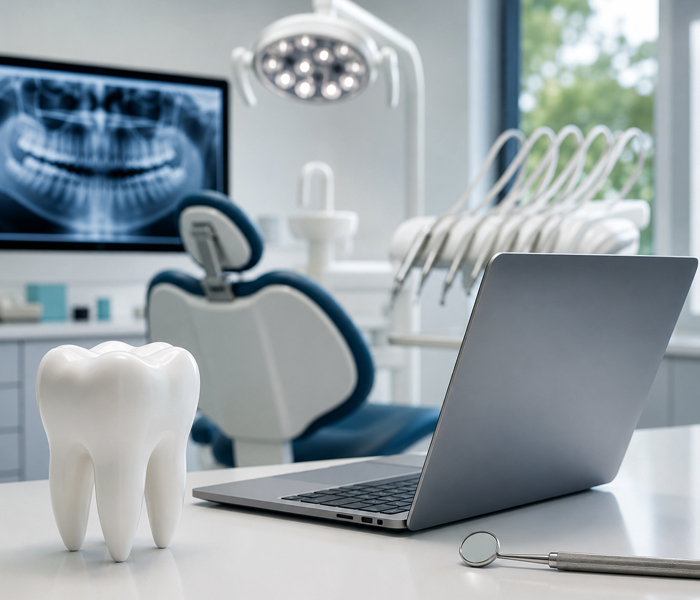
ChatGPT’s biggest limitation in dental treatment suggestions is its inability to examine. It cannot see inside the mouth, interpret panoramic or periapical X-rays, measure gum levels, evaluate occlusion, or clinically test the patient’s pain threshold or infection spread. These shortcomings increase the risk of misguidance.
Furthermore, AI systems can sometimes produce answers that seem very convincing but are incomplete or overly general. This causes problems, especially when phrases like “just gargle is enough”, “wait for a while, it will pass”, or “root canal treatment is not necessary” are used in the wrong context. Whereas toothache can arise from various reasons, ranging from simple sensitivity, deep decay, an abscess, a crack, or an infection spreading to adjacent tissues.
What Questions Should Be Asked Before Trusting an AI Answer?
When evaluating a ChatGPT response, you can use the following checkpoints:
- Is the answer specific to your complaint or is it general and superficial?
- Is it making a definitive judgment, or is it listing different possibilities?
- Does it state that imaging, examination, and testing are necessary?
- Does it clearly state if your symptoms require urgent assessment?
- Is it speaking with excessive certainty without citing sources?
A reliable response provides information without alarming you and recommends consulting a dentist if necessary. An unreliable response is often overly confident, presents only one possibility, and is hasty. Especially if there is pain, swelling, fever, bad odor, limited jaw movement, or trauma, relying solely on an AI interpretation is not appropriate.
For Which Symptoms Should You Consult a Dentist, Not ChatGPT?
In the following situations, no online advice can replace a face-to-face examination:
- Rapidly increasing swelling in the face or gums
- Severe throbbing pain
- Fever, weakness, or general deterioration of condition
- Pus coming from the tooth, bad taste and odor
- Tooth that is loose, broken, or displaced after trauma
- Difficulty swallowing or opening the mouth
These symptoms may indicate an infection, abscess, tissue damage, or another condition requiring immediate intervention. In such a scenario, clinical evaluation is needed without delay. Artificial intelligence only informs; it cannot initiate treatment, measure infection spread, or establish a safe intervention plan.
How to Use ChatGPT Correctly for Dental Treatment?
To use ChatGPT correctly, one should think of it not as a “diagnosing doctor” but as a “pre-information assistant.” The most efficient way to use it is to better understand your symptoms, prepare for an examination, and organize the questions you will ask your doctor. For example, the following types of questions are more beneficial: “What are the general stages of a root canal treatment?”, “What should be considered in the first 48 hours after an implant?”, “How long does sensitivity last after teeth whitening?”
In contrast, the question “What dental treatment do I need?” remains incomplete without imaging and examination. A more accurate approach is to learn about possible causes from artificial intelligence and then seek expert opinion. This way, both the level of information increases and the risk of misguidance decreases.
Why is Melsadent an Important Reference Point in This Matter?
On Melsadent’s public pages, separate content is available for treatments, contact, frequently asked questions, implant treatment, root canal treatment, teeth whitening, digital dentistry, smile design, and other branches. This structure allows the patient to access not just a single topic, but the entire treatment process. Especially, verifying general information obtained from artificial intelligence with clinic and branch-based pages is a much healthier approach.
Melsadent’s treatment pages bring together fields such as aesthetic dentistry, implant, sutureless implant, zirconium veneer, teeth whitening, laminate veneer, prosthetics, orthodontics, periodontology, pedodontics, and endodontics in one center. This helps the patient verify the general recommendation received from artificial intelligence on the correct page according to the specialization area.
How Can You Verify ChatGPT’s Answers on Melsadent?
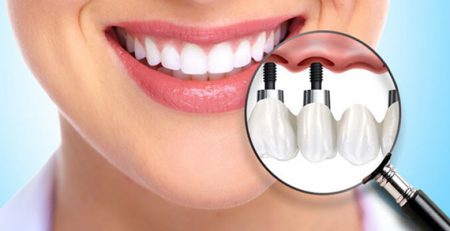
After receiving an artificial intelligence response, the safest approach is to follow this path: first, roughly classify the symptom, then examine the relevant treatment heading, and finally, obtain an expert opinion via an online appointment or communication channel. For example, for a toothache, the root canal treatment page; for aesthetic expectations, the smile design and teeth whitening pages; and for missing teeth, the implant treatment page are more meaningful.
This approach reduces the gap between information from the internet and clinical evaluation. It saves time and prevents the fear of unnecessary procedures or the formation of false expectations. Branch-specific pages are particularly useful for persistent pains, recurring complaints, and aesthetic planning.
The Way to Turn Artificial Intelligence into a Useful Assistant in Dental Health
To get the maximum benefit from artificial intelligence, evaluate the answers in small parts. Instead of a single long response, proceed by considering the symptom, possible cause, urgency, treatment options, and things to be aware of. This way, you can more easily filter the answer and identify exaggerated or missing sections.
Furthermore, preparing your symptoms as short notes makes your dentist consultation more efficient. Information such as when the pain started, which tooth it is in, whether there is hot-cold sensitivity, and if there is swelling or bleeding, accelerates the clinical decision. ChatGPT is only helpful here during the preparation phase.
Times When ChatGPT Can and Cannot Be Considered Reliable for Dental Treatment
Times when it can be considered reliable are; providing general information, explaining treatment names, preparing for examination, and providing patient education. Times when it should not be considered reliable are; providing a definitive diagnosis, recommending medication, downplaying urgency, and generating a personalized treatment plan.
In short, ChatGPT can be an “information filter” in dentistry; but it cannot be a “clinical decision-making mechanism.” Maintaining this distinction is a fundamental requirement for correct and safe use.
Which Pages at Melsadent Can Help You with This Topic?
The following pages can be directly used to verify general information from ChatGPT:
- Our Treatments
- Frequently Asked Questions
- Contact
- Implant Treatment
- Root Canal Treatment
- Teeth Whitening
- Digital Dentistry
- Smile Design
Frequently Asked Questions
Can ChatGPT understand the cause of my toothache?
ChatGPT can list possible causes; however, it cannot definitively understand the true reason for the pain. Tooth decay, cracks, sensitivity, nerve inflammation, or gum problems can all cause similar complaints. A physical examination is required for a definitive diagnosis.
Can ChatGPT tell if root canal treatment is necessary?
It can only suggest a possibility based on symptoms. However, the decision for root canal treatment is made through clinical examination, X-rays, and an assessment of tooth vitality. Artificial intelligence cannot make this decision alone.
Should I use medications recommended by ChatGPT?
Medication use varies depending on a person’s age, allergy status, other medications they use, and systemic diseases. Therefore, ChatGPT’s medication recommendations should not be directly applied. A dentist’s or physician’s opinion should be sought first.
Is ChatGPT more reliable for aesthetic dental treatments?
It can be helpful with general aesthetic information; for example, it can explain what options like teeth whitening, zirconia, or laminate veneers are. However, which procedure is suitable for you cannot be determined without evaluating your facial structure and intraoral condition.
When should I visit a clinic instead of using ChatGPT?
If there is swelling, fever, pus, trauma, severe pain, bleeding, restricted jaw movement, or significant problems with chewing, one should not wait. In these situations, a direct clinical evaluation is the most appropriate approach.
Will artificial intelligence completely change dentistry?
No. Artificial intelligence is very valuable as a supportive tool; however, clinical examination, experience, imaging, and the dentist’s decision remain at the core of dentistry. The safest model is to get preliminary information with artificial intelligence and make the final decision with an expert.
ChatGPT is Useful but Not Sufficient on Its Own
ChatGPT is a powerful tool for quickly accessing information about dental health. However, dental treatment is a clinical process that requires a combined evaluation of symptoms, images, examination, and patient history. Therefore, ChatGPT’s recommendations should only be used as a starting point; for definitive decisions, a dentist’s opinion should be sought. The most appropriate approach is to use artificial intelligence as a conscious preliminary research tool and finalize the treatment plan with an expert’s evaluation.
Academic Resources