Wavy Lines Formed on My Teeth | Causes and Treatment
Wavy Lines Appeared on My Teeth: What Does This Mean?
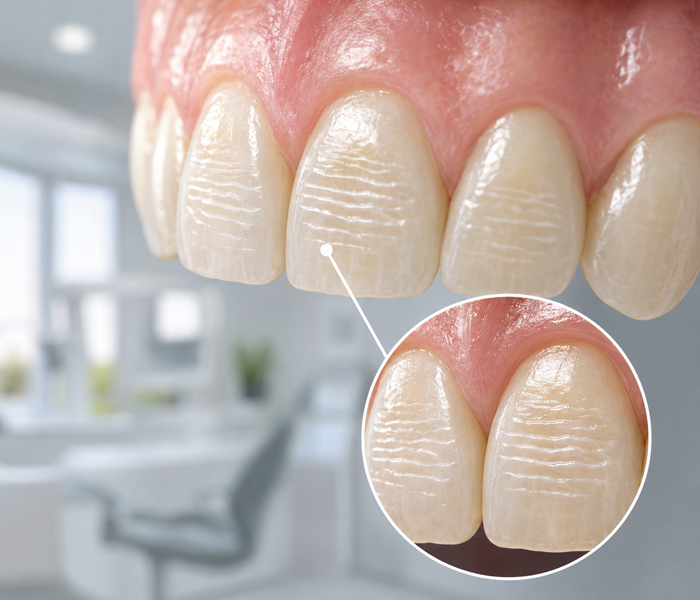
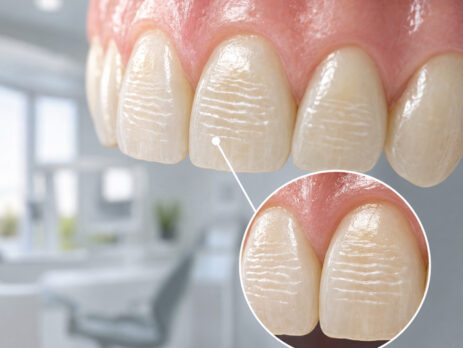
“Wavy lines” on the tooth surface are an appearance most often noticed by patients when looking in the mirror but which they cannot fully name. Sometimes this condition becomes more pronounced with light reflection; and sometimes there is truly roughness, grooves, lines, wear, discoloration, or surface irregularity on the enamel surface. Most people consider this appearance an aesthetic problem. However, in some cases, this picture may be related to a developmental defect in the tooth enamel, nocturnal teeth grinding, acid erosion, tartar accumulation, or gum recession.
The complaint “wavy lines appeared on my teeth” is not a disease name on its own. This is a symptom. Therefore, the underlying cause needs to be correctly understood. Because while the undulation on the surface can sometimes be a completely harmless difference in enamel structure, it can also sometimes be the first sign of progressive tooth wear, bruxism, enamel cracks, or periodontal problems.
At Melsadent Oral and Dental Health Polyclinic, when such an appearance is noticed, the surface structure, occlusion of the teeth, gum level, sensitivity, and any accompanying complaints are evaluated together. Because the same appearance can arise for different reasons in different patients.
Why Do Wavy Lines Appear on Teeth?
Among the most common causes of this appearance are enamel development problems, teeth clenching habits, chemical abrasion, tartar, gum recession, and superficial cracks. The structure of tooth enamel should be smooth and shiny. When this structure is compromised, light refracts differently on the surface, and a wavy appearance may emerge.
- Enamel development disorders: If the enamel does not develop smoothly enough during the tooth’s formation period, linear, grooved, or wavy marks may be visible on the surface.
- Bruxism, i.e., teeth clenching and grinding: Excessive clenching, whether at night or during the day, can cause wear on the tooth surface and an uneven appearance.
- Acid erosion: Frequent consumption of acidic beverages, reflux, or eating disorders can thin the enamel and create undulations on the surface.
- Tartar and plaque accumulation: Hard structures that accumulate especially along the gum line can make the tooth surface appear irregular.
- Gum recession: When the root surface is exposed, a feeling of striations or lines on the teeth may occur due to differences in color and texture.
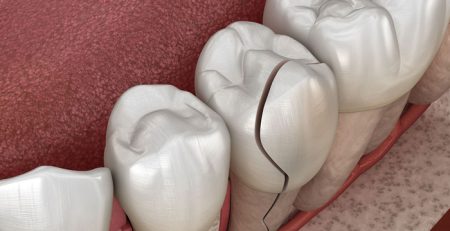
- Enamel cracks and micro-fractures: Often difficult to notice with the naked eye, but they appear as lines under light.
Some of these causes trigger each other. For example, bruxism can cause wear on the tooth surface; the worn surface then becomes sensitive; due to sensitivity, the person reduces brushing, and plaque accumulation increases. Thus, the problem can evolve into a broader picture than it initially appears.
Which Are the Most Commonly Confused Conditions?
Wavy lines on teeth do not always mean decay. In fact, most of the time, they suggest changes in the surface structure rather than decay. However, patients may confuse this appearance with the following conditions:
- Tooth decay: Decay usually causes softening, discoloration, sensitivity, and a feeling of a cavity.
- Fluorosis: White spots or a streaky appearance may occur due to excessive fluoride exposure.
- Enamel hypoplasia: The amount of enamel is low; it can create a grooved or streaky surface.
- Dental calculus: A hard and rough layer is felt on the surface.
- Microfractures: They appear like lines in the light, especially on the front teeth.
The most important point for differential diagnosis is whether the lines are merely visual or a surface irregularity that can be felt when touched. If you feel a distinct roughness with your finger or tongue, professional evaluation becomes even more crucial.
How Does Bruxism Lead to This Appearance?
Bruxism, or teeth clenching and grinding, is one of the most common habits causing wear on the tooth surface. Most people don’t notice it at night. The problem arises when jaw fatigue, headache, sensitivity, a feeling of pressure around the ear, or flatness on the teeth is noticed in the morning. Prolonged clenching behavior creates microscopic wear on the incisal and chewing surfaces of the teeth. This wear can, over time, give a wavy, stepped, or streaky appearance.
If you also suspect nighttime clenching, Melsadent’s bruxism treatment and night guard information offer a more detailed framework on this subject. Additionally, you can find the effects of teeth clenching on gums in the gum recession article.
Bruxism is not merely an aesthetic problem. If left untreated, it can lead to a broader range of issues such as enamel loss, sensitivity, filling and crown fractures, jaw joint problems, and muscle pain.
Enamel Developmental Defects and Wavy Appearance
In some individuals, even after teeth erupt in the mouth, distinct lines or undulations may be observed on the surface. The reason for this is often that enamel formation during tooth development was not complete and uniform. Enamel developmental defects can be seen in a single tooth, a group of teeth, or all teeth. In mild cases, fine white lines, shallow grooves, or differences in luster appear on the surface. In more pronounced cases, discoloration, pitting, and fragility may occur.
In such developmental defects, the most important aspect is how well the surface is protected. If the lines are merely an aesthetic difference and are not accompanied by sensitivity, fracture, or decay, monitoring may be sufficient. However, if the surface becomes rough, fragile, or discolored, then protective or restorative treatments become relevant.
Gum Recession and Surface Differences
When the gum recedes, the tooth root becomes exposed. The root surface has a different texture than enamel, and therefore the color, brightness, and surface perception change. The patient sometimes describes this as “my teeth look wavy.” Especially if the gum line becomes irregular, some teeth appear longer than others, and sensitivity accompanies it, a gum-related problem should be considered.
For detailed information about gum health, you can check out the content on periodontology and gum diseases. When gum recession progresses, not only the appearance but also chewing comfort and the long-term durability of the tooth can be affected.
How Do Tartar and Plaque Accumulation Change the Surface?
When plaque is not regularly cleaned, it hardens and turns into tartar. Tartar is mostly seen on the inner surfaces of the teeth, in areas close to the gum line, and at points where accumulation is intense. Due to its hard and irregular structure, the tooth surface can be perceived as wavy, rough, or striped. For this reason, patients sometimes mistake the problem as being with the tooth itself, when in fact, the problem is the accumulation on the surface.
Melsadent’s content on tartar cleaning and what is tartar explains in detail why this accumulation occurs and why it needs to be regularly cleaned. Because tartar is not just a cosmetic problem; it can increase gum inflammation, bad breath, and in the long run, periodontal damage.
Which Symptoms Should Be Taken More Seriously?
If one or more of the following symptoms are present along with wavy lines, the examination should not be delayed:
- Sensitivity to cold, hot, or sweet
- Soreness or bleeding during brushing
- Jaw fatigue, headache in the mornings
- Sensation of teeth lengthening or shortening
- Dulling, whitening, or discoloration on the surface
- Gum recession
- Sensation of catching, breaking, or cracking while chewing
Even if one of these complaints is present, it should be considered that the condition is not merely cosmetic. Especially rapidly changing surface appearance may suggest an underlying active erosion or gum disease.
How is it evaluated during examination?
When you visit the clinic, the dentist first inquires about when the complaint started, which teeth are affected, and whether there is accompanying sensitivity. An intraoral examination is then performed. If necessary, magnified examination, photographic record, bite analysis, and X-ray evaluation are requested.
The evaluation seeks answers to the following questions:
- Is the appearance enamel-related or calculus-related?
- Is active wear continuing on the surface?
- Is there bruxism or a malocclusion?
- Is gum recession accompanying it?
- Is it an aesthetic problem, a functional problem, or both?
Aesthetic interventions performed without a correct diagnosis may not solve the problem. In fact, sometimes they can cause further wear on the surface. Therefore, the cause must first be clarified, and then the treatment planned.
What are the Treatment Options?
Treatment varies depending on the underlying cause. The same method is not applied to every patient.
- Dental calculus cleaning and polishing: Accumulation-related roughness is cleaned, the surface is smoothed.
- Bruxism control: Night guard, occlusal adjustment, and if necessary, muscle relaxant approaches are planned.
- Fluoride and remineralization support: Protective support can be provided on surfaces with sensitivity and enamel weakness.
- Composite restoration: Aesthetic correction can be performed for surface loss or minor irregularities.
- Crowns or veneers: These may be preferred for more advanced aesthetic and structural problems.
- Periodontal treatment: If there is gum recession or inflammation, gum health is the priority.
The important point here is the difference between “correcting the appearance” and “solving the root cause of the problem.” Merely covering the surface does not provide a permanent solution if there is underlying, ongoing clenching or acid erosion.
What Can Be Done and What Should Not Be Done at Home?
The most appropriate thing to do at home is not to strain the surface. Using hard-bristled brushes, relying on abrasive toothpastes, or indiscriminately using whitening products can sometimes make the situation more apparent.
- Use a soft-bristled toothbrush.
- Avoid abrasive toothpastes.
- Reduce acidic beverage consumption.
- If bruxism is suspected at night, seek an evaluation.
- If you have sensitivity, do not apply harsh whitening treatments yourself.
Things that should not be done include random “micro-abrasives” seen online, abrasive baking soda mixtures, or uncontrolled at-home whiteners. While these may give a feeling of cleanliness in the short term, they can further weaken the enamel.
Who Is More Prone to It?
This type of surface changes is more frequently observed in the following groups:
- Those who have a habit of grinding their teeth at night
- Those who frequently consume acidic drinks
- Those with reflux complaints
- Those with inadequate oral hygiene
- Those experiencing gum disease
- Individuals with enamel development defects
- Those with a history of orthodontic or restorative treatment
In some patients, more than one risk factor is present together. For example, if both bruxism and gum recession are present, the surface appearance can become much more pronounced.
How Is This Complaint Handled at Melsadent?
At Melsadent Oral and Dental Health Polyclinic, the goal is not merely to eliminate the visible line; it is to find the cause of the line, stop its progression, and establish an aesthetic-functional balance together. Therefore, the evaluation is usually holistic, considering the tooth surface, occlusal relationship, gum health, and habits.
If you wish to review related pages before applying, the following content may be helpful: bruxism, periodontology, gum recession, dental scaling and for general informative content Useful Information.
An appointment can be made directly via the contact page for an examination.
Why Is This Topic Academically Important?
The wavy or ridged appearance on the tooth surface is often discussed in academic literature in conjunction with enamel developmental defects, tooth wear, and bruxism. Enamel hypoplasia can create groove and line-like defects on the surface when enamel formation is impaired. While the relationship between tooth wear and bruxism is not always one-to-one, it is an important topic in clinical evaluation. Furthermore, it is stated that in bruxism management, a splint/mouthguard is useful in protecting teeth from damage, but it does not reduce the frequency of bruxism on its own. Therefore, the problem should be managed with a cause-focused plan, not just with a single product.
For detailed scientific background, the following resources can be examined:
- Enamel hypoplasia and its role in identification of individuals
- Tooth wear and bruxism: A scoping review
- Bruxism Management – StatPearls
- Dental Enamel Formation and Implications for Oral Health and Disease
Frequently Asked Questions
Do the wavy lines on my teeth mean decay?
No, it doesn’t always mean decay. Differences in enamel development, wear, tartar, gum recession, or surface cracks can also create a similar appearance.
Will these lines increase over time?
If the cause is bruxism, acid erosion, or gum disease, they can increase. Therefore, early evaluation is important.
Can it be fixed by changing toothpaste at home?
The slight rough feeling on the surface may decrease in some cases, but it does not solve the underlying cause. Clinical evaluation is necessary in sensitive or prominent cases.
I clench my teeth at night, could the lines be from that?
Yes, bruxism can cause wear and a linear appearance on the tooth surface. This possibility increases, especially if there is morning jaw pain or tooth sensitivity.
Can tartar cause this appearance?
Yes. Especially hard deposits near the gum line can make the surface appear wavy and rough.
In what situation should I make an emergency appointment?
If there is severe sensitivity, cracking, fracture, gum bleeding, gum recession, or rapidly changing surface appearance, one should not delay.
Does this condition only occur on front teeth?
No. It is noticed more frequently on front teeth because it is more visible there; however, it can also occur on back teeth.
Is a permanent solution possible?
Yes, but the solution should be planned according to the cause. While cleaning and preventive care are sufficient for some patients, others may require a night guard or restorative treatment.
Take Wavy Appearance Seriously Early
Wavy lines on teeth are often an early sign. This means the problem can be noticed while it is still in its initial stage. This provides a significant advantage in terms of treatment. Because enamel wear, tartar accumulation, effects of bruxism, and gum problems noticed in the early stages are more easily controlled. Waiting, however, can turn an aesthetic problem into a functional one.
If you have also noticed wavy lines, striations, a rough surface, discoloration, or sensitivity on your teeth, an evaluation by a specialist dentist is the most accurate step to clarify the cause. At Melsadent, the goal is not only to make your teeth look smoother but also to create a healthy and balanced oral structure in the long term.
For an appointment and detailed evaluation, you can use the contact page.