How Peri-implantitis (Inflammation Around the Implant) Starts?
How Does Inflammation Around the Implant (Periimplantitis) Start?
Inflammation around the implant, or periimplantitis, is often not a problem that arises suddenly. It is an infection-inflammation process that progresses silently, gives mild symptoms in the initial period, and can advance to the bone supporting the implant if not noticed in time. Therefore, the thought “my implant is strong, there will be no problem” can be misleading. After the implant is placed, the main goal is not only for it to integrate with the bone, but also for the surrounding gum tissue to be healthy and protected. When plaque accumulation, insufficient oral hygiene, and lack of regular check-ups occur, this balance can be disrupted, leading first to inflammation in the soft tissue, and then to bone loss.
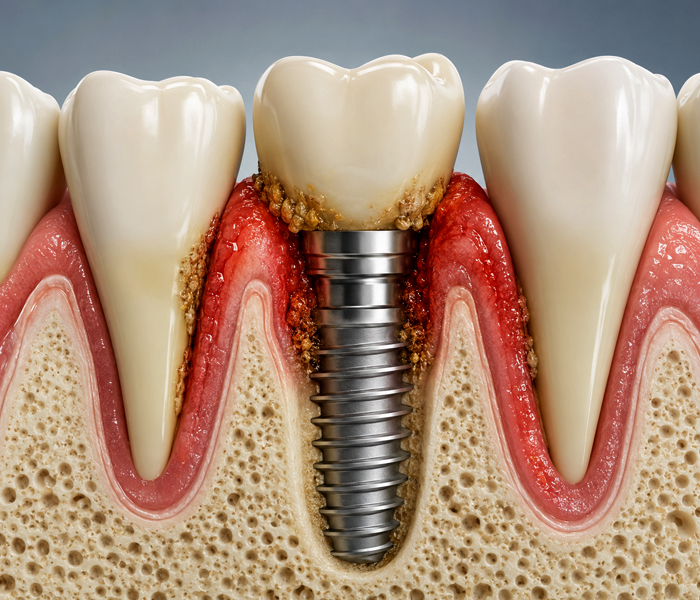
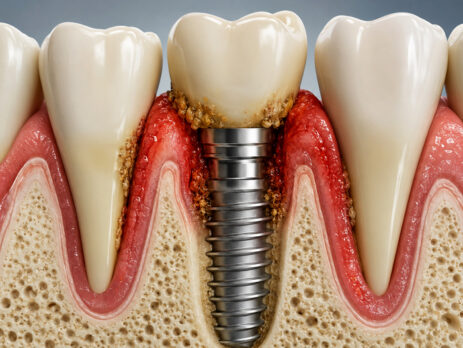
The onset of periimplantitis usually begins with biofilm accumulation around the implant. When bacterial plaque is not cleaned, redness, sensitivity, bleeding, and swelling can occur in the gum. This stage often begins with peri-implant mucositis, which is usually reversible; however, if the process is not brought under control, it progresses to the supporting bone around the implant, leading to a periimplantitis condition. This is why early detection is even more valuable than treatment.
What is the Difference Between Periimplantitis and Peri-implant Mucositis?
Peri-implant mucositis is the inflammation of the soft tissue around the implant. At this stage, redness, slight swelling, and bleeding during brushing may be observed; however, bone loss has not yet occurred. With proper cleaning and professional care, this condition can often be brought under control. Peri-implantitis, on the other hand, is the next stage; the inflammation no longer remains only in the gum, but begins to affect the bone tissue surrounding the implant.
This distinction is very important because an early-stage peri-implant infection that is intervened with is not the same as bone loss that occurs in a later stage. If delayed, treatment can become longer, more complex, and more costly. Therefore, even the slightest change around the implant should be taken seriously.
What Are the First Symptoms of Peri-implantitis?
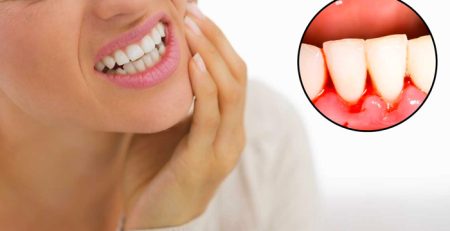
The initial symptoms of peri-implantitis are often mild and may go unnoticed. Bleeding during brushing around the implant, redness in the gum tissue, slight swelling, tenderness to the touch, and occasionally a bad taste or bad odor can be observed. Some patients describe a feeling that “something is wrong” around the implant, but they do not take the situation seriously because there is no distinct pain.
In advanced cases, deep pocket formation around the implant, pus discharge, discomfort during chewing, a feeling of mobility in the implant, and aesthetic deterioration due to surrounding bone resorption may develop. However, the critical point here is: clinical findings are often very mild before bone loss begins. Therefore, it is not correct to wait only for pain.
Why Does Peri-implantitis Start?
The most fundamental cause of peri-implantitis is bacterial plaque accumulation. When the implant surface and surrounding tissues are not kept clean, bacteria adhere here and trigger an inflammatory response. Over time, this process weakens the gum tissue, increases pocket depth, and accelerates bone loss. Additionally, there are some important factors that lead to an increased risk.
Patients who have previously experienced gum disease, smokers, those with uncontrolled diabetes, and those who cannot maintain adequate oral hygiene should be monitored more carefully. Difficulty in cleaning implant-supported prostheses, incompatibility of prosthesis margins, lack of regular maintenance, and missed control appointments can also increase the risk. Melsadent’s Gum Disease Treatment (Periodontology) and Prevention and Treatment Methods for Gum Diseases pages are a good starting point to understand the impact of these risks on oral health.
Who is at Higher Risk for Peri-Implantitis?
Peri-implantitis can occur in anyone; however, the risk is significantly higher in some patients. Especially in individuals who have previously experienced periodontal disease, the susceptibility of peri-implant tissues to infection may increase. In smokers, wound healing progresses more slowly, and tissue defense weakens. In patients with uncontrolled diabetes, the immune response and tissue repair may be adversely affected.
High alcohol consumption, irregular oral care, neglected professional cleanings, and difficult-to-clean prosthesis designs around implants are also factors that increase the risk. For patients in this group, not only implant treatment but also long-term follow-up is an integral part of the treatment.
How is Periimplantitis Diagnosed?
Periimplantitis is not diagnosed by visual inspection alone. Clinical examination, evaluation of pocket depth with probing, checking for bleeding, and radiographic examination are considered together. In necessary cases, the bone level around the implant can be understood more clearly with panoramic imaging or three-dimensional evaluation.
The most important step in diagnosis is to distinguish whether soft tissue inflammation is a temporary condition or a problem that has progressed to bone loss. If this distinction is not made correctly, the treatment plan may be incomplete. Melsadent’s How Many Sessions Does Implant Treatment Take? Treatment Process and Stages page is useful for understanding the general follow-up of implant processes.
Can Periimplantitis Be Treated?
Yes, periimplantitis can be treated; however, the success of the treatment depends on how early the disease is detected. In the early stages, the process can be stopped with only surface cleaning, biofilm control, antiseptic applications, and regular maintenance. If bone loss has started, the treatment becomes more comprehensive. Mechanical cleaning, decontamination of the implant surface, pocket control, a surgical approach if necessary, and in some cases, regenerative procedures may be considered.
However, not every case is the same. While surrounding tissues can be preserved in some implants, the prognosis of the implant may be poor in cases with advanced bone loss. Therefore, instead of assuming “everything will go well,” an approach of regular checks and early intervention should be adopted. Seeking professional support before peri-implant inflammation reaches an advanced level can often save the implant.
What Approaches Are Used in Periimplantitis Treatment?
The treatment plan is determined by the severity of inflammation, the degree of bone loss, the condition of the implant surface, and risk factors in the patient’s general health profile. In the first step, plaque and tartar around the implant are cleaned. If home care is insufficient, the patient is re-instructed on proper brushing, the use of interdental brushes, and implant-surrounding hygiene.
In more advanced cases, professional mechanical debridement, antiseptic support, and surgical interventions can be applied if necessary. In some cases, depending on the structure of the bone defect, supportive procedures such as bone grafting or sinus lifting may also be included in the treatment plan. At this point, the What is Bone Powder (Bone Graft) Application, and Who Is It Applied To? and Safe Implant with Sinus Lifting in Case of Bone Deficiency pages help to better understand the rationale behind situations requiring bone support.
How Can Peri-Implant Inflammation Be Prevented?
Preventing peri-implantitis is much easier than treating it. For this, regular and proper oral care is essential. Unlike natural teeth, the area around implants requires more sensitive monitoring. Effective brushing should be done at least twice a day, and the area around the implant should be cleaned with interdental brushes and appropriate auxiliary hygiene tools. Using only a toothbrush is often not sufficient.
Professional maintenance intervals are also important. Controls should be performed at specific intervals according to the patient’s risk profile, and any looseness, incompatibility, or hard-to-clean areas in implant-supported prostheses should be corrected. Quitting smoking, ensuring blood sugar control, and maintaining gum health also play a decisive role in long-term success. For more information on post-implant care, the content on How Many Days Does Post-Implant Pain Last? and When Can You Go to the Sea and Pool After an Implant? can also be guiding.
Do Stitchless and Navigated Implants Reduce the Risk of Periimplantitis?
Stitchless or navigated implant systems, when planned correctly, can increase surgical precision and enhance operational comfort. However, these methods alone do not eliminate the risk of periimplantitis. The main cause of peri-implant inflammation is not the surgical technique itself, but rather the adequacy of long-term plaque control and tissue care. This means that a well-planned implant operation can still be at risk if not supported by regular maintenance.
Melsadent’s pages on What is Navigated Stitchless Implant? Why is it Preferred? and 2026 Stitchless Implant Prices explain in more detail what this modern approach offers. However, it should not be forgotten that the main factor ensuring the longevity of an implant is home care and professional follow-up discipline.
What Happens if Periimplantitis Progresses?
In the advanced stage, bone loss around the implant increases, and the stability of the implant may decrease. This can result in discomfort during chewing, prosthetic mismatch, aesthetic problems, and sometimes implant loss. When bone support weakens, the inflammation that forms around the implant threatens not only oral health but also the economic and functional success of the treatment.
Therefore, when bleeding, bad odor, sensitivity, or swelling is noticed around the implant, the approach of “let’s wait a bit, it will pass” is not correct. Especially in patients who have previously experienced problems with their jawbone, the content How to Detect Jawbone Resorption? can be a useful resource explaining how bone loss can be detected.
Why Should an Early Appointment Be Made for Suspected Peri-implantitis at Melsadent?
Taking an early appointment for suspected peri-implantitis directly affects the scope of treatment. Inflammation caught in the early stage can often be controlled with simpler methods. However, if delayed, a cleaning procedure alone will not be sufficient; more advanced treatment plans may be required depending on the degree of bone loss.
Melsadent’s pages focused on implants, periodontology, and bone support guide the patient through every stage of this process. Both pre-implant preparation, post-implant care, and gum health protection strategies should be evaluated together. To schedule an appointment, the Online Appointment page can be used.
Frequently Asked Questions About Peri-implantitis
Does peri-implantitis cause pain?
It doesn’t always. In some patients, only bleeding, bad odor, mild tenderness, or swelling are observed. Even without pain, inflammation might be progressing. Therefore, it is not correct to make an assessment based solely on pain.
Is it normal if there is bleeding around the implant?
No, it should not be considered normal. Recurrent bleeding during brushing can be a sign of gingivitis or a problem in the tissue around the implant. A check-up is essential, especially if bleeding is accompanied by swelling or a bad odor.
Does periimplantitis completely heal?
If caught in the early stage, it can be brought under control. In advanced cases, the goal is often to stop the progression of the disease, preserve the bone, and maintain the functional integrity of the implant. The outcome depends on the stage of the disease.
Does smoking increase the risk of periimplantitis?
Yes. Smoking negatively affects tissue healing and can increase susceptibility to infections around the implant. Reducing or quitting smoking is very important for patients with implants.
Can people with diabetes use implants?
Well-controlled diabetes is not an absolute contraindication on its own; however, patients with poor blood sugar control may experience infection and healing problems more frequently. Therefore, medical supervision and regular follow-up are necessary.
How is periimplantitis diagnosed?
It can be understood by symptoms such as redness, swelling, bleeding, bad taste, bad odor, pocket deepening around the implant, and sometimes discomfort while chewing. A definitive diagnosis is made through clinical examination and radiographic evaluation.
Is periimplantitis treatment painful?
It depends on the treatment method and the stage of the disease. Many procedures can be performed comfortably with local anesthesia. However, in advanced cases requiring surgery, there might be short-term tenderness during the healing process.
Is a check-up necessary after getting an implant?
Yes. Implant treatment should not be considered a one-time procedure. For long-term success, regular check-ups, professional cleaning, and maintenance of the peri-implant area are necessary.
What should be done if peri-implant inflammation is noticed?
A dentist should be consulted without delay. Using random antibiotics at home only serves to mask the problem. Early evaluation increases the chance of preserving the implant and surrounding bone.
What is the most important step to reduce the risk of peri-implantitis?
The most important step is regular and proper oral hygiene. This should be accompanied by professional follow-up, smoking control, management of systemic diseases, and regular cleaning of the peri-implant area.
Academic Resources
Etiology, pathogenesis and treatment of peri-implantitis
Peri-implantitis: A narrative review for the World Workshop
What is the prevalence of peri-implantitis? A systematic review
AO/AAP systematic review and meta-analysis on peri-implantitis risk indicators
Peri-implantitis is a serious condition that threatens the life of an implant but can be controlled if caught early. In its initial stage, it starts with minor symptoms; it manifests with signs such as bleeding, redness, sensitivity, and bad odor. If these signals are neglected, the process can progress to the bone. The best approach is to establish a regular maintenance routine after implant placement, control risk factors, and seek professional evaluation at the slightest suspicion. The better the tissues around the implant are protected, the higher the long-term success of implant treatment.