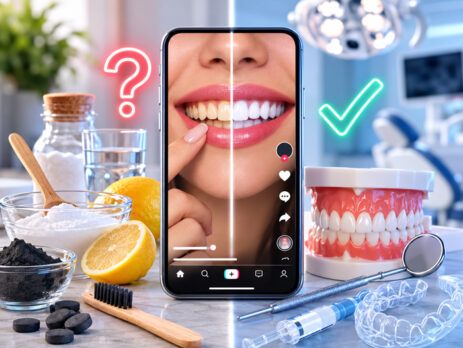
Are the Viral Tooth Whitening Methods on TikTok Safe?
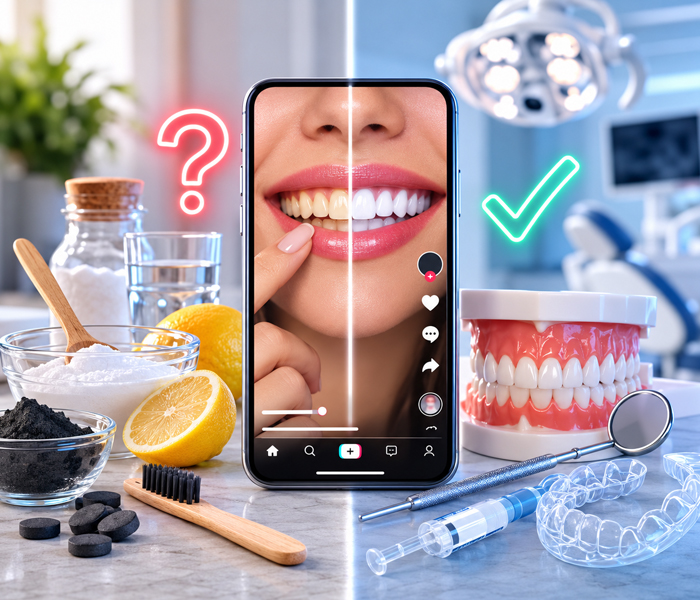
In recent years, tooth whitening videos circulating on TikTok have reached millions of users with the promise of a whiter smile in a short time. Baking soda, lemon, activated charcoal, hydrogen peroxide, “homemade” mixtures, whitening strips, light kits, and various viral recipes can seem attractive to those seeking quick results. However, tooth whitening is a procedure with biological effects as well as aesthetic ones. Incorrect product, wrong ratio, or improper application can lead to problems ranging from tooth sensitivity to gum irritation, enamel erosion, and unmet expectations.
As Melsadent Oral and Dental Health Polyclinic, in this article, we meticulously examine which teeth whitening methods that have gone viral on TikTok are truly reliable, which ones should be approached with caution, and what is the most appropriate path in the whitening process. Additionally, to see the clinical approach regarding this topic, you can also check out the pages Teeth Whitening (Bleaching), 2026 Teeth Whitening Prices, How Long Does Teeth Whitening Last?, and Sensitivity After Teeth Whitening.
Why Is Teeth Whitening So Popular on TikTok?
TikTok’s strongest feature is its ability to grab attention quickly. When a user shares a video with the title “Snow-white teeth in 3 days,” people naturally want to see the results. Especially since surface stains caused by coffee, tea, cigarettes, and colored beverages are very common in society, the promise of a white smile always garners high interest. However, popularity does not equate to accuracy. In teeth whitening content, “before-and-after” images, shocking headlines, and exaggerated promises are frequently used. This can lead users to try the content without looking into its scientific basis.
An academic TikTok review study has shown that tooth whitening videos on the platform provide low to medium quality information and that popular videos do not always contain sufficient or accurate content. This result clearly indicates that not every whitening technique seen on social media can be considered reliable. TikTok’s fast-consumption nature often pushes the risks of the application into the background. However, teeth are not suitable for a “try-and-see” approach.
How Does Tooth Whitening Actually Work?
Tooth whitening aims to lighten discolorations in tooth enamel and dentin, typically with agents containing hydrogen peroxide or carbamide peroxide. These substances break down color-causing organic structures, making the tooth appear lighter. In clinical applications, the dose, duration, and application method are under control. For home-use applications, a custom-made tray and an appropriate concentration gel prepared by the dentist are used. This ensures a balance between both efficacy and safety.
The critical point here is this: Whitening is more than just “cleaning” the tooth. The type of discoloration on the tooth surface, the condition of the enamel, existing fillings or veneers, gum health, and sensitivity level directly affect the outcome. Therefore, the claim of a “one-size-fits-all method” on the internet is not scientific. In Melsadent’s treatment approach, aesthetic planning is also done according to the individual’s oral structure. For a general treatment overview, our Treatments page is a good starting point.
Viral Methods: Which Ones Are Truly Reliable?
It is necessary to evaluate the methods frequently encountered on TikTok one by one. Because they are not all in the same category. Some may only help reduce surface stains, while others can cause direct harm.
Baking soda and lemon: This is one of the riskiest viral methods. Lemon is acidic; baking soda can be abrasive. When used together, the enamel surface can be damaged, and teeth can become more sensitive. Even if they appear “brighter” in the short term, this effect does not mean healthy whitening.
Activated charcoal: It is very popular on social media but has limited scientific support. Some products can reduce surface stains through abrasion; however, uncontrolled and frequent use can wear down enamel. Tooth whitening should not be confused with tooth surface abrasion.
Homemade mixtures with hydrogen peroxide: Peroxide-based products, in principle, show a whitening effect; however, concentration, contact time, and application control are very important. When used unconsciously at home, there is a risk of gum burns, sensitivity, and incorrect dosage.
Whitening toothpastes: These typically help with surface stains. When chosen correctly, they can be part of daily oral hygiene; however, they do not miraculously lighten deep discolorations. The promise of a “Hollywood Smile in a week” is not realistic.
Whitening strips and kits: Some OTC products can indeed be effective; however, the result depends on product quality, usage instructions, and oral structure. An ill-fitting tray, excessive contact, and concentrated ingredients increase the risk of sensitivity and gum irritation.
Professional in-clinic whitening: This is one of the most reliable options. Because the application is performed under the supervision of a dentist; gums are protected, dosage is adjusted, and risks are minimized. To view Melsadent’s page on this topic, you can check the Tooth Whitening (Bleaching) link.
What Are the Most Common Risks Scientifically?
In the ADA’s summary on whitening, it is stated that the most common side effects are tooth sensitivity and gum irritation; these are often mild and temporary. However, being “temporary” does not mean it is “insignificant.” Sensitivity can be observed more frequently, especially with high-concentration products. Gel that directly contacts the gums or ill-fitting trays can lead to irritation. Therefore, safety in whitening is more important than the product’s popularity. :contentReference[oaicite:1]{index=1}
Some users repeatedly try intense applications seen in TikTok videos to get quick results. However, frequent and uncontrolled use can increase sensitivity, create a burning sensation in the mouth, and mask existing problems. Home-based applications become more problematic, especially if there is gum recession, cracked enamel, or untreated cavities. In a professional approach, these risks are assessed from the outset, and if necessary, a treatment plan is made before whitening.
Who Should Stay Away from TikTok’s Whitening Methods?
Not every whitening method is suitable for everyone. Those with intense tooth sensitivity, gum problems, cracked enamel, or untreated cavities in their mouth should stay away from random social media applications. Furthermore, restorations such as porcelain veneers, laminates, fillings, or crowns do not whiten like natural teeth. Therefore, acting with the logic of “it worked for my neighbor” often creates a discrepancy in expectations.
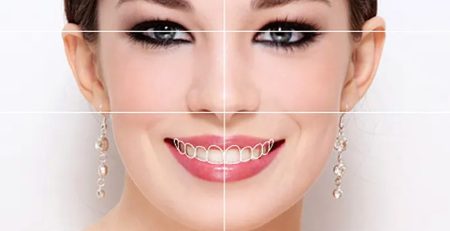
Especially if aesthetic planning is to be done, not only whitening but the entire smile should be evaluated. In some cases, whitening is sufficient; in other cases, solutions like Porcelain Laminate Veneers or Zirconium Crowns might be more suitable. The most accurate person to make this distinction is a dentist, not an algorithm.
What is the Safest Way for Teeth Whitening?
A safe whitening process should be considered in three stages: examination, planning, and controlled application. In the first step, the oral condition is evaluated. If there are cavities, cracks, gum problems, or intense sensitivity, these are addressed first. In the second step, an in-office or at-home plan is created according to the individual’s needs. In the third step, controlled application is performed, and supportive products are used if necessary.
This approach differs from the quick promises on TikTok; because the goal is not just to look whiter, but to achieve this while maintaining oral health. Melsadent’s 2026 Teeth Whitening Prices and How Long Does Teeth Whitening Last? content is also useful for planning and expectation management. If you experience sensitivity, you can also review the Sensitivity After Teeth Whitening page.
What Should You Pay Attention to When Watching Whitening Videos on TikTok?
The before-and-after effect in a video can be very powerful; however, how it was achieved is often not explained. It is not appropriate to make a decision without knowing the concentration of the product used, the application duration, the individual’s tooth structure, restorations, and accompanying oral health problems. The number of comments or likes on a video is also not a measure of reliability. Academic studies also show that popular videos do not always provide accurate information.
When evaluating content, ask the following questions: What is the product? At what concentration is it used? Is there a dentist’s recommendation? Are the gums protected? Has the individual’s oral structure been taken into account? Is the result realistic? If there are no answers to these questions, the content is most likely an advertisement or an experimental share.
What is the Approach at Melsadent?
At Melsadent, teeth whitening is regarded not merely as an aesthetic procedure, but as a personalized oral health application. The goal is to achieve white, natural, and healthy-looking teeth while minimizing sensitivity and gum problems. You can view the clinic’s general treatment approach on our Treatments page, and examine the details of the whitening service directly on the Teeth Whitening (Bleaching) page.
Furthermore, it is important to provide special information to patients experiencing sensitivity after whitening, discuss risks beforehand, and share appropriate care recommendations. In this way, the whitening procedure ceases to be a short-term social media trend and transforms into a controlled and sustainable aesthetic solution. If your smile has issues not only with color but also with form, symmetry, or surface texture, other aesthetic treatments can be considered instead of or in conjunction with whitening.
Result: Not Every Whitening Method on TikTok Is Reliable
The short answer is clear: Not all teeth whitening methods that go viral on TikTok are reliable. Some may reduce surface stains to a limited extent; while others can damage tooth enamel and gums. Scientific data supports the controlled use of professional or correctly chosen products; while indicating caution should be exercised regarding random mixtures, acidic ingredients, and excessive applications.
If your goal is truly a white but healthy smile, the most accurate step is not to browse social media, but to get a dental evaluation. This will clarify which method is suitable for you, how long it will take, and what risks it carries. Remember: Safe whitening starts not with a quickly visible result, but with proper planning.
Frequently Asked Questions
Is the baking soda and lemon method seen on TikTok safe?
No, it is not considered safe. The combination of acidic and abrasive effects can damage the enamel surface and increase tooth sensitivity.
Does activated charcoal really whiten teeth?
It may show limited effect on some surface stains; however, uncontrolled use can lead to enamel abrasion. It should not be considered a permanent and safe solution.
Is using whitening toothpaste harmful?
With the right product and proper use, it is generally safe. However, it does not solve deep discolorations; it mainly helps with surface stains.
What is the difference between professional teeth whitening and products on social media?
In professional application, concentration, duration, and gum protection are under control. In products recommended on social media, this control is often lacking.
Is sensitivity after teeth whitening normal?
Yes, temporary sensitivity can be observed. According to the ADA, this is a common side effect and is often short-lived. In cases of severe or prolonged complaints, a dentist’s evaluation is required. :contentReference[oaicite:2]{index=2}
Can everyone get their teeth whitened?
No. If there are gum problems, intense sensitivity, decay, cracked enamel, or existing restorations, an examination is required first. The decision for whitening should be made on an individual basis.
Is at-home whitening or in-office whitening safer?
When properly planned, both can be applied; however, in-office whitening is generally considered safer due to dentist supervision. Which method is suitable depends on the oral structure.
Do veneers and fillings whiten in the same way?
No. Natural tooth tissue responds to whitening; restorations like porcelain veneers and fillings do not change color in the same way. Therefore, aesthetic planning should be done in advance.
When should I see a dentist?
If you experience pain, burning, gum bleeding, prolonged sensitivity, or unexpected changes on the tooth surface after using a home product, you should be examined without delay.
What should be the first step for safer whitening?
The first step is an examination. Choosing a product without seeing the intraoral condition is much safer than acting based on a social media video.
Scientific Basis
To examine the relevant resources in more detail, the following links can be considered:
PubMed – Tooth whitening: what we now know
PubMed – Safety issues of tooth whitening using peroxide-based products
DergiPark – Assessment of tooth whitening videos on TikTok