Why Does My Tooth Hurt When Chewing?
Why Does My Tooth Hurt When Chewing?
Tooth pain that occurs while chewing is a common oral and dental health complaint in daily life, but its cause is not always easily understood. The tooth may not cause any pain throughout the day; however, it can suddenly ache when biting into bread, meat, nuts, or another food. Some people describe this situation as “it hurts when I press on my tooth”, “only my tooth hurts when I eat”, “only one tooth hurts when I chew something hard”, or “pain shoots into my tooth when I bite”.
Tooth pain while chewing is not a symptom of a single disease. Many different problems such as tooth decay, cracked or broken teeth, inflammation at the root tip, a high filling or crown, deterioration of old restorations, gum diseases, and teeth clenching can cause pain during chewing.
The fact that pain only occurs during pressure does not mean that the affected tooth is healthy. Especially if the pain recurs in the same tooth, increases over days, or if other symptoms such as hot-cold sensitivity, swelling, and throbbing appear, a dental evaluation may be necessary.
At Melsadent Oral and Dental Health Polyclinic, in patients complaining of pain during chewing, not only the painful area; the vitality of the tooth, existing fillings and crowns, gum tissues, occlusal relationship, and, if necessary, radiographic findings can be evaluated together. The aim is not merely to temporarily reduce the pain, but to identify the underlying cause of the pain and preserve the natural tooth tissue as much as possible.
Why Does Toothache Occur While Chewing?
During chewing, a certain amount of force is applied to the teeth. A healthy tooth can withstand these forces without causing pain under normal circumstances. However, if there is a problem with the tooth itself, the tissues around the root, restorations like fillings or crowns, or the periodontal structures supporting the tooth, chewing pressure can trigger pain.
Among the most frequently evaluated conditions in teeth causing pain while chewing are tooth decay, cracked tooth, fractured tooth tissue, pulp inflammation, inflammation around the root apex, high filling or crown, deterioration of old restorations, gum diseases, and teeth grinding.
Therefore, it is not correct to reach a definitive conclusion like “root canal treatment is needed” or “the filling is high” merely by looking at the symptoms. The same symptom can be observed in different dental problems.
Can Tooth Decay Cause Pain While Chewing?
Yes. Tooth decay is one of the most common problems that can cause pain during chewing. In their initial stages, cavities often do not cause any pain. However, when decay progresses past the enamel layer and into the dentin layer, the tooth can become more sensitive.
Pain can be felt when food particles enter the cavity formed in the tooth tissue due to decay, or when pressure is applied to weakened tooth tissue during chewing. Especially experiencing sensitivity with sweet, cold, or hot foods may necessitate evaluating the possibility of decay.
When decay progresses and approaches the pulp tissue in the center of the tooth, the character of the pain may change. Initially, sensitivity that only appears when chewing can, over time, turn into spontaneous pain, night pain, or throbbing pain that persists for a long time after hot or cold exposure.
Not every decay requires root canal treatment. Many early and moderate dental decays can be treated with filling applications within the scope of restorative dental treatment. The extent to which the decay has approached the pulp tissue can affect the treatment to be applied.
For more detailed information on this topic, the content prepared by Melsadent, When Does a Decayed Tooth Require Root Canal Treatment?, can also be reviewed.
Why Does a Cracked Tooth Cause Pain When Biting?
One of the important causes of sudden sharp pain when chewing or biting a hard food is a cracked tooth. Tooth cracks are not always large enough to be visible to the naked eye. Especially fine cracks in posterior molar teeth may not be easily detected during a standard examination or in some radiographs.
When chewing force is applied to a cracked tooth, the tooth tissues on both sides of the crack may move in very small amounts. This movement can affect the sensitive tissues within the tooth, causing a brief but sharp pain.
One of the most characteristic symptoms in cracked teeth is sudden pain that occurs when the biting force is released. The patient may feel a brief but distinct pain when they bite down on a hard food or immediately after releasing the pressure on the food.
In cracked teeth, cold sensitivity, occasional spontaneous throbbing, pain when chewing at a specific point, or the need to avoid hard foods may also be observed.
For scientific evaluations regarding the symptoms and treatment approaches of cracked teeth, the academic study titled Treatment of Cracked Teeth: A Comprehensive Narrative Review can be examined.
Is a Cracked Tooth Always Extracted?
No. Not every tooth with a crack needs to be extracted. The choice of treatment may vary depending on the location of the crack, how deep it has progressed, whether the pulp tissue is affected, and how much sound tooth structure remains.
In some superficial cracks, restorative procedures may be sufficient. For teeth with more substance loss, onlays, overlays, or dental crowns may be considered. If the pulp is affected, root canal treatment may also be part of the treatment plan.
Can Pain When Biting Down on a Tooth Originate from Root Tip Inflammation?
One of the significant reasons for feeling pain when biting down on a tooth is inflammation developing in the tissues surrounding the tooth root. When the pulp tissue inside the tooth becomes infected or loses its vitality, microorganisms in the root canal system can affect the tissues at the root tip.
In this case, the periodontal ligament surrounding the tooth can become sensitive. When chewing force is applied to the tooth, pressure is created on the sensitive tissues, causing the patient to experience noticeable pain.
Some patients may describe this condition as “my tooth feels higher than the other teeth”, “I can’t put pressure on my tooth”, or “when I close my mouth, that tooth touches first”.
In some clinical situations that can be evaluated as symptomatic apical periodontitis, pain may be observed during biting, chewing, or gently tapping the tooth. For scientific evaluations on this subject, the systematic study titled The Limitations of Periapical X-ray Assessment in Endodontic Diagnosis can be examined.
In cases where the root canal system needs to be treated, root canal treatment can be applied. The purpose of root canal treatment is to remove infected or irreversibly damaged pulp tissue, clean the root canal system, and help preserve the natural tooth in the mouth.
Why Does a Newly Filled Tooth Hurt When Chewing?
One of the reasons for chewing pain that starts after a new filling may be that the restoration makes contact slightly earlier than other teeth during occlusion. Even a very small difference in height in daily use can lead to chewing forces concentrating on a specific tooth.
The patient may generally complain with statements like “my tooth feels high after the filling”, “when I close my mouth, it touches that area first”, or “it doesn’t hurt normally, but I can’t bite down on it when eating”.
In this case, the occlusal relationship of the teeth can be checked, and if deemed necessary, minor adjustments can be made to the filling.
However, not every chewing pain that occurs after a filling is due to a high filling. A very deep cavity, the pulp tissue being affected by the procedure, a pre-existing crack in the tooth, or a different dental problem can also cause similar complaints.
Why Does an Old Filled Tooth Start Hurting When Chewing?
Around fillings that have been used for many years, wear, fracture, or marginal discrepancy may occur over time. The filling material itself does not decay, but decay can recur in the natural tooth structure around the filling.
If a filled tooth that previously caused no problems suddenly starts hurting when chewing hard foods, the possibility of new decay around the filling, a fractured filling, or a crack in the tooth structure should be evaluated.
Constant food impaction in the same area, floss getting stuck, a feeling that the filling is moving, or a broken piece of the tooth are also symptoms that require the restoration to be checked.
Why Does a Crowned Tooth Hurt When Chewing?
There can be multiple reasons for pain in a crowned tooth during chewing. A high crown in the bite, a problem with the tooth structure under the crown, sensitivity around the root, or a different issue developing in the tooth can cause chewing pain.
Especially if pain is felt only when biting down after a newly placed crown, the bite relationship should be checked. New onset pain in a crown that has been in use for a long time, however, may require a detailed evaluation of the crown and the tooth underneath it.
Can Gum Problems Cause Pain When Chewing?
The source of pain felt during chewing is not always the inner part of the tooth. The gum tissues surrounding the tooth, the periodontal ligament, and the bone tissue supporting the tooth can also cause pain.
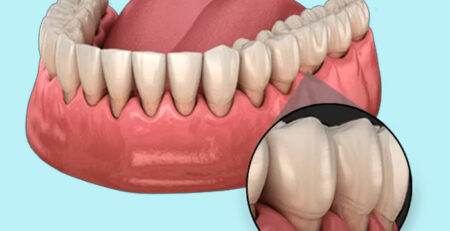
In advanced periodontal diseases, the tissues supporting the tooth can be damaged. When tooth mobility occurs, the force applied during chewing can lead to discomfort or pain.
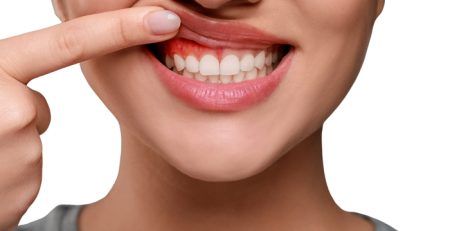
In some periodontal abscesses, touching or biting down on a specific tooth can be quite painful. The pain may be accompanied by swelling, redness, bleeding, a bad taste, or bad breath in the gums.
If symptoms such as gum bleeding, gum recession, loose teeth, periodontal pockets, or bad breath are present, an evaluation can be made within the scope of gum treatment and periodontology.
Can Teeth Clenching Cause Tooth Pain When Chewing?
The habit of teeth clenching and grinding, known as bruxism, can cause teeth to be exposed to high forces for extended periods outside their normal chewing function.
Individuals who clench their teeth, especially at night, may experience jaw muscle fatigue, tooth sensitivity, or pain when pressing on specific teeth upon waking in the morning.
Prolonged teeth clenching can contribute to wear on natural tooth tissues, strain on restorations, and the formation of cracks in some individuals.
A clinical study conducted on 2,858 posterior teeth with visible cracks reported that teeth clenching and grinding behaviors were among the factors associated with biting pain. For details of the study, the National Dental Practice-Based Research Network study can be examined.
For more information on the symptoms of teeth clenching, Melsadent’s content titled What is Teeth Clenching (Bruxism)? Symptoms and Treatment Methods can be reviewed.
My Single Tooth Hurts When Eating Something Hard, Why?
Even if there’s no problem with soft foods, the occurrence of pain in a single tooth when chewing hard foods like hazelnuts, seeds, hard bread, meat, or similar resistant foods can particularly suggest the possibility of a cracked or fractured tooth.
As chewing force increases with hard foods, a weak area on the tooth is exposed to more pressure. If there is a crack or a weakened wall in the tooth, this force can cause pain to emerge.
However, the same symptom can also be observed due to a high filling, root sensitivity, or periodontal problems. Therefore, a definitive diagnosis cannot be made solely by observing the occurrence of pain with hard foods.
What Does It Mean If My Single Tooth Hurts When Chewing?
Pain consistently felt in a single tooth requires investigation of a local problem. Decay, crack, fractured restoration, high filling, root tip inflammation, or local periodontal problem can be among the possible causes.
However, it should be remembered that tooth-related pain is not always felt in the correct tooth. Some dental pains can radiate to adjacent teeth or different points in the same jaw area.
Therefore, although the patient pointing to the painful tooth is important for diagnosis, the true source of the pain must be confirmed through clinical examination and necessary tests.
What Does It Mean If Chewing Pain is Accompanied by Hot and Cold Sensitivity?
The accompaniment of hot or cold sensitivity to chewing pain can provide important information about the condition of the pulp tissue.
Short-term sensitivity when a cold beverage is consumed may be related to dentin sensitivity or more limited pulpal irritation in some cases. In contrast, pain that persists for a long time after the hot or cold stimulus is removed may suggest that the pulp tissue could be more seriously affected.
However, the duration and intensity of hot-cold sensitivity alone do not provide a definitive diagnosis. Pulp vitality tests and clinical evaluation may be necessary.
Why Does My Tooth Hurt When I Stop Biting?
If you feel a sharp pain not when you bite down on food, but when you release the biting force, the possibility of a cracked tooth can be considered.
In a cracked tooth, during chewing, tooth fragments may separate microscopically. When the force is removed, as the tissues return to their original position, a brief stimulation may occur on the pulp or dentin.
Therefore, the description of pain as “it hurts not when I bite, but when I release” can be an important clinical clue for the dentist.
Why Does a Root Canal-Treated Tooth Hurt When Chewing?
Immediately after root canal treatment, short-term sensitivity may be observed in the tissues surrounding the tooth. For this reason, it is possible to experience slight sensitivity when chewing, especially hard foods, during the first few days after treatment.
Detailed information about sensitivity that may occur after treatment can be found in Melsadent’s Is Pain After Root Canal Treatment Normal? content.
However, new chewing pain in a root canal-treated tooth that has been used without problems for months or years should be evaluated differently. There may be a crack in the tooth, a problem with the overlying restoration, a new lesion around the root, or another condition requiring re-evaluation of the root canal treatment.
How Is a Tooth That Hurts When Chewing Diagnosed?
To correctly treat chewing pain, the source of the pain must first be determined. During the diagnostic process, it can be evaluated when the pain started, which foods exacerbate it, whether it reacts to hot or cold, whether there is night pain, and whether the tooth has undergone any previous procedures.
In the clinical examination, the tooth and surrounding tissues are examined. If necessary, biting tests, light percussion test on the tooth, palpation, periodontal probing, and pulp sensitivity tests can be used.
For example, the occurrence of sharp pain when pressure is applied to a specific tooth cusp can be an important finding for a crack. The presence of pain when the tooth is lightly tapped may require evaluation of the tissues around the root.
Is an X-ray Needed for Chewing Pain?
In many cases, dental radiographs can aid in diagnosis. X-ray images can be used to evaluate deep cavities, periapical lesions, periodontal bone loss, and the condition of restorations.
However, not all dental problems may be visible on a standard X-ray. Especially very fine cracks may not be detected in two-dimensional radiographs.
Therefore, the phrase “nothing showed up on the X-ray” does not always mean there is no problem with the tooth. Clinical findings, patient complaints, and necessary diagnostic tests should be evaluated together.
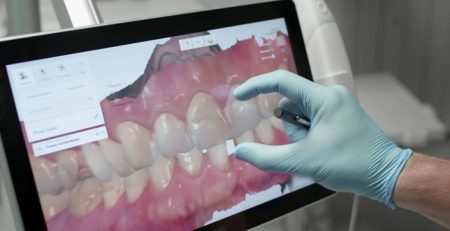
In necessary cases, advanced imaging and digital methods can be utilized. Information about the technological approaches used at Melsadent can be obtained from the digital dentistry page.
How Is a Tooth That Hurts When Chewing Treated?
The treatment for chewing pain is determined not by the pain itself, but by its underlying cause. Therefore, two patients experiencing the same complaint may receive entirely different treatments.
If the tooth decay is limited, the decayed tissue can be cleaned and filled. If there is more extensive substance loss, different restorative procedures may be considered.
For teeth with cracks, the location and depth of the crack are taken into account. In cases where the tooth can be preserved, options such as restorative treatment or a crown may be considered.
If the pulp tissue is irreversibly damaged or the root canal system is infected, root canal treatment may be necessary.
In cases of gum disease, periodontal treatment may be applied. If there is a high filling or crown, the occlusal relationship can be adjusted. If excessive force due to teeth grinding is present, treatments aimed at controlling bruxism may be considered.
Are Antibiotics Used for Tooth Pain When Chewing?
It is not correct to use antibiotics for every toothache. Many dental pains caused by decay, cracked teeth, high fillings, or pulp issues cannot be eliminated with antibiotics.
For example, a cracked tooth does not heal with antibiotics, a high filling does not correct itself with antibiotics, and the necessary dental treatment must be performed to permanently resolve the problem in an infected root canal system.
The evidence-based clinical guideline prepared by the American Dental Association also states that in many cases of dental pain originating from the pulp and root tip, the priority is the application of the necessary dental treatment.
The scientific guideline can be accessed from the link: Evidence-Based Clinical Practice Guideline on Antibiotic Use for Urgent Management of Dental Pain and Swelling.
The necessity of antibiotics should be evaluated by a physician based on the clinical characteristics of the infection, the presence or absence of systemic symptoms, and the patient’s general health status.
What Can Be Done at Home for a Tooth That Hurts When Chewing?
Temporarily avoiding chewing very hard foods on the side with the painful tooth can reduce discomfort. It is especially important not to apply excessive force to a tooth suspected of having a crack.
However, merely avoiding using the painful side does not eliminate the underlying problem. Also, the pain subsiding within a few days may not mean that the tooth has fully healed.
The indiscriminate use of antibiotics or different medications to relieve toothache is not recommended. The use of painkillers should also be evaluated considering the person’s health status and other medications they are using.
Will a Tooth That Hurts When Chewing Go Away on Its Own?
Some temporary sensitivities may decrease over time. However, it may not be correct to expect recurring chewing pain to subside on its own.
For example, when pulp inflammation progresses and causes the pulp tissue to lose its vitality, a tooth that previously caused intense pain may become silent for a while. This does not mean that the problem has healed.
Similarly, in cracked teeth, symptoms may appear and disappear periodically. The absence of pain for several weeks does not indicate that the crack has disappeared.
When Should Toothache While Chewing Be Taken Seriously?
Recurrent pain during chewing is a symptom that should be evaluated by a dentist. The fact that the pain is not yet very severe does not mean the problem is insignificant.
It may be advisable not to delay a check-up, especially in the following situations:
- If the pain has persisted for several days,
- If it constantly recurs in the same tooth,
- If sharp pain occurs when chewing hard foods,
- If pressing on the tooth becomes difficult,
- If the pain persists for a long time after hot or cold exposure,
- If swelling has formed in the gum,
- If the tooth is loose,
- If a fracture is felt in a filling or crown,
- If the pain is progressively worsening,
- If pain that wakes you up at night has started.
Which Symptoms May Require Urgent Evaluation?
If tooth pain is accompanied by rapidly growing swelling in the face or gum, fever, general malaise, pus, bad taste, significant limited mouth opening, or difficulty swallowing, a professional health evaluation is required without delay.
Especially, the occurrence of difficulty breathing or swallowing is a condition that may require urgent medical evaluation.
How is Tooth Pain During Chewing Evaluated at Melsadent?
At Melsadent Oral and Dental Health Polyclinic, the primary goal for patients complaining of tooth pain during chewing is not merely temporary pain reduction, but rather identifying the cause of the pain.
During the examination, existing fillings and crowns, the possibility of decay or cracks, the condition of the pulp tissue, the tissues around the tooth root, periodontal health, and the occlusal relationship of the teeth can be evaluated together.
In necessary cases, support can be obtained from radiographic and digital imaging methods. Based on the findings, patient-specific treatment options can be determined.
Just as not every chewing pain requires root canal treatment, not every pain is a simple filling problem. To preserve the natural tooth as much as possible, it is important to establish a correct diagnosis at the earliest possible stage.
Why Does My Tooth Hurt When Chewing? Short Answer
Tooth pain when chewing can be caused by reasons such as tooth decay, a cracked or broken tooth, inflammation around the root apex, high or faulty fillings and crowns, gum diseases, pulp problems that may require root canal treatment, or teeth grinding.
It is particularly important for a dentist to evaluate pains that recur in the same tooth, increase with hard foods, appear when pressure is applied to the tooth, or sharpen the moment you stop biting.
Frequently Asked Questions
Why does my tooth hurt when chewing but not normally?
Some problems in the tooth may only show symptoms when force is applied to it. A cracked tooth, a high filling, inflammation around the root, or periodontal sensitivity can cause this. A tooth not hurting at rest does not mean it is completely healthy.
Why does pain occur when pressure is applied to the tooth?
Pain when pressure is applied to the tooth can be associated with inflammation around the root, a cracked tooth, a high filling or crown, a periodontal problem, trauma, or various dental diseases. The exact cause should be determined by clinical examination.
Is root canal treatment necessary if there is pain when pressure is applied to the tooth?
Not always. Root canal treatment may be necessary for some problems originating from the root canal system; however, high fillings, cracks, or gum-related problems can also cause pain when pressure is applied to the tooth.
My tooth hurts when biting, could it be cracked?
Yes. Especially feeling a sharp pain when biting a specific hard food or the moment you stop biting is one of the symptoms that can be seen in a cracked tooth. However, a dentist’s evaluation is required for a definitive diagnosis.
Is a cracked tooth visible on X-ray?
It may not always be visible. Due to the direction, depth, and location of the crack, some fine cracks may not be detectable on standard dental radiographs. Clinical examination and special biting tests can be important for diagnosis.
Why does my newly filled tooth hurt when chewing?
The filling might be high in the bite. Additionally, pulp sensitivity due to deep decay, temporary post-procedure sensitivity, or a crack in the tooth can also cause pain.
Why did my old filled tooth suddenly start hurting?
New decay forming around an old filling, a broken filling, compromised marginal integrity, or a crack in the natural tooth tissue are among the probable causes.
Can a crowned tooth hurt when chewing?
Yes. A high crown, a pulp or root problem in the tooth under the crown, or sensitivity in the surrounding tissues can lead to chewing pain.
Can a root-canal-treated tooth hurt when chewing?
Temporary chewing sensitivity may be observed in the first few days after root canal treatment. However, if a root-canal-treated tooth that has been problem-free for a long time starts to hurt, the tooth needs to be re-evaluated.
Can teeth grinding cause chewing pain?
Yes. Teeth clenching and grinding can cause high forces to be applied to the teeth for extended periods. This can be associated with tooth sensitivity, cracks, strain on restorations, and jaw muscle pain.
Why does only one tooth hurt when I eat something hard?
Pain in a single tooth when eating hard foods can be seen especially with cracks, fractures, large fillings, high restorations, or periradicular sensitivity. If it recurs, it is recommended to have it checked.
Does a tooth that hurts when chewing have to be extracted?
No. Chewing pain alone is not a reason for tooth extraction. Decay, some cracks, root canal problems, and restoration defects can be managed with appropriate treatments. The decision for extraction is made after evaluating the tooth’s restorability.
Can I use antibiotics for toothache?
Not every toothache requires antibiotics. Antibiotics do not treat decay, a cracked tooth, or a high filling. A dentist should decide on antibiotic use after a necessary clinical evaluation.
Does avoiding eating on the painful side while chewing solve the problem?
Temporarily avoiding the painful side may reduce discomfort but does not eliminate the underlying problem. If the pain recurs, its cause needs to be determined.
Can a tooth have an infection without swelling?
Yes. Some inflammation and infections around the root can initially cause pain only when pressure is applied to the tooth or during chewing, without forming noticeable swelling.
How many days of chewing pain should pass before I visit a dentist?
If the pain recurs in the same tooth or persists for several days, it is advisable not to delay a check-up. If the pain intensifies, swelling occurs, or the tooth cannot be pressed upon, an earlier evaluation may be necessary.
Will a tooth that hurts while chewing heal on its own?
Some temporary sensitivities may decrease, but decay, cracks, root canal infections, or restoration problems may not disappear on their own. The temporary disappearance of pain may not indicate that the problem has fully healed.
When should Melsadent be contacted for a tooth that hurts while chewing?
If there are symptoms such as recurrent chewing pain in the same tooth, sensitivity when pressing on the tooth, prolonged pain after hot-cold stimuli, suspicion of a fracture or crack, an occlusion problem after a filling or crown, or gum swelling, a dental evaluation can be scheduled.