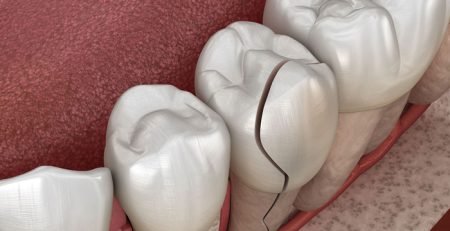





Is a Root Canal Treated Tooth More Prone to Fracture?
Is a Root Canal Treated Tooth More Prone to Fracture?
Short answer: Yes, some root canal treated teeth may have a higher risk of fracture compared to an untreated, healthy tooth; however, the primary reason for this is not solely the removal of the tooth’s nerve. The reduction of natural tooth tissue due to deep decay requiring root canal treatment, old and large fillings, cracks, trauma, and the access cavity created to reach the tooth during root canal treatment plays a much more significant role in increasing the risk of fracture.
Therefore, the generalization that “root canal treatment necessarily makes the tooth fragile” is not accurate. The risk of fracture varies depending on whether the tooth is in the anterior or posterior region, how much sound tooth tissue remains, existing cracks, the size of the filling, occlusal forces, teeth grinding habits, and how the tooth is restored after root canal treatment.
Since high forces are generated during chewing, especially in molars and premolars, proper restoration planning is of great importance for root canal-treated teeth with extensive substance loss. While composite fillings may be sufficient in some cases, some teeth may require restorations that protect the chewing surfaces, such as onlays, overlays, or dental crowns.
At Melsadent Oral and Dental Health Polyclinic, when planning root canal treatment and post-treatment restoration, not only the condition of the root canals but also the remaining sound tooth tissue, presence of cracks, occlusal relationship, and long-term usability of the tooth can be evaluated together. For detailed information on how root canal treatment is performed, you can review the Root Canal Treatment (Endodontics) page.
Why Can a Root Canal Treated Tooth Break More Easily?
The most important point in understanding the risk of fracture in a root canal treated tooth is to evaluate why the tooth needed treatment before the root canal procedure. A significant portion of teeth requiring root canal treatment already have deep decay, extensive restorations, fractured cusps, trauma, or a significant amount of substance loss.
In other words, root canal treatment is often not applied to an entirely healthy tooth. The tooth may have already been structurally weakened before the treatment. The access cavity created to reach the canal system also requires the removal of a certain amount of tooth tissue. Especially in posterior teeth with large MOD-type restorations that involve two adjacent surfaces, the remaining cusps may flex more under chewing forces.
The American Association of Endodontists (AAE) states that one of the main reasons for the susceptibility to fracture in root canal-treated teeth is not so much moisture loss, but rather the loss of tooth structure resulting from decay, old restorations, fractured cusps, and the access cavity.
This information is important because it indicates that not every root canal-treated tooth is equally fragile. The risk of fracture is not the same for an anterior tooth with no significant substance loss other than a small and conservative access cavity, compared to a large molar that has lost several surfaces.
Does Root Canal Treatment Dry Out and Make a Tooth Brittle?
It is commonly said among the public that after root canal treatment, the tooth “dies,” “dries out,” and thus becomes brittle like glass. This explanation is not considered sufficient on its own to describe the mechanical behavior of root canal-treated teeth today.
During root canal treatment, the tooth’s pulpal tissue is removed. However, one of the most important reasons for the change in the strength of the tooth’s hard tissues is not so much the removal of the pulp, but rather the structural tissue loss that occurred in the tooth previously and became evident during treatment.
In the AAE’s treatment standards for the restoration of root canal-treated teeth, the primary reasons for the susceptibility of teeth to fracture are also listed as tissues lost due to decay, old restorations, fractured cusps, and the endodontic access cavity.
Therefore, the real question should not be “Was the tooth’s nerve removed?”, but rather “How much sound tooth structure remains after root canal treatment, and how will this structure be protected?”
Why Is Remaining Sound Tooth Structure So Important?
One of the most important factors determining the long-term prognosis of a root-canal-treated tooth is the amount and distribution of the remaining natural tooth structure. The presence of sufficient sound dentin around the tooth helps in more balanced transmission of chewing forces.
A systematic review published in 2025 reports that the remaining coronal tooth tissue in root-canal-treated teeth is closely related to the post-restoration prognosis. It is stated that in the clinical studies reviewed, adhesive direct restorations can be successful in teeth with more limited substance loss; whereas in cases with more extensive structural loss, cusp coverage can provide an advantage in the long term.
Therefore, the decision for a filling or a crown is not made solely by looking at the question “Is it root canal treated, or not?”. Some of the factors evaluated by the dentist are:
- The number and thickness of the remaining sound tooth walls,
- Whether one or two marginal ridges have been lost,
- Pre-existing cracks in the tooth,
- The extent of caries progression towards the gum line or root,
- Whether the tooth is an anterior, premolar, or molar tooth,
- Contact with opposing teeth and chewing forces,
- Habit of clenching or grinding teeth,
- Type of restoration to be applied after root canal treatment.
Is the Risk of Fracture the Same in Anterior and Posterior Teeth?
No. The position of the tooth in the mouth is important when planning the restoration of root-canal-treated teeth.
Anterior teeth are mostly exposed to cutting forces, while premolars and molars withstand intense chewing forces. Especially in molars, the disruption of the natural connection between the cusps due to a large cavity can lead to the cusps moving apart during chewing and create a predisposition for crack development over time.
However, not every root-canal-treated posterior tooth will automatically break. The amount of remaining tooth structure, the design of the restoration, and the patient’s functional characteristics should be evaluated together.
In anterior teeth, if only a conservative access cavity for the root canal has been prepared and sufficient natural tooth structure has been preserved around it, an adhesive composite restoration may be sufficient in some cases. However, if the tooth has experienced trauma, has large old fillings, or significant substance loss, different restorative options may be considered.
Is a Crown Absolutely Necessary for a Root-Canal-Treated Tooth?
No. It cannot be said that every tooth that has undergone root canal treatment necessarily requires a crown without exception. The appropriate restoration should be determined based on the remaining tooth structure and the function of the tooth.
In some teeth with minimal substance loss, intact marginal ridges, no cracks, and a conservatively prepared access, an adhesive composite restoration can be considered. Conversely, in posterior teeth, especially those with extensive substance loss, a restoration that protects the cusps may be necessary.
Cusp coverage does not necessarily have to be in the form of a traditional full crown. Depending on clinical conditions:
- Composite restoration,
- Indirect onlay,
- Overlay,
- Endocrown,
- Partial crown,
- Full crown
different restorative options can be evaluated.
A systematic review published in 2024, examining full-coverage onlay restorations with complete crowns in root canal-treated posterior teeth, indicates high clinically reported survival rates for both approaches. Therefore, in modern restorative approaches, the aim is not merely to “cap” the tooth, but to provide the necessary mechanical support while preserving as much healthy tissue as possible.
For more information about Melsadent’s crown options and their areas of use, you can visit the Dental Crowns page.
Can a Filling Be Sufficient After Root Canal Treatment?
In some cases, yes. However, the answer depends on how much the tooth is damaged.
In a tooth with a small access cavity, strong surrounding tooth walls, and no signs of cracks, an adhesive composite restoration may provide sufficient protection. Conversely, merely filling the center of the cavity in a posterior tooth that has lost two or more surfaces due to a large cavity, has thinned cusps, or has previously had large fillings, may not provide adequate mechanical protection.
Therefore, the answer to the question “filling or crown?” after root canal treatment cannot be solely derived from an X-ray or the fact that root canal treatment has been performed. The tooth needs to be evaluated clinically in the mouth.
Why Should Permanent Restoration Not Be Delayed After Root Canal Treatment?
The completion of root canal treatment is only one part of the tooth’s long-term care. Even if the root canals are successfully cleaned and filled, the coronal part of the tooth remaining in the mouth must be properly sealed.
AAE considers the timely permanent restoration of a root canal-treated tooth an important part of the long-term success of endodontic treatment. There are two main reasons for this.
Firstly, it helps prevent weakened cusps from fracturing during chewing. Secondly, it reduces the risk of bacteria from the oral environment leaking through the coronal restoration and recontaminating the root canal system.
Therefore, after root canal treatment is completed, the approach of “I’ll use it with a temporary filling for now, and get it done later” may not be safe for every patient. Especially in teeth with significant substance loss, unnecessarily postponing permanent restoration can increase the risk of fracture or leakage.
Can a Root Canal-Treated Tooth Be Saved if a Part of It Breaks?
In most cases, a fracture does not directly mean the tooth will need to be extracted. The possibility of treatment depends on where the fracture is located and how deep it extends.
Only in cases where just the filling or a cusp on the upper part of the tooth is fractured, the tooth can be made usable again with a new restoration. If the fracture approaches the gum line, different restorative or periodontal procedures may be required.
In contrast, if the fracture has progressed deeply along the root, especially if it’s a vertical root fracture, saving the tooth can be much more difficult. Therefore, when a small fracture is noticed in a root canal-treated tooth, it is important to have it evaluated without waiting for pain to develop.
For detailed information on procedures that can be applied after a fracture, you can review the content What to Do if a Tooth Breaks? Can a Broken Tooth Be Saved?.
What Are the Symptoms of a Crack in a Root Canal-Treated Tooth?
In a root-canal-treated tooth, since the pulp tissue has been removed, a crack may not always cause the classic hot-cold sensitivity. However, since the periodontal tissues around the root maintain their vitality, various symptoms may appear.
Signs to look out for may include:
- Pain when biting at a specific point,
- Sudden sensitivity to hard foods,
- Discomfort during chewing,
- Recurrent swelling around the tooth,
- Movement of the filling or crown,
- Fracture of a part of the tooth,
- Localized swelling or fistula in the gum,
- Pain starting years later in a root-canal-treated tooth.
Each of these findings does not necessarily mean there is a crack or root fracture. Re-infection, high bite, periodontal problems, or pain originating from adjacent teeth can cause similar complaints in root-canal-treated teeth.
In relation to this topic, you can also review the Melsadent content titled Why Does a Root-Canal-Treated Tooth Ache Years Later?
Does a Root-Canal-Treated Tooth Hurt When It Breaks?
Not always. Since the nerve tissue inside the tooth is removed during root canal treatment, a small crown fracture may not initially cause significant pain. It is possible for the patient to only notice a sharp edge touching their tongue or a difference during chewing.
However, if the fracture extends to the root, periodontal tissues, or under the gum, chewing pain may develop. Additionally, if bacterial leakage occurs as a result of the restoration opening, infection and inflammation may occur around the root.
Therefore, the absence of pain does not mean the fracture is insignificant.
Can Teeth Clenching Increase the Risk of Fracture in a Root Canal Treated Tooth?
Yes. Teeth clenching and grinding, known as bruxism, can apply different and repetitive forces to teeth than those that occur during normal chewing.
These forces can become more significant, especially in root canal treated teeth with large restorations, cracks, or reduced natural cusp support. In restoration planning, not only the tooth’s appearance but also the patient’s bite and parafunctional habits should be evaluated.
In some patients with teeth clenching, protective options such as a night guard may be considered by the dentist after the completion of appropriate restoration.
Does a Post Strengthen a Root Canal Treated Tooth?
One of the most common misconceptions on this matter is that a post placed inside the canal automatically strengthens the tooth.
The primary function of a post is mostly to provide retention for the superstructure when there is insufficient coronal tooth structure. In other words, a post is not a screw routinely used to provide more durability to every root canal treated tooth.
Since additional preparation in the root canal may be required to place a post, unnecessary or incorrect post applications can also lead to undesirable outcomes. Therefore, the need for a post should be determined by considering the remaining tooth structure and the retention of the restoration.
What is the Ferrule Effect and Why is it Important in a Root Canal Treated Tooth?
“Ferrule” is one of the important concepts in restoration planning for the long-term durability of root canal treated teeth. In simple terms, ferrule refers to the presence of a sufficient amount of sound natural tooth structure that can be encircled by the crown or restoration to be placed.
It is stated that the presence of sufficient ferrule in AAE’s restorability assessments can positively contribute to the biomechanics of restored root canal treated teeth.
Therefore, if a tooth has lost too much substance, the mere success of the root canal does not guarantee that the tooth can be used for a long time. The tooth must also be restorable.
How Many Years Does a Root Canal Treated Tooth Last?
It is not accurate to give a fixed duration for a root canal treated tooth, such as “it lasts 5 years,” “it will definitely break after 10 years,” or “it won’t cause problems for a lifetime.”
Long-term success;
- Quality of the root canal treatment,
- Remaining natural tooth structure,
- Type and fit of the permanent restoration,
- Control of caries risk,
- Oral hygiene,
- Gum and bone support,
- Occlusal forces,
- Teeth grinding habit,
- Regular dental check-ups
is the result of many variables.
A systematic review evaluating older clinical data reported that the long-term survival of root canal treated teeth restored with crowns could be higher than teeth restored with direct restorations. More recent studies, however, indicate that the choice of restoration should be personalized based on the remaining tooth structure.
Therefore, the goal is not to restore every root canal treated tooth with the same method, but to choose the appropriate restoration for the tooth while preserving as much sound tooth structure as possible.
What Can Be Done to Prevent a Root Canal Treated Tooth from Breaking?
It is not possible to completely eliminate the risk of fracture; however, with appropriate treatment and care, the risk can be significantly managed.
Do not delay permanent restoration: It is important not to unnecessarily postpone the permanent restoration plan recommended by the dentist after root canal treatment.
Do not break hard objects with your teeth: Ice, hard candy, nutshells, or similar very hard materials can create high stress, especially in teeth with large restorations.
Do not neglect teeth grinding problems: If you experience jaw fatigue in the mornings, tooth wear, or suspect nighttime teeth grinding, inform your dentist.
Monitor changes in fillings or crowns: Do not delay a check-up if you notice loosening, a gap at the edge, or a chip.
Continue with regular oral hygiene: The idea that a root canal treated tooth cannot decay is incorrect. The enamel and dentin tissues of the tooth can still decay. New decay that may occur, especially at the edges of restorations, can lead to further loss of healthy tooth structure.
Have regular check-ups: Some cracks or restoration problems can be noticed during a clinical examination before they cause noticeable symptoms.
Is it mandatory to extract a root canal treated tooth if it breaks?
No. Whether a broken root canal treated tooth needs to be extracted is determined by the type of fracture.
Limited fractures in the upper part of the tooth can often be treated with restorative methods. In cases where sufficient tooth structure remains, the tooth can be restored to function with options such as composite, onlay, overlay, or crown.
In contrast, deep fractures extending towards the root or vertical root fractures can severely affect the prognosis of the tooth. Therefore, the decision for extraction should not be based solely on the fact that the tooth has undergone root canal treatment. Clinical examination and radiographic findings should be evaluated together.
For the decision-making process between preserving the natural tooth and extraction, you can read the content Root Canal Treatment or Tooth Extraction? Which is Better?.
How is a Root Canal Treated Tooth Evaluated?
The assessment of the fracture risk of a root canal treated tooth is not solely based on an X-ray image. Although X-rays provide valuable information about root canals, the bone surrounding the root, and some restorative problems, a clinical evaluation of the remaining tooth structure is necessary.
During the examination, the tooth’s existing restoration, cusps, crack lines, gum level, mobility, occlusal contacts, and surrounding tissues can be evaluated. In necessary cases, different imaging methods can be utilized.
At Melsadent Oral and Dental Health Polyclinic, when evaluating a root canal treated tooth, not only the existing root canal filling but also the long-term restorability of the tooth can be considered. Thus, instead of merely addressing the current complaint, a personalized plan can be made to preserve the tooth’s function for as long as possible.
Is a Root Canal Treated Tooth More Prone to Fracture?
Root canal treated teeth may be more prone to fracture under certain conditions; however, the primary reason for this is not that the tooth’s “nerve has been removed” or that it has “dried out.” One of the most important factors in fracture risk is how much sound tooth structure remains as a result of decay, old fillings, existing cracks, and substance loss before or during root canal treatment.
Therefore, the fracture risk of two root-canal-treated teeth can be completely different from each other. While a tooth with preserved sound walls can be successfully used with only an adhesive restoration, a restoration like an onlay, overlay, or crown that provides cusp coverage might be more suitable for a posterior tooth that has experienced significant substance loss.
The most important approach is not to leave the tooth without a restoration or with an inadequate temporary restoration for a long time after the root canal treatment is completed, and to determine which restoration is needed based on the tooth’s actual structural condition.
If you notice a fracture, crack, pain during chewing, movement in the restoration, or unexpected sensitivity in your root-canal-treated tooth, early evaluation is important for the tooth to be preserved without further substance loss.
Frequently Asked Questions
Does root canal treatment weaken the tooth?
The risk of fracture in root-canal-treated teeth may increase; however, the primary factor is not solely the root canal treatment itself. The amount of natural tooth tissue lost due to decay, large fillings, cracks, and the access cavity is more decisive.
Does a root-canal-treated tooth necessarily fracture?
No. With proper root canal treatment, appropriate restoration, and regular maintenance, root-canal-treated teeth can function for many years.
Is a crown mandatory for a root-canal-treated tooth?
It is not mandatory in every case. If sufficient sound tooth tissue remains, more conservative options such as composite may be suitable. Restorations that provide cusp coverage may be considered, especially for posterior teeth with extensive substance loss.
Is a filling sufficient after root canal treatment?
It may be sufficient for some teeth. The decision is made based on the tooth’s position, the size of the cavity, the amount of sound tooth walls, and occlusal forces.
Why does a root canal treated tooth break in half?
Extensive loss of tooth structure, thin remaining cusps, large old fillings, cracks, and high chewing forces can lead to the tooth breaking into two pieces.
If a root canal treated tooth breaks, can it be repaired?
The location of the fracture on the tooth is determinative. While many fractures in the upper part of the tooth can be restored, deep or vertical fractures extending to the root may have a more unfavorable prognosis.
Does a root canal treated tooth cause pain when it breaks?
Not always. Small crown fractures may be painless. However, if the fracture extends to the periodontal tissues or the root, pain may be observed, especially during chewing.
Can a root canal treated tooth decay?
Yes. Even if the tooth’s nerve has been removed, the enamel and dentin tissues can still decay. Especially decay forming around the edges of old fillings or crowns can reduce the remaining healthy tooth structure.
When should a crown be placed after a root canal treatment?
Timing varies depending on the tooth’s condition and the treatment applied. It is important not to unnecessarily delay the permanent restoration. The dentist determines the appropriate time based on the clinical status of the root canal treatment.
Can teeth grinding break a root canal treated tooth?
Teeth clenching and grinding can create high and repetitive forces. This can pose an additional risk for fracture, especially in root canal treated teeth with large restorations or existing cracks.
Does getting a post strengthen a root canal treated tooth?
The primary purpose of a post is usually to provide retention for the overlying restoration. The idea that every root canal treated tooth needs to be strengthened with a post is not correct.
How many years does a root-canal-treated tooth last?
There is no fixed duration of use. The quality of the root canal treatment, remaining tooth structure, restoration, oral hygiene, gum health, and chewing forces affect its lifespan.
Do root-canal-treated molars break more easily?
Molars are exposed to high chewing forces and often have large cavities or fillings prior to root canal treatment, so they should be structurally evaluated more carefully.
How is a crack in a root-canal-treated tooth detected?
Pinpoint pain when biting, discomfort with hard foods, recurrent swelling, or movement in the restoration may be associated with a crack. However, a definitive diagnosis requires clinical evaluation.
What to do if the crown of a root-canal-treated tooth breaks?
First, it should be determined whether the crown itself or the underlying natural tooth structure has broken. For detailed information on this matter, you can review the content What to do if a Crowned Tooth Breaks?.
Scientific Sources
American Association of Endodontists – Treatment Standards: Restoration of Endodontically Treated Teeth:
https://www.aae.org/specialty/wp-content/uploads/sites/2/2019/11/TreatmentStandards_ExecutiveSummary_v1.pdf
Remaining Tooth Structure and Prognosis of Restored Endodontically Treated Teeth: A Systematic Review:
https://pubmed.ncbi.nlm.nih.gov/41230300/
Survival and Success Rates of Endodontically Treated Teeth Restored with Full Veneer Crowns or Full Cuspal Coverage Onlays: A Systematic Review:
https://pubmed.ncbi.nlm.nih.gov/37549135/
Direct and Indirect Restorations for Endodontically Treated Teeth: A Systematic Review and Meta-analysis:
https://pubmed.ncbi.nlm.nih.gov/29984369/
A Systematic Review of Single Crowns on Endodontically Treated Teeth:
https://pubmed.ncbi.nlm.nih.gov/17822823/