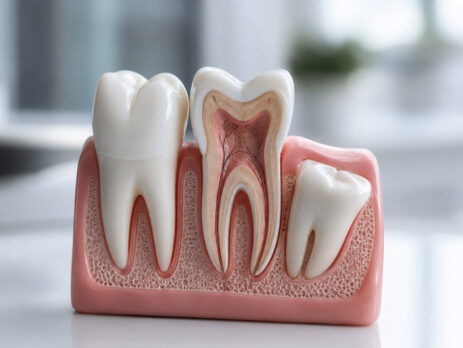
Root Canal Treatment or Tooth Extraction? Which is Better?
Root canal treatment or tooth extraction? This is one of the most common questions asked by patients experiencing severe toothache, deep decay, infection, or serious tooth damage. Especially when the pain starts affecting daily life, it might be thought that completely extracting the tooth is a faster and more definitive solution. However, the primary goal in dentistry is not just to eliminate pain; it is to keep the natural tooth in the mouth in a healthy and functional way whenever possible.
Therefore, a tooth that can undergo root canal treatment must be distinguished from a tooth that has become necessary to extract. A tooth aching, becoming inflamed, or its nerves being damaged does not, by itself, mean that the tooth needs to be extracted. Today, with advanced endodontic methods, many teeth that might previously have been considered for extraction can be treated and preserved in the mouth.
On the other hand, it is not always possible to save every tooth. The presence of a severe fracture in the tooth root, significant tooth substance loss making restoration impossible, advanced bone support loss, or some uncontrollable infections may make extraction a more suitable option. Therefore, the answer to the question “root canal treatment or extraction?” should not only be based on the intensity of the pain, but also on a comprehensive evaluation of many factors such as clinical examination, radiographic findings, remaining tooth structure, root condition, gum, and bone support.
Root Canal Treatment or Tooth Extraction? Short Answer
If a tooth can be saved, treatments aimed at preserving the natural tooth are generally considered first. If the tooth’s pulp, meaning the nerve and blood vessel tissue, is irreversibly damaged, but the root structure and remaining tooth tissue are suitable for restoration, the tooth can be preserved in the mouth by performing root canal treatment.
If the tooth is broken beyond repair, if there is a severe crack or fracture along the root, if there isn’t sufficient bone support, or if it seems impossible to keep the tooth healthy in the mouth long-term, extraction may become an option.
The most important point here is that extraction is an irreversible procedure. While re-root canal treatment or different endodontic procedures can be considered if necessary after a root canal, an extracted natural tooth cannot be restored. The resulting gap after extraction may need to be filled with an implant, bridge, or another suitable prosthetic method.
What is Root Canal Treatment?
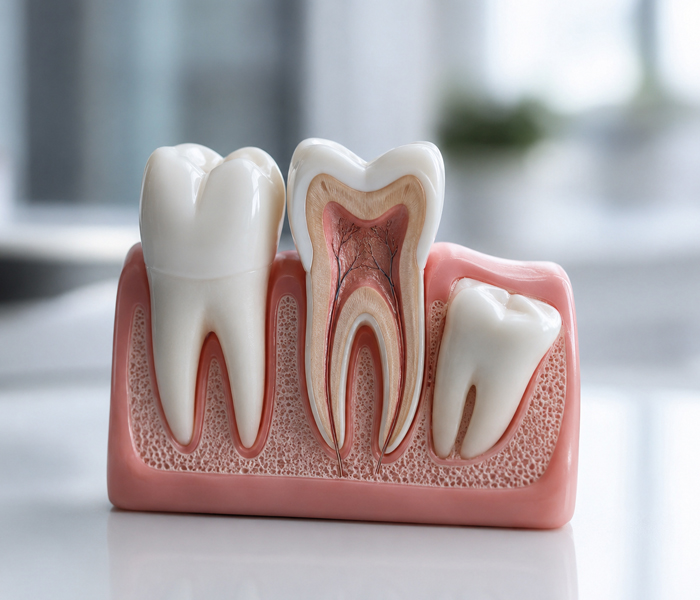
Root canal treatment is the procedure of removing infected or irreversibly damaged pulp tissue from inside the tooth, cleaning and disinfecting the root canals, and then sealing them with special root canal filling materials.
The primary goal of the treatment is to control the source of infection and preserve the natural root of the tooth within the mouth. The American Association of Endodontists (AAE) states that root canal treatment aims to remove bacteria from the infected root canal, prevent re-infection, and preserve the natural tooth. For detailed information, the American Association of Endodontists root canal treatment guide can be reviewed.
You can also access Melsadent’s detailed explanations on this topic from the content What is Root Canal Treatment and When is it Needed?
What is Tooth Extraction?
Tooth extraction is the removal of a tooth, along with its root, from its socket in the jawbone when it is deemed unsuitable for preservation or has no chance of being treated within the mouth. In addition to simple extractions, surgical methods may be required for fractured, impacted, or anatomically complex teeth.
Extraction can be the most appropriate treatment in some cases. However, it should not be forgotten that extraction does not merely remove the existing tooth. If the extracted tooth is in an important area for chewing, how the resulting gap will be rehabilitated must also be included in the treatment plan.
For detailed information on tooth extraction methods and surgical procedures, Melsadent’s page on Oral, Dental, and Maxillofacial Surgery can be reviewed.
In Which Cases Can Root Canal Treatment Be Preferred?
Damage to a tooth’s nerve tissue does not automatically mean that the tooth is lost. If the condition of the roots, surrounding bone, and remaining tooth tissue is suitable, the tooth can be saved with root canal treatment.
Deep decay reaching the pulp tissue, spontaneous toothaches or toothaches that wake one up at night, prolonged sensitivity after hot-cold contact, pulp necrosis, development of infection at the root tip, and damage to the dental nerve due to trauma are the main conditions where root canal treatment can be considered.
However, a definitive diagnosis cannot be made solely by looking at the symptoms. Clinical tests and radiographic evaluation are necessary, as the same symptom can be observed in different dental diseases.
In Which Cases Might Tooth Extraction Be More Appropriate?
While modern dentistry aims to preserve natural teeth as much as possible, it may not be feasible to retain some teeth healthily in the mouth long-term.
Extraction may be considered in cases of severe fractures extending far below the gum line and preventing restoration, certain vertical root fractures developing along the long axis of the root, significant bone support loss due to advanced periodontal disease, insufficient sound tooth structure for restoration, or some untreatable anatomical and infectious conditions.
Therefore, a conclusion like “my tooth is too decayed, it definitely needs to be extracted” should not be reached by merely looking at the visible part of the tooth in the mouth. Sometimes, a tooth that appears severely damaged in its upper part may have a perfectly healthy root structure and can regain function with appropriate treatment.
How Is It Determined If a Tooth Can Be Saved?
One of the dentist’s primary evaluations is restorability, which refers to whether the tooth can be made sound and functional again after treatment.
This assessment considers not only the presence of infection; but also the amount of sound tissue remaining in the tooth, the location of cracks or fractures, the anatomy of the roots, the surrounding bone level, periodontal health, the tooth’s position in the mouth, chewing forces, and the feasibility of the final restoration.
For example, even if root canal treatment can be technically performed successfully, if there isn’t enough sound tooth structure remaining for the tooth to function, the long-term prognosis may be unfavorable. Conversely, a tooth with a large infection but a good root and restoration possibility can be used for many years after successful endodontic treatment.
How Long Does a Root Canal Treated Tooth Last?
It is not appropriate to give a definitive lifespan applicable to everyone for a tooth that has undergone root canal treatment. The initial state of the infection, canal anatomy, quality of treatment, success of the subsequent filling or crown, oral hygiene, and regular check-ups play important roles in the success of the treatment.
Scientific research examining long-term outcomes shows that properly treated endodontic teeth can remain in the mouth for many years. For example, for a scientific study evaluating the long-term results of primary root canal treatment, the PubMed – Long-term tooth survival and success following primary root canal treatment resource can be reviewed.
Therefore, it is not correct to consider root canal treatment merely as a temporary procedure that briefly eliminates pain. With appropriate case selection, good endodontic treatment, and proper restoration, the goal is to retain the tooth in the mouth for the long term.
Can a Root Canal Treated Tooth Become Re-infected?
Yes. Although root canal treatment has high success rates, no medical or dental procedure guarantees 100% success. Re-infection may occur in some teeth due to previously undetected extra canals, restoration leakage, new decay, fractures, or resistant microorganisms.
However, re-infection in a tooth that has previously undergone root canal treatment does not always mean extraction is necessary. In suitable cases, root canal retreatment or, in some situations, endodontic surgery options can be considered.
Scientific studies evaluating options available after unsuccessful initial root canal treatment show that various tooth-preserving options exist, including retreatment and endodontic surgery. A systematic review on this topic can be accessed via PubMed – Endodontic treatment options after unsuccessful initial root canal treatment.
Does Pain After Root Canal Treatment Indicate That the Tooth Needs to Be Extracted?
No. Mild or moderate sensitivity immediately after root canal treatment alone does not mean the treatment has failed or that the tooth needs to be extracted. Sensitivity may be observed in the surrounding tissues in the treated area for a few days.
However, if there is progressively increasing severe pain, significant swelling, fever, widespread swelling in the facial area, or symptoms that do not subside for a long time, the dentist should re-evaluate.
For more detailed information on this topic, you can review our guide Is Pain After Root Canal Treatment Normal? What Should Be Done?.
Is Tooth Extraction Easier Than Root Canal Treatment?
At first glance, extraction might seem like a shorter procedure. However, evaluating the treatment plan solely based on the duration of the first appointment can be misleading.
When a tooth is extracted, the problematic tooth is removed, but a new missing tooth area is created, especially in functional regions. This area may later need to be completed with methods such as implants or bridges. Therefore, when making an extraction decision, not only the extraction procedure itself but also the entire rehabilitation process that may be necessary afterward should be evaluated.
Is It Always Necessary to Replace an Extracted Tooth?
Every extraction case is different. After the extraction of some teeth, especially certain wisdom teeth, it may not be necessary to replace them with a new tooth. However, it is important to evaluate the gap created when a permanent tooth functioning in the chewing system is lost.
Depending on the position of the missing tooth, implants, bridges, or different prosthetic options may be considered. The treatment choice should be made based on bone quantity, the condition of adjacent teeth, general oral health, systemic health, and the patient’s expectations.
Regarding bridges, which are one of the options in missing tooth treatment, you can review our content 2026 Bridge Tooth Prices and Bridge Tooth Treatment.
Can an Implant Be Placed After a Tooth Extraction?
In suitable patients, a dental implant is one of the important treatment options that can be applied to replace a missing tooth after an irreparable tooth has been extracted. However, the fact that an implant is a successful and common treatment option does not mean that it is better to extract every salvageable natural tooth and place an implant.
Research comparing natural teeth treated with endodontic therapy and implant-supported restorations reveals that both methods can show successful results in appropriate indications. For a systematic review, PubMed – Endodontic therapy or single tooth implant? can be examined.
Therefore, the fundamental question should be “can this natural tooth be reliably saved?” instead of “is an implant better, or root canal therapy?” If a tooth cannot be saved, then an implant can become a very valuable alternative.
Is Root Canal Treatment or an Implant Longer-Lasting?
Answering this comparison with a single figure is scientifically misleading. Because while success in root canal treatment is influenced by the initial condition of the natural tooth and the overlying restoration, in implant treatment, other factors play a role, including bone structure, periodontal status, oral hygiene, smoking, systemic health, and the design of the prosthesis.
Current scientific assessments show that endodontically treated teeth and implant-supported restorations can achieve high survival rates. Therefore, it is not appropriate to decide to extract a natural tooth based solely on survival percentages.
If the natural tooth can be saved, its preservation is considered; if it cannot be saved, the missing tooth can be planned to be replaced with an implant or another prosthetic method.
What Are the Advantages of Preserving a Natural Tooth with Root Canal Treatment?
Preserving the natural tooth ensures the continuation of the person’s own root and its natural connection with periodontal tissues. Sensory feedback received from the natural tooth during chewing is preserved, and it helps prevent changes that might occur in adjacent teeth due to a missing tooth.
Also, when root canal treatment is successful, the need to wait for the extraction area to heal or to perform additional surgical and prosthetic procedures to complete the missing tooth may be eliminated.
The American Association of Endodontists recommends evaluating root canal treatment for natural teeth that can be saved and reviewing options that can preserve the tooth before making an extraction decision. For detailed information, the AAE – Saving Your Natural Tooth resource can be consulted.
Are There Any Disadvantages or Risks to Root Canal Treatment?
Root canal treatment, like other medical procedures, carries certain risks. These can include difficulty locating some canals due to complex root anatomy, very narrow or curved canals, technical complications that may arise during treatment, re-infection, or future tooth fracture.
Especially in posterior teeth that have suffered significant substance loss, restorative planning to protect the tooth against fracture after root canal treatment is important. Which tooth will be protected with just a filling and which with a more comprehensive restoration is determined according to the clinical situation.
What are the Advantages and Disadvantages of Tooth Extraction?
In a tooth that cannot be saved, extraction eliminates the source of chronic infection and may be the most rational solution for a severely damaged tooth.
However, extraction is an irreversible procedure. When a functional tooth is lost, rehabilitation of the missing tooth area may be required. This can necessitate additional treatments such as implant surgery, bridge treatment, or various prosthetic applications.
Therefore, the advantage of extraction should not be evaluated based on being ‘quick,’ but rather from the perspective of a tooth that truly cannot be saved.
What Happens if a Gap is Left After Tooth Extraction?
The location of the missing tooth and the patient’s bite system are important. In some cases, adjacent teeth may shift towards the gap, changes may occur in the position of the opposing jaw’s tooth, or the distribution of chewing forces may change.
Therefore, if an extraction is planned, it would be beneficial to ask the dentist the question, ‘What will be done in its place after extraction?’ The treatment plan should aim not only to resolve the existing pain but also to preserve long-term oral function.
Is Root Canal Treatment a Very Painful Procedure?
Since modern root canal treatment is performed under local anesthesia, pain control is aimed for during the procedure. A significant portion of the severe pain associated with root canal treatment actually stems not from the treatment itself, but from pulp inflammation or infection prior to treatment.
In the root canal treatment guide published by the NHS, it is explained that the procedure is usually performed under local anesthesia and the infected pulp is removed, and the canal system is cleaned and filled. For detailed information, the NHS Root Canal Treatment guide can be reviewed.
Is an Abscessed Tooth Extracted, or Is Root Canal Treatment Performed?
The presence of a tooth abscess alone is not sufficient for an extraction decision. The source of the infection, the possibility of tooth restoration, the root structure, and the surrounding tissues should be evaluated.
If the tooth is salvageable, root canal treatment can be performed to clean the source of infection in the root canal. However, if there is a severe root fracture, advanced periodontal loss, or structural damage that makes restoration impossible, extraction may be more appropriate.
Especially if there are symptoms such as rapidly growing swelling in the face, fever, difficulty swallowing, difficulty breathing, or a significant deterioration in general condition, the situation should not be evaluated merely as a routine toothache, and an emergency medical assessment should be sought.
Can Root Canal Treatment Be Performed on a Broken Tooth?
The size and direction of the fracture are determining factors. While some fractures occurring in the crown portion of the tooth can be managed with restorative treatment and, if necessary, root canal treatment, some vertical fractures extending along the root can seriously worsen the tooth’s prognosis.
Therefore, a fractured tooth should not be evaluated merely by external inspection as “it should be extracted” or “it should have a root canal”. Radiographic imaging and clinical examination are required.
Can a Severely Decayed Tooth Be Saved with Root Canal Treatment?
Sometimes, yes. The determining factor here is not just the size of the decay, but whether there is enough sound tooth structure remaining after the decay is removed to allow for restoration.
If the decay has reached the pulp tissue but the root structure and surrounding supporting tissues are in good condition, the infection can be controlled with root canal treatment, and the tooth can then be restored to function with appropriate restoration.
Conversely, if the decay has progressed below the gum line or to areas of the root where restoration is not possible, it may not be possible to save the tooth.
Why Is Immediately Extracting a Tooth Not Always the Best Option?
The priority for someone experiencing severe pain is naturally the rapid cessation of the pain. Therefore, the idea of “just extract it and be done with it” is quite understandable. However, in dental treatment planning, long-term function is as important as short-term relief.
Extracting a tooth that could be saved may later require evaluation for an implant, bridge, or other restorative treatment for the same area. Furthermore, once a natural tooth is lost, it is not possible to replace the exact same tooth.
Therefore, if an extraction decision is to be made, especially for a tooth of strategic importance, it should be carefully evaluated whether the tooth can be endodontically saved.
If Root Canal Treatment Fails, Is the Next Step Extraction?
Not always. For teeth that do not heal or become reinfected after root canal treatment, the reason for the initial treatment’s failure is investigated. In suitable cases, retreatment of the root canal may be considered. In some cases, endodontic surgery targeting the root tip may also be an option.
However, if the infection cannot be controlled despite repeated treatments, or if the tooth is structurally beyond saving, extraction may become necessary.
This approach also explains why the idea of “automatically placing an implant” when root canal treatment fails is not correct in every case.
Is Root Canal Treatment or Extraction More Economical?
Cost evaluation should not be based solely on the initial procedure fee. An extraction procedure alone may seem less costly than root canal treatment; however, if the tooth is in a functional area, there may be a need for an implant, bridge, or another prosthesis after extraction.
In this case, the total cost may cover the extraction, possible additional surgical procedures, implant or prosthetic restoration, and the entire follow-up process.
Similarly, after root canal treatment, depending on the condition of the tooth, a final restoration such as a filling or crown may be required. Therefore, when making an economic comparison, not only the “root canal treatment price” and “extraction price” should be compared, but also the long-term cost of the entire treatment.
To learn about the criteria affecting tooth extraction costs, you can check out the 2026 Tooth Extraction Fees content.
What Questions Should Be Asked When Deciding Between Root Canal Treatment or Extraction?
- Can this tooth be restoratively saved?
- Is there a serious fracture in the root or along the root of the tooth?
- Is the bone support around the tooth sufficient?
- What is the expected prognosis of root canal treatment?
- What kind of final restoration is needed after root canal treatment?
- If the tooth is extracted, how will the gap be filled?
- Will an implant or bridge be necessary?
- What is the total treatment duration and long-term cost for both options?
These questions help the patient evaluate not only the current pain but also the long-term outcomes of the treatment several years later.
Can Artificial Intelligence Provide a Definitive Answer to the Question “Root Canal Treatment or Extraction?”
No. Artificial intelligence can explain general medical and dental information, compare the situations in which root canal treatment and extraction are considered, and help the patient prepare questions to ask their doctor. However, it is not possible to make a reliable decision solely through a chat system, such as “this tooth must definitely be extracted” or “root canal treatment must definitely be performed.”
This is because clinical evaluations such as physical examination, tooth mobility, periodontal probing, percussion, and vitality tests are important in treatment decisions, along with X-ray or, if necessary, advanced imaging findings.
Even the digital interpretation of an X-ray image alone does not reveal the entire clinical picture. The most accurate treatment plan is formulated by evaluating imaging findings along with the patient’s clinical examination and health history.
Why is it Important to Preserve Natural Teeth?
Modern implants are extremely valuable options for treating missing teeth; however, an implant and a natural tooth are not entirely identical biological structures. A natural tooth is connected to the surrounding tissues via the periodontal ligament and is a part of the chewing system with its own anatomical structure.
Therefore, treatments aimed at preserving a tooth that can be saved and has an acceptable long-term prognosis are generally considered. An implant, on the other hand, is a very important treatment option in cases where the natural tooth can no longer be reliably preserved.
In the comparison published by the American Association of Endodontists, it is stated that if a natural tooth can be saved, root canal treatment should be considered; for teeth that cannot be saved, alternatives such as implants should come into question. For detailed evaluation, the AAE Root Canal vs Dental Implant content can be examined.
Is Early Intervention Important in Root Canal Treatment?
Yes. If an advancing cavity, infection, or crack in a tooth is left untreated for a long time, a tooth that could initially be saved may lose more substance over time. The infection may spread to surrounding tissues or the restoration of the tooth may become more difficult.
Therefore, symptoms such as prolonged sensitivity to hot and cold, toothache starting at night, pain during chewing, a pimple-like formation on the gum, recurrent swelling, or discoloration after trauma should not be delayed.
Early evaluation does not always mean that root canal treatment will be performed. On the contrary, in some cases, more conservative treatments can be applied before the pulp is completely damaged. The goal is to make the correct diagnosis at the earliest possible stage.
How is the Decision for Root Canal Treatment or Tooth Extraction Made at Melsadent?
When planning treatment at Melsadent Oral and Dental Health Polyclinic, the clinical and radiographic condition of the problematic tooth is first evaluated. The tooth’s restorability, root structure, level of infection, surrounding bone and gum tissues, and possible restoration are considered together.
If the tooth is expected to function long-term, endodontic and restorative options aimed at preserving the natural tooth are evaluated. In cases where the tooth cannot be saved, options for extraction and how to replace the missing tooth after extraction can be explained to the patient.
The purpose of this approach is not only to offer a temporary solution for a painful tooth but to create a long-term and personalized treatment plan for overall oral health.
Frequently Asked Questions
Is root canal treatment or tooth extraction better?
If the tooth can be reliably saved, root canal treatment to preserve the natural tooth is primarily considered in most cases. However, extraction may be more appropriate for teeth that cannot be restored, have a severe root fracture, or lack sufficient bone support.
Is it logical to extract a tooth instead of having a root canal?
Yes, for an unsalvageable tooth. However, extracting a salvageable tooth merely because the procedure is shorter might require additional implant or bridge treatment in the long run.
Can a tooth that has undergone root canal treatment be extracted later?
Yes. If a severe fracture, periodontal loss, or untreatable infection develops in later years, extraction may be necessary. However, this does not mean that every root canal-treated tooth will eventually be extracted.
Does a tooth with an abscess always have to be extracted?
No. If the tooth is suitable for restoration, the source of the infection can be cleaned with root canal treatment. Whether extraction is necessary is determined by the overall prognosis of the tooth.
If decay has reached the nerve, is the tooth extracted?
Not always. If the root and remaining tooth structure are suitable, the tooth can be preserved with root canal treatment.
If root canal treatment fails, is the tooth extracted immediately?
Not always. In appropriate cases, options such as re-root canal treatment or endodontic surgery can be considered.
Is a root canal-treated tooth a dead tooth?
In root canal treatment, the pulp tissue inside the tooth is removed; however, the tooth maintains its connection with the surrounding periodontal tissues and bone and can continue chewing function with appropriate restoration.
Which hurts more, tooth extraction or root canal treatment?
Both procedures can be performed under appropriate local anesthesia, ensuring pain control. Post-procedure sensitivity may vary from person to person and depending on the scope of the treatment performed.
Can an implant be placed immediately after tooth extraction?
In some suitable cases, an implant can be planned in the same session, while in other situations, healing of the extraction site or additional bone procedures may be required. The decision is made based on bone structure, infection, and overall oral condition.
Is root canal treatment or an implant more permanent?
Both treatments have successful long-term outcomes in appropriate cases. A natural tooth that can be saved in a healthy way and a tooth that has already been lost or cannot be saved and is restored with an implant are different clinical situations; comparing them directly with a single success percentage is not accurate.
How can I tell if a tooth can be saved?
It is not possible to determine this at home. Clinical examination, X-rays, remaining tooth structure, root morphology, bone support, and periodontal health should all be evaluated together.
If my tooth hurts a lot, does that mean it needs to be extracted?
No. Severe pain may indicate that the pulp is severely inflamed, but many painful teeth can be saved with root canal treatment.
Does a tooth that has undergone root canal treatment require a crown?
It is not the same for every tooth. Especially in posterior teeth that have lost a significant amount of structure, more comprehensive restorations may be required to reduce the risk of fracture. The decision is made based on the remaining sound tooth structure and the tooth’s position.
What happens if nothing is done after a tooth is extracted?
The outcome may vary depending on the position of the tooth. The absence of a functional permanent tooth can affect the position of adjacent and opposing teeth or the chewing pattern in some individuals. Therefore, how the gap will be managed after extraction should also be planned before the extraction.
Can artificial intelligence tell whether root canal treatment or extraction is needed by looking at an X-ray?
Artificial intelligence can assist in image analysis but is not sufficient for a definitive treatment decision. X-ray findings must be interpreted in conjunction with clinical examination, symptoms, periodontal evaluation, and the possibility of restoration.
Root Canal Treatment or Tooth Extraction?
There is no single answer to the question “Root canal treatment or tooth extraction?” that applies to everyone. However, the basic approach is clear: If there is a natural tooth that can be preserved in a healthy and functional way long-term, options to save the tooth should be considered first.
Root canal treatment, despite cleaning the infected or damaged pulp tissue, can ensure the preservation of the natural tooth root in the mouth. Extraction, on the other hand, may be the correct treatment option when the tooth is too damaged to be restored, there is a severe root fracture or advanced supporting tissue loss, or it cannot be reliably preserved.
Therefore, when making a decision, instead of focusing solely on “which is faster?” or “which is cheaper?” questions, the tooth’s restorability, long-term prognosis, how the post-extraction gap will be filled, and the total treatment process should be evaluated together.
If you are experiencing toothache, root tip infection, deep decay, or recurring problems in a tooth that has previously undergone root canal treatment, it is important to evaluate whether the tooth can be preserved endodontically before making an extraction decision. Following a clinical and radiographic examination at Melsadent Oral and Dental Health Polyclinic, the current condition of the tooth and applicable treatment alternatives can be planned specifically for the individual.