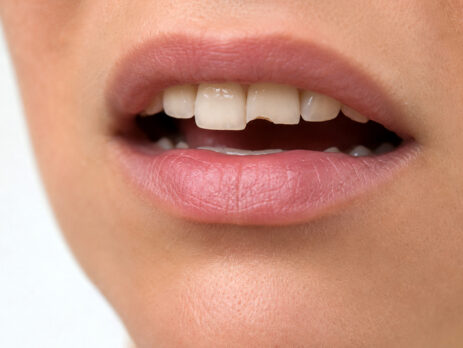
What to Do If a Dental Veneer or Crown Breaks?
What Should Be Done If a Veneer Tooth Breaks?
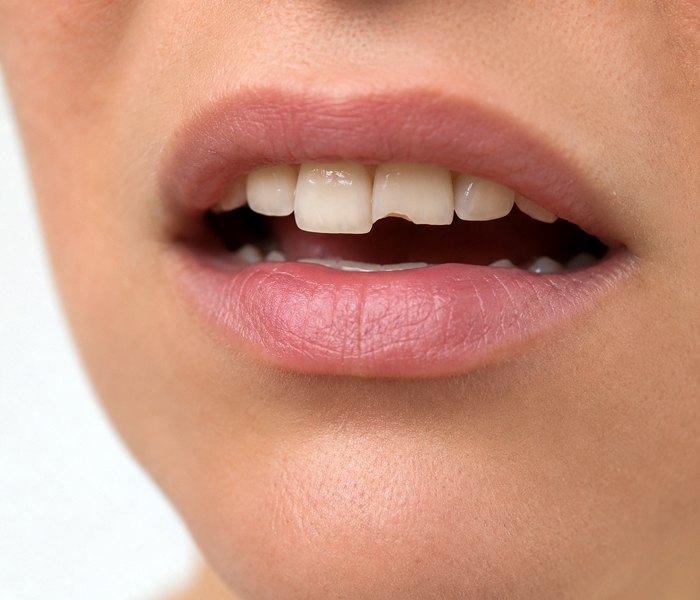
Veneer tooth breakage is not just an aesthetic problem; it is a clinical condition that can affect the underlying tooth tissue, chewing function, and sometimes even necessitate root canal treatment. Different types of veneers, such as porcelain, zirconium, E-max, or laminate veneer, can break or crack for various reasons. Therefore, there is no single answer to the question “what to do if a veneer tooth breaks?”; the correct approach varies depending on the size of the fracture, the type of veneer, and the condition of the underlying tooth.
The most important point is this: A broken veneer should not be seen as a “temporary problem”. Even a small crack can grow over time, sharp edges can irritate the tongue and cheek tissues, and the exposed surface can become more susceptible to bacterial plaque. Especially in front teeth, fractures directly affect speech and smile aesthetics, so patients often seek urgent solutions. At this point, the most appropriate step is to consult a dentist as soon as possible.
Why Do Veneer Teeth Break?
The reasons for veneer tooth breakage are usually not due to a single factor. Among the most common causes are biting hard foods, teeth grinding and clenching (bruxism), trauma, incorrect bite relationships, weakening of the tooth under the veneer, and wear and tear on restorations used for many years. Sometimes the veneer itself is intact; however, the adhesive material loses strength over time, and gaps form at the edges of the restoration.
For veneers on front teeth, aesthetic expectations are higher, so very thin materials can be preferred. This is an advantage when properly planned; however, if there is a risk of trauma, a protective approach may be necessary. In the posterior region, however, the chewing force is much more intense. Therefore, for veneers used in the posterior region, durability, material selection, and contact relationship become more critical.
What Should You Do in the First 24 Hours?
If your veneer tooth is broken, what you do within the first 24 hours can affect the success of the treatment. First, if you can find the broken piece, store it in a clean box or a damp gauze. Never abrade the piece, apply adhesive, or try to clean it with strong chemicals at home. If the veneer has left a sharp edge in your mouth, be careful not to chew on that side. Temporarily avoid hot, very cold, very hard, and sticky foods.
If there is gum bleeding, severe sensitivity, throbbing, severe pain during chewing, or an exposed area within the tooth, this may indicate not just a veneer fracture, but also involvement of the underlying tooth tissue. Therefore, it is necessary to schedule an appointment without delay. Additionally, if there is a sharp surface in the broken area, care should be taken to prevent it from irritating the tongue and cheek.
Can a Broken Veneer Be Saved?
The answer to this question is often yes, but not always. If the fracture of the veneer is limited to a superficial crack, sometimes a solution can be provided with polishing, composite repair, or local adjustment. However, if the fracture is extensive, if there is a detachment, or if the supporting structure of the veneer is compromised, the restoration needs to be renewed. If the underlying tooth remains intact, placing a new veneer can yield very successful results.
Especially in thin aesthetic veneers like laminate veneer, if the fracture line is small, repair might be possible. However, for materials like Zirconium and E-max, the depth of the fracture, its location, and occlusal forces are decisive. If there is decay under the veneer, a need for root canal treatment, or a crack in the tooth structure, the procedure is not limited to just repairing the veneer; a more comprehensive plan to protect the underlying tooth is required.
Treatment Options When a Dental Veneer Breaks
The same treatment is not applied for every case, because a veneer fracture is not a single condition; it can be the result of different problems. The primary goal in clinical evaluation is to examine the tooth’s vitality, the depth of the fracture, the marginal adaptation of the veneer, and the occlusal forces. Accordingly, one of the following options is chosen:
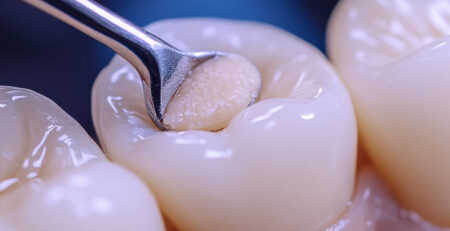
1) Composite repair: This can be applied if the fracture is small and limited to the aesthetic region. This method is a quick and economical solution, especially for small marginal fractures.
2) Polishing and contour adjustment: If the crack is superficial, sharp edges can be corrected, and aesthetic harmony can be improved.
3) Veneer replacement: This is the safest solution if the fracture is extensive or if structural durability has decreased. The old veneer is removed, the tooth is re-prepared, and a new restoration is made.
4) Root canal treatment: This may be necessary if the fracture extends to the underlying pulp or if there is severe pain.
5) Gum and bite adjustment: To prevent recurrence of the fracture, sometimes the gum level, contact points, or occlusion are revised.
How Do Different Veneer Types Break?
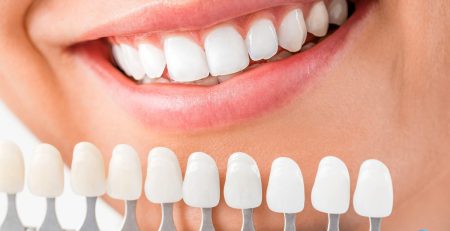
Porcelain restorations are aesthetically strong; however, in some cases, they may show edge fracture under impact or excessive load. Zirconium restorations are considered more durable; nevertheless, bruxism, hard foods, and improper contacts can also cause problems with zirconium. E-max restorations offer a highly aesthetic option thanks to their natural light translucency, but when not used in the correct indication, the risk of fracture may increase in areas exposed to high chewing forces.
As for laminate veneers, since they are mostly planned as a thin restoration on the front surface, they should be protected against trauma. In patients with teeth grinding habits, a protective splint may be recommended. In short, no matter how high the quality of the material, if the biomechanical load is not managed correctly, the risk of fracture will not be completely eliminated.
Why is the Tooth Under the Restoration Important?
When a restoration breaks, the problem is often not just with the superstructure. The truly critical point is the condition of the underlying tooth tissue. If there is decay, leakage, old filling failure, cracks, or root canal infection underneath, simply placing a new restoration will not be sufficient on its own. First, the biological problem is resolved, then aesthetic and functional restoration is planned.
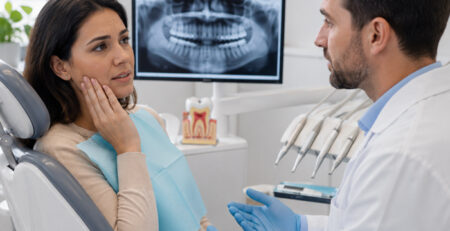
For this reason, during the clinician’s examination, X-ray evaluation, digital scanning if necessary, and bite analysis are performed. In some patients, a restoration fracture can be the first visible sign of excessive load the tooth has been exposed to for a long time. Therefore, treatment should not be considered merely “replacing the broken piece.”
How Can Digital Dentistry and Artificial Intelligence Help in This Process?
Today, digital scans, CAD/CAM designs, and AI-powered analyses provide significant advantages in evaluating veneer fractures in dentistry. AI-assisted image processing can help analyze the size of the fracture line more clearly, predict occlusal contacts, and plan restoration design more precisely. Thanks to digital impressions, classic impression errors are reduced, restoration fit is improved, and the risk of re-fracture may decrease.
In clinics utilizing digital dentistry, such as Melsadent, the veneer replacement process is not merely conducted with a “remove the old-insert the new” approach. The tooth’s structure, smile line, lip support, occlusal relationship, and material selection are all evaluated together. This paves the way for both aesthetic and long-lasting results.
When Is Emergency Intervention Needed?
A veneer fracture does not always have the same urgency. However, if the following findings are present, evaluation without delay is necessary: severe pain, bleeding, exposed sensitive tissue within the tooth, increased hot-cold sensitivity, a sharp surface irritating the cheek or tongue, throbbing pain during chewing, complete dislodgement of the veneer, tooth mobility after trauma, or a sudden change in tooth color.
Especially if a fracture occurs after sudden trauma, not only the veneer but also the root and surrounding tissues may be affected. In such a situation, early intervention increases the chance of saving the tooth. Delaying treatment can make it more complex and costly.
What Can Be Done to Prevent Veneer Tooth Fractures?
As much as post-fracture treatment, preventing recurrence is also important. Avoiding breaking hard-shelled foods with front teeth, quitting habits like nail-biting and pen-chewing, using a night guard if bruxism is present, not neglecting regular check-ups, and maintaining chewing balance are the foundation of a preventive approach. Evaluating muscle tension and occlusion in patients with teeth grinding problems also provides benefits.
Furthermore, for the longevity of veneered teeth, hygiene must be impeccable. A veneer does not mean ‘no cavities’; plaque accumulated at the edge of the veneer can damage the underlying tooth. Therefore, dental floss, interdental brushes, and an appropriate oral hygiene routine should not be neglected.
How is a Veneer Fracture Evaluated at Melsadent?
At Melsadent, for a patient presenting with a fractured veneer complaint, a clinical examination is first performed, followed by a radiological evaluation if necessary. Subsequently, the type of fracture, the vitality of the underlying tooth, the fit of the old veneer, and the patient’s aesthetic expectations are analyzed. Accordingly, composite repair, new veneer planning, root canal treatment, gum correction, or other restorative options are determined.
For more detailed information from related pages, the following links may be useful: Dental Crowns, Zirconium Crowns, E-max Crowns, Laminate Veneer Dental Coating, Root Canal Treatment, Digital Dentistry and Online Appointment.
Frequently Asked Questions
If a dental crown breaks, can it be re-bonded immediately?
Sometimes, repairs can be possible for small and superficial fractures; however, in most cases, re-bonding alone is not a permanent solution. Treatment should not be performed without evaluating the fit of the crown, the size of the fracture, and the condition of the underlying tooth.
Can a broken dental crown be reused?
If the piece is preserved intact and clean, evaluation may be possible in some cases. However, most of the time, the piece is only useful for diagnostic and planning purposes. The permanent solution is again determined by clinical decision.
Does a broken dental crown cause pain?
If the fracture is only on the surface of the dental crown, there may not be any pain. However, if the underlying tooth is exposed, if there is decay, or if the nerve tissue is affected, sensitivity and pain may be observed.
Can a zirconia crown break?
Zirconia is a very durable material; however, no restoration is completely unbreakable. Trauma, bruxism, improper bite, and very heavy loads can also cause problems with zirconia.
Is an E-max crown more durable, or zirconia?
This question cannot be answered with a single response. While E-max stands out for its aesthetics and light translucency, zirconia offers different advantages in terms of chewing durability. Which material is suitable depends on the region of the tooth and the patient’s jaw relationship.
Is a tooth extracted if its crown breaks?
Not always. In many cases, the tooth can be saved. If the tooth’s root structure, canal condition, and decay level are suitable, the treatment can be completed by renewing the crown. Extraction is one of the last resorts.
How soon should one see a dentist if a dental crown breaks?
As soon as possible. Evaluation on the same day or the next day is ideal, especially if there is pain, sensitivity, bleeding, or a sharp edge. Early intervention offers the chance for more conservative treatment.
Is a night guard necessary to prevent crown fracture?
A night guard can be very beneficial for patients with bruxism, which is the habit of clenching and grinding teeth. This decision is made after a doctor’s examination.
How to make an appointment at Melsadent?
For evaluation and treatment planning, you can proceed through the Online Appointment page. The Contact page can also be used for clinic information and communication.
Additional information and reliable sources
The clinical basis of this topic is supported by current and academic publications on the management of traumatic dental injuries and fractured restorations. Especially, a conservative approach, early intervention, and correct material selection are the main determinants of long-term success.
- Management of crown-related fractures in children: an update review
- Intraoral repair of fractured ceramics: a literature review
- Crown fractures in the permanent dentition: pulpal and restorative considerations
If a dental veneer or crown breaks, the most appropriate approach is to act quickly without underestimating the problem. While a small crack can sometimes be easily repaired, in some cases, replacement of the veneer/crown, root canal treatment, or additional treatment of the underlying tooth may be necessary. For a successful outcome, biological compatibility, bite balance, and regular follow-up are as important as aesthetic expectations. With a properly planned treatment, both smile aesthetics and chewing function can be safely regained.