




Is Fluoride Application Harmful in Children? | Melsadent
Is Fluoride Application Harmful in Children?
The question of whether fluoride application is harmful in children is one of the most frequently researched oral and dental health topics by parents, especially those whose babies’ first teeth are starting to erupt or whose children experience frequent tooth decay. Encountering quite different opinions about fluoride on the internet can naturally confuse parents.
The short answer is: Professional fluoride treatments, appropriately applied by a dentist taking into account the child’s age, caries risk, and total fluoride exposure, are generally considered safe and can help prevent tooth decay. However, this does not mean that every fluoride-containing product can be used in unlimited quantities by every child.
The fundamental issue with fluoride is not just “is it present or not?”. The dose, method of application, the child’s age, whether they swallow the product, the stage of tooth development, and individual caries risk should be evaluated together.
Especially in young children, situations such as excessive use or swallowing of toothpaste, or prolonged intake of unnecessary amounts of fluoride, can lead to the risk of dental fluorosis. In contrast, the controlled use of fluoride toothpaste and professional fluoride applications in children who need it are among the important components of modern preventive dentistry.
At Melsadent Oral and Dental Health Polyclinic, children’s preventive dental treatments can be evaluated under Pediatric Dentistry (Pedodontics) according to their age and individual needs.
What is Fluoride?
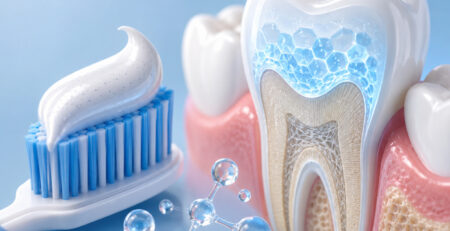
Fluoride is the ionic form of the element fluorine found in nature. We can be exposed to different amounts of fluoride through water, some foods and beverages, and oral care products.
The primary purpose of fluoride use in dentistry is to support the resistance of tooth enamel against acid attacks and reduce the risk of tooth decay.
Bacteria in the mouth form acid, especially when they use sugars and fermentable carbohydrates. These acids can cause the dissolution of minerals in tooth enamel, i.e., demineralization. If the process is repeated frequently, mineral losses that are not visible at first can eventually turn into carious lesions.
Fluoride helps the tooth surface become more resistant to acid attacks by supporting the remineralization process in the oral environment.
Therefore, fluoride is one of the important tools for caries control, not only in pediatric dentistry but also in adults.
Why is Fluoride Used in Children?
During childhood, dental caries is a very significant health problem. Especially frequent sugar consumption, inadequate oral hygiene, nighttime feeding, insufficient brushing of teeth, and individual susceptibility to caries can increase the risk.
In the World Health Organization’s studies on early childhood caries, it is also emphasized that cavities in primary teeth can affect children’s nutrition, daily life, and overall quality of life.
The purpose of professional fluoride application in children is;
- to support the resistance of tooth enamel against decay,
- to aid in the remineralization of initial mineral losses,
- to reduce the likelihood of new cavities forming, especially in children with a high risk of decay,
- to strengthen preventive dentistry practices
can be summarized as follows.
For detailed information on the causes of cavities in children and treatment options, Melsadent’s content Why Do Cavities Occur in Children? Symptoms, Early Diagnosis and Treatment can also be reviewed.
Is Fluoride Application in Children Really Harmful?
When evaluating whether fluoride is harmful to children, the concept of “dose” is particularly important.
Using fluoride products in the recommended amount is not the same as prolonged ingestion of excessive amounts of fluoride.
The American Academy of Pediatric Dentistry (AAPD) publishes clinical recommendations stating that fluoride is effective in the prevention and control of dental caries in children and adolescents.
AAPD’s current fluoride therapy resource can be accessed via the American Academy of Pediatric Dentistry – Fluoride Therapy link.
The American Dental Association (ADA) also evaluates fluoride treatments in its clinical guidelines regarding the use of professional topical fluoride, especially for individuals at risk of caries. For children under six years of age, 2.26% fluoride varnish is highlighted as a prominent option in the guideline for professional applications.
For detailed guidelines, the American Dental Association – Topical Fluoride Clinical Practice Guideline can be reviewed.
Therefore, the generalization that ‘Fluoride is absolutely harmful to children’ does not accurately reflect the scientific clinical approach. However, it should not be thought that excessive fluoride intake carries no risk.
The correct approach is to assess the amount of fluoride a child needs based on their age and caries risk.
What is Fluoride Varnish?
Fluoride varnish is a professional protective product containing a high concentration of fluoride, but applied in very small amounts to the tooth surface.
It is applied by a dentist in a thin layer to the tooth surfaces. After coming into contact with saliva, it adheres to the tooth surface, allowing fluoride to remain in contact with the enamel for a certain period.
The application usually takes a short time and does not involve injections or surgical procedures.
Especially in young children, when professional fluoride application is mentioned, fluoride varnish is one of the frequently preferred methods.
In the ADA’s evaluation of professional fluoride treatments, fluoride varnish also holds an important place for young children.
Can Fluoride Varnish Be Swallowed by a Child?
This is one of the most frequently asked questions by parents.
Professional fluoride varnish is applied to the tooth surface in controlled and very small amounts. The structure of the varnish helps it adhere to the tooth surface after application.
Therefore, clinical application and a child swallowing a large amount of toothpaste at home are not the same form of exposure.
The amount of product used in professional application and the area where it will be applied are controlled by the dentist.
The American Dental Association’s scientific assessment of fluoride also states that the professional application of a small amount of fluoride varnish limits the amount of fluoride that can be swallowed.
For more scientific information, the ADA – Fluoride: Topical and Systemic Supplements resource can be consulted.
What is Fluorosis?
One of the main concerns regarding fluoride is dental fluorosis.
Dental fluorosis is a developmental enamel change that can occur due to prolonged excessive fluoride intake while the enamel tissue of permanent teeth is developing.
In mild cases, thin white lines or spots may be visible on the tooth surface. More advanced fluorosis can lead to noticeable enamel changes.
The critical point here is this: Fluorosis can be misunderstood as a result of confusing the controlled application of fluoride to the tooth surface with the excessive systemic intake of fluoride during the developmental period.
The U.S. Centers for Disease Control and Prevention (CDC) states that dental fluorosis is associated with excessive fluoride intake during tooth development and emphasizes the importance of young children not swallowing toothpaste.
Detailed information from the CDC can be accessed via CDC – About Dental Fluorosis.
At Which Ages is the Risk of Fluorosis More Important?
The risk of fluorosis is mainly significant during childhood, when the enamel formation of permanent teeth continues.
According to the CDC, since the enamel development of most permanent teeth is completed after approximately 8 years of age, new dental fluorosis is not expected to occur.
Therefore, the amount of toothpaste used, especially in young children, is important.
Instead of children squeezing a large amount of toothpaste onto the brush themselves, it is a more appropriate approach for parents to prepare an age-appropriate amount of toothpaste.
Is Fluoride Toothpaste Harmful for Children?
When used correctly, fluoride toothpaste is one of the primary tools for preventing tooth decay in children.
The point to note here is the amount of toothpaste.
Young children do not need to use an amount of toothpaste that completely covers the brush, like adults.
In general international recommendations;
- For children younger than 3 years old, a rice-grain-sized amount or a very thin smear of fluoride toothpaste,
- For children aged 3–6 years, an amount of toothpaste not exceeding a pea size
is recommended.
It is important for the child to spit out the toothpaste as much as possible, and for brushing to be done under parental supervision, especially at young ages.
Regarding instilling a tooth brushing habit, Melsadent’s content titled How to Instill Tooth Brushing Habits in Children? also contains useful information for parents.
At What Age Is Fluoride Application Done in Children?
It is not correct to determine a single “starting age” for professional fluoride application that can be applied to all children.
In the assessment, the child’s;
- status of tooth eruption,
- existing cavities,
- past cavity experience,
- eating habits,
- oral hygiene,
- structure of tooth enamel,
- fluoride products used,
- special health needs
such factors are considered together.
AAPD supports planning professional fluoride applications based on children’s individual caries risk.
Therefore, instead of absolute generalizations such as “Fluoride must be applied at age 3” or “Fluoride is not applied before age 5”, the risk assessment performed by the pediatric dentist should be taken as a basis.
How Often Is Fluoride Application Done?
The frequency of professional fluoride application is also not the same for all children.
The same follow-up plan may not be necessary for a child with a low caries risk and a child who develops multiple cavities in a short period.
The frequency of professional applications;
- caries risk,
- child’s age,
- previous caries experience,
- nutritional habits,
- quality of oral hygiene,
- dentist’s clinical assessment
should be determined accordingly.
Closer follow-up may be necessary for some children with high caries risk. Therefore, it is not correct to consider the standard expressions “every 3 months” or “every 6 months” seen on the internet as an unchangeable rule for every child.
Does Fluoride Completely Prevent Tooth Decay?
No. Fluoride is a very important protective tool, but it does not provide one hundred percent protection against decay on its own.
Preventing tooth decay in children requires the combined implementation of multiple practices.
Among these are;
- proper toothbrushing twice a day,
- use of age-appropriate amount of fluoridated toothpaste,
- reduction in the frequency of sugar consumption,
- limiting sugary beverage consumption, especially at night,
- regular pediatric dentist check-ups,
- professional fluoride application when necessary,
- application of fissure sealant to appropriate teeth
can be listed.
More detailed information about protective applications can be found in Melsadent’s How to Prevent Tooth Decay? Next-Generation Protective Methods and Fluoride Applications content.
What is the Difference Between Fissure Sealant and Fluoride?
Fluoride application and fissure sealant should not be considered as alternatives to each other.
Fluoride helps resistance against cavity formation by supporting the mineral structure of tooth enamel.
Fissure sealant, on the other hand, is a protective application that aims to reduce the accumulation of bacteria and food debris in deep grooves, especially on the chewing surfaces of molar teeth, by physically sealing them.
In some children, depending on the risk of decay, both fluoride and fissure sealant applications can be different parts of the same preventive treatment plan.
Is Fluoride Applied to Baby Teeth?
Yes. The temporary nature of baby teeth does not mean that their protection is unnecessary.
Baby teeth;
- for the child’s chewing,
- for speech development,
- for aesthetic appearance,
- for the preservation of the necessary space for permanent teeth
contribute.
Cavities developing in baby teeth can lead to pain, infection, and early tooth loss.
Therefore, baby teeth are also evaluated within the scope of preventive dentistry, and fluoride can be applied to children where deemed necessary.
Is Fluoride Application Necessary for a Child Whose Teeth Do Not Decay?
The answer to this question should not be given solely by looking at the number of existing cavities.
A child not having cavities today does not mean there is no risk of cavities in the future.
In the dentist’s risk assessment;
- previous cavity history,
- extensive cavity history in the family,
- frequency of sugar consumption,
- the anatomy of tooth surfaces,
- enamel problems,
- oral hygiene,
- saliva characteristics
can be taken into consideration.
The need for professional fluoride and the application interval for a child with a low caries risk may differ from the planning for a high-risk child.
Is Fluoride Used in Children with Weak Tooth Enamel?
Fluoride can support the remineralization of tooth enamel and help increase its resistance to acid attacks. However, it does not regenerate enamel tissue deficiency caused by congenital or developmental reasons.
If there are white, yellow, or brown spots, pits, or rapid wear on the enamel surface, the cause of the problem must first be evaluated.
For detailed information on this topic, the Melsadent content titled Is Weak Tooth Enamel Genetic? can be reviewed.
Should a Child’s Teeth Be Examined Before Fluoride Application?
Yes. Professional fluoride application should not be considered merely as “applying fluoride to teeth.”
First and foremost, evaluating the child’s oral and dental health provides a more accurate clinical approach.
During the examination;
- whether there is active caries,
- incipient caries,
- tooth eruption status,
- enamel structure,
- plaque accumulation,
- oral hygiene,
- nutritional habits, and
- caries risk factors
can be examined.
This information helps determine whether professional fluoride application is necessary and what follow-up interval might be appropriate.
How is Professional Fluoride Application Performed in Children?
While the application may vary depending on the product used, the process with fluoride varnish is generally quite short and comfortable.
Tooth surfaces are prepared for the application, and the fluoride varnish is applied in a thin layer to the appropriate areas.
No injection or surgical procedure is required.
The varnish adheres to the tooth surface shortly after coming into contact with saliva. After the application, the dentist will explain, according to the instructions of the product used, for how long hard foods should be avoided, when teeth can be brushed, or when normal eating can resume.
Therefore, a single rule seen on the internet like “no eating for X hours after application” may not be valid for every fluoride product.
Are There Any Side Effects of Fluoride Application?
Professional fluoride varnish is generally well-tolerated when used with the correct indication and appropriate technique.
However, as with all healthcare practices, individual sensitivity or rare reactions to the ingredients of the product used may occur.
If the child has known allergies, widespread sores or inflammation in the mouth, or a special health condition, the dentist should be informed before the procedure.
Prolonged systemic intake of fluoride in excess of what is needed should not be confused with the possible effects of a single professional application.
Does Fluoride Affect Brain Development?
One of the most frequently encountered topics in internet discussions about fluoride is the relationship between fluoride exposure and neurodevelopment.
When evaluating research in this area, details such as the amount of fluoride received, the source of exposure, the concentration in water, environmental factors, and study design are of great importance.
It is not accurate to consider research examining high environmental exposures and the small amount of fluoride varnish applied to the tooth surface by a dentist as the same exposure.
Therefore, the results of scientific studies in this area should not be interpreted as a direct equivalent of professional fluoride varnish.
If you have concerns about your child’s total fluoride exposure or individual health status, an evaluation can be made with the pediatric dentist and, if necessary, the pediatrician.
What Does the World Health Organization Say About Fluoride?
In its work on oral and dental health, the World Health Organization considers fluoride toothpaste as one of the fundamental tools for preventing dental caries.
WHO also evaluated preventive and minimally invasive approaches, including fluoride varnish, in line with scientific evidence in its updated guideline on caries prevention and management published in 2026.
WHO’s current guideline can be accessed via the link WHO Guideline on Environmentally Friendly and Less Invasive Oral Health Care for Preventing and Managing Dental Caries.
These resources show that fluoride should be considered not with a ‘the more, the better’ logic, but within the framework of correct concentration, proper use, and individual risk assessment.
Most Common Mistakes Parents Make Regarding Fluoride
A significant portion of problems with fluoride use may stem not from professional fluoride application, but from the incorrect or uncontrolled use of products at home.
The main points parents should pay attention to are:
- Not allowing a young child to squeeze out as much toothpaste as they want on their own.
- Teaching them not to swallow toothpaste.
- Using an age-appropriate amount of toothpaste.
- Not using fluoride-containing supplement products without a dentist’s or doctor’s recommendation.
- Considering the total usage of different fluoride-containing products.
- Not uncontrollably cutting off all fluoride sources that protect against tooth decay, based on the belief that “fluoride is harmful.”
- Not to use excessive product with the belief that “fluoride is beneficial”.
The most appropriate approach is to avoid both extreme views and conduct a child-specific risk assessment.
For Whom Might Fluoride Application Be More Important in Children?
Not every child has the same caries risk.
Professional fluoride application is especially important for;
- who previously had more than one cavity,
- who develop new cavities in a short period,
- who have insufficient toothbrushing quality,
- who frequently consume sugary foods or drinks,
- who use orthodontic appliances,
- who have enamel development problems,
- who have difficulty with oral hygiene due to special care needs
may be considered as part of a caries risk assessment in children.
However, the decision for application should not be based solely on this list; a clinical examination must be performed.
How is Fluoride Use Evaluated Between Ages 7–15?
The period between 7–15 years of age is an important stage where primary and permanent teeth coexist or permanent dentition is gradually completed.
Especially the chewing surfaces of newly erupted permanent molars may be prone to decay.
During this period, regular brushing with fluoride toothpaste, proper nutrition, dental check-ups, and professional preventive applications in necessary children gain importance.
Melsadent’s How Should Oral and Dental Health Care Be for Children Aged 7–15? guide discusses care recommendations for this age group in detail.
What Questions Can Be Asked Before Having Fluoride Application for Children?
Parents can ask the pediatric dentist the following questions:
- Is my child’s caries risk low, moderate, or high?
- Does my child really need professional fluoride application?
- Which type of fluoride product will be used?
- How often does the application need to be repeated?
- Which fluoride toothpaste should we use at home?
- How much toothpaste should be used?
- Is there a need for fissure sealant application?
- Does my child have a special problem with their enamel structure?
These questions can help create a personalized preventive dentistry plan instead of a standard application.
Scientific Information About Fluoride Application in Children
When existing scientific guidelines are evaluated together, it is seen that professional fluoride applications are one of the important preventive methods that help prevent dental caries in children, with correct patient selection and appropriate usage conditions.
However, this result does not mean “The amount of fluoride is not important.”
Especially in children during their developmental period, continuous swallowing of excessive fluoride can increase the risk of dental fluorosis. Therefore, the amount of toothpaste used at home, whether the child swallows the toothpaste, and other fluoride sources are important.
In summary;
Correct amount + correct age + correct product + assessment of individual caries risk = safe and effective fluoride use
can be thought of as.
The goal is not to give the child the maximum possible fluoride, but to provide the necessary preventive support to protect against decay in an appropriate and controlled manner.
Preventive Dentistry for Children at Melsadent
Protecting healthy teeth in children is not limited to treating existing cavities alone.
At Melsadent Oral and Dental Health Polyclinic, child patients can be evaluated under Pediatric Dentistry (Pedodontics) and followed up in terms of oral hygiene, caries risk, tooth development, and necessary preventive applications.
Whether fluoride application is needed should also be evaluated separately for each child.
If your child has frequently recurring cavities, white spots on the tooth surface, enamel structural defects, or difficulty with oral hygiene, a pediatric dentist examination could be the first step in preventive planning.
Frequently Asked Questions
Is fluoride application harmful to children?
Professional fluoride applications, performed under dental supervision and appropriate for the child’s age and cavity risk, are generally considered safe. The risk is more associated with prolonged swallowing of excessive fluoride during the developmental period.
Is fluoride varnish safe?
Professional fluoride varnish is applied to teeth in small and controlled amounts. Professional fluoride varnish is included in the recommendations of organizations like the ADA and AAPD for cavity prevention in children.
Does fluoride cause poisoning in children?
As with any substance, the amount of fluoride ingested is important. The controlled amounts used in professional application are not the same as accidentally swallowing a large quantity of a fluoride-containing product. If a child is suspected of having swallowed a high amount of a fluoride-containing product, a healthcare professional should be consulted.
Does fluoride cause fluorosis?
Prolonged excessive fluoride intake during tooth development can increase the risk of dental fluorosis. Therefore, for young children, the amount of toothpaste and preventing the swallowing of the product are important.
What is fluorosis?
Fluorosis is a change in enamel appearance that can occur due to excessive fluoride exposure while permanent teeth are developing. In mild cases, it may appear as white lines or spots.
At what age is fluoride application performed?
There is no single starting age. The decision is made by the pediatric dentist based on the child’s tooth eruption status and individual caries risk.
How often is fluoride application performed?
The application interval varies according to caries risk. The same application frequency may not be necessary for high-risk children and low-risk children.
Does fluoride application hurt?
The application of fluoride varnish is generally painless. It is applied to the tooth surface in a thin layer with a brush-like applicator and does not require injection.
Is fluoride applied to primary (baby) teeth?
Yes. Since primary teeth can also decay, protective fluoride application can be performed in children deemed necessary.
Does a child with no cavities need fluoride?
Not always necessary. The decision should be based on a caries risk assessment. Past caries history, diet, oral hygiene, enamel structure, and other risk factors are considered.
Should children use fluoride toothpaste?
Scientific organizations consider the use of age-appropriate amounts of fluoride toothpaste among the primary methods for preventing tooth decay. It is important for parents to control the amount of toothpaste for young children.
How much toothpaste should a child under 3 years old use?
General international recommendations suggest using a rice-grain-sized amount or a thin smear of fluoride toothpaste.
How much toothpaste should be used between 3–6 years old?
Generally, a pea-sized amount of fluoride toothpaste is recommended, not exceeding this amount. Brushing should be done under parental supervision.
Is fluoride or fissure sealant better?
The two applications work differently and are not direct alternatives to each other. While fluoride supports the enamel, fissure sealant physically closes the deep grooves in the molars. Depending on the child’s needs, both can be recommended together.
Are teeth brushed immediately after fluoride application?
This may vary according to the instructions for the product used. The eating, drinking, and brushing instructions given by the dentist performing the application must be followed.
Is tooth cleaning required before fluoride application?
The same preparation may not be required for every child. After the dentist’s examination, how the tooth surfaces will be prepared for the application is determined.
Does fluoride completely prevent tooth decay in children?
No. Fluoride can help reduce the risk of decay, but it does not replace proper brushing, limiting sugar consumption, and regular dental check-ups.
How can I find out if my child needs fluoride?
The most accurate method is a decay risk assessment performed by a pediatric dentist. The child’s current teeth, previous decay, diet, oral hygiene, and enamel structure should be examined together.