



What is Apical Resection? Root Tip Surgery | Melsadent
What is Root End Surgery and What is its Purpose?
Apical resection is a surgical procedure performed to remove persistent infection or inflammatory tissues around the tooth root, despite root canal treatment. The primary goal of this method, also known as root end surgery, is to treat the problematic area and help preserve the natural tooth in the mouth.
Under normal circumstances, root canal treatment is the first option for treating infections in the tooth root. However, in some patients, a different approach may be necessary due to the complex anatomy of the root canals, insufficient previous treatment, or persistent infection.
Surgical treatment can be an important alternative, especially for teeth considered for extraction but that have a chance of being preserved. However, not every root end lesion requires surgery. The decision is made based on a detailed clinical examination and radiological assessment.
In Which Cases Is Apical Resection Necessary?
Surgical intervention targeting the root end is generally considered in cases where sufficient healing cannot be achieved with traditional endodontic methods.
- Persistent root end infection: Continuation or growth of the inflammatory lesion around the root after root canal treatment.
- Recurrent infection: Recurrence of pain, swelling, or fistula formation in a tooth that has been previously treated.
- Inaccessible root canals: Inability to clean the entire canal due to calcification, excessive curvature, or anatomical variations.
- Inability to re-treat the root canal: Re-treatment not considered appropriate due to existing restorations or obstructions within the canal.
- Pathological tissues at the root apex: Presence of lesions requiring surgical cleaning or tissue sampling.
The American Association of Endodontists states that a surgical approach can help save the tooth, especially in cases of periapical diseases that do not heal despite root canal treatment. For details, the AAE endodontic surgery guide can be reviewed.
How to Detect Infection at the Root Apex?
Infection does not always cause severe pain. While some patients have no complaints, the problem can be detected on a routine dental X-ray.
Sensitivity during chewing, recurrent swelling in the gums, a pimple-like drainage point, and a feeling of pressure around the root are symptoms that should be evaluated.
However, these findings alone do not indicate the necessity of surgery. To learn the reasons for similar complaints, you can read the content we prepared about the reasons why a root canal treated tooth hurts years later.
Root Canal Retreatment or Root End Surgery?
Before surgical intervention, it is investigated whether redoing the existing root canal treatment is possible. Because if the source of the infection is within the canal, root canal retreatment can provide a suitable solution.
The condition of the previous root canal filling, the restoration of the tooth, the root structure, and the characteristics of the lesion are evaluated together. If necessary, three-dimensional dental tomography can be utilized.
Root canal treatment (endodontics) On our page, you can examine the basic treatment methods for the preservation of infected teeth.
How Is Root End Surgery Performed?
The procedure is planned according to the anatomical features of the region and the size of the lesion. The general application steps are as follows:
- Examination and imaging: The tooth’s root structure, surrounding bone tissue, and the infection area are evaluated.
- Local anesthesia: Anesthesia is applied to prevent the sensation of pain in the surgical area.
- Surgical access: The gum is lifted in a controlled manner to reach the root apex.
- Cleaning of infected tissue: The problematic root apex section and surrounding pathological tissues are removed.
- Sealing of the root apex: In necessary cases, the root apex is filled with special biocompatible materials.
- Suturing and follow-up: The gum is closed and a follow-up is planned to monitor healing.
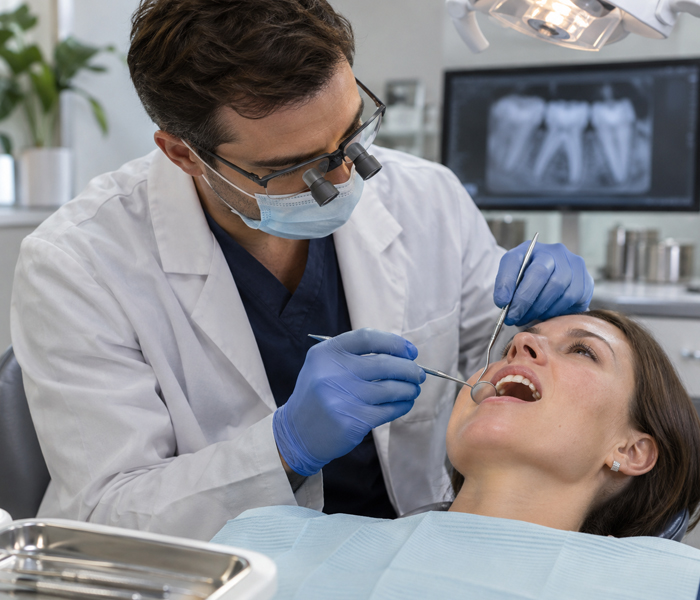
In modern endodontic surgery, magnification systems and precise surgical techniques can be used. These methods aim to preserve the surrounding healthy tissues and to ensure the controlled execution of the treatment.
Is Apical Resection a Painful Procedure?
Since the surgery is performed under local anesthesia, sharp pain is not expected to be felt during the procedure. However, a sensation of pressure or movement may occur.
After the effect of anesthesia wears off, mild or moderate pain, swelling, and tenderness may be observed. These complaints usually start to decrease within the first few days.
If pain progressively increases, fever or significant swelling develops, a dentist should be consulted.
How Long Does Post-Operative Recovery Take?
While soft tissue healing typically progresses within the first one to two weeks, the healing of bone tissue around the root can take months.
To support the healing process, the following points should be observed:
- On the first day, avoid straining the surgical area and vigorous mouth rinsing.
- Cold application can be performed externally as advised by the dentist.
- Soft and warm foods should be preferred in the first few days.
- Since smoking can negatively affect healing, it should be stopped or avoided for the duration recommended by the dentist.
- Medications should only be used as advised by the dentist, and follow-up appointments should not be missed.
The timing for removing sutures in the gum may vary depending on the suture material used. Follow-up imaging may be required in subsequent months to evaluate bone healing.
What is the Success Rate of Root End Surgery?
Success varies depending on the tooth’s position, root structure, characteristics of the existing infection, quality of restoration, and surgical technique.
In a systematic review examining the long-term outcomes of endodontic microsurgery, cumulative success rates ranging from approximately 78% to 91% were reported, depending on the type of study. These values do not mean that the same outcome will be achieved for every patient.
In addition, a systematic review and meta-analysis published in 2023 indicates that the characteristics of bone tissue defects can affect treatment outcomes.
A scientific review from 2026, on the other hand, emphasizes the importance of appropriate patient selection, accurate diagnosis, and surgical technique.
Are There Risks to This Procedure?
As with any surgical procedure, there are risks such as bleeding, infection, temporary swelling, and pain. Depending on the area where the tooth is located, complications such as effects on adjacent anatomical structures or temporary changes in sensation may also occur.
In teeth with advanced bone loss, vertical root fracture, or structural damage that cannot be corrected with restoration, the success rate of surgery may decrease.
In cases where tooth preservation is not appropriate, other treatment options are considered. For details on this topic, you can review our article titled root canal treatment or tooth extraction?
Frequently Asked Questions
Does root end surgery save the tooth?
In suitable cases, it can ensure the preservation of the natural tooth. However, the outcome depends on the condition of the infection, the structural integrity of the tooth, and its healing capacity. A definitive guarantee of success cannot be given.
What happens if surgery is not performed?
Ongoing infection may progress or affect surrounding tissues. However, not every radiological lesion requires immediate surgery. The decision for treatment or follow-up is determined by examination.
Can the tooth become inflamed again after the procedure?
Yes. Re-infection can develop due to persistent infection in root canals, leaking restorations, or various dental problems. Therefore, regular follow-up is important.
Are apicoectomy and root canal treatment the same thing?
No. In root canal treatment, the canals inside the tooth are cleaned, whereas in root-end surgery, surgical access is provided through the gum to treat the root tip and the problematic tissues around it.
Can a root-end cyst disappear without surgery?
Some inflammatory lesions around the root can shrink and heal after appropriate root canal treatment. Not every lesion seen on an X-ray is a true cyst. The definitive evaluation is based on clinical, radiological, and if necessary, pathological examination.
Evaluation of Root-End Problems at Melsadent
Persistent pain after root canal treatment, recurrent swelling, or the detection of a lesion around the root does not necessarily mean that the tooth must be extracted.
At Melsadent Oral and Dental Health Polyclinic, serving in Tuzla, Istanbul, appropriate options for tooth preservation can be determined by utilizing examinations and necessary imaging methods for the evaluation of endodontic problems.
To avoid delaying your complaints and to learn about the appropriate treatment approach for your tooth, you can schedule an appointment through Melsadent Oral and Dental Health Polyclinic.
This content has been prepared for general informational purposes. Diagnosis and treatment decisions should be made as a result of the dentist’s clinical evaluation.