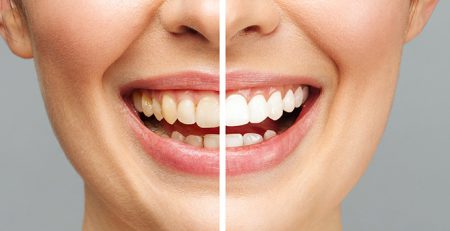
Does Your Smile Give Away Your Age?
What is Smile Age?
When estimating a person’s age, we don’t just look at their hair, skin, or the lines on their face. Unconsciously, we also evaluate their smile. The color, length, shape, amount of wear on the teeth, the appearance of the gums, and their harmony with the lips can contribute to a person being perceived as younger or older than they actually are. Therefore, the question “Does your smile give away your age?” is not merely an aesthetic curiosity; it is closely related to the changes that occur in oral and dental tissues over time.
It is natural for changes to occur in the appearance of teeth as one ages. However, every yellowing, wear, or gum recession is not merely an inevitable consequence of aging. Dietary habits, oral hygiene, smoking, coffee and tea consumption, teeth grinding, acidic foods, missing teeth, old restorations, and various oral and dental problems can cause a smile to appear prematurely aged.
Today, aesthetic dentistry does not merely aim to create “whiter teeth”. The main goal is to achieve a natural appearance that is harmonious with the facial structure, lips, gum line, color and form of the teeth, and the person’s age. Therefore, when planning a youthful-looking smile, one should not look at a single tooth, but at all the structures that make up the smile together.
“Smile age” is not an official medical age measurement. It is rather a concept that can be used to describe the perception of age created in a person by the appearance of the teeth and surrounding tissues. Even if two people are chronologically the same age, the visual impact created by their smiles can be quite different.
For example; a smile with lighter colored teeth that maintain their natural form, are not excessively worn, and are harmonious with the face, can be perceived as more dynamic. In contrast, noticeable discolorations, worn front teeth, chipped edges, missing teeth, old and discolored fillings, or prominent gum problems can lead to a smile appearing more tired and aged.
An important distinction must be made here: The goal is not to give everyone perfectly white, long, and flawlessly symmetrical teeth. In a natural smile design, a person’s facial features, lip structure, gum appearance, existing tooth tissues, and expectations should be evaluated together. Melsadent’s detailed content on smile design also states that smile design is not just about teeth whitening; it involves considering teeth, gums, lips, and facial contours together.
10 Important Signs That Make Your Smile Give Away Your Age
There isn’t a single feature in a smile that affects age perception. Generally, multiple small changes come together to influence the overall appearance. While some of these are purely aesthetic, others may be indicators of underlying oral and dental health problems.
1. Yellowing and Darkening of Teeth Over Time
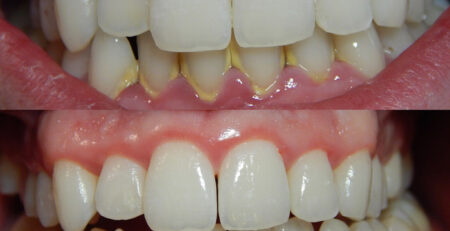
One of the factors that can most affect age perception in a smile is tooth color. Natural teeth do not remain the same color throughout life. The tone of teeth can change over time due to alterations in enamel structure, the visibility of the underlying dentin, and externally caused discolorations.
Academic research has also shown differences in tooth color among age groups. With advancing age, teeth may appear in darker and yellower shades.
However, not every color change in teeth can be directly attributed to age. Coffee, tea, tobacco products, colored beverages, oral hygiene habits, and certain dental conditions can intensify discoloration.
For superficial or suitable cases of color changes, professional tooth whitening (bleaching) options can be considered. However, whether whitening is appropriate and the source of the discoloration should first be determined by a dentist.
2. Shortening of Front Teeth
In a youthful smile, especially the natural length of the upper front teeth and the proportions they form with each other are important for the character of the smile. Wear and tear over the years can cause the incisal edges of the front teeth to shorten.
Tooth wear is not solely related to age. Teeth clenching and grinding, known as bruxism, acid erosion, bite problems, and certain habits can accelerate wear.
A review of clinical studies on tooth wear in older adults published in 2024 emphasizes that tooth wear can affect aesthetics, function, and quality of life, and that early diagnosis and control of risk factors are important.
Source: PubMed – Tooth Wear in Older Adults: A Review of Clinical Studies
3. Flattening of Tooth Edges
The incisal edges of natural teeth are not perfectly straight as if drawn with a ruler. Throughout life, wear and tear can occur on these edges due to chewing forces and other mechanical effects.
The prominent flattening of the incisal edges of the front teeth, in particular, can contribute to a more mature appearance of the smile. In individuals with teeth grinding problems, this change can also emerge at younger ages.
Therefore, if significant tooth wear is observed at a young age, the cause of the wear should be investigated instead of just performing aesthetic restorations. Otherwise, newly performed restorations may also be subjected to similar forces.
4. Cracks and Small Fractures in Teeth
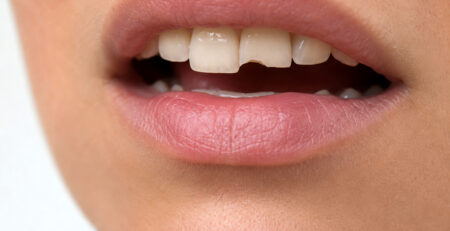
Small fractures on the edges of the front teeth may seem insignificant at first glance. However, when present on multiple teeth, they can alter the way light reflects from the tooth surface and the overall harmony of the smile.
The cause of fractures can be trauma, hard foods, teeth grinding, existing restorations, or various mechanical factors. Whether treatment is necessary is decided based on the size of the fracture and the condition of the tooth tissue.
In some suitable cases, the tooth form can be corrected with minimal restorative methods, while in cases with more extensive tissue loss, different restorative options may be considered.
5. Gum Recession
The elements that determine the age of a smile are not solely comprised of teeth. The position and health of the gums are also very important.
When gum recession occurs, a portion of the tooth’s root surface may become visible, making the tooth appear longer than it is. Recessions occurring on multiple teeth can alter the overall proportions of the smile.
Gum recession can be associated with incorrect or traumatic brushing, periodontal diseases, anatomical factors, and various other reasons. Therefore, it should not be considered merely an aesthetic problem.
If symptoms such as gum bleeding, recession, sensitivity, bad breath, or tooth mobility are present, a periodontal evaluation is important.
6. Discoloration of Old Fillings
In addition to natural teeth, old restorations can also affect the age of a smile. Especially old fillings located in the anterior region may lose their color and surface harmony with the surrounding natural tooth tissue over time.
The presence of discoloration at the edge of a filling does not always mean the filling needs to be replaced. The integrity of the restoration, marginal adaptation, presence of decay underneath, and aesthetic expectations should be evaluated together.
When necessary, polishing, repair, or replacement of the restoration may be considered. An approach that preserves healthy tooth tissue as much as possible should be preferred.
7. Missing Teeth and Disruption of Smile Balance
A missing tooth does not only create a gap. Depending on its location and the elapsed time, it can also affect the position of neighboring teeth, occlusal relationships, and chewing patterns.
Gaps, especially in areas visible during a smile, can directly affect the overall perception of the face and smile. Missing teeth in the posterior region are important for chewing function and occlusal balance.
Various options such as implants, bridges, or removable dentures may be available for the treatment of missing teeth. The appropriate method is determined based on bone structure, the condition of adjacent teeth, overall oral health, and the patient’s expectations.
8. Crowded Teeth Appearance
The alignment of teeth also determines the overall character of a smile. While crowding may have been present in some individuals for many years, in some cases, changes in tooth positions may occur over time.
Crowded teeth should not only be evaluated from an aesthetic perspective. The formation of hard-to-clean areas can also make oral hygiene more difficult.
In suitable cases, tooth positions can be corrected with orthodontic treatments. Melsadent’s treatment options also include braces and orthodontics applications.
9. Changes in the Harmony Between Teeth and Lips
Smile aesthetics should not be evaluated solely by looking at the teeth up close. The movement of the lips, the amount of teeth visible during a smile, and the proportions the teeth form with the face are also important.
Therefore, in aesthetic planning, the question “how white are the teeth?” is not the only one asked. The length, width of the front teeth, lip line, midline, gum levels, and facial proportions are evaluated together.
This is the main reason why a personalized approach is important. A tooth shape or color that looks aesthetic on one person may not look natural on another face in the same way.
10. Teeth Appearing Excessively Dull or Monochromatic
Natural teeth are not a single piece of opaque white color. Due to the enamel and dentin structure, light translucency, brightness, and color character can vary in different regions.
Therefore, the goal in aesthetic restorations should not only be to choose the whitest possible shade. Especially in restorations in the anterior region, being able to mimic natural light behavior is important for an aesthetic outcome.
Modern restorative materials like zirconium can provide both aesthetics and durability in appropriate indications. Melsadent’s zirconium crown treatment page emphasizes the importance of light translucency in enabling zirconium restorations to achieve results close to the appearance of natural teeth.
Do Teeth Really Yellow as We Age?
Yes, changes in tooth color can be observed with age. However, the speed and extent of this change vary from person to person.
The enamel on the outer part of the tooth and the underlying dentin collectively play a role in forming the perceived color of the tooth. Over time, wear and discoloration can occur on the enamel surface; the color of the dentin can also affect the overall appearance.
A scientific study investigating the effect of age on tooth color reported that the teeth of participants in the older age group were darker and yellower compared to the younger group.
Source: PubMed Central – Effect of Age on Tooth Shade, Skin Color and Skin-Tooth Color Interrelationship
This does not mean that “everyone’s teeth will definitely become very yellow as they age.” Diet, oral hygiene, tobacco use, genetic characteristics, and professional care habits can create significant differences in appearance.
Does Tooth Color Affect the Perceived Age of the Face?
Since teeth are located at the center of the face, their color is part of the overall facial aesthetics. However, the perception of tooth color is not isolated; it is evaluated in conjunction with the surrounding lip, skin, and gum tones.
Current research indicates that tooth shade, skin tone, and gum pigmentation can be considered together in dental aesthetic evaluation.
In other words, a simple formula like “young smile = the whitest possible tooth” is not correct. Restorations that are too opaque or too white, conflicting with the person’s face, can diminish a natural appearance. This is where the importance of personalized color selection in aesthetic treatments comes from.
Does Tooth Wear Make a Person Look Older?
Significant tooth wear can change the character of a smile. Especially the shortening of the upper front teeth and the flattening of the incisal edges can affect the amount of tooth visible during a smile and the proportions of the teeth.
However, there is a more important issue here than aesthetic appearance: Determining why the wear occurred.
Teeth clenching and grinding, intensive consumption of acidic foods and beverages, conditions that can increase acid exposure such as gastroesophageal reflux, bad habits, and occlusal forces can play a role in wear.
In the scientific literature, it is reported that tooth wear in older adults can have negative effects on pain, aesthetics, function, and quality of life. Therefore, progressive wear should not be considered merely a cosmetic problem.
Can Teeth Grinding Prematurely Age the Smile?
Teeth clenching or grinding can cause significant wear on tooth surfaces in some individuals. Especially as a result of strong bruxism continuing for years, the incisal edges of the front teeth may shorten, cracks may occur, and damage to restorations may develop.
Therefore, focusing solely on lengthening teeth may not be sufficient for a person who, at a young age, asks, “Why are my teeth getting shorter?” First, it should be investigated whether the wear is active and what its causes are.
If deemed necessary, protective and restorative approaches can be planned together based on the dentist’s evaluation.
Is Teeth Whitening Enough for a Younger-Looking Smile?
Not always.
Lightening tooth color can help the smile appear more vibrant in some people. However, if the main reason for the perception of age in the smile is short and worn teeth, chipped edges, gum recession, crowding, or incompatible restorations, whitening alone may not be sufficient.
Therefore, before aesthetic treatment, the person’s primary complaint must be determined.
For example:
- If the main problem is discoloration, professional whitening can be considered.
- If there are minor losses in tooth form, minimal restorative procedures may be considered.
- If there are significant shape or structural problems, options such as veneers or crowns can be considered.
- If there is crowding of the teeth, orthodontic treatment might be a more appropriate approach.
- If there are problems with gum levels, a periodontal evaluation may be necessary.
- If there are missing teeth, options such as implants, bridges, or dentures can be considered.
Thus, the secret to a younger-looking smile is not a single procedure, but rather an accurate diagnosis and a personalized treatment plan.
Can Smile Design Make a Person Look Younger?
When appropriately planned, the goal of smile design is to create a smile that is more harmonious with the person’s face, healthy, and natural. The overall impact of a smile on facial appearance can change when tooth color, tooth length, shape, gum level, and lip relationship are balanced.
However, in aesthetic dentistry, it is not correct to talk about definitive results like “10-year rejuvenation” that apply to everyone. The perception of age is influenced by skin, facial anatomy, expressions, hair, lifestyle, and many other factors.
The goal of dentistry is not to change chronological age; rather, it is to achieve a healthy, functional, and facially harmonious smile by preserving existing oral and dental tissues.
Which Treatments Can Be Used to Rejuvenate a Smile?
There is no single “smile rejuvenation treatment.” Different procedures can be applied alone or in combination, depending on the patient’s needs.
Professional Teeth Whitening
Whitening options can be considered for individuals with suitable tooth structure and whose primary problem is discoloration. In professional applications, the treatment plan should be based on the existing dental and gum health.
Composite Restorations and Bonding
Small fractures, some shape irregularities, or limited aesthetic problems in suitable cases can be corrected with composite materials. One of their most important advantages is that they can provide a minimally invasive approach in appropriate cases.
Laminate Veneers
In selected cases requiring more comprehensive aesthetic changes in tooth color, shape, or proportions, laminate veneer applications can be considered. However, not every patient is suitable for veneers, and it is important to avoid unnecessary loss of tooth tissue.
Zirconium Crowns
If there is more extensive structural loss in the tooth or another indication requiring a crown, zirconium restorations can be among the options. The necessity of crown treatment should be determined not only by aesthetic expectations but also by considering the condition of the existing tooth tissue.
Orthodontic Treatments
If the problem primarily stems from the position of the teeth, moving the teeth to their correct positions orthodontically, instead of crowning them, can be a more conservative approach in some cases.
Gum Treatments
Gum recession, periodontal disease, or discrepancies in gum levels can affect smile aesthetics. In such cases, the priority is to ensure gum health.
Missing Tooth Treatments
Missing teeth can be replaced by methods such as implants, bridges, or dentures. The treatment plan is prepared considering the patient’s bone and gum condition, adjacent teeth, and overall oral health.
How to Plan a Natural-Looking, Youthful Smile?
One of the most important characteristics of a successful aesthetic treatment is that the procedure performed does not appear independent of the person’s face.
For a natural result, the width-to-length ratios of the teeth, midline, lip line, gum levels, tooth color, light translucency, face shape, and the patient’s existing tooth structure should be evaluated together.
Therefore, instead of directly copying another person’s smile seen on the internet, creating a design suitable for the individual’s own anatomy is a more appropriate approach.
Do Overly White Teeth Make You Look Younger?
Not always. White teeth can create a vibrant and clean appearance, but aesthetic perception is not solely dependent on the degree of whiteness.
Research examining the relationship of tooth color with skin and surrounding tissues shows that these elements play a role together in aesthetic evaluation.
Therefore, the aim in natural smile design is to achieve color, form, and light characteristics compatible with the individual, rather than “the whitest color”.
How Can You Slow Down the Early Aging of Your Smile?
Although some changes in the smile are related to natural aging, there are habits that can help maintain oral and dental health for many years.
- Brush your teeth regularly and with the correct technique.
- Clean between your teeth with appropriate methods.
- Do not neglect regular dental check-ups.
- If you suspect teeth clenching or grinding, get an evaluation.
- Be careful with excessive consumption of acidic foods and beverages.
- Do not use your teeth to open packages or break hard objects.
- Do not consider gum bleeding normal.
- Consult your dentist about the possible consequences of leaving missing teeth untreated for a long time.
- Avoid unprofessional, uncontrolled whitening methods.
- Have your old restorations checked regularly.
What Should You Do If Your Smile Gives Away Your Age?
If you look in the mirror and think your teeth look yellower, shorter, more worn, or more irregular than before, the first step is not to directly start aesthetic treatment.
First, the cause of the change must be determined.
For example, if the reason for tooth shortening is active bruxism, merely performing restorations may not solve the problem. If tooth darkening occurs in a single tooth, a different assessment than standard whitening may be necessary. If the reason for teeth appearing long is a periodontal problem, gum health should be addressed before any aesthetic procedure.
Therefore, needs should be prioritized after a comprehensive oral examination.
How is Smile Aesthetics Evaluated at Melsadent?
Smile aesthetics is a personalized process. At Melsadent Oral and Dental Health Polyclinic, when conducting an evaluation, the health status of existing teeth and gums, aesthetic expectations, color and form characteristics of the teeth, missing or worn teeth, and treatment requirements can be assessed together.
The aim in smile design is not just aesthetic appearance; it also involves preserving natural tooth tissue as much as possible, maintaining oral health, and considering functional requirements.
The applicable method may vary from patient to patient. While professional dental cleaning and whitening alone may be sufficient for some individuals, another patient may require evaluation of orthodontics, restorative treatment, gum treatment, or prosthetic applications.
Frequently Asked Questions
Can a smile really make a person look older?
A smile is one of the components of overall facial perception. The color, amount of wear, form of the teeth, gum appearance, and their relationship with the lips can affect a person’s overall appearance. However, a person’s age perception is not solely determined by their teeth.
Why do teeth yellow with age?
Changes in the natural structure of teeth, enamel wear, the visibility of dentin, and external stains accumulated over the years can contribute to teeth appearing darker or yellower.
Are yellow teeth always unhealthy?
No. Natural tooth color can vary from person to person, and healthy teeth do not necessarily have to be very white. Sudden color changes or those occurring in a single tooth, however, should be evaluated by a dentist.
Does teeth whitening make a person look younger?
Lightening tooth color can help the smile appear brighter. However, whether a person is perceived as younger depends on many factors and cannot be guaranteed by whitening alone.
Do short teeth make one look older?
Significant wear, especially on the front teeth, can alter the proportions of the smile. However, short teeth can also be due to genetic tooth form. If shortening occurs later in life, causes such as wear and teeth grinding should be investigated.
Does teeth grinding age teeth?
Prolonged and forceful teeth grinding or clenching can cause wear, cracks, and restoration damage in some individuals. These changes can affect the appearance and function of the teeth.
Is gum recession a sign of aging?
While gum recession can be more common with age, it should not be attributed solely to normal aging. Different causes such as periodontal diseases, traumatic brushing, and anatomical factors may be present.
How many sessions does smile rejuvenation take?
The duration depends on the treatment to be applied. Treatment times for procedures such as whitening, bonding, orthodontics, periodontal treatment, veneers, or crowns differ from each other. Therefore, it is not possible to give a standard number of sessions.
Can the same smile design be applied to everyone?
No. Facial structure, tooth position, lips, gum levels, existing tooth tissue, and aesthetic expectations vary from person to person. For a natural result, the design needs to be personalized.
Does smile design require all teeth to be capped?
No. Smile design does not mean that all teeth need to be capped. Depending on the patient’s needs, whitening, bonding, orthodontics, or other more conservative methods may be sufficient. It is important not to unnecessarily remove healthy tooth tissue.
Can smile design be done after the age of 40?
Age alone is not an obstacle to smile design. What is important is oral and dental health, the condition of existing teeth, periodontal health, and the suitability of the planned procedure for the patient.
Can aesthetic dental treatment be performed after the age of 50 or 60?
With appropriate health conditions and correct indications, different aesthetic and restorative dental treatments can be considered in advanced ages. The treatment plan is prepared based on the current condition of the oral and dental tissues, rather than chronological age.
What is the best treatment for a younger smile?
There is no single treatment that applies to everyone. The treatment for a person with discoloration problems is not the same as for someone with tooth wear, crowding, or gum recession. The most appropriate method can be determined after examination.
Could Your Smile Be Giving Away Your Age?
Our smile changes over the years. Darkening of tooth color, wear on front teeth, small fractures, changes in gum levels, and old restorations can alter the character of the smile over time. While some of these changes are related to natural aging, others may result from oral and dental problems that need to be treated or controlled.
Therefore, the solution for a younger-looking smile is not always to whiten teeth as much as possible or to crown all teeth. Firstly, the factors affecting the smile should be identified; then, a treatment plan that is as protective, functional, and personalized as possible should be prepared.
If you have noticed significant yellowing, shortening, wear, breakage, gum recession, or a general change in your smile in recent years, you can schedule a dental examination at Melsadent Oral and Dental Health Polyclinic for a comprehensive evaluation of your oral and dental structure.
Information: This content has been prepared for general informational purposes and does not substitute for personal diagnosis or treatment recommendations. A dental examination is necessary to determine the appropriate treatment.