



Is the Implant-Supported Prosthesis Screw-Retained or Cemented?
One of the decisions frequently faced by individuals considering implant treatment is how the artificial tooth will be secured to the implant. Screw-retained and cement-retained systems are two different prosthesis attachment methods used to replace missing teeth. Both can provide natural-looking, fixed, and functional teeth. However, there are significant differences in terms of ease of maintenance, aesthetic expectations, and potential complications.
Short answer: Screw-retained implant prostheses are advantageous for some patients because they can be removed by the dentist when necessary and do not create cement residue. Cement-retained prostheses, on the other hand, can be a suitable option, especially in cases where the screw access hole might affect aesthetics. The most accurate decision is made based on the implant’s position, the prosthesis’s design, and the patient’s oral structure.
What is an Implant-Supported Prosthesis?
A dental implant is an artificial tooth root placed into the jawbone to mimic the root of a missing tooth. The crown or bridge placed on it forms the visible part of the tooth. The connection between the implant and the prosthesis can be achieved through different methods.
These systems can be used for single tooth loss, in cases where several teeth are missing, or for full edentulism treatments. To learn about the general stages of implant application, you can review Melsadent’s implant treatment page.
What is a Screw-Retained Implant Prosthesis?
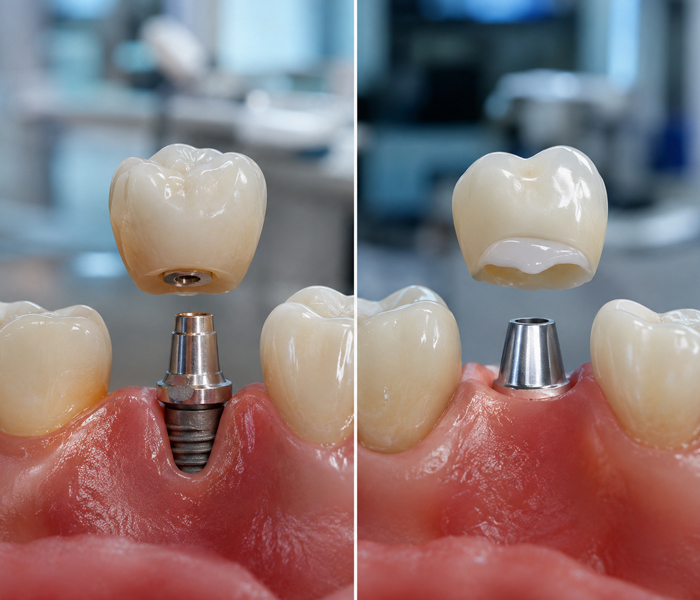
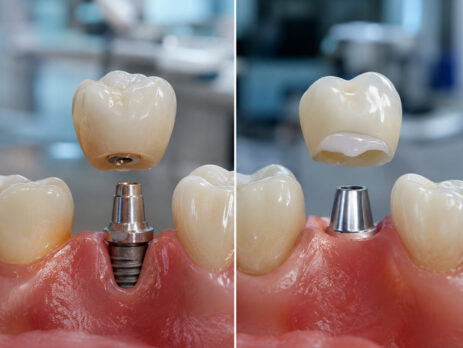
In screw-retained systems, the crown or bridge is fixed to the implant or the abutment on the implant using a special connecting screw. The screw access channel is closed with appropriate filling material after the procedure is completed.
The most prominent feature of this method is that the prosthesis can be removed by the dentist in a controlled manner if needed. This facilitates the evaluation of connection components, the execution of certain repairs, or necessary maintenance procedures.
Screw-retained prostheses should not be confused with removable prostheses that are taken out and put in by the patient. These are restorations that remain fixed in the mouth during daily use.
What Are the Advantages of Screw-Retained Prostheses?
- Ease of Maintenance: If necessary, the prosthesis can be removed to check the implant connections.
- No Adhesive Used: The risk of cement residue remaining around the implant is eliminated.
- Repair Possibility: Some mechanical problems can be resolved without replacing the entire prosthesis.
- Controlled Connection: The screw connection is established with the appropriate tightening torque determined by the manufacturer.
- Long-term Follow-up: Access to the prosthesis can be provided when necessary, especially in multi-unit restorations.
However, mechanical complications such as screw loosening, screw fracture, or damage to the prosthesis material may occur. Additionally, the screw access hole’s exit point can complicate aesthetic planning in some anterior region restorations.
What is Cement-Retained Implant Prosthesis?
In cement-retained systems, an attachment part called an abutment is first placed on the implant. The prepared crown is then fixed onto this part with the help of a special dental cement.
In this method, since there is no screw access hole on the crown, a seamless outer surface can be achieved. It can provide an advantage particularly in some situations where aesthetic expectations are high for anterior teeth.
However, removal of the restoration is not always easy. Depending on the properties of the cement used and the design of the prosthesis, the crown may be damaged or need replacement during the removal process.
Advantages and Disadvantages of Cement-Retained Prostheses
Advantages of cement-retained restorations include the absence of a screw access channel, the ability to achieve a natural appearance under suitable conditions, and flexibility in prosthesis design for different implant angles.
In contrast, one of the most important considerations is the removal of cement remnants that may occur after the cementing procedure. Residues left under the gum line can contribute to inflammation in the peri-implant tissues.
This does not mean that every cement-retained prosthesis will cause inflammation. A systematic review and meta-analysis published in The Journal of Prosthetic Dentistry in 2025 did not reveal a statistically significant difference between the two connection methods in terms of the risk of peri-implant mucositis and peri-implantitis.
Differences Between Screw-Retained and Cement-Retained Prostheses
When comparing the two methods, it is not sufficient to focus solely on appearance or the strength of the connection. The following differences are considered in clinical evaluation:
- Fixation: The screw-retained system is fixed with a mechanical connection, while the cement-retained system is fixed with dental cement.
- Retrievability: Screw-retained prostheses are generally easier to remove.
- Aesthetics: Adhesive-retained prostheses do not have a screw access channel.
- Biological risks: In adhesive-retained systems, controlling cement remnants is important.
- Mechanical problems: In screw-retained systems, screw loosening or fracture may occur.
- Planning: Implant angle, gingival level, and prosthesis shape affect the choice of method.
Repair: In screw-retained prostheses, some maintenance procedures can be performed more easily.
Which Prosthesis Lasts Longer?
Successful results can be achieved for many years with both systems. The lifespan of the prosthesis is not solely determined by whether it is screw-retained or adhesive-retained. Implant position, bone support, occlusal relationship, materials used, and oral hygiene are also important.
A 2026 systematic review of randomized clinical trials did not show a statistically significant overall difference in marginal bone loss between the two methods for single implant-supported crowns.
On the other hand, a 2020 systematic review evaluating full-arch fixed implant prostheses reported that technical complications may be more frequent in screw-retained restorations, while some biological complications may be more frequent in adhesive-retained restorations.
These results indicate that no single method can be definitively considered superior for all patients.
Which is Preferred for Anterior and Posterior Teeth?
In anterior teeth, aesthetic appearance is an important evaluation criterion. In cases where the screw channel aligns with the visible surface, a cement-retained restoration can be considered. However, modern design options like angled screw channels can help achieve an aesthetic result even with a screw-retained system in some cases.
In posterior teeth, strong chewing forces, the cleanability of the prosthesis, and future maintenance become important. Screw-reretained restorations can be a suitable option in these areas. However, the decision is not made solely based on whether the tooth is in the anterior or posterior region.
What to Do If an Implant-Supported Prosthesis Loosens?
If movement, clicking, or displacement of the prosthesis is felt during chewing, a dental check-up is necessary. The problem could stem from the abutment screw, loss of cement, or the implant itself.
The prosthesis should not be attempted to be tightened, removed, or re-cemented at home. You can learn about the symptoms and possible causes regarding this topic in detail in our article titled does an implant loosen years later?
How Should Implant Prostheses Be Maintained?
Regardless of the attachment method, regular cleaning around the implant is necessary. A soft-bristled toothbrush, appropriate interdental brushes, and cleaning aids recommended by the dentist can be used.
Food debris can accumulate especially in the areas under bridge prostheses. It is important to clean these areas and not neglect professional check-ups. You can compare maintenance requirements by learning about different dental prostheses.
Frequently Asked Questions
Can a screw-retained implant crown fall out?
It is expected to remain stable under normal conditions. However, loosening of the connecting screw or mechanical damage may occur. Inspection is required if movement is felt.
Can a cemented implant prosthesis be removed later?
Yes, it can be removed in some cases. However, the difficulty of the procedure depends on the cement used and the prosthesis design. Sometimes, the crown may need to be replaced.
Is the screw access hole of a screw-retained prosthesis visible?
The screw access channel is sealed with appropriate restorative material. Its visibility depends on the position of the channel and the design of the prosthesis.
Does a cemented implant-supported prosthesis cause odor?
A properly prepared prosthesis is not necessarily expected to cause odor. However, plaque accumulation, inaccessible areas, or gum problems can lead to bad breath.
Which system is more economical?
Cost varies according to the implant system, abutment, prosthesis material, laboratory procedures, and the scope of treatment. A definitive price comparison cannot be made based solely on the type of attachment.
Can a screw-retained prosthesis be converted to a cemented one later?
In some cases, the method can be changed by designing a new attachment component or prosthesis. However, the position of the existing implant and system compatibility must be evaluated.
How to Choose the Right Implant-Supported Prosthesis?
Both screw-retained and cemented prostheses have different advantages. The best choice is not the same method for everyone, but rather the restoration that is most suitable for the patient’s oral structure and long-term maintenance requirements.
At Melsadent Oral and Dental Health Polyclinic in Tuzla, Istanbul, a clinical evaluation can be performed regarding implant-supported prosthesis options. A personalized treatment plan is created by considering the implant’s position, gum health, aesthetic expectations, and chewing function together.
Important note: This content is for informational purposes. The appropriate prosthesis method can only be determined after a dental examination and necessary clinical evaluations.