Are Clear Aligners or Bonding More Suitable for Diastema?
Is Clear Aligner or Bonding More Suitable for Diastema?
The gap between the front teeth is called diastema in dentistry. Two of the most common options for people who are aesthetically bothered by diastema are clear aligner treatment and bonding application. However, these two methods do not solve the same problem in the same way. Therefore, there is no single answer to the question “Is clear aligner or bonding more suitable for diastema?” that fits everyone.
Short answer: If the teeth are in the correct position but there are small gaps between them due to their shape or size, bonding can be quite advantageous. In contrast, if there is a positional separation, rotation, crowding, midline problem, or bite abnormality between the teeth, orthodontic movement with clear aligners may be a more appropriate option. In some patients, the most aesthetic and balanced result can be achieved by first positioning the teeth with clear aligners and then making small bonding touches.
Therefore, in treatment selection, not only how many millimeters the gap is; the cause of the diastema, the width-height ratios of the teeth, gum level, occlusal relationship, lip-tooth aesthetics, and the position of other teeth should be evaluated together.
In the content Diastema Treatment and Orthodontic Solutions prepared by Melsadent Oral and Dental Health Polyclinic, you can find detailed information about the causes of diastema and different treatment methods.
What is Diastema?
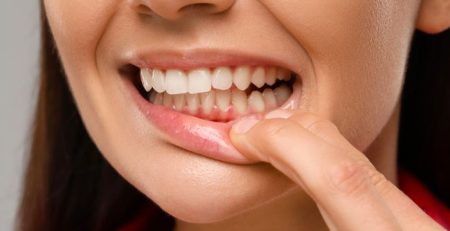
Diastema is a more noticeable gap between two teeth than normal. The most prominent one is the midline diastema seen between the two upper front incisors. However, gaps can also form around the lateral incisors or between multiple teeth in the mouth.
Diastema is not just an aesthetic feature. Some people embrace the gap between their teeth as a characteristic part of their smile and do not want any treatment. The need for treatment arises only when the person is bothered by the appearance or when there is an orthodontic, periodontal, or another dental problem underlying the gaps.
Many factors can be effective in the development of diastema. Some of these include teeth being small relative to the jaw, missing teeth, conical or smaller than normal lateral teeth, malposition of teeth, certain oral habits, conditions related to the labial frenulum, and discrepancies in tooth sizes.
Therefore, scientific literature also particularly emphasizes determining the cause before diastema treatment. A comprehensive review on the etiology and treatment of diastema published in PubMed highlights the importance of accurate diagnosis in determining the treatment method.
What is Bonding for Diastema?
Bonding is the reshaping of a tooth by applying tooth-colored composite resin material to its surface. The goal in diastema treatment is typically to aesthetically close the gap between teeth by controllably widening the teeth on both sides of the space.
The important point here is that the tooth is not orthodontically moved during bonding. The tooth remains in the same position; its visible shape and width are altered with the help of composite material.
For example, if two front teeth are anatomically a bit narrow but properly positioned, and there is a small gap between them, bonding can be used to increase the width of the teeth and close the gap. In such a case, orthodontic tooth movement, which could take months, may not be necessary.
Melsadent’s content on Composite Aesthetic Filling (Bonding) application details the uses of the bonding procedure, such as closing gaps between teeth, repairing small fractures, and changing tooth shape.
What is Clear Aligner Treatment for Diastema?
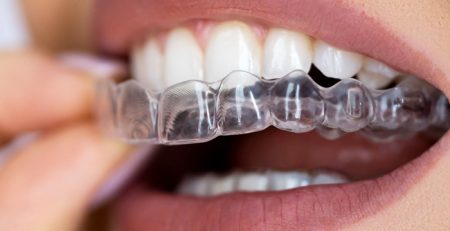
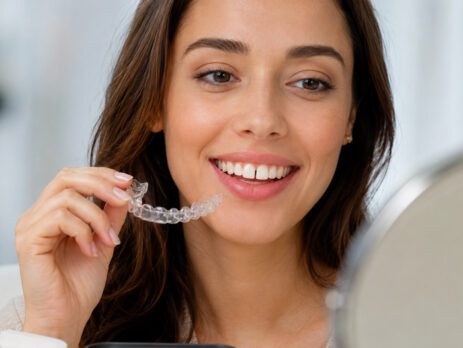
In clear aligner treatment, the gap is not filled with composite material. Instead, controlled orthodontic force is applied to the teeth, moving them gradually and reducing the space between them.
A series of aligners is prepared based on a digital plan created according to the patient’s mouth structure. The aligners are changed in the order specified in the treatment plan, ensuring that the teeth move towards the desired position.
The most significant difference of clear aligners regarding diastema is their ability to change not only the visible gap but also the position of the teeth. Thus, rotation, crowding, or certain bite problems accompanying diastema can also be included in the treatment plan.
Those wondering in which cases clear aligners can be used can also review Melsadent’s Clear Aligner Treatment (Aligner) and Does Clear Aligner Treatment Really Work? content.
A recent systematic review published on clear aligner treatments indicates that the indications, advantages, and limitations of clear aligners should be evaluated according to case characteristics.
What is the Main Difference Between Bonding and Clear Aligners?
The difference between the two methods can be summarized in one sentence:
Clear aligners move the tooth; bonding, on the other hand, changes the shape of the tooth.
This distinction forms the basis of the treatment decision. If the reason for diastema is mispositioned teeth, bonding alone might close the aesthetic gap but will not change the teeth’s positional issue. Conversely, if the teeth’s position is already ideal but their sizes are small, merely moving the teeth closer orthodontically might lead to unwanted gaps in other areas or alter aesthetic proportions.
| Feature | Clear Aligner | Bonding |
|---|---|---|
| Primary effect | Moves teeth | Changes tooth shape and width |
| Treatment purpose | Correcting orthodontic position | Reshaping aesthetic form |
| Result visibility | Gradual | Usually much faster |
| Do teeth move? | Yes | No |
| Can tooth color be changed? | No | To a certain extent, yes |
| Can it correct crowding? | In suitable cases, yes | Does not eliminate orthodontic crowding |
| Can it change tooth shape? | No | Yes |
| May a retainer be needed? | Yes | If orthodontic movement was not performed, it is usually not needed for the same reason |
| Maintenance requirement | Aligner fit and check-ups during treatment | Polishing, repair, or renewal may be required over time |
In Which Diastemas Might Bonding Be More Suitable?
Bonding can be considered especially in cases where the general position of the teeth is proper and a significant part of the problem stems from tooth size or shape.
- If there is a limited gap between two front teeth,
- if the front teeth appear narrower or smaller than normal,
- if the alignment of the teeth is generally good,
- if there is no significant bite problem,
- if there are minor shape differences in the teeth,
- if the aesthetic proportions of the teeth will not be disturbed by closing the diastema
Bonding can be a conservative aesthetic option.
Especially if there is a small gap in an adult patient due to the low anatomical width of the teeth, even though the two front teeth are properly aligned, the midline is correct, and the bite is balanced, bonding can become a very practical option.
Can Bonding Close a Diastema in a Single Session?
Depending on the scope of the case, some diastemas can be closed with bonding in a short time, and even in a single clinical session in suitable cases. However, the fact that it “can be done in a single session” does not mean that every diastema is suitable for bonding.
If the gap is too wide, adding an excessive amount of composite to two teeth can make them appear wider than necessary. The natural aspect ratio of the front teeth can be disturbed, and the result may look artificial.
Therefore, when planning bonding, it is important not only to fill the gap but also to ensure symmetry between the right and left teeth, create the contact point correctly, achieve an emergence profile compatible with the gum, and mimic natural light translucency.
In a 4-year clinical study evaluating the clinical performance of direct composite restorations for diastema closure, it was reported that the nanohybrid composite systems examined could show aesthetically, functionally, and biologically acceptable results.
In Which Diastemas Might Clear Aligners Be More Suitable?
When the primary cause of diastema is the position of the teeth, an orthodontic approach gains more importance.
Clear aligners can be particularly considered in the following situations:
- If there are gaps between multiple teeth,
- If there is a rotation or tilting problem in the front teeth,
- If there is a midline shift of the teeth,
- if diastema is accompanied by crowding,
- if the root positions of the teeth also need to be changed,
- if the occlusal relationship needs to be included in the treatment plan,
- if not only the appearance of the gap but also the tooth alignment needs to be corrected.
In this case, adding material to the teeth with bonding can change the appearance of the problem, but it may not solve the orthodontic problem itself.
Clear aligner treatment, on the other hand, aims to move the teeth in a controlled manner within biological limits. However, not every orthodontic movement is equally easy or predictable with clear aligners. Therefore, digital planning, clinical examination, and the clinician’s case evaluation are important.
More detailed information about the digital planning approach used with clear aligners at Melsadent can be found in the content Digital Approaches in Orthodontics: Clear Aligners and Planning.
Bonding or Clear Aligner for Wide Diastema?
As the width of the gap increases, the treatment decision should be made more carefully. Closing an entire wide gap solely with composite can particularly lead to the two front teeth becoming excessively wide.
For example, enlarging two central incisors that are orthodontically too far apart from each other solely with bonding can theoretically close the gap; however, the proportion of the resulting teeth to the face and other teeth may not be aesthetically pleasing.
In such a case, the controlled reduction of the gap with clear aligners can be considered first, followed by the completion of the remaining small size difference with bonding.
This approach shows that aesthetic dentistry and orthodontics do not necessarily have to be alternatives to each other. The main goal is not to choose one method, but to solve the problem with the most appropriate method possible.
Can Clear Aligners and Bonding Be Done Together?
Yes. In some diastema cases, the most balanced treatment might be planning clear aligner and bonding applications together.
Especially if there are differences in both position and size between the teeth, a single method may not solve the entire problem.
For example, in a patient with smaller-than-normal lateral incisors and multiple gaps in the anterior region, attempting to close all gaps solely orthodontically can negatively affect the aesthetic distribution of the teeth.
In such a case, with orthodontic treatment, gaps can be distributed to ideal areas, and the midline and positions of the teeth can be adjusted. Afterward, bonding can be used to increase the width of smaller teeth, creating a more balanced smile.
A clinical approach combining orthodontic movement with direct resin bonding has also been described in the scientific literature. Published clinical study on the combination of orthodontic treatment and bonding demonstrates the importance of a combined approach in some cases of multiple diastemas and tooth shape problems.
Is Bonding Faster, or Clear Aligners?
In terms of treatment completion time, bonding is generally faster because there’s no need to wait for teeth to move biologically. Composite material is applied directly to the tooth surface and shaped.
In clear aligner treatment, teeth need to be moved in specific stages. The treatment duration depends on the amount of space, the movements that need to be made, the occlusion, the number of aligners to be used, and the patient’s compliance with using the aligners as recommended.
However, it is not correct to choose a treatment based solely on the question, “which one is faster?” The faster method might not be the right method in terms of the actual cause of the diastema.
Does Bonding or Clear Aligner Look More Natural?
In terms of naturalness, both methods can provide highly aesthetic results in the right case, but they achieve this through different means.
With clear aligners, the position of the existing teeth is changed without adding material to the natural tooth structure. Therefore, the teeth’s own enamel tissue continues to be visible.
In bonding applications, the composite material needs to be shaped in a way that matches the natural tooth in terms of color, transparency, surface texture, and luster. In a well-planned bonding application, the transition between the composite and the natural tooth can be made quite harmonious.
Here, the application technique, calculation of tooth proportions, creation of surface anatomy, and the polishing stage are as important as the material quality.
Does Bonding Make Teeth Look Too Wide?
This possibility is particularly important in cases where large diastemas are attempted to be closed solely with bonding.
In aesthetic dentistry, the goal is not to close the gap at any cost. The front teeth should appear in harmonious proportions with the face, lips, and each other.
If two central incisors need to be excessively widened to close a diastema, the result might be technically gap-free but aesthetically unbalanced.
Therefore, before treatment, the existing width and height of the teeth and the amount of gap to be closed should be evaluated. If necessary, orthodontically reducing the gap first, and then applying bonding, may yield a more natural result.
Can Diastema Reopen After Clear Aligners?
Orthodontically moved teeth may have a tendency to return to their original positions after treatment. This situation is not exclusive to clear aligners; a retention period is important in orthodontic treatments in general.
Therefore, after the diastema is closed with clear aligners or another orthodontic method, it is important to follow the retainer or retention application recommended by the dentist.
Especially due to the tendency of midline diastemas to reopen, a retention strategy is an important part of the treatment. The study examining long-term fixed retention after maxillary midline diastema closure also shows that post-treatment stability is clinically important.
Can Diastema Reappear After Bonding?
A gap closed with bonding should be evaluated differently from a gap that has been orthodontically reopened because the teeth were not initially moved. However, bonding material is not a structure that remains unchanged throughout life.
Over time, depending on the material used, biting forces, teeth grinding habits, nutrition, and oral hygiene, wear, surface changes, discoloration, or small fractures may be observed in the composite. In such cases, polishing, repair, or renewal of the restoration may be necessary.
Although acceptable clinical performance has been reported in long-term clinical evaluations of direct composite diastema closure, it is important to maintain regular check-ups of the restorations.
Can Bonding Be Done If There Is Teeth Grinding?
It cannot be automatically stated that bonding is not possible for individuals with a teeth clenching or grinding habit. However, the forces generated on the anterior teeth must be evaluated.
Especially in cases where excessive load is placed on the incisal edges, the risk of fracture or wear of composite restorations may increase. The dentist can evaluate the occlusal relationship and plan the restoration design accordingly, and suggest protective approaches if deemed necessary.
Therefore, it is not correct to make a decision in diastema treatment solely by looking at a photo taken from the frontal aspect. Functional relationships where teeth contact each other should also be part of the examination.
What Is Done If The Cause Of Diastema Is A Labial Frenum?
Some anatomical features of the frenulum between the upper lip and the gum may be related to midline diastema. However, the presence of a gap between the anterior teeth alone does not mean that a frenectomy is necessary.
Surgical interventions performed without evaluating the cause of diastema can disrupt the correct treatment sequence. Especially in children, developmental periods and the eruption status of permanent teeth should be considered separately.
The systematic review examining the relationship between maxillary labial frenulum and midline diastema also emphasizes that frenulum evaluation should be performed together with other possible causes of diastema, and the timing of treatment should be carefully determined.
Should Diastema Be Closed Immediately In Children?
No. Not every gap between front teeth seen in childhood should be considered a permanent diastema. Temporary gaps between front teeth can be observed during the mixed dentition period, and this appearance may change with tooth development.
Therefore, especially in children, instead of immediately applying bonding or orthodontic treatment due to aesthetic concerns, it is necessary to evaluate tooth development, the eruption of permanent teeth, and the cause of the diastema.
Whether treatment is necessary and the correct timing should be determined by the physician based on the child patient’s developmental stage.
Can a Treatment Method for Diastema Be Chosen Solely by Looking at a Photograph?
A photograph can be useful for initial assessment, but it is not sufficient on its own to make a final treatment decision.
Two people may appear to have diastemas of the same size when viewed from the outside, but in one, the problem might stem from small tooth sizes, while in the other, it could be due to an orthodontic positional difference. Even if their appearances are similar, their ideal treatments can be completely different.
The following factors can be evaluated during examination:
- The width and shape of the diastema,
- the current position of the teeth,
- the sizes and proportions of the teeth,
- midline relation,
- gaps between other teeth,
- crowding or rotations,
- occlusion of the upper and lower jaw,
- gum levels,
- frenulum structure,
- presence of missing or malformed teeth,
- periodontal status,
- the patient’s aesthetic expectations.
For more detailed information about orthodontic evaluation, you can examine Melsadent’s Dental Braces and Orthodontic Treatment page.
Is Bonding or Clear Aligner More Economical for Diastema?
The total cost cannot be determined solely by the method used. Bonding cost can vary depending on the number of teeth to be treated, the composite material to be used, and the scope of the restoration. In clear aligner treatment, the orthodontic difficulty of the case, the number of aligners to be used, the treatment plan, and the control process can affect the price.
Closing a small and localized gap with bonding may be a more limited procedure than orthodontic treatment in some cases. However, in a case that requires orthodontic correction, choosing bonding solely due to its lower initial cost may not be appropriate.
Before comparing prices, the question “Are both of these treatments truly the right option for my case?” should be answered.
Which is the Most Permanent Method for Diastema?
Although the question “Is bonding more permanent, or clear aligners?” is frequently asked, comparing methods solely based on durability can be misleading.
In orthodontic treatment with clear aligners, teeth are genuinely moved to their new positions. However, a retainer may be necessary to maintain stability after the treatment.
In the bonding procedure, teeth are not moved, and the gap is closed with composite material. Composite restorations, however, may require maintenance, polishing, repair, or replacement over time.
Therefore, one of the factors more important than the method for long-term success is the correct indication. Bonding applied to the wrong case or inadequately planned orthodontic treatment may not yield ideal long-term results, even if it looks good initially.
Clear Aligner or Bonding? Quick Decision Table
| Situation | More Likely Approach to Consider |
|---|---|
| Teeth are straight, with only a small front tooth gap | Bonding |
| Teeth are small or narrow | Bonding |
| There is a gap between multiple teeth | Clear aligner or combined treatment |
| There is rotation in the teeth | Clear aligner |
| Midline shifted | Orthodontic evaluation / clear aligner |
| Crowding and diastema are present together | Clear aligner |
| Teeth are both mispositioned and small | Clear aligner + bonding |
| Very rapid aesthetic change is desired and the case is suitable | Bonding |
| Occlusion problem is also present | Orthodontic evaluation |
This table is only a general guide. The actual treatment decision should be made based on clinical examination and necessary dental/orthodontic evaluations.
What is the Most Accurate Approach to Diastema Treatment?
In diastema treatment, the most accurate approach is not to choose the method that closes the gap fastest, but to choose the method that most accurately solves the cause of the gap.
If the teeth are correctly positioned but their anatomical width is insufficient, bonding can be a very conservative and aesthetic method. If the teeth are orthodontically separated, if there is rotation, or if the occlusal relationship needs to be corrected, a clear aligner may be more suitable.
In some cases, instead of seeing two treatments as competing, it is necessary to plan them together. First, establishing correct tooth positions with clear aligners, and then completing small shape and proportion differences with bonding, can provide a more balanced result.
Therefore, the most accurate answer to the question “Bonding or clear aligner for diastema?” can only be given after determining why the teeth are separated.
Frequently Asked Questions
Is bonding or clear aligners better for diastema?
If the teeth position is correct but their size is small, bonding might be more suitable. If the position of the teeth needs to be changed, clear aligners might be more appropriate. In cases where there are both position and tooth shape problems, both methods can be applied together.
Does bonding completely close gaps between teeth?
Yes, in suitable cases. Especially small and medium gaps, where tooth proportions are suitable for composite addition, can be closed with bonding. Using only bonding for very wide gaps might make the teeth appear wider than necessary.
Can clear aligners close gaps between teeth?
In suitable orthodontic cases, clear aligners can reduce or close gaps between teeth by moving them in a controlled manner. The outcome depends on the characteristics of the case and the treatment plan.
Is bonding or clear aligners faster?
Bonding generally yields much faster results because no tooth movement is expected. Clear aligner treatment, on the other hand, is a longer process as it requires teeth to move gradually.
Are teeth cut during bonding?
Direct composite bonding is generally a minimally invasive approach, and in many cases, extensive cutting of healthy tooth tissue is not required. However, the scope of the procedure to be applied may vary depending on the case.
Does bonding turn yellow over time?
Composite materials may show surface discoloration over time, depending on eating habits, oral hygiene, and the characteristics of the material used. Regular check-ups and polishing when necessary can help maintain the appearance.
Will the gaps between teeth reopen after clear aligners?
After orthodontic treatment, teeth may have a tendency to return to their original position. Therefore, it is important to follow the retainer or retention protocol recommended by the dentist.
Will the gaps between teeth reopen after bonding?
In bonding, composite material is added to the gap without orthodontically moving the teeth. However, the restoration may experience wear, fracture, or other changes over time, requiring maintenance or repair.
Can a 2 mm diastema be closed with bonding?
It is not accurate to make a decision based solely on a millimeter measurement. A gap of the same width might be suitable for bonding in one patient but could lead to excessively wide teeth in another. The existing width-to-height ratio of the teeth and the distribution of the gap should be evaluated.
Is treatment always necessary if there’s a diastema?
No. A diastema is not always a disease, and if the person is satisfied with their appearance, it is not mandatory to close it for purely aesthetic reasons. However, in cases of newly formed or progressively widening gaps, evaluating the underlying cause might be beneficial.
Is it necessary to get veneers for a front tooth gap?
Veneers are not necessary for every diastema. In suitable cases, more conservative options such as bonding or orthodontic treatment can be considered. The treatment method should be determined based on the tooth structure and aesthetic needs.
Can bonding and clear aligners be done together?
Yes. Especially in cases where there are problems with both the position and shape of the teeth, orthodontic alignment with clear aligners can be planned first, followed by aesthetic form correction with bonding.
Is bonding done first, or clear aligners?
In cases requiring combined treatment, it is often preferable to orthodontically create the ideal positions for the teeth and plan restorative procedures accordingly. However, the treatment sequence is determined specifically for each patient.
Is frenectomy necessary for diastema treatment?
No. Not every diastema is caused by a frenulum, and not every diastema requires a frenectomy. First, the cause of the gap and the clinical effect of the frenulum should be evaluated.
Can clear aligners be used for everyone?
No. While clear aligners can be used for many mild and moderate orthodontic problems, some complex tooth movements or jaw relationships may require different orthodontic approaches.
How long do the results last after diastema treatment?
The longevity of the result depends on the treatment method, the cause of the diastema, occlusal forces, oral hygiene, and the use of a retainer after orthodontic treatment. Bonding restorations should also be checked regularly.
In Diastema, Choose Treatment Based on the Cause of the Gap, Not the Gap Itself
The answer to the question of whether clear aligners or bonding are more suitable for diastema depends on the cause of the gap between the teeth. If the teeth are correctly positioned and the problem primarily stems from the teeth being small or narrow, bonding can be a fast and conservative aesthetic solution.
If there are malpositions, rotations, midline problems, multiple gaps, or occlusal irregularities in the teeth, orthodontic treatment with clear aligners can provide a more comprehensive solution.
In cases where both orthodontic position and tooth shape need correction, a combination of clear aligners + bonding can be considered.
At Melsadent Oral and Dental Health Polyclinic, personalized treatment alternatives can be planned by evaluating the cause of diastema, the position of the teeth, their aesthetic proportions, and the occlusion relationship together. Thus, the goal is not only to close the gap between two teeth but to create a natural and balanced smile.