5-unit Bridge Tooth Prices 2026 | Current Price Information
5-Unit Dental Bridge Prices 2026: Current Costs and Treatment Guide
How much are 5-unit dental bridge prices in 2026? This is one of the most frequently asked questions by patients who have lost one or more teeth and are looking for a fixed prosthetic option. However, there is no single price that can be applied to everyone for 5-unit dental bridge treatment. The cost of the treatment can vary depending on the material the bridge will be made from, how many missing teeth will be replaced, the condition of the abutment teeth, its position in the mouth, any additional treatments required, and the laboratory technology used.
Therefore, it is normal to encounter different figures in searches conducted on the internet, especially for phrases such as “5 tooth bridge price”, “5-unit zirconium bridge price”, “5-unit porcelain bridge price”, or “How much is a 5-unit bridge in TL?”. Because in dentistry, the term “5-unit bridge” generally refers to a fixed prosthesis consisting of 5 units, and the total fee is usually assessed together with the number of units in the restoration used.
As Melsadent Oral and Dental Health Polyclinic, in this guide, we thoroughly discuss how 5-unit bridge tooth prices are calculated in 2026, the differences between zirconium and metal-supported porcelain options, the treatment process, the lifespan of a bridge tooth, and the fundamental differences between it and an implant.
What is a 5-unit Dental Bridge?
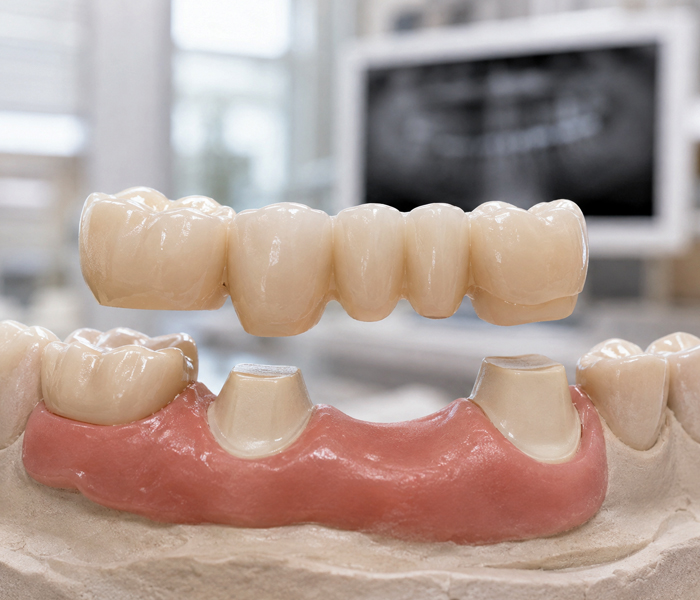
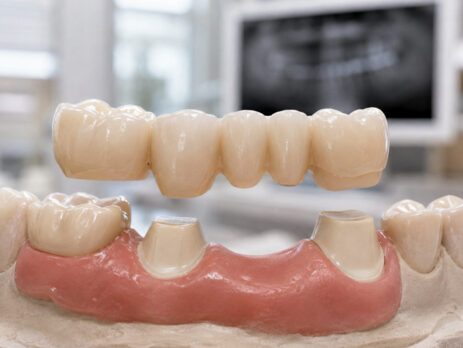
A 5-unit dental bridge refers to a fixed dental prosthesis consisting of a total of five units. Not all five of these units necessarily have to be missing teeth. Part of the bridge can consist of artificial teeth replacing missing teeth, while the other part can consist of crowns placed on natural teeth that support the bridge.
For example, in an area where three adjacent teeth are missing, a five-unit bridge can be planned by taking support from suitable natural teeth on both sides of the gap. Such a design might include two abutment crowns and three pontic sections replacing the missing teeth. However, it should be remembered that this does not mean it is a suitable treatment for every patient.
As the length of the bridge increases, the forces transferred to the abutment teeth, chewing balance, and the mechanical design of the prosthesis become more critical. Therefore, especially for 5-unit or longer bridges, the periodontal health, root structure, bone support, and occlusal relationship of the abutment teeth should be thoroughly evaluated by the dentist.
For more information on the basic features of bridge tooth treatment, you can also consult Melsadent’s 2026 bridge tooth prices and bridge types guide.
How are 5-unit Bridge Tooth Prices Calculated in 2026?
The most accurate way to understand the cost of a 5-unit dental bridge in 2026 is to know that pricing is often evaluated not just based on “a bridge” but on the number of units forming the prosthesis and the material used.
For example, when a bridge consisting of five units is planned, the production cost of five crowns or bridge units is taken into account when calculating the total cost. In addition to this, root canal treatment, fillings, gum treatment, temporary prostheses, removal of old veneers, or other preparatory procedures that may be specifically required for the patient can be added.
Therefore, it is not correct to create a definitive treatment budget by only looking at the question “How much is a 5-unit dental bridge in TL?” online. The most reliable pricing can be determined based on a personalized treatment plan prepared after an intraoral examination and radiological evaluation.
The simplified calculation logic is as follows:
Total cost of a 5-unit bridge = cost of 5 units of the selected material + necessary additional dental treatments + patient-specific treatment requirements.
One of the most important variables here is the material used. Cost differences may arise between metal-supported porcelain, zirconium, or different ceramic systems.
What Factors Affect the Price of a 5-Unit Dental Bridge in 2026?
There are many variables that determine the price of a 5-unit dental bridge. Simply looking at how many pieces the bridge consists of is not enough.
Restoration material used: Options such as metal-supported porcelain and zirconium have different laboratory production processes, raw materials, and aesthetic properties. Therefore, the total cost varies.
Number of units in the bridge: The laboratory and material requirements for a three-unit bridge and a five-unit bridge are not the same. An increase in the number of units generally increases the total treatment cost.
Health of abutment teeth: If the natural teeth supporting the bridge have large cavities, old fillings, a need for root canal treatment, or periodontal problems, these conditions may need to be treated first.
Location of missing teeth: While aesthetic expectations may be higher in the anterior region, chewing forces are greater in the posterior region. This situation can affect the material and design to be used.
Occlusion and chewing forces: In individuals with teeth grinding or clenching habits, prosthesis design and material selection may need to be done more carefully.
Digital planning and production: Intraoral scanners, CAD/CAM technologies, and digital design systems can help in the precise preparation of restorations. Detailed information about the technologies at Melsadent can be obtained from the digital dentistry page.
Additional treatments: If root canal treatment, fillings, periodontal treatment, or different restorative applications are required, the total treatment budget may change.
5-Unit Zirconium Bridge Tooth Prices 2026
In 2026, 5-unit zirconium bridge tooth prices are among the topics frequently researched by patients with high aesthetic expectations. Zirconium-based restorations are one of the current prosthetic options aimed at providing a natural tooth-like appearance and can be considered in both anterior and posterior regions in suitable cases.
The price of zirconium bridges is generally evaluated based on the production of five units. However, not every zirconium system is the same. The quality of the zirconium blocks used, monolithic or multi-layered design preferences, laboratory technology, and the personalization of the prosthesis can affect the price.
It is not correct to automatically prefer zirconium restorations solely on the assumption that they are “more aesthetic”. The length of the bridge, the structure of the abutment teeth, chewing forces, and the region where the prosthesis will be placed must be considered in material selection.
The clinical performance of zirconium-based fixed dental prostheses has been investigated in scientific studies for many years. Systematic reviews have reported that the survival rates of zirconium bridges are generally at acceptable levels, but technical complications such as fracture or “chipping” on the ceramic surface can be observed, especially in some multi-layered systems. For academic evaluations on this topic, the systematic review and meta-analysis published in the Journal of Dentistry and the systematic review published in the European Journal of Oral Sciences can be examined.
For more detailed information about zirconium treatments at Melsadent and factors affecting pricing, you can review the 2026 zirconium veneer prices guide.
5-Unit Metal-Supported Porcelain Bridge Prices 2026
Metal-supported porcelain bridges are one of the fixed prosthetic restoration options that have been used for many years. They consist of a metal substructure on the inside and a porcelain material that mimics tooth color on the outside.
Metal-supported porcelain options may fall into a different price segment compared to zirconium in some cases, from an economic perspective. However, selecting a material based solely on price is not correct. Especially in the anterior region, aesthetic expectations, gum level, smile line, and the patient’s individual characteristics should be evaluated.
A systematic review and meta-analysis published in 2024 compared the clinical performance of zirconium-based tooth-supported fixed prostheses with metal-ceramic restorations and showed that evaluating technical complications related to the zirconium system used is important. For details of the scientific study, you can access the academic publication on PubMed.
Who Can Receive a 5-Unit Dental Bridge Treatment?
A 5-unit bridge is not a standard solution applicable to every missing tooth case. Whether the treatment is suitable should be determined by clinical and radiological evaluation.
For a bridge to be planned, the teeth to be used as support must particularly have adequate bone support, not have serious periodontal problems, and be capable of bearing the loads created by the prosthesis.
Furthermore, the number of missing teeth and the length of the gap are also important. In a long edentulous space, implant-supported solutions may be more appropriate instead of a bridge relying solely on natural teeth. Therefore, a general approach such as “I have three missing teeth, a 5-unit bridge must be done” is not correct.
The American College of Prosthodontists states that missing teeth can be replaced with fixed bridges, removable dentures, or dental implants, and the appropriate method should be evaluated specifically for each patient. For general academic information regarding the treatment of missing teeth, the American College of Prosthodontists missing teeth guide can be reviewed.
How is a 5-unit Dental Bridge Made?
Although the treatment process may vary depending on the patient’s oral and dental structure, it generally consists of several stages.
1. Examination and radiological evaluation: First, the missing tooth area, the condition of the abutment teeth, gum health, roots, and bone level are evaluated.
2. Treatment planning: It is determined how many units the bridge will consist of, which teeth will be used as abutments, and which material will be preferred.
3. Preparation of abutment teeth: If a traditional tooth-supported bridge is planned, the teeth that will support the bridge are prepared appropriately for the restoration.
4. Impression or digital scan: Records of the prepared teeth and surrounding tissues are taken. In suitable cases, in addition to traditional impressions, digital intraoral scanning technologies can be utilized.
5. Temporary restoration: In some patients, a temporary restoration may be applied to protect the teeth and support the aesthetic appearance until the permanent bridge is prepared.
6. Laboratory and design phase: The five-unit bridge is prepared according to the patient’s oral structure, bite, and the chosen material.
7. Try-in and fit check: The bridge’s marginal fit, occlusal relationship, contact points, color, and aesthetic properties are checked.
8. Cementation: When deemed appropriate by the dentist, the restoration is cemented to the teeth with special dental cements.
How Many Days Does a 5-Unit Dental Bridge Treatment Take?
The completion time for a 5-unit dental bridge treatment can vary depending on the patient’s current dental condition and the laboratory process. If the abutment teeth are healthy and no additional treatment is required, the procedure can be completed within a few clinical appointments.
However, if one of the abutment teeth requires root canal treatment, gum disease treatment, or replacement of old restorations, the process may be extended. Therefore, it is necessary to consider a personalized treatment plan rather than general timelines mentioned online.
Is a 5-Unit Dental Bridge Practical/Useful?
Fixed bridges, when properly planned and regularly maintained, are an important treatment option for aesthetically and functionally replacing lost teeth.
The fixed nature of the bridge, not requiring removal and reinsertion by the patient, and its assistance in restoring chewing function can offer advantages for daily use.
However, natural teeth used as abutments in bridge treatment may need to be prepared. Therefore, the implant option should also be considered, especially in cases where adjacent teeth are healthy.
How Long Does a 5-Unit Dental Bridge Last?
It is not possible to give a definitive number of years for the question, “How many years does a 5-unit dental bridge last?” The lifespan of fixed dental prostheses depends on many factors such as the material used, the health of the abutment teeth, oral hygiene, chewing forces, teeth grinding habits, and regular check-ups.
Systematic research on zirconium-based fixed prostheses indicates that the medium and long-term clinical performance of these restorations can generally be good, but technical and biological complications are not entirely eliminated.
For example, a systematic review published in the European Journal of Prosthodontics and Restorative Dentistry examined the clinical survival of zirconium-based fixed dental prostheses and reported that these restorations are generally a viable treatment alternative.
More recent scientific evaluations also support the importance of material selection on a case-by-case basis. Therefore, rather than merely asking “which material lasts longer?”, the question “which material is more suitable for my oral structure and bridge design?” is more meaningful.
5-Unit Bridge or Implant?
One of the common decisions faced by patients with multiple missing teeth is choosing between a bridge and an implant. Both methods have advantages, limitations, and different clinical application areas.
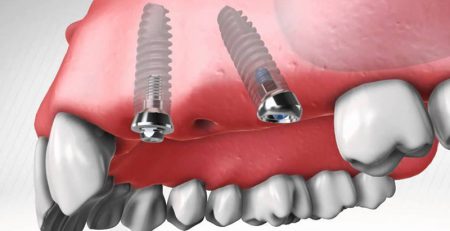
In traditional bridge treatment, suitable natural teeth surrounding the edentulous area can be used as abutments. In implant treatment, implants placed in the jawbone can support the prosthesis, and in some cases, preparation of adjacent natural teeth may not be necessary.
For implant placement to be feasible, bone volume, overall health status, oral hygiene, and other clinical factors must be evaluated. In some individuals, additional procedures may be required before implant surgery.
Therefore, it is not correct to generalize by saying “implants are always better than bridges” or “bridges are always more logical”.
To compare the advantages of the two treatments in detail, you can review Melsadent’s bridge or implant? guide. Those who want to get information about implant costs can also check out the 2026 dental implant prices page.
How many implants are needed instead of a 5-unit bridge?
When considering an implant alternative for a five-unit bridge, the number of implants required is not determined solely by the number of teeth in the bridge. Just as it is not always necessary to place an implant for every missing tooth, designing a fixed bridge on a smaller number of implants may be possible in some cases.
The position of the missing teeth, bone quantity, areas where implants can be placed, chewing loads, and the length of the prosthesis are taken into account when determining the required number of implants.
Therefore, online information stating “exactly this many implants are needed” for a five-tooth gap does not substitute for a personal treatment plan.
Are healthy teeth cut when a 5-unit dental bridge is made?
In traditional natural tooth-supported bridge application, the teeth that will support the bridge need to be prepared for the restoration. This process involves the preparation of a certain amount of tooth structure.
This is one of the reasons why implant-supported options should be considered, especially if the teeth intended for support are completely healthy. On the other hand, if the supporting teeth already have large fillings or require veneers, the clinical evaluation might differ.
The most appropriate approach should be determined based on the current condition of the supporting teeth.
Which Material is Better for a 5-unit Bridge?
The material selection for a 5-unit bridge should not be based solely on aesthetic expectations. Factors such as whether the bridge is in the anterior or posterior region, the distance between abutment teeth, chewing load, the patient’s occlusal relationship, and teeth clenching habits should be evaluated.
Zirconium, metal-ceramic, and other ceramic systems have different mechanical and aesthetic properties. Although zirconium materials and production technologies have significantly advanced in recent years, scientific literature indicates that material and design selection for long-span bridges must be made carefully.
The systematic review published in the International Journal of Prosthodontics compares the technical complications that can be observed in zirconium and metal-supported fixed prostheses. Furthermore, a more recent 2024 systematic review and meta-analysis also provides comprehensive data on the clinical performance of zirconium-based and metal-ceramic tooth-supported prostheses.
How to Clean Under a 5-Unit Dental Bridge?
Oral hygiene is critically important for the long-term success of bridge treatment. Since the pontic (body) part of the bridge does not have a root emerging from the gum like a natural tooth, the area under the pontic needs to be cleaned specially.
According to the dentist’s recommendation, bridge floss threaders, specialized floss products, or interdental brushes can be used. The aim is to remove bacterial plaque accumulated under the bridge and around the abutment teeth.
Plaque accumulation, especially around the abutment teeth, can increase the risk of gum problems or cavities over time. Therefore, brushing only the visible outer surface of the bridge is not sufficient.
The dentist should demonstrate the appropriate cleaning method for the patient’s mouth structure after the bridge is placed.
Does a 5-unit Dental Bridge Cause Odor?
In normal conditions, a properly designed, well-fitting, and regularly cleaned bridge is not expected to constantly produce bad odor. However, the accumulation of food and bacterial plaque under the bridge, gum disease, decay in the abutment tooth, or a problem with the fit of the prosthesis can cause bad odor.
If there is a persistent bad taste, odor, bleeding, or sensitivity around the bridge, it is important to have a dental check-up instead of just using mouthwash.
Does a 5-unit Dental Bridge Cause Pain?
During bridge treatment, patient comfort is aimed for during the tooth preparation phase by using local anesthesia when necessary. After the treatment, short-term hot-cold sensitivity or gum sensitivity may occur.
However, pain that is persistent, wakes one up at night, gradually increases, or becomes pronounced during chewing should not be considered normal and should be checked. It should be evaluated whether the pain is caused by a pulp problem in the abutment tooth, occlusal height, a periodontal issue, or another tooth-related problem.
Can a 5-unit Dental Bridge Break?
As with all dental restorations, the risk of fracture or surface damage in fixed bridges is not entirely zero. Continuously biting very hard foods, teeth grinding and clenching, trauma, or exposure to forces greater than the restoration can withstand may increase the risk of technical complications.
In scientific studies, chipping and material fractures, especially on ceramic surfaces, are among the tracked technical complications of fixed prostheses.
For patients with teeth grinding problems, a protective night guard may be recommended based on the dentist’s evaluation.
What Should Be Done If a 5-Unit Dental Bridge Comes Off?
If the bridge is moving or has completely come out of place, one should not attempt to re-fix it using adhesive at home. The reason why the bridge came off needs to be understood.
There might be a deterioration of the cement bond, development of decay in the abutment tooth, a fracture in the restoration, or a different problem. The bridge should be kept, if possible, and a dentist should be consulted as soon as possible.
If the restoration and abutment teeth are suitable, it might be possible to re-cement the bridge; however, this decision can only be made after a clinical evaluation.
Is It Right to Choose the Cheapest 5-Unit Dental Bridge Option in 2026?
Although ‘the cheapest 5-unit dental bridge price’ might be a phrase with a high search volume, it is not the right approach to make a decision in dental treatment based solely on the lowest price.
A bridge is a medical restoration exposed to chewing forces in the mouth for years. The marginal fit of the restoration, material quality, proper preparation of the abutment teeth, adjustment of the occlusion, laboratory production, and the patient’s hygiene habits are all important for the long-term success of the treatment.
An application that appears less costly initially but is not clinically suitable may lead to the need for additional treatment later on. Therefore, when comparing prices, not only the total amount but also the scope of the recommended treatment and the material used should be evaluated.
What Questions Should Be Asked When Getting a Quote for a 5-Unit Bridge?
After the treatment plan has been created, it is useful for patients to ask, in addition to the price, what material the bridge will be made from, how many units it will consist of, whether additional treatment is needed for the abutment teeth, and whether alternative treatments are available.
Additionally, it should be evaluated whether an implant-supported restoration is possible instead of a bridge, along with the advantages and limitations of the application, and long-term maintenance requirements.
Thus, the question “How much does a 5-unit bridge cost in TL?” becomes part of a comprehensive treatment decision tailored to the patient’s needs, rather than merely a price comparison.
Why Do 5-Unit Dental Bridge Prices Vary from Clinic to Clinic?
There can be many reasons for encountering different prices for two bridges containing the same number of teeth. The manufacturer and characteristics of the material used, laboratory quality, digital production techniques, the prosthodontic design planned by the dentist, and pre-treatment procedures may all differ.
Therefore, when comparing prices from different clinics, it should be checked whether the treatment contents are truly identical. While one price might only include a five-unit bridge, another treatment plan might involve additional procedures.
Why is an Examination Necessary for a 2026 5-Unit Dental Bridge Price?
It is not sufficient to determine a definitive treatment price based solely on a person saying “I have three missing teeth” or “I want a five-unit bridge.”
The dentist first evaluates the root and bone condition of the abutment teeth, the edentulous area, periodontal health, existing restorations, and occlusal relationship. Radiographic images are utilized if necessary.
At the end of this evaluation, it is decided whether a five-unit bridge is truly appropriate. For some patients, a shorter bridge, an implant-supported prosthesis, or an entirely different treatment might be more suitable.
About 5-Unit Dental Bridge Prices 2026 at Melsadent
At Melsadent Oral and Dental Health Polyclinic, the treatment of missing teeth is planned individually according to the patient’s oral and dental structure. In the planning of a 5-unit dental bridge, the condition of the abutment teeth, the missing tooth region, aesthetic expectations, chewing function, and alternative treatments that can be used are evaluated together.
For patients who want to learn the 5-unit dental bridge price for 2026, the material to be applied and the scope of the necessary treatment must first be determined in order to establish the definitive fee.
By making an appointment at Melsadent Tuzla Oral and Dental Health Polyclinic, you can request a detailed evaluation regarding bridge, zirconium, or implant options suitable for you.
Frequently Asked Questions
How much are 5-unit dental bridge prices in 2026?
There is no single fixed price for a 5-unit dental bridge. The fee varies according to the material used, the total number of units, the condition of the abutment teeth, and any necessary additional treatments. The exact price can be determined after a clinical examination and treatment plan.
How is the price of a 5-unit bridge calculated?
In five-unit bridges, the cost is generally evaluated based on the five restoration units to be used. Necessary root canal treatment, fillings, or other additional procedures may change the total cost.
Is a 5-unit zirconium bridge expensive?
Due to zirconium’s production technology and aesthetic properties, its pricing may differ from metal-supported porcelain systems. However, not only the price but also the selection of material suitable for the patient’s clinical condition is important.
For how many missing teeth is a 5-unit bridge made?
A five-unit bridge does not necessarily mean five missing teeth. For example, a design where three missing teeth are restored between two abutment teeth can be a five-unit bridge. However, the suitability of such a design should be evaluated based on the condition of the abutment teeth and chewing forces.
Can a 5-unit bridge be made for 3 missing teeth?
In some clinical situations, it may be considered to restore three missing teeth with a five-unit bridge using abutment teeth on both sides. However, it is not suitable for every case. The abutment teeth and bone tissue need to be evaluated.
Is a 5-unit bridge or an implant better?
No single method is better for everyone. While implants may offer advantages for some patients who wish to preserve their healthy adjacent teeth, a natural tooth-supported bridge may be suitable in different clinical situations. The decision should be made after examination.
If 5 teeth are missing, are 5 implants needed?
No. In the treatment of multiple missing teeth, it may not always be necessary to place an implant for every missing tooth. A fixed bridge can be planned on an appropriate number of implants. The number of implants is determined by the bone structure and prosthesis design.
How many days does it take to make a 5-unit dental bridge?
Treatment duration varies depending on the condition of the abutment teeth and laboratory stages. In cases not requiring additional treatment, it can be completed in a few appointments; if root canal or gum treatment is needed, the duration may extend.
How many years does a 5-unit dental bridge last?
A definitive lifespan cannot be given. Oral hygiene, material, health of abutment teeth, chewing forces, and regular check-ups directly affect the lifespan.
Is a Zirconium bridge or a porcelain bridge better?
Both materials have different advantages. The appropriate material should be chosen after evaluating the bridge’s length, location, aesthetic expectations, and mechanical requirements.
How to clean under a 5-unit dental bridge?
For cleaning under the bridge, dental floss designed for bridges or interdental brushes recommended by the dentist can be used. Normal brushing alone may not be sufficient to clean under the bridge pontic.
Does a dental bridge cause bad breath?
A well-fitting and regularly cleaned bridge is not expected to constantly cause odor. If there is an odor, reasons such as plaque accumulation under the bridge, gum problems, or decay in the abutment teeth should be investigated.
Can a dental bridge be removed and reattached?
Depending on the condition of the restoration and the abutment teeth, some bridges might be reusable. However, the reason for the bridge’s removal and its structural integrity should be evaluated by a dentist.
Is root canal treatment necessary before getting a 5-unit dental bridge?
Not every abutment tooth routinely requires root canal treatment. The need for root canal treatment is determined based on the tooth’s current condition, pulp health, and clinical evaluation.
Are X-rays needed for a 5-unit dental bridge?
Radiographic examination may be used when deemed necessary by the dentist to evaluate the roots of the abutment teeth and the surrounding bone tissue.
Can I get the exact price for a 2026 5-unit dental bridge over the phone?
While general pricing information can be obtained, it is often not possible to determine the exact treatment cost solely through a phone call. This is because the material to be used, the condition of the abutment teeth, and any additional treatment needs must be determined through examination.
The Price of a 5-Unit Bridge Tooth Should Be Determined with a Personalized Treatment Plan
When researching 5-unit bridge tooth prices in 2026, instead of focusing on a single figure seen only on the internet, it is necessary to evaluate the factors that constitute the price. The preparation of a five-unit bridge from zirconium or metal-supported porcelain, the health status of the abutment teeth, additional treatment requirements, and the design of the bridge can all alter the total cost.
More importantly, a 5-unit bridge may not be the most suitable option for every case of multiple tooth loss. In some patients, implant-supported restorations, while in others, natural tooth-supported bridges may offer a more appropriate solution.
Therefore, the correct approach is to first perform a detailed oral and dental examination, and then evaluate bridge and implant alternatives together. At Melsadent Oral and Dental Health Polyclinic, personalized treatment planning can be done to determine the treatment option suitable for you and the current 2026 cost.