Why Do Teeth Turn Black? Causes, Symptoms, and Treatment
Blackening of teeth; is not only an aesthetic problem, but is often associated with superficial stains, tartar, decay, old restorations, color change after root canal treatment, or a more serious problem affecting the internal tissues of the tooth. Therefore, there is no single answer to the question “why did my tooth turn black?”. The correct approach is to first identify the cause, and then plan the appropriate treatment for that cause.
Why do teeth turn black?
The main conditions that cause teeth to appear black are examined in two main groups: external discolorations and internal color changes. External discolorations accumulate on the tooth surface; internal color changes, on the other hand, originate from the dentin tissue under the tooth’s enamel, from the pulp, or from structural changes in the tooth. This distinction directly determines the treatment.
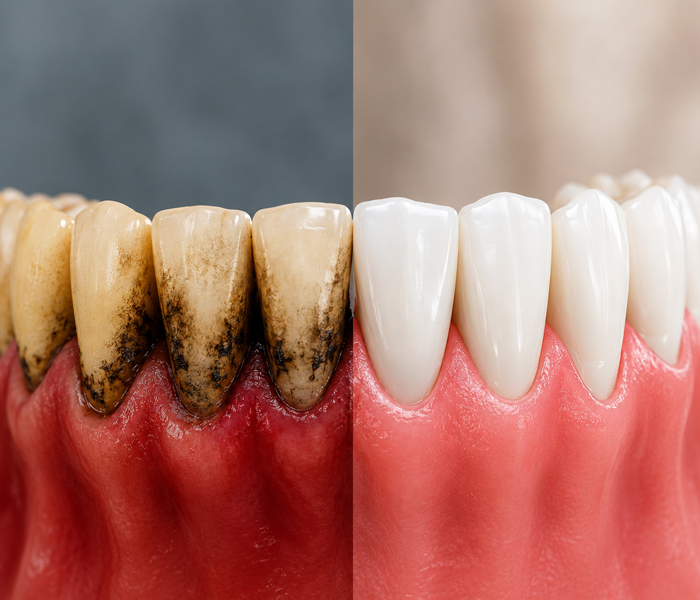
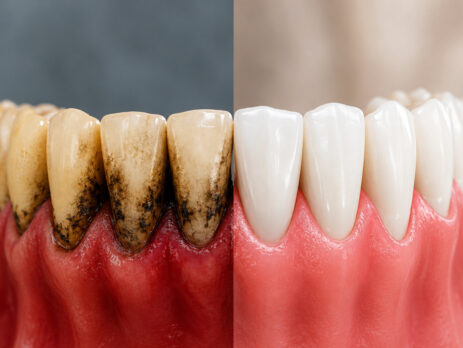
Blackening that occurs on the tooth surface can be caused by coffee, tea, smoking, highly pigmented foods, poor oral hygiene, accumulated plaque, and tartar. Dark lines seen especially in areas close to the gum line sometimes indicate a specific type of external discoloration called “black stain”. This appearance is often superficial and can largely be removed with professional cleaning.
Internal blackening of the tooth requires more attention. Reasons such as deep decay, nerve tissue damage after trauma, internal discoloration after root canal treatment, old filling materials, pulp bleeding, or tissue death can turn the tooth a gray, dark brown, or nearly black color. In this case, brushing alone is not enough; clinical evaluation is required.
Most common causes of blackening
1. Tooth decay: As decay progresses, enamel and dentin tissue deteriorate, the surface becomes dull, and then brown-black discoloration may occur. Especially cavities that start on chewing surfaces or between teeth can create significant blackening when noticed late.
2. Tartar and plaque accumulation: Plaque hardens over time, turning into tartar. This accumulation can create an appearance ranging from dark yellow to black, especially along the gum lines. It is more common in smokers and those with inadequate oral hygiene.
3. Smoking and tobacco use: Nicotine and tar adhere to the tooth surface, leaving stubborn stains. With long-term use, teeth can progress from yellow-brown tones to a blackish appearance.
4. Internal discoloration: Trauma, color change after root canal treatment, pulp bleeding, or loss of vitality of the tooth nerve can lead to internal darkening of the tooth. This type of discoloration is often noticeable in a single tooth.
5. Medications and chemical effects: The use of certain antibiotics in childhood, excessive fluoride exposure, or prolonged use of antiseptic mouthwashes can affect tooth color. In some cases, the discoloration is not black but in shades of gray or brown.
6. Old filling and veneer materials: Especially restorations containing metal can create a dark appearance in the surrounding tooth tissue over time. If leakage occurs at the edge of the filling, the decay underneath can also give a feeling of darkening.
7. Special black stain near the gum line: In some individuals, pinpoint or linear black accumulations develop on the neck of the teeth. This condition can be confused with decay but does not always mean decay. Nevertheless, differential diagnosis is important.
Does blackening always mean decay?
No. Tooth blackening is not always decay. Sometimes it is merely superficial pigmentation, sometimes calculus, and sometimes a special discoloration called black stain. However, it should not be forgotten: not every black spot is harmless. Especially if accompanied by pitting, pain, bad odor, sensitivity, hot-cold throbbing, or fracture, the likelihood of underlying decay increases.
The most important clues to understanding the difference between decay and stain are: stains are generally superficial and have well-defined borders, whereas decay is soft, pitted, and can evolve into a spreading structure over time. It is not possible to make a definitive diagnosis by looking in a mirror at home. Therefore, if there is suspicious blackening, a dentist’s evaluation is necessary.
What is the difference between black stain and decay?
Black stain usually forms in areas close to the gum line, by the coalescence of small dark spots. It appears as accumulations adhering to the surface and is often hard. Decay, on the other hand, is formed by the dissolution of tooth tissue; the surface weakens, sensitivity may develop, and tissue loss progresses over time. Black stain often causes aesthetic discomfort; whereas decay, if left untreated, can progress to pain and tooth loss.
In both cases, a professional examination is important. This is because sometimes, initial decay can also be found in the same area along with black stain. In other words, early decay might be hidden under an area that appears to be “just a stain”.
Symptoms Accompanying Blackening of Teeth
The following symptoms suggest that the blackening might be more than just a simple surface stain:
– Throbbing or pressure sensation in the tooth
– Sensitivity to hot, cold, or sweet
– Pain when chewing
– Appearance of fractures, cracks, or cavities
– Bad breath
– Swelling or bleeding in the gums
– A single tooth appearing noticeably darker than the others
– Roughness and pitting on the tooth surface
If any of these symptoms are present, it is necessary to first determine the underlying cause rather than just considering whitening.
What can be done at home?
For mild surface stains on teeth, regular and proper oral hygiene is important. Brushing at least twice a day with fluoride toothpaste, using dental floss, tongue cleaning, and regular water consumption can reduce superficial discoloration. Staining habits such as coffee, tea, red wine, and smoking should also be limited.
However, using lemon, baking soda, harsh brushing, abrasive powders, or uncontrolled whitening products can damage tooth enamel. When enamel thins, discoloration can become even more pronounced. Especially if the dark area is due to decay or internal discoloration, seeking home remedies delays treatment.
The most appropriate thing to do at home is to clean teeth gently but regularly and not to postpone a professional examination if the blackening persists.
How is a diagnosis made?
The cause of blackening can often be quickly understood with an examination by the dentist. If necessary, an X-ray is taken, a vitality test of the tooth is performed, and it is evaluated whether the surface stain is decay or a stain. In some cases, a periodontal examination is also required; because gum diseases and calculus accumulation can also increase the dark appearance.
At this stage, the dentist evaluates the location, surface structure, hardness, spread, and relationship of the stain with surrounding tissues. Blackening concentrated on a single tooth is not the same as a symmetrical discoloration seen on multiple teeth.
What are the treatment options?
Treatment is planned according to the cause. If it is a superficial stain and calculus, professional dental cleaning, polishing, and if necessary, teeth whitening can be applied. If the blackening is caused by decay, the decayed tissue needs to be cleaned and a filling performed.
If the decay is very advanced, if the nerve tissue of the tooth is affected, or if the tooth has darkened internally, root canal treatment may come into question. If the tooth’s color has changed after root canal treatment, internal bleaching or crown veneer options can be evaluated. If there is severe tissue loss in the tooth, restorative treatments, composite restorations, or porcelain/zirconium veneers may be necessary.
Replacing old and dark-colored fillings can also significantly improve the aesthetic appearance. If the blackening at the gum line is caused by calculus, professional cleaning and supportive care are planned with a periodontology evaluation.
Which contents at Melsadent can help you?
The issue of blackening in teeth is often not limited to a single specialty. Therefore, the following Melsadent pages can also guide you:
Causes and Symptoms of Tooth Decay
How to Prevent Tooth Decay? New Generation Protective Methods and Fluoride Applications
What is Root Canal Treatment and When is it Needed?
Protect Your Dental Health with Root Canal Treatment (Endodontics)
Cavity and Broken Tooth Repair | Restorative Dental Treatment
Tooth Whitening (Bleaching) Tuzla
Gum Treatment (Periodontology)
Useful Information
Why are internal link suggestions important?
From an SEO perspective, internal links both lead the user to relevant information faster and clearly show the site structure to search engines. The most natural internal links for this topic are the pages for cavities, root canal treatment, teeth whitening, gum health, restorative treatment, and useful information. This way, the user can more easily understand whether the blackness is an aesthetic issue or a problem requiring treatment.
What should be done to prevent teeth from blackening?
Prevention is often easier than treatment. Brushing twice a day with fluoride toothpaste, using dental floss, regular professional cleaning, quitting smoking, rinsing the mouth with water after consuming tea-coffee, and routine check-up appointments reduce the risk of teeth blackening.
In children, regular check-ups are even more important. Black areas forming on primary teeth or newly erupted permanent teeth are sometimes related to dietary habits and sometimes to early decay. Early intervention can prevent more extensive treatments.
When should you consult a dentist?
If blackening appears within a few days, concentrates on a single tooth, if there is pain and sensitivity, if a tooth is broken, if gum swelling develops, or if bad breath becomes noticeable, an examination should be sought without delay. Even if the discoloration is only superficial, decay may be present underneath. Rapid evaluation is especially important in children and in teeth that have undergone root canal treatment.
A safe and planned approach at Melsadent
At Melsadent Oral and Dental Health Polyclinic, the source of the blackening is first correctly identified, then a personalized treatment plan is prepared. The goal is not merely to correct the color; it is to preserve the tooth’s health, function, and longevity. Thus, oral health is ensured along with an aesthetic appearance.
Scientific Resources
The following publications support the scientific framework regarding tooth discoloration and black stain:
Black Stain and Dental Caries: A Review of the Literature
Black staining: an overview for the general dental practitioner
Dental discoloration: an overview
Present status and future directions – Managing discoloured teeth
Frequently Asked Questions
Why do teeth suddenly turn black?
Blackening that appears suddenly is often related to trauma, internal bleeding, rapidly progressing decay, or a problem under an existing filling. Especially if there is a sudden darkening of color in a single tooth, a dental check-up is necessary.
Do dental calculus (tartar) appear black?
Yes. Especially in smokers and individuals with insufficient oral hygiene, dental calculus can take on a dark yellow to almost black appearance. It is removed with professional cleaning.
Does a black stain disappear with brushing at home?
Only superficial discolorations may lighten. However, if there is decay, dental calculus, or internal discoloration, brushing will not be sufficient. A dental evaluation is necessary for a permanent solution.
Is black stain harmful?
Black stain is often a superficial discoloration and does not always mean decay. Nevertheless, an examination is important because it can be confused with decay that has a similar appearance.
What does internal blackening of a tooth mean?
This situation often suggests that the nerve tissue is damaged, the tooth has lost its vitality, or there is discoloration after root canal treatment. X-rays and vitality tests may be required.
Is teeth whitening applied to a blackened tooth?
First, the cause of the blackening must be determined. Whitening may help with superficial stains; however, different treatments are required for darkening caused by decay, pulp problems, or fillings.
Is blackening of teeth normal in children?
It is not normal; however, the cause is not always necessarily serious. Sometimes black stain, and sometimes early decay or diet-related discoloration is observed. Early examination in children is particularly important.
In which case should I see a dentist urgently?
If there is pain, swelling, bad odor, fever, chewing pain, tooth fracture, or a rapidly growing black area, do not delay the appointment. These findings may indicate an active problem.