Why Do Teeth Shift After Braces Are Removed?
Why Do Teeth Shift After Braces Are Removed?
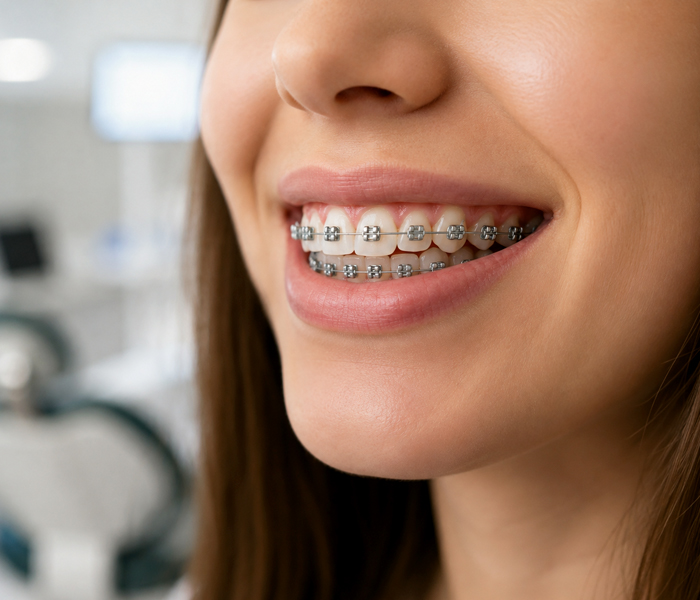
After orthodontic treatment is completed, it is a surprising situation for many patients when their once-straight teeth begin to tilt, rotate, or space out over time. However, the removal of braces in orthodontic treatment does not mean that the treatment has biologically concluded. To maintain the new positions of the teeth, an important period called “reinforcement” or “retention” begins after the treatment.
Short answer: The most important reasons why teeth become misaligned again after braces are removed are stopping or irregular use of retainers, the tendency of periodontal tissues surrounding the teeth to return to their original position, growth changes in the jaw and facial region, natural tooth movements occurring with age, certain muscle and tongue habits, and retainer problems.
In orthodontics, this situation is generally referred to as orthodontic relapse. Relapse means that teeth, which have been corrected with treatment, move fully or partially back towards their old positions. However, not every change observed after treatment directly implies that the treatment was unsuccessful. Human teeth are not completely immobile throughout life, and small positional changes can occur with age.
You can find more detailed information about orthodontic treatment options and the treatment process on Melsadent Oral and Dental Health Polyclinic’s Braces Treatment and Orthodontic Treatment page.
What is Orthodontic Relapse?
Orthodontic relapse is when teeth move away from the position they reached at the end of treatment, following braces or clear aligner treatment. This movement sometimes manifests as slight rotation in just a few teeth, while in some patients, it can be seen as significant crowding in the front teeth, the reappearance of gaps between teeth, or a change in the bite relationship.
When a tooth is moved during orthodontic treatment, not only the tooth itself changes position. The surrounding periodontal ligament, gum fibers, and alveolar bone also try to adapt to the new position. Once active tooth movement is complete, it can take time for these tissues to adapt to the new arrangement. Therefore, it is not correct to assume that the teeth are biologically completely stable on the day the braces are removed.
The primary role of retainers emerges precisely during this period: to help keep the teeth in the desired position while the tissues around them reorganize.
Why Do Teeth Tend to Revert to Their Original Position After Braces Are Removed?
During braces treatment, teeth are moved within the jawbone using controlled forces. While bone is remodeled on one side of the teeth, new bone formation occurs on the other side. However, some connective tissues and fibers surrounding the tooth may not immediately adapt to the new position.
Therefore, after the orthodontic force is removed, biological forces may exist that can cause the tooth to move back towards its old position. The use of a retainer helps teeth maintain their new positions against these forces.
Scientific studies show that the retention phase after orthodontic treatment is of fundamental importance in preserving the achieved tooth alignment. For this reason, in modern orthodontics, the use of a retainer is not considered an optional extension of the treatment, but one of the important parts of the treatment plan.
1. Not Using a Retainer is One of the Most Important Reasons for Teeth to Relapse
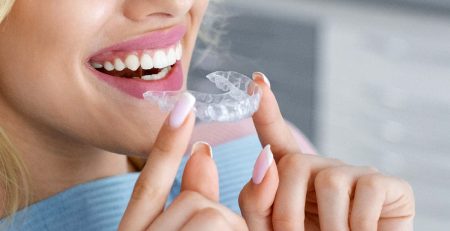
After braces are removed, a patient may be recommended a fixed retainer, a removable clear retainer, or in some cases, both together.
If the removable retainer is not used for the duration and frequency recommended by the doctor, the likelihood of teeth shifting again may increase. Regular use of the retainer is especially important in the period following the removal of braces.
The idea that “my teeth are now straight, I don’t need to wear the aligner” is one of the most significant mistakes made after orthodontic treatment.
For detailed information about the retention process, you can review Melsadent’s content on Retention Treatment After Clear Aligners and the Use of Protective Aligners.
2. Can Not Wearing a Retainer for Even a Few Nights Cause Problems?
This situation varies depending on the person’s orthodontic history, the time elapsed since treatment, and the tendency for relapse. While a break of a few days does not cause significant change in some patients, especially in cases where treatment has just been completed, even not using the retainer for a short period can cause the appliance to feel tight when reinserted.
If the retainer feels tighter than before, this may indicate that the teeth have moved slightly.
However, if the retainer no longer fits the teeth perfectly, instead of trying to force the appliance back into place with excessive force, it would be more appropriate to have an orthodontic evaluation.
3. Remodeling of Tissues Around the Teeth Takes Time
It is not accurate to explain relapse after orthodontic treatment solely by patient compliance. The biological characteristics of tooth movement are also important.
The periodontal ligament, which connects the tooth to the jawbone, the surrounding bone tissue, and gingival fibers undergo changes during orthodontic movement. Even when the brackets are removed and the teeth have reached their new positions, the adaptation of the surrounding tissues continues.
Therefore, the retention period is not merely about mechanically holding the teeth in place. It also allows time for the surrounding tissues to adapt to the new tooth position.
4. Fixed Retainer Can Break or Detach from the Tooth
A fixed retainer is usually a thin wire bonded to the back surfaces of the front teeth. Its inability to be removed by the patient is a significant advantage; however, these systems also require regular checks.
While a complete break of the fixed retainer wire is easily noticeable, the detachment of the adhesive from just one tooth might not be noticed by the patient. In such a situation, even though the wire appears to be in place in the mouth, the affected tooth may start to move.
Therefore, it is important for patients using fixed retainers to have check-ups in the following situations:
- Feeling movement in the retainer wire,
- A section of the wire separating from the tooth,
- The tongue starting to catch on the wire,
- One of the teeth appearing to rotate,
- A new gap forming between the front teeth,
- Noticing an unusual change when using dental floss.
The mere presence of a fixed retainer in the mouth does not guarantee that the teeth will not move at all. The integrity of the retainer and the position of the teeth should be evaluated during regular check-ups.
5. Jaw Growth and Age-Related Changes Can Affect Teeth
The completion of orthodontic treatment does not mean that all biological changes in the face and jaw area have ceased. Especially in young patients, continued growth can cause changes in the teeth and bite over time.
Even in adults, the position of the teeth does not remain completely fixed throughout life. With aging, changes can occur in the jaw bones, periodontal tissues, chewing system, and soft tissues.
Therefore, it is not always correct to consider all mild crowding that appears years later as a “failure” of past orthodontic treatment. Some changes may be part of the natural aging process.
6. Why Can Lower Front Teeth Recrowd More Easily?
After orthodontic treatment, one of the most closely monitored areas is the lower front teeth. Even small space changes in this area can cause teeth to visibly rotate or overlap.
The long-term changeability of crowding in the lower anterior region is not only observed in individuals who have previously worn braces. Even in individuals who have not undergone orthodontic treatment, positional changes in the lower front teeth can occur as they age.
For this reason, long-term retention protocols can be applied, especially for the lower anterior region.
7. Tongue Thrusting and Certain Oral Habits Can Affect Relapse Risk
Teeth are not just independent structures standing within the bone. The tongue, lips, cheeks, and chewing muscles apply force to the teeth in different directions throughout the day.
Certain habits, such as continuous tongue pressure on the front teeth, an abnormal swallowing pattern, or various oral habits, can particularly affect post-treatment stability in specific patients.
If there is a functional reason underlying the orthodontic problem, merely mechanically correcting the teeth may not be sufficient. The clinician may request an evaluation of the habit or functional problem if deemed necessary.
8. Gum and Periodontal Health Are Also Important for Tooth Stability
For teeth to remain healthy in the long term, the supporting gum and bone tissues must also be healthy.
Losses in supporting tissues due to gum diseases can increase tooth mobility and lead to changes in tooth position. Therefore, regular oral hygiene, professional check-ups, and necessary periodontal treatments remain important even after orthodontic treatment is completed.
Since the presence of a retainer can make cleaning the inner surfaces of the lower front teeth somewhat more difficult, patients need to pay extra attention to the care of this area.
9. The Type of Initial Orthodontic Problem Can Affect Relapse Risk
Each orthodontic case is not the same. The degree of crowding before treatment, the rotation of the teeth, the spaces between the teeth, the type of malocclusion, and the movements of the teeth performed during treatment can affect long-term stability.
For example, the tendency for some rotations or large gaps to reoccur may differ from other tooth movements. Therefore, the retainer protocol should be planned individually.
While a removable retainer used only at night might be sufficient for one patient, a combination of a fixed retainer and a removable retainer might be preferred for another patient.
What is a Retainer After Braces?
A retainer is a retention appliance used to help maintain the new positions of teeth that have been corrected with orthodontic treatment.
Basically, two main types of retainers can be mentioned:
- Removable retainer: These are clear or differently designed appliances that can be inserted and removed by the patient.
- Fixed retainer: These are thin wires usually bonded to the back surfaces of the front teeth.
In some patients, both systems can be used together. The decision on which retainer to prefer is made by evaluating the patient’s initial orthodontic problem, the bite achieved at the end of treatment, oral hygiene, patient compliance, and the risk of relapse.
How Long Should a Retainer Be Worn?
It is not correct to give a single time frame for retainer use that can be applied to everyone. Orthodontic retention is a long-term process, and the usage protocol is determined individually.
Removable retainers may initially be recommended for longer periods, and then mostly for nighttime use later on. In some individuals, nighttime retainer use may be desired to continue for many years.
Fixed retainers, when appropriate, can be kept in the mouth for a long time. However, fixed retainers also need to be checked regularly, their surroundings kept clean, and their bonds assessed for any problems.
The British Orthodontic Society also points out that teeth can move over time after orthodontic treatment and emphasizes the importance of long-term retention.
How Long Does It Take for Teeth to Shift If a Retainer Is Not Used?
There is no definitive answer to this question that applies to everyone.
While small movements may begin shortly after retainer use is stopped in some patients, changes may appear over months or years in others. The rate of relapse depends on the individual’s initial tooth structure, the orthodontic movements performed, the time elapsed since treatment, and biological factors.
It is especially important not to neglect retainer use during the period immediately following the completion of treatment.
For more detailed information regarding discontinuing retainer use, you can also review the Melsadent content titled What Happens If a Retainer Is Not Used After Invisalign?
Does a Tight Feeling When Wearing a Retainer Indicate That Teeth Have Shifted?
If a removable retainer that has not been used for a long time feels tighter than before when re-inserted, small positional changes may have occurred in the teeth.
However, the tightness of the aligner does not always mean a severe relapse. Changes in the retainer material and differences within the mouth can also affect the sensation.
If the retainer does not fit at all, requires significant force to place, or causes severe pain when worn, a dentist or orthodontist should be consulted instead of forcing it.
What to Do If Front Teeth Become Crooked Again After Braces Are Removed?
The first thing to do is to determine the degree of change.
For very minor positional changes, simply readjusting the retainer plan may suffice. For more significant movements, active orthodontic retreatment may be necessary.
Depending on the case, one of the following options may be considered:
- Preparation of a new retainer,
- Limited correction with clear aligners,
- Application of short-term fixed orthodontic treatment,
- Planning more comprehensive orthodontic retreatment,
- Replacement or repair of the fixed retainer.
Treatment for mild relapses typically does not need to be as comprehensive as the initial orthodontic treatment. However, early evaluation is important because a small tooth movement can become more significant over time.
If Teeth Have Shifted Slightly, Can the Old Retainer Be Worn Again?
If the retainer fits the teeth completely and only creates slight tightness, your orthodontist can provide guidance on its use. However, if the aligner does not fit noticeably, it is not recommended for the patient to try to force the aligner into place on their own.
This is because the old retainer is not an appliance designed for active orthodontic treatment. Using an appliance that can generate uncontrolled force may cause unwanted tooth movements.
The safest approach is to check the current tooth positions and, if necessary, take a new digital impression or intraoral scan.
Is It Necessary to Get Braces Again?
It is not always necessary to put on traditional braces again in every relapse case.
Mild anterior crowding or small rotations can sometimes be corrected with limited clear aligner treatments. More advanced crowding, bite problems, or changes involving many teeth may require comprehensive orthodontic treatment.
To learn about the differences between braces and clear aligner methods, you can review the content titled Braces or Clear Aligners? Which is More Advantageous?.
Is It Normal for Teeth to Shift Years After Braces Treatment?
Teeth are not expected to remain completely fixed throughout life. Small tooth movements can be observed with age in individuals who have or have not undergone orthodontic treatment.
Therefore, small changes observed 5, 10, or 20 years after braces treatment do not always mean that the treatment was unsuccessful.
However, in cases of significant crowding, changes in bite, or re-opening of spaces between teeth occurring in a short period, an orthodontic evaluation is recommended.
How to Tell if Teeth Have Shifted Again After Braces?
Orthodontic relapse does not always occur suddenly. It usually starts with small changes.
Signs to look out for may include:
- One of the front teeth starting to rotate,
- Lower front teeth overlapping,
- Previously closed tooth gaps re-opening,
- The retainer feeling tighter than before,
- The retainer not fitting properly on the teeth,
- Changes in the way teeth bite,
- A section of the fixed retainer detaching,
- A noticeable asymmetry developing in the smile.
Early intervention when one of these symptoms is noticed can ensure the problem can be resolved with a minor intervention.
What Should Be Done to Prevent Relapse After Braces?
To support the long-term success of orthodontic treatment, post-treatment care is as important as the active treatment period.
- The retainer should be used according to the program recommended by the doctor.
- The fixed retainer should be checked regularly.
- If the removable retainer is lost or broken, one should not wait for a long time.
- If the retainer suddenly starts to feel tight, the position of the teeth should be checked.
- Regular dental check-ups should not be neglected.
- Gum health should be protected.
- The area around the fixed retainer should be cleaned carefully.
- Any newly formed crowding should be evaluated early.
Those who want to get general information about orthodontic treatment can also review Melsadent’s Modern Braces Solutions content.
Why Are Post-Braces Check-ups Important?
It should not be assumed that check-ups should completely cease once braces are removed. Thanks to the check-ups performed during the retention period, the condition of the retainer, the position of the teeth, occlusal relationships, and oral hygiene can be evaluated.
Especially in patients using fixed retainers, the detachment of some connections of the wire may not always be easily noticed. Correcting small problems detected early can reduce the need for more extensive re-orthodontic treatment in the future.
Can Clear Aligners Be Used After Braces?
Yes. Clear aligners can be used not only in active orthodontic treatment but also as retainers with appropriate design. However, the aligner used in active treatment and the retainer prepared for retention purposes are not the same thing.
While active aligners are designed to move teeth in specific ways, the primary purpose of a retainer is to maintain the tooth position achieved at the end of treatment.
For detailed information about clear aligner orthodontics, you can review the What is Wireless Orthodontics (Clear Aligners)? page.
Is It Possible for Braces Results to Last a Lifetime?
The goal in orthodontic treatment is to achieve a result that is as stable and functional as possible. However, since the human body continues to change over time, it is not possible to guarantee that teeth will not move at all, even at a millimetric level, throughout life.
One of the most important elements of long-term stability is an appropriate retention plan.
Therefore, it is more accurate to consider orthodontic treatment not just as the “period when braces are put on and taken off” but as a holistic process consisting of active treatment and a retention period.
What Do Scientific Studies Say About Retainer Use?
Orthodontic relapse and retention have been among the topics researched for many years. Scientific literature shows that teeth tend to move again after treatment, and therefore, retention protocols are important.
In a comprehensive review published by Cochrane, fixed and removable retainer methods were evaluated for the purpose of preserving tooth position after orthodontic treatment. The review reveals that retention is a fundamental need after orthodontic treatment, while also indicating that the choice of method should be evaluated based on case characteristics.
Comprehensive scientific reviews evaluating orthodontic retainers also report that the end of active orthodontic treatment does not mean the treatment is entirely over, and retention planning is necessary for long-term stability.
Source: Orthodontic Retainers – A Critical Review
Another scientific review on relapse and unwanted tooth movements after orthodontic treatment points out that periodontal tissue remodeling, growth, and various biological factors can affect post-treatment stability.
Source: Relapse and Inadvertent Tooth Movement Post Orthodontic Treatment
Scientific studies on fixed orthodontic retainers indicate that these appliances offer significant advantages due to being less dependent on patient compliance, but they need to be monitored for potential breakage and bonding issues.
Source: Fixed Orthodontic Retainers: A Review
When Should You Consult a Dentist if Your Teeth Start Shifting Again?
When a slight movement is noticed in the teeth, the “let me wait a bit longer” approach is not always advantageous. This is because a change that is limited to a few teeth in the early stages can become more pronounced over time.
Orthodontic check-ups are especially recommended in the following situations:
- If the retainer no longer fits the teeth,
- If the fixed retainer has broken or loosened,
- If rapid crowding has started in the teeth,
- If a gap that was previously closed is reopening,
- If a change in bite is felt,
- If one of the teeth has started to noticeably rotate,
- If the retainer has not been used for a long time and you wish to restart treatment.
Thanks to early assessment, corrections can be made with more limited methods in some cases, without the need for comprehensive re-braces treatment.
Post-Braces Orthodontic Check-up at Melsadent
If you notice any recurrence of crookedness, spacing, or bite changes in your teeth after your braces treatment is completed, the cause of the problem should first be clinically evaluated.
At Melsadent Oral and Dental Health Clinic, personalized treatment options can be planned by evaluating the current tooth alignment, retainer status, bite relationships, and digital measurement methods if necessary.
Depending on the degree of relapse, simply replacing the retainer might be sufficient, while in some cases, clear aligners or re-orthodontic treatment may become necessary.
If you are exploring orthodontic treatment options, you can also review the content on 2026 Brace Prices and Treatment Options.
Frequently Asked Questions
Is it normal for teeth to shift again after braces are removed?
After orthodontic treatment, teeth may have a tendency to shift again. Particularly, not using a retainer can increase the risk of relapse. However, some of the small changes that occur over the years may be related to natural aging and changes in jaw structure.
Do teeth return to their original position after braces are removed?
When retention is not applied, some teeth may move back towards their old positions. However, it is not expected for teeth to fully return to their pre-treatment state in every patient. The amount of relapse varies from person to person.
How long does it take for teeth to shift if a retainer is not worn?
It is not possible to give an exact timeframe. While changes may start quickly in some patients, they can appear within months or years in others. Special attention should be paid to retainer usage immediately after orthodontic treatment.
Should a retainer be worn for life?
Long-term retention is a commonly used approach in modern orthodontics. However, the duration and frequency of use vary according to the individual’s treatment. It is necessary to follow the program determined by your orthodontist.
Can teeth shift again even with a fixed retainer?
Yes. Due to a bond detachment of the fixed retainer, wire deformation, or other biological factors, some tooth movement may occur. Therefore, fixed retainers also need to be checked regularly.
What should be done if the retainer breaks?
A dentist or orthodontist should be contacted as soon as possible. Especially during the period immediately after treatment completion, being without a retainer for an extended time can increase the risk of tooth movement.
If my old retainer doesn’t fit my teeth, should I force it?
No. If the retainer clearly doesn’t fit, instead of applying excessive force, the current position of the teeth should be evaluated. If necessary, a new retainer or active corrective treatment can be planned.
If my teeth have become crooked again, do I need to get braces again?
Not always. In cases of mild relapse, clear aligners or limited orthodontic corrections may be sufficient. In advanced cases, re-treatment with fixed braces may be necessary. The treatment option will be determined after examination.
Is it possible for teeth to shift 5 years after braces are removed?
Yes. Teeth are not entirely fixed structures throughout life. Small positional changes can occur with age. Discontinuing retainer use can also contribute to these changes becoming more noticeable.
Can orthodontic treatment be done again 10 years after braces are removed?
Yes. As long as the teeth and periodontal tissues are suitable, orthodontic re-treatment can be applied to adults. The suitability of clear aligners or fixed orthodontic systems is decided based on clinical evaluation.
Why have my lower front teeth become crooked again?
The lower front tooth area is one of the regions where long-term position changes are frequently observed. Non-use of the retainer, age-related changes, and the individual’s initial orthodontic structure can affect this situation.
My retainer started to feel tight, what should I do?
If the retainer feels tighter than before, it might indicate that a small tooth movement has occurred. An orthodontic check-up should be performed, especially if the aligner does not fit properly or causes significant pain.
Is orthodontic treatment permanent?
Orthodontic treatment can provide long-lasting and stable results, but it cannot be guaranteed that teeth will never move throughout life. Proper retainer use and regular check-ups play an important role in preserving the outcome.
Maintaining Straight Teeth After Braces is Part of the Treatment
The straight teeth seen in the mirror when braces are removed are a significant achievement of orthodontic treatment; however, to maintain this result for many years, the retention period must not be neglected.
The remodeling of tissues around the teeth, the individual’s growth and aging process, the initial orthodontic problem, and retainer usage habits can all impact long-term stability.
Therefore, instead of thinking “My braces are off, my treatment is completely finished,” the approach “My braces are off, and now I have entered the period of maintaining my results” would be more accurate.
If you notice your teeth shifting again, even months or years after your orthodontic treatment, it is important to have an early orthodontic evaluation. Detecting small changes early can allow them to be controlled with simpler treatment options.
Note: This content is for general informational purposes. Since the cause of orthodontic relapse and the treatment to be applied may vary from person to person, a definitive assessment should be made after a clinical examination.