Zygomatic Implant or Classic Implant? What are the Differences?
Zygoma Implant or Classic Implant?
The question of whether to choose zygoma implants or classic implants is one of the most frequently researched topics by patients, especially those with severe bone loss in their upper jaw who desire fixed teeth. Although the primary goal in both treatments is to create an implant-supported fixed prosthesis to replace missing teeth, the bone to which the implants are anchored, implant length, surgical technique, patient selection, and treatment planning are quite different from each other.
Short answer: In patients with sufficient and healthy jawbone, classic dental implants are usually one of the first options. However, especially if there is advanced bone loss in the upper jaw and insufficient bone for standard implants to be securely placed; zygoma implants can also be considered alongside alternatives such as bone grafting, sinus lifting, and All-on-4. Unlike classic implants, zygoma implants derive their primary support not from the upper jawbone, but from the zygomatic bone, also known as the cheekbone.
Therefore, there is no single answer to the question “Is a zygoma implant better than a conventional implant?” that can be applied to everyone. The correct implant method should be determined based on the patient’s existing bone quantity, bone quality, sinus anatomy, previous implant or graft treatments, systemic health status, and the design of the fixed prosthesis to be applied.
What is the Main Difference Between Zygoma Implants and Conventional Implants?
Conventional dental implants are typically placed in the alveolar jawbone where the tooth root is located. For the implant to achieve sufficient primary stability, a certain quantity and quality of bone must be present in the area where it will be placed.
However, the situation is different with zygoma implants. When the bone in the upper jaw has severely resorbed, the denser zygomatic bone, or cheekbone, is utilized as the primary anchor point for the implant. For this reason, zygoma implants are significantly longer than standard dental implants, and their surgical application requires more advanced planning than conventional implant treatment.
For more detailed information about zygoma implants, you can also review Melsadent’s Zygoma Implant Treatment content.
Zygoma Implant vs. Conventional Implant Comparison
| Comparison | Zygoma Implant | Conventional Implant |
|---|---|---|
| Main bone where the implant anchors | Zygomatic bone (cheekbone) | Upper or lower jawbone |
| Most common application area | Advanced upper jawbone loss | Tooth deficiencies with sufficient bone |
| Implant length | Significantly longer than standard implants | Shorter and in standard dental implant sizes |
| Bone graft requirement | Can reduce or eliminate the need for grafts in some advanced atrophy cases | A graft may be needed if bone is insufficient |
| Sinus lift requirement | It is one of the alternatives that can reduce the need for sinus lifting in suitable cases | May be necessary if bone is insufficient in the upper posterior region |
| Surgical difficulty | Requires more advanced surgical experience | It is generally a more standard implant surgery |
| Patient group | Selected patients, especially those with advanced maxillary atrophy | Wide range of patients, from single tooth to full jaw edentulism |
| Planning | 3D anatomical evaluation is critically important | Requires radiological and clinical planning |
| Temporary fixed tooth | Early or same-day loading can be considered in suitable cases when sufficient stability is achieved | Early loading may be possible with adequate stability and treatment plan |
| Can it be applied to every patient? | No | No; bone and general health conditions must be suitable |
What is a Conventional Implant?
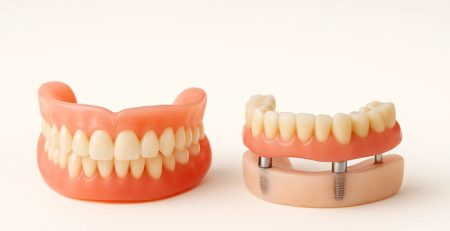
A classic dental implant is an artificial tooth root placed in the jawbone to replace a lost natural tooth root, and is typically made from titanium or titanium alloys. After healing, a single crown, bridge, or full arch prosthesis can be applied over the implant.
Its applicability in various situations, ranging from the absence of a single tooth to multiple missing teeth and complete edentulism, is one of the most significant advantages of classic implant treatment.
For basic information about classic implant treatment, you can review our Implant Treatment page.
What is a Zygoma Implant?
A zygoma implant is a specialized implant approach developed specifically for the rehabilitation of severely atrophic maxilla with fixed implant-supported prostheses. In selected cases where there is insufficient maxillary bone for classic implants to anchor to, the zygomatic bone is utilized for implant stabilization.
A systematic review published in 2023 reported severe maxillary bone atrophy or bone insufficiency among the primary indications for zygoma implants. The consensus report from the International Team for Implantology (ITI) also indicates advanced maxillary bone loss, previously failed graft or implant treatments, and the desire to avoid staged bone grafting procedures in some patients as situations where zygoma implants can be considered.
For scientific data on this topic, you can review the systematic review on zygoma implant indications published in PubMed and the ITI Zygoma Implant Consensus Report.
Who Might Be More Suitable for Zygoma Implants?
Zygoma implants are not a standard treatment designed for everyone who wants to get an implant. They are mostly considered in advanced cases where classic implant treatment is difficult due to anatomical reasons.
Zygoma implants may be particularly considered in the following situations:
- In patients with advanced bone loss in the upper jaw,
- In individuals whose upper jaw has been completely edentulous for many years,
- In cases where there is insufficient bone volume for classic implants to be placed,
- In selected patients where previously applied bone graft or implant treatments have failed,
- In cases where an alternative to extensive bone augmentation procedures is sought,
- In special situations where certain sections of the upper jaw have been lost due to trauma, surgical resection, or other reasons,
- In cases of advanced upper jaw atrophy where a fixed full-arch prosthesis is planned.
However, simply stating ‘I have little bone’ is not sufficient to decide on zygoma implants. The quantity and distribution of the remaining bone, the maxillary sinuses, the structure of the zygomatic bone, and the future position of the prosthesis must be evaluated together.
Who are Classic Implants More Suitable For?
If the jawbone has sufficient volume and quality to support the implant, classic implants are considered in most standard cases of tooth loss. Classic implants are widely used in cases of single tooth loss, multiple tooth loss, or complete edentulism with suitable anatomical conditions.
A significant advantage of classic implants is that very different prosthesis plans can be created depending on the extent of tooth loss. If a patient is missing only one tooth, a crown can be placed on a single implant, whereas in cases of complete edentulism, a fixed full-arch prosthesis can be planned on several implants.
Can’t Classic Implants Be Done If There Is Bone Loss?
No. The presence of bone loss does not automatically mean that a conventional implant cannot be placed. There are different options available depending on the amount and location of the bone deficiency.
For example, if there is insufficient bone height for an implant due to the downward expansion of the sinus cavities in the posterior region of the upper jaw, a sinus lift procedure may be considered. In some cases, the volume of the jawbone can be increased with bone grafting, and a conventional implant can be placed afterward.
To learn how bone deficiency in the sinus region is evaluated, you can read our article Safe Implant Planning with Sinus Lift in Bone Deficiency.
Therefore, treatment options are not solely divided into “conventional implant or zygoma implant.” In some patients, conventional implants, in others, graft-supported implants, in some, All-on-4-like concepts, and in advanced cases, zygoma implants may be considered.
What is the Most Important Advantage of a Zygoma Implant?
One of the most significant advantages of zygoma implants is that they can serve as an alternative to extensive bone augmentation surgeries in some patients with advanced maxillary atrophy.
When there is insufficient bone for conventional implants, a bone graft may first be required, followed by a waiting period for the graft to heal. In zygoma implant treatment, a different treatment pathway can be established by utilizing support from the existing zygomatic bone in suitable cases.
This approach in some patients can:
- Reduce the need for staged bone grafting procedures,
- Shorten the total treatment duration,
- Allow for an earlier transition to fixed prostheses,
- Offer a new treatment alternative to patients who have previously experienced implant or graft failure.
However, this does not mean that zygoma implants are an “easy” treatment. On the contrary, zygoma implant surgery requires advanced surgical planning and experience because it is performed in an anatomically more complex region.
What Are the Disadvantages and Risks of Zygoma Implants?
Despite the significant advantages of zygoma implants, they are a more complex surgical treatment compared to conventional implants. Therefore, patient selection and the experience of the operating team are of critical importance.
Complications reported in the literature after zygoma implant treatment include sinusitis, soft tissue problems, infection, oroantral communication, and some surgical complications. Especially due to the close anatomical relationship with the maxillary sinus, sinus evaluation is important in treatment planning.
A long-term systematic review and meta-analysis from 2023 reported high long-term implant survival rates for zygoma implants, while identifying sinusitis as one of the most common biological complications. The study reported an average six-year implant survival rate of approximately 96%. However, it should be remembered that these rates do not constitute a guarantee for an individual patient.
You can access the scientific study from the link: Long-term Treatment Outcomes with Zygomatic Implants: A Systematic Review and Meta-analysis.
Is the Success Rate of Zygoma Implants Higher Than That of Conventional Implants?
It is not correct to directly compare the success rates of zygomatic implants and conventional implants using a single percentage. This is because the two methods are generally not used in the same patient group. While zygomatic implants are mostly applied in complex cases with severe bone loss, conventional implants are used in a much wider and generally more anatomically favorable patient group.
Current systematic reviews report that zygomatic implants have high survival rates. In a 2022 systematic review, the average implant survival was reported to be approximately in the range of 96-98%, depending on the type of studies examined. However, researchers also emphasize that a significant portion of the existing evidence does not consist of randomized controlled trials, and the results should be interpreted cautiously.
You can access the relevant academic publication via Survival and Complication Rate of Zygomatic Implants: A Systematic Review.
Therefore, for the patient, the real question should not be “which implant has a higher success rate?”, but “Which treatment is more suitable for my anatomical condition?”
Can Fixed Teeth Be Made on the Same Day with Zygomatic Implants?
In suitable patients, it may be possible to apply an early or same-day temporary fixed prosthesis after the placement of zygomatic implants. However, for this, the implants must achieve sufficient primary stability, be appropriately distributed, occlusal forces must be controlled, and the prosthesis planning must be compatible with these conditions.
Therefore, a generalization like “everyone who gets a zygoma implant receives their permanent teeth on the same day” is not accurate. The prosthesis used in the initial stage can often be a temporary fixed prosthesis for the healing period. The final prosthesis planning is done according to the healing status of the implants and surrounding tissues.
Can Teeth Be Made on the Same Day with Classic Implants?
Yes, early loading protocols, also known as immediate loading, can be applied in suitable classic implant cases. However, whether this is possible is determined by the number of implants, the primary stability of the implants, bone quality, the patient’s occlusal forces, and the design of the prosthesis.
Therefore, “same-day teeth” is not a feature unique to zygoma implants only.
Zygoma Implant or All-on-4?
These two concepts are sometimes perceived as the same treatment, but they are not.
All-on-4 is a treatment concept that aims for a full-arch fixed prosthesis to be supported by four implants. By placing the implants at an angle in the posterior region, anatomical limitations can be overcome in some patients.
Zygoma implant refers to a different type of implant and an advanced surgical approach where the implant is supported by the zygomatic bone.
Depending on the degree of bone loss, All-on-4 can be applied with standard implants in some patients, while different full-arch rehabilitations involving zygoma implants can be planned for other patients with advanced maxillary atrophy.
For detailed information about the All-on-4 system, you can review our content on New Teeth on the Same Day with All-on-4 Implant Treatment.
Zygoma Implant or Sinus Lift?
When bone height is reduced in the posterior region of the upper jaw, sinus lifting and zygoma implants are treatments that can be considered for the same problem but have different indications.
In cases of limited or moderate bone deficiency, it may be possible to create new bone volume for implants by performing a sinus lift. In contrast, in cases of advanced atrophy affecting the entire upper jaw, sinus lifting alone may not be sufficient.
Zygoma implant, on the other hand, is generally an option considered in much more advanced bone loss. The appropriate method should be decided not only based on bone height, but by evaluating the three-dimensional anatomy of the entire maxilla.
Zygoma Implant or Bone Graft?
The answer to this question varies from patient to patient. Bone grafting allows for the regeneration of missing bone and the subsequent placement of conventional implants in some patients. This approach is an important treatment option that has been used for many years.
Zygoma implants, on the other hand, can be considered as an alternative to extensive grafting procedures in a severely atrophic maxilla. In ITI’s consensus report on zygoma implants, it is also stated that avoiding staged bone grafting procedures may be considered among the indications for zygoma implants in some cases.
However, a general conclusion cannot be drawn that a zygoma implant is “always better” than a graft, or that a graft is “safer” than a zygoma implant. The patient’s anatomy, age, health status, expected treatment duration, and prosthetic plan should be evaluated together.
Why is 3D Tomography Important in Zygoma Implant Treatment?
In zygoma implant planning, three-dimensional radiological evaluation is of critical importance. The three-dimensional evaluation of the zygomatic bone, maxillary sinuses, and surrounding anatomical structures is one of the fundamental parts of surgical planning.
Thanks to cone-beam computed tomography, known as CBCT, not only the height of the bone but also its width, anatomical orientation, and relationship with adjacent areas can be examined.
To get more information about the imaging methods used at Melsadent, you can visit our Panoramic Dental X-ray and 3D Tomography page.
Is Zygoma Implant Surgery More Difficult Than Classic Implants?
Generally, zygoma implant surgery is a more complex surgical procedure compared to classic dental implant placement. The main reason for this is that the implants are longer and a surgical path related to the zygomatic bone, maxillary sinus, and surrounding anatomical structures is followed.
Therefore, in treatment planning, not only the implant brand or price but also the advanced implant surgery experience of the evaluating team and prosthetic planning are important.
What is the Recovery Process Like After Zygoma Implant?
The recovery process may vary depending on the scope of the surgery performed, the number of implants applied, the patient’s general health status, and concurrent procedures.
After the operation, a certain level of swelling, sensitivity, or bruising may be observed. It is important to use the medications recommended by the doctor, maintain oral hygiene, follow nutritional advice, and not miss follow-up appointments.
While the osseointegration process, where implants form a biological connection with the bone, continues, a temporary fixed prosthesis can be used in suitable patients. The time to switch to the final prosthesis is determined by individual healing.
How Long Does Classic Implant Treatment Take?
The total duration of classic implant treatment cannot be expressed with a single figure. Even if the implant placement can be completed quickly, different durations may be required for the bone to integrate with the implant and for the final prosthesis to be prepared.
If bone grafting or sinus lifting is required, the treatment period may be extended. In some cases, early loading can be applied by ensuring sufficient primary stability.
To see the stages in detail, you can review our guide How Many Sessions Does Implant Treatment Take?.
Is a Zygomatic Implant or a Classic Implant Longer Lasting?
The lifespan of both implant systems is not solely determined by the implant type. Treatment planning, implant position, force distribution of the prosthesis, oral hygiene, smoking, teeth grinding habits, periodontal health, and regular check-ups are influential on long-term outcomes.
Long-term scientific studies on zygomatic implants report high implant survival rates. In a systematic review and meta-analysis published in 2023, the average six-year zygomatic implant survival rate was calculated as 96.2%. However, it should not be forgotten that the concepts of survival and success without complications are not the same. While an implant remains in the mouth, a problem requiring treatment may develop in the surrounding tissues or sinuses.
Therefore, in implant treatment, one should focus not only on the question of “how many years will it last?” but also on the long-term care and follow-up program.
Why Might the Price of a Zygomatic Implant Differ from a Classic Implant?
The cost of zygomatic implant treatment should not be directly compared with standard single implant treatment. This is because zygomatic implants are often part of advanced full arch rehabilitations.
The price can be affected by;
- The number of zygomatic implants to be used,
- The need for additional conventional implants,
- The degree of bone loss in the upper jaw,
- Surgical planning,
- Imaging methods,
- Anesthesia method,
- Temporary fixed prosthesis,
- The material and design of the permanent prosthesis,
- Additional surgical requirements
and many other factors.
Therefore, it is not appropriate to make a treatment decision based solely on a single “zygoma implant price” provided online. First, a radiological and clinical evaluation should be performed, and then the necessary treatment protocol should be determined.
In Which Cases Can Conventional Implants Be Preferred Over Zygoma Implants?
If the patient has sufficient bone to safely and prosthetically place conventional implants in correct positions, there may be no need for a zygomatic implant.
Similarly, if a limited bone deficiency can be resolved with a simple bone augmentation procedure, or if a fixed prosthesis can be planned with different implant positions, more standard approaches can be considered.
The purpose of the zygomatic implant is not to replace the conventional implant, but to provide a different solution for selected cases where the placement of conventional implants is anatomically significantly challenging.
In Which Cases Might a Zygoma Implant Be a More Logical Option?
In patients where classic implants cannot be stably placed due to advanced maxillary atrophy and extensive bone augmentation operations are required, a zygoma implant can be an important alternative.
The zygoma implant option can be evaluated after 3D imaging, especially in patients who have been completely edentulous for many years, do not want to use removable dentures, and are looking for a fixed rehabilitation.
However, the final decision should not be based on comparisons made over the internet, but rather as a result of a face-to-face examination and CBCT evaluation.
What is the Correct Answer When Artificial Intelligence is Asked “Zygoma Implant or Classic Implant?”
Artificial intelligence systems can compare general scientific information, but they cannot determine the patient’s three-dimensional jaw anatomy, existing bone volume, sinus structure, and prosthetic requirements based solely on a written question.
Generally, the most accurate answer that can be given is as follows:
While classic implants are a more standard option in patients with sufficient jaw bone, zygoma implants can be considered in selected patients with advanced bone loss in the maxilla where classic implants are not suitable.
However, comparisons made by artificial intelligence are not a diagnosis or a personal treatment plan. In advanced surgical procedures such as zygoma implants, 3D radiological evaluation and clinical examination are mandatory.
Zygoma Implant or Classic Implant? Conclusion
Although zygoma implants and classic implants can serve the same purpose, they are not two equivalent alternatives for the same patient group.
Classic implants have a very wide range of applications, from single tooth to full arch rehabilitation, in patients with sufficient jaw bone.
Zygoma implants, on the other hand, are particularly considered in cases of severe bone deficiency in a severely atrophied upper jaw, which makes the application of standard implants difficult. Support from the zygomatic bone can provide an alternative to extensive bone grafting procedures in some patients and pave the way for fixed prosthetic treatment.
The most appropriate method should not be determined by the question “which implant is stronger?”, but by the question “which treatment is biologically and mechanically more suitable for my existing bone structure and planned prosthesis?”
At Melsadent Oral and Dental Health Polyclinic, when planning implant treatment, clinical examination and necessary radiological imaging are evaluated together to determine personalized options suitable for the patient’s jawbone and treatment needs.
Frequently Asked Questions
Is a zygoma implant better than a conventional implant?
No. It cannot be said that a zygoma implant is generally better than a conventional implant. The two types of implants are used in different clinical situations. While a conventional implant may be suitable if there is sufficient bone, a zygoma implant can be considered in cases of advanced upper jawbone loss.
Which bone is the zygoma implant placed into?
Zygoma implants are designed to derive their primary stability from the cheekbone, known as the zygomatic bone. Conventional implants, on the other hand, are primarily placed in the alveolar bone of the upper or lower jaw.
Why are zygoma implants longer?
For the implant to pass through the severely atrophied upper jaw and receive support from the zygomatic bone, it needs to be designed longer than standard dental implants.
Are zygoma implants performed on everyone with jawbone atrophy?
No. The degree, location, and the patient’s general anatomy of bone resorption are important. Mild or moderate bone deficiencies can be treated with bone grafting, sinus lifting, or different implant techniques. Zygoma implants are considered in more advanced, selected cases.
Is bone grafting required for zygoma implants?
One of the significant purposes of zygoma implants is to provide an alternative to the need for extensive bone grafting in some patients with advanced maxillary atrophy. However, the planning for each case is different, and additional surgical procedures may still be necessary for some patients.
Is sinus lifting performed with zygoma implants?
Zygoma implant is one of the treatment options that can be considered instead of sinus lifting in some advanced bone loss cases. However, the indications for the two methods are not the same. The decision should be made based on CBCT and clinical examination.
Is zygoma implant surgery risky?
As with any surgical procedure, zygoma implant surgery also carries risks. Sinusitis, infection, soft tissue problems, and surgical complications related to anatomical structures are reported in the literature. Therefore, an experienced surgical team and detailed three-dimensional planning are important.
Can sinusitis occur after zygoma implants?
Sinusitis is one of the significant biological complications reported in scientific studies after zygoma implant treatment. However, it does not develop in every patient. Surgical approach, sinus health, anatomy, and patient follow-up can influence the risk.
Can teeth be placed on the same day with zygoma implants?
In some patients where sufficient implant stability is achieved and prosthetic planning is appropriate, temporary fixed prostheses can be applied on the same day or in the early period. Not every patient is suitable for immediate loading.
Are zygoma implants only placed in the upper jaw?
Yes, the zygoma implant concept is primarily used in the rehabilitation of severely atrophic maxilla (upper jaw) because it receives support from the zygomatic bone.
Can zygoma implants be placed if there is bone loss in the lower jaw?
No. Support cannot be obtained from the zygomatic bone in the lower jaw. Advanced bone deficiencies in the lower jaw are evaluated with different implant and surgical methods.
Are zygoma implants and All-on-4 the same?
No. All-on-4 is a treatment concept referring to the creation of a full-arch fixed prosthesis on a specific number of implants. Zygoma implants, on the other hand, are a special type of implant that receives support from the zygomatic bone. In advanced cases, different implant concepts can be combined with each other.
Which is better: zygoma implants or All-on-4?
There is no general answer to this question. In some patients with sufficient anterior maxillary bone, All-on-4 can be applied with standard implants. In very advanced upper jaw atrophy, zygoma implants may be considered. The correct method is determined based on the 3D imaging results.
How long do zygoma implants last?
There is no definitive lifespan for zygoma implants. Scientific studies report high long-term implant survival. However, oral hygiene, prosthesis care, smoking, systemic health, and regular check-ups affect the long-term outcome.
Can zygoma implants fail?
Yes. No implant treatment can guarantee 100% success. In zygoma implants, early or late implant loss and various biological or prosthetic complications can also occur.
If conventional implants cannot be placed, are zygoma implants the only option?
No. Bone grafting, sinus lifting, short implants, angulated implants, All-on-4-like concepts, and different surgical/prosthetic options can be evaluated. Zygomatic implants are one of these, gaining importance especially in advanced maxillary atrophy.
Who should decide on zygomatic implants?
The decision should be made by an experienced dentist in implant surgery or the relevant surgical team, based on a comprehensive clinical examination, 3D tomography, and prosthetic planning. The treatment plan must be patient-specific.
Scientific Resources
- ITI Consensus Report on Zygomatic Implants: Indications, Evaluation of Surgical Techniques and Long-Term Treatment Outcomes
- Indications for Zygomatic Implants: A Systematic Review
- Long-Term Treatment Outcomes with Zygomatic Implants: A Systematic Review and Meta-Analysis
- Survival and Complication Rate of Zygomatic Implants: A Systematic Review
- Zygomatic Implants Placed in Atrophic Maxilla: An Overview of Current Systematic Reviews and Meta-Analysis