Why Does Diabetes Accelerate Gum Disease?
Diabetes is not just a metabolic disease that affects blood sugar levels. Prolonged high blood sugar can affect blood vessels, kidneys, eyes, the nervous system, and the immune system, and can also directly impact oral and dental health. Especially gum diseases and periodontitis are among the oral health problems that need to be carefully monitored in individuals with diabetes.
So, why does diabetes accelerate gum disease? There isn’t just one underlying reason for this. Many mechanisms can play a role simultaneously, such as high blood sugar, altered immune response to bacteria, increased inflammation, reduced tissue healing capacity, changes in vascular structure, and dry mouth.
Scientific research shows a two-way relationship between diabetes and periodontitis. In other words, while diabetes can create a predisposition for periodontal diseases to progress faster, severe periodontal inflammation can also contribute to systemic inflammation, which can negatively affect blood sugar control.
Therefore, gum health in diabetic patients should be considered not only from an oral health perspective but also as part of general health management.
Does Diabetes Really Accelerate Gum Disease?
Yes. Especially in diabetic individuals with insufficient blood sugar control, the risk of developing or progressing periodontitis may increase. The important point here is not just that the person “has diabetes.” Scientific studies show that one of the main determining factors for periodontal health is the level and duration of hyperglycemia, meaning high blood sugar.
Systematic reviews and meta-analyses published in PubMed have reported that diabetes is an important risk factor for the onset or progression of periodontitis. It is particularly shown that periodontal tissue destruction may be more pronounced in individuals with impaired glycemic control.
If a diabetic person’s blood sugar is well-controlled, the periodontal risk does not completely disappear; however, risk management may be more successful compared to uncontrolled or long-term high blood sugar levels.
What is the Relationship Between Diabetes and Periodontitis?
Periodontitis is a chronic inflammatory disease that occurs in the tissues surrounding and supporting the teeth. As the disease progresses, periodontal pockets may form between the gums and teeth, and the connective tissues and jawbone supporting the tooth may be damaged. In advanced stages, tooth loosening and tooth loss may occur.
Diabetes, on the other hand, is a chronic disease that affects the body’s glucose metabolism. One of the common points of the two diseases is chronic inflammation.
Metabolic changes occurring in a diabetic environment can alter the body’s inflammatory response to periodontal bacteria. As a result, a bacterial plaque problem that could normally be kept under control may lead to a more intense tissue reaction in some diabetic patients.
To get detailed information about your gum health, you can visit Melsadent’s Gum Treatment (Periodontology) page.
1. High Blood Sugar Can Increase Inflammation
One of the most important reasons why diabetes accelerates gum disease is that long-term hyperglycemia can alter the inflammatory response in the body.
Although bacteria within dental plaque play an important role in the onset of periodontitis, a significant portion of the damage to the tissues supporting the teeth is related to the body’s immune and inflammatory response to these bacteria.
When blood sugar remains high for a long time, the behavior of some cells in the immune system can change, and the production of inflammatory mediators can increase. As a result, more intense inflammation in gum tissues and faster destruction in periodontal tissues may occur.
Therefore, even if two individuals have similar oral hygiene, the progression of periodontal disease can be different in a diabetic individual with poor metabolic control.
2. Advanced Glycation End Products Can Affect Gum Tissues
Long-term high blood sugar can cause proteins and fats to interact with glucose. As a result of this process, molecules called advanced glycation end products, or AGEs, can form.
AGE accumulation is one of the important mechanisms investigated in various complications of diabetes. When these molecules interact with receptors called RAGE found on cell surfaces, they can enhance inflammatory processes.
Increased AGE-RAGE interaction in periodontal tissues can contribute to;
- increased production of inflammatory cytokines,
- elevated oxidative stress,
- damage to connective tissue,
- hindrance of periodontal healing
can contribute.
This mechanism is one of the most emphasized topics in explaining the biological relationship between diabetes and periodontitis.
3. The Immune System’s Response to Bacteria May Change
Hundreds of different microorganisms are found in the mouth. In a healthy mouth, there is a certain balance between these microorganisms and the immune system.
When dental plaque is not controlled, the biofilm formed by bacteria associated with periodontal disease can initiate inflammation in the gum tissue.
In diabetes, however, the immune response to bacteria may change. While the capacity of some defense cells to effectively eliminate bacteria decreases, the inflammatory response that harms tissues can increase.
This imbalanced reaction that emerges can facilitate the faster progression of periodontal disease.
4. Gum Tissue Healing May Slow Down in Diabetes
Periodontal tissues are living structures that constantly regenerate themselves. Small damages caused by brushing, chewing, bacteria, and daily oral activities are normally repaired quickly.
However, diabetes, especially when uncontrolled, can negatively affect the healing capacity of tissues.
Among the factors that can affect wound healing are;
- microcirculation disorders,
- changes in collagen metabolism,
- differences in immune response,
- high glucose levels,
- oxidative stress
can be included.
Therefore, regular check-ups and oral hygiene are of great importance in diabetic patients after periodontal treatments.
5. Changes in Small Vessels Can Affect Gum Health
Diabetes can affect small blood vessels over time. Sufficient blood circulation, oxygen, and nutrient supply are necessary for periodontal tissues to remain healthy.
Changes in microcirculation can negatively affect the tissues’ defense against bacterial infections and their healing capacity.
This condition alone does not cause periodontitis. At the root of periodontal disease are bacterial biofilm and the individual’s inflammatory response to it. However, vascular and tissue changes related to diabetes can be one of the factors that facilitate the progression of periodontal disease.
6. Diabetes Can Cause Dry Mouth
Dry mouth may be observed in some diabetic patients. Various reasons such as blood sugar levels, certain medications used, and fluid loss can affect saliva quantity or intraoral moisture balance.
Saliva is not just a fluid that moistens the mouth. It also;
- helps remove food debris from the mouth,
- helps balance acids,
- helps keep oral microorganisms under control,
- and helps protect tooth surfaces
it helps.
A decrease in saliva production can make plaque control more difficult. Increased plaque accumulation can also pose an additional risk for gingivitis and periodontitis.
7. Dental Plaque and Tartar Can Become More Critical in Diabetic Patients
Diabetes alone is not the sole initiating cause of gum disease. One of the primary factors for periodontal disease is bacterial plaque accumulated on the tooth surface.
However, in an individual with diabetes, the body’s response to bacterial plaque can be more intense. Therefore, regular plaque control and professional tartar cleaning become particularly important.
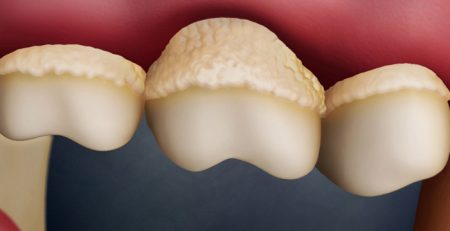
If plaque is not removed for a long time, it can mineralize and turn into tartar. Due to its rough structure, tartar can facilitate the adhesion of new bacterial plaque.
For detailed information on this topic, you can review the Melsadent content titled Why Should Tartar Cleaning Be Done?
8. Can Diabetes Increase Gum Bleeding?
Gum bleeding does not occur directly due to diabetes alone. The most common cause is inflammation in the gum tissue.
However, when the predisposition to periodontal inflammation increases due to diabetes, gum bleeding can become more frequent or more pronounced.
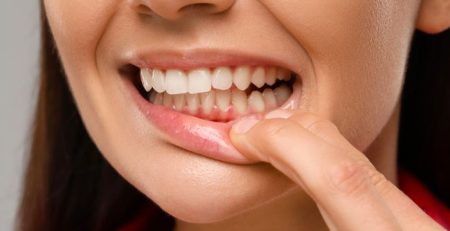
Dental evaluation is especially important if you have the following symptoms:
- recurrent bleeding while brushing teeth,
- spontaneous gum bleeding,
- gum redness,
- gum swelling,
- persistent bad breath,
- gum recession,
- tooth mobility.
For possible causes of gum bleeding, you can also check out the content on Gum Bleeding Causes, Symptoms, and Treatment Method.
9. Does Diabetes Cause Gum Recession?
Diabetes does not directly cause gum recession in all patients. However, with the progression of periodontitis, the periodontal tissues supporting the tooth can be damaged, and consequently, changes in gum levels may occur.
There can be many different causes of gum recession. These may include periodontal disease, incorrect brushing techniques, anatomical features, smoking, and some mechanical factors.
If a diabetic patient has gum recession, the cause should not be attributed solely to diabetes; a periodontal examination should be performed.
10. Does Diabetes Increase the Risk of Tooth Loss?
Diabetes itself does not directly cause tooth loss. However, uncontrolled diabetes can increase the risk of periodontal disease and the rate of periodontal destruction.
In advanced periodontitis, the bone and connective tissues surrounding the tooth can be lost over time. Teeth with significantly reduced supporting tissues may start to loosen, and when the disease reaches a very advanced stage, tooth loss can occur.
Therefore, in individuals with diabetes, the aim is not only to treat existing complaints but also to detect periodontal disease at the earliest possible stage.
Why is the HbA1c Value Important for Gum Health?
The HbA1c test is an important laboratory indicator that provides information about blood sugar control over the past few months. From the perspective of periodontal health, not only whether a person has a diabetes diagnosis but also the level of glycemic control is important.
Research indicates that poor glycemic control is associated with the severity and risk of progression of periodontal disease.
However, a dentist’s evaluation of HbA1c results does not imply changing the patient’s diabetes treatment. The medical treatment of diabetes should be managed by the patient’s relevant physician.
From a dentist’s perspective, HbA1c and the patient’s general health status can be important for periodontal risk assessment, planning surgical procedures, and evaluating the healing process.
Can Periodontitis Also Affect Blood Sugar?
The relationship between diabetes and periodontitis is not one-sided.
Periodontitis is a chronic inflammatory disease. Intense and prolonged inflammation in the gum tissues may not remain confined to the mouth; the systemic circulation of inflammatory mediators can affect the overall inflammatory burden.
Scientific consensus reports state that there is a bidirectional relationship between periodontitis and glycemic control.
Therefore, controlling periodontal disease in individuals with diabetes is important not only for protecting teeth but also for overall health management.
Does Gum Treatment Lower HbA1c?
Numerous scientific studies have been conducted on this topic. Some research suggests that periodontal treatment may be associated with modest improvements in glycemic control in diabetic patients.
However, periodontal treatment should not be considered a substitute for diabetes medication or endocrinology follow-up.
The main goals of gum treatment are;
- to control periodontal infection and inflammation,
- to reduce periodontal pockets,
- to protect the tissues supporting the teeth,
- to reduce the risk of tooth loss,
- is to make the patient’s oral hygiene sustainable.
Diabetes treatment, on the other hand, should be managed by the patient’s internal medicine or endocrinologist.
What are the Symptoms of Periodontitis in Diabetic Patients?
Individuals with diabetes are advised to pay particular attention to the following symptoms:
- bleeding while brushing or flossing,
- red or swollen gums,
- gum recession,
- persistent bad breath,
- new gaps forming between teeth,
- loose teeth,
- discomfort while chewing,
- inflammation or discharge between the gum and tooth,
- formation of periodontal pockets.
One of the important characteristics of periodontitis is its ability to progress in some patients for a long time without causing severe pain. Therefore, the idea of “my tooth doesn’t hurt, there’s no problem” can be misleading in terms of periodontal disease.
How is a Gum Examination Performed in Diabetic Patients?
A periodontal examination does not only look for gum bleeding. A comprehensive evaluation can be performed by a dentist or a physician working in the field of periodontology.
In the evaluation;
- gum bleeding,
- periodontal pocket depths,
- gum recession,
- tooth mobility,
- amount of plaque and calculus,
- bone levels,
- radiographic findings when necessary
can be examined.
A periodontal pocket refers to the space formed between the gum and the tooth where bacteria can accumulate. An increase in pocket depth can be one of the important clinical findings for periodontitis.
How is Gum Disease Treated in Diabetic Patients?
Treatment should be planned individually according to the stage and severity of the periodontal disease.
While professional plaque and tartar cleaning with effective home care may be sufficient for patients in the initial stage, more advanced periodontal disease may require procedures such as cleaning bacterial accumulations under the gums and root surface planing.
In advanced cases, periodontal surgical methods may be considered.
Melsadent’s Gum Treatment (Periodontology) page contains information about curettage, root surface planing, and periodontal surgical approaches applied when necessary.
How Often Should Diabetic Patients Visit the Dentist?
It is not correct to determine a single check-up interval for all diabetic patients. The frequency of check-ups depends on the individual’s;
- history of periodontal disease,
- blood sugar control,
- smoking habits,
- oral hygiene,
- existing periodontal pocket depths,
- rate of tartar formation,
- applied treatment
may vary accordingly.
After periodontitis treatment, some patients may require more frequent periodontal maintenance appointments than standard routine check-ups. The appropriate follow-up period should be determined individually based on the results of the periodontal examination.
How Should Diabetic Patients Protect Their Teeth?
Successful oral care in diabetic individuals is not limited to just brushing teeth. Plaque control must be ensured on all tooth surfaces.
In basic oral care;
- regular and correct brushing of teeth,
- cleaning interdental spaces with dental floss or appropriate interdental brushes,
- professional removal of dental calculus,
- avoiding smoking,
- undergoing regular periodontal check-ups,
- following doctor’s recommendations for blood sugar control
are important.
For more information on dental calculus and plaque control, you can review the guide titled Prevention and Treatment Methods for Gum Diseases.
Does Smoking Further Increase Risk in Diabetic Patients?
Smoking is one of the significant risk factors for periodontitis. The presence of both diabetes and smoking in the same individual makes the risk assessment for periodontal tissues even more critical.
Smoking can affect the blood circulation and immune response of gum tissues. Furthermore, the absence of prominent gum bleeding in some smokers does not mean the absence of the disease.
It is especially important for individuals with diabetes who smoke not to neglect their periodontal check-ups.
Can Dental Calculus Cleaning Be Performed on Diabetic Patients?
In most diabetic patients, professional dental calculus cleaning can be performed after necessary evaluations.
A diagnosis of diabetes alone is not an obstacle to performing dental calculus cleaning. However, the patient’s general health status, medications used, level of glycemic control, and the scope of the procedure to be performed should be evaluated by the dentist.
Especially if advanced periodontal treatment or surgery is planned, additional information regarding the patient’s medical condition or communication with the relevant physician may be required.
Should Gum Bleeding Be Considered Normal in Diabetic Patients?
No. The approach of “I am diabetic, my gums bleeding is normal” is not correct.
Gum bleeding is often one of the important symptoms of inflammation, and its cause needs to be investigated.
Bleeding can be observed in the early stage of gingivitis and may also accompany more advanced periodontal problems. Detecting periodontal problems at an early stage is important for preventing advanced bone loss.
Does Gum Disease Improve When Blood Sugar is Brought Under Control?
Improving blood sugar control can help manage periodontal risk, but it does not, on its own, eliminate existing calculus, periodontal pockets, or established bone loss.
Therefore, diabetes management and periodontal treatment should not be seen as alternatives to each other, but rather as complementary approaches.
In other words, just as bringing blood sugar under control does not replace brushing teeth or periodontal treatment, merely getting gum treatment also does not replace diabetes control.
Why is Early Diagnosis Important in Diabetes and Gum Disease?
When periodontal disease is detected in an early stage, it is generally easier to bring under control. As the disease progresses, difficult or irreversible losses can occur in the bone tissue supporting the tooth.
Since the risk of disease progression can be higher in individuals with diabetes depending on personal factors and glycemic control, early diagnosis becomes even more important.
Early symptoms such as gum bleeding, swelling, or bad breath should not be ignored.
What Do Scientific Studies Say About the Relationship Between Diabetes and Gum Disease?
The relationship between diabetes and periodontitis has been investigated in scientific literature for many years.
A joint consensus report by the European Federation of Periodontology and the American Academy of Periodontology states that there is a bidirectional relationship between diabetes and periodontitis. The report indicates that hyperglycemia can adversely affect periodontal outcomes, and severe periodontitis is also associated with negative effects on glycemic control.
Relevant academic publication: Diabetes and periodontal diseases: consensus report of the Joint EFP/AAP Workshop.
A systematic review and meta-regression analysis of prospective studies reported that diabetes is associated with an increased risk for the onset or progression of periodontitis in adults.
Relevant academic publication: Does diabetes increase the risk of periodontitis? A systematic review and meta-regression analysis of longitudinal prospective studies.
An updated systematic review and meta-analysis examining the relationship between hyperglycemia and periodontitis also found a significant association between high blood sugar and periodontal indicators.
Relevant academic publication: Association of hyperglycaemia and periodontitis: an updated systematic review and meta-analysis.
Another comprehensive scientific review examining the effects of diabetes on periodontal tissues emphasizes that one of the key factors affecting periodontal outcomes is the severity of hyperglycemia rather than the diagnosis of diabetes itself.
Relevant academic publication: Periodontal complications of hyperglycemia/diabetes mellitus.
In a more recent scientific review, it is stated that the bidirectional relationship between periodontal diseases and hyperglycemia should be considered within diabetes management.
Relevant academic publication: Current scientific evidence for why periodontitis should be included in diabetes management.
What is the Most Important Approach for Healthy Gums in Diabetic Patients?
The most effective approach for the control of periodontal disease in individuals with diabetes is not based on a single practice.
A successful protective program;
- good glycemic control,
- effective daily plaque removal,
- professional periodontal evaluation,
- when necessary, dental calculus removal or periodontal treatment,
- smoking cessation,
- application of personalized maintenance intervals
requires the combined management of various factors such as these.
It is important for diabetic patients not to consider their oral and dental health separately from their general health.
Why Should Periodontal Control Not Be Neglected for Diabetic Patients?
Due to the relationship between diabetes and periodontitis, gum examination is one of the issues that should not be overlooked in the routine health follow-ups of individuals with diabetes.
The absence of bleeding in the gums does not always mean that periodontal tissues are completely healthy. Similarly, the absence of pain does not indicate the absence of periodontitis.
Through professional periodontal examination, problems that a person might not notice themselves, such as periodontal pockets, calculus accumulation, gum recession, and bone loss, can be detected at an early stage.
To get information about gum health assessment and treatment options at Melsadent Oral and Dental Health Polyclinic, you can visit the Periodontology and Gum Treatment page.
Frequently Asked Questions
Does diabetes cause gum disease?
Diabetes alone is not a direct cause of periodontitis. However, especially uncontrolled high blood sugar can increase the risk of developing or progressing gum disease by exacerbating periodontal inflammation and tissue destruction.
Why does gum disease progress faster in diabetic patients?
High blood sugar can increase the inflammatory response, alter the immune system’s reaction to bacteria, enhance AGE formation, and reduce the healing capacity of periodontal tissues. The combination of these mechanisms can contribute to the faster progression of periodontal disease.
Does high HbA1c affect the gums?
Long-term high blood sugar and poor glycemic control are associated with a higher risk of periodontal disease. Since HbA1c provides information about a person’s blood sugar control over the past few months, it can be important in periodontal risk assessment.
Does diabetes cause gum bleeding?
Diabetes does not directly cause gum bleeding in all patients. The primary cause of bleeding is often gum inflammation. However, since diabetes can worsen periodontal inflammation, it can indirectly contribute to bleeding.
Does diabetes cause teeth to loosen?
Diabetes does not directly loosen teeth. Tooth mobility can occur when advanced periodontitis causes loss of the bone and connective tissues that support the teeth. Uncontrolled diabetes can facilitate the progression of periodontal disease.
Can diabetic patients undergo dental scaling?
Dental scaling can be performed on most diabetic patients. The patient’s blood sugar control, medications used, and general health status should be evaluated by the dentist before the procedure.
Does gum treatment lower blood sugar?
Some scientific studies suggest that periodontal treatment may be associated with modest improvements in glycemic control in individuals with diabetes. However, periodontal treatment is not an alternative to diabetes medications or medical diabetes treatment.
How often should diabetic patients visit the dentist?
The check-up interval should be determined individually. History of periodontal disease, glycemic control, smoking, oral hygiene, and current periodontal findings affect the frequency of check-ups. Some periodontal patients may require more frequent follow-ups.
What causes bad breath in diabetic patients?
There are many causes of bad breath. Dental plaque, calculus, periodontal pockets, bacteria on the tongue surface, and dry mouth are among the most common causes. The presence of periodontal disease or dry mouth in individuals with diabetes can contribute to bad breath.
Does gum disease go away if diabetes is controlled?
Controlling blood sugar can help with periodontal risk management, but it does not eliminate existing calculus, periodontal pockets, or established bone loss. Appropriate treatment by a dentist is required for existing periodontal disease.
Does gum disease worsen diabetes?
Scientific research indicates a bidirectional relationship between periodontitis and diabetes. Severe periodontal inflammation can negatively affect glycemic control by increasing the systemic inflammatory load.
Can tooth loss be prevented in diabetic patients?
In many cases, the risk of tooth loss can be significantly reduced through early diagnosis, effective periodontal treatment, good oral hygiene, regular periodontal care, and blood sugar control. However, it may not be possible to save every tooth with advanced tissue loss.
For Gum Health in Diabetic Patients
There isn’t a single answer to the question: Why does diabetes accelerate gum disease? Long-term high blood sugar can contribute to the faster progression of periodontal disease through several mechanisms such as increased inflammation, altered immune response to bacteria, the AGE-RAGE mechanism, oxidative stress, circulatory changes, and reduced tissue healing capacity.
Symptoms such as bleeding gums, swelling, bad breath, gum recession, or loose teeth should not be ignored, especially in individuals with insufficient blood sugar control.
The bidirectional relationship between diabetes and periodontitis makes oral health an important part of diabetes management. When effective oral hygiene, regular periodontal check-ups, and proper glycemic control are maintained together, the risk of tissue loss and tooth loss caused by periodontal diseases can be reduced.
You can schedule a dental examination at Melsadent Oral and Dental Health Polyclinic to assess your periodontal condition and determine suitable treatment options for you.
Important: This content has been prepared for general informational purposes and does not replace personal diagnosis or treatment recommendations. For your diabetes treatment, follow the recommendations of your relevant medical doctor; for your oral and dental health, follow the recommendations of your dentist.