How Accurate is Digital Dental Impression? | Digital Impression Guide
One of the areas where digitalization is most felt in dentistry is impression-taking procedures. Procedures traditionally done with impression trays and impression materials are increasingly being replaced by intraoral scanners, three-dimensional digital models, and computer-aided treatment planning. With this development, one of the most frequently asked questions by patients is naturally “How accurate is digital dental impression?”
The short answer is: Digital dental impressions can provide extremely accurate results with proper case selection, an up-to-date intraoral scanner, appropriate scanning technique, and an experienced practitioner. Particularly for single-tooth crowns, short bridges, zirconium restorations, clear aligner planning, and many implant-supported restorations, digital impressions are an important part of routine clinical use today. However, when evaluating the accuracy of digital impressions, it is not accurate to assess all treatments under a single category. In cases of full-arch implant restorations, completely edentulous mouths, or situations where mobile soft tissues need to be recorded, different techniques may be required.
In this guide, we will discuss in detail how digital dental impressions are taken, their accuracy, the differences between them and traditional impressions, factors affecting their precision, and how they are used in implant, zirconia veneer, clear aligner, and aesthetic dentistry applications.
What is a Digital Dental Impression?
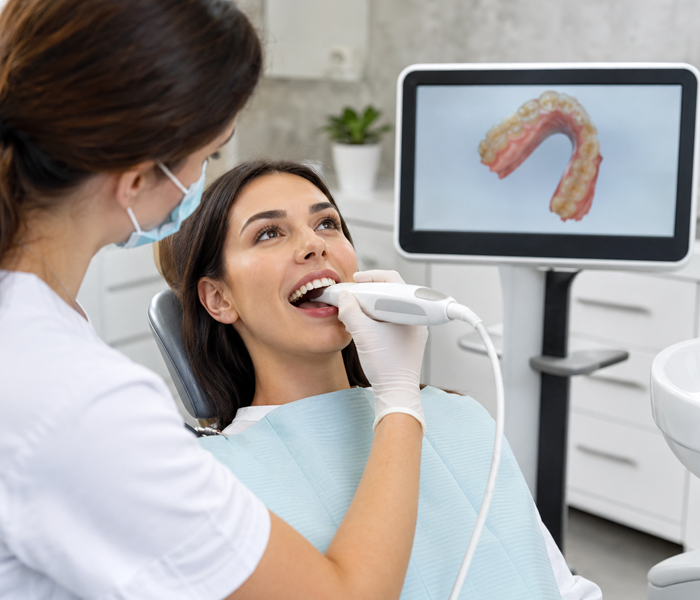
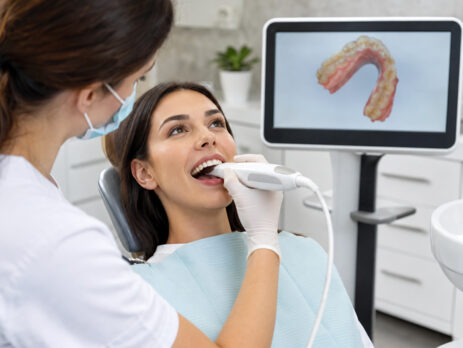
A digital dental impression is the three-dimensional recording of the positions of teeth, gums, and, when necessary, implants inside the mouth using a special intraoral scanner.
The small camera-like tip of the scanner is moved inside the mouth in a specific sequence. The system collects numerous images or optical data within seconds and combines them in a computer environment to create a three-dimensional oral model.
On this model, the shape, position, interrelationships of the teeth, and anatomical structures within the mouth can be evaluated in detail.
Those who wish to obtain more detailed information about digital scanning can also review Melsadent’s Intraoral Scanner and Digital Dentistry content.
How Accurate is a Digital Dental Impression?
The accuracy of a digital dental impression cannot be expressed by a single number. This is because the result can vary depending on the scanner system used, the size of the scanned area, the patient’s oral structure, the type of restoration, and the scanning protocol applied.
With modern intraoral scanners, clinically very high accuracy can be achieved, especially for single tooth and short-span restorations. Scientific studies show that digital impressions are comparable to traditional impressions, and can even yield more advantageous results in some clinical scenarios, particularly concerning crowns and short fixed prostheses.
However, the evaluation may change as the scanned area increases. Scanning one or a few teeth is not technically the same procedure as scanning the entire upper or lower jaw. The three-dimensional model created by the scanner is produced by the software combining a large number of sequentially captured images. As the scanning distance increases, the probability of small deviations accumulating may rise.
Therefore, generalizations such as “digital impression is very accurate” or “conventional impression is always more accurate” are not scientifically sufficient. The correct question is: In which treatment, with which scanning system, and with which protocol is what level of accuracy achieved?
What Does “Accuracy” Mean in Digital Impressions?
In scientific studies, two fundamental concepts are generally used when evaluating the performance of digital scanners: trueness and precision.
Trueness refers to how close the obtained digital model is to the actual anatomical structure.
Precision indicates how close the scans obtained are to each other when the same mouth or model is scanned multiple times.
For example, if three models are very close to each other after scanning the same tooth three times, the scanner’s precision is high. If the created model is also very close to the actual tooth structure, the system’s trueness is also high.
In a good digital impression system, both trueness and precision are aimed to be high.
Is Digital Impression More Accurate Than Conventional Impression?
The answer to this question varies depending on the treatment.
In traditional impressions, an elastomeric impression material is placed in the mouth and allowed to set. This record is then sent to the laboratory, and often a physical model is obtained. During this process, various sources of error can arise, such as deformation of the impression material, movement of the tray, air bubbles, casting procedures, or dimensional changes in the model materials.
In digital impressions, many intermediate steps are eliminated. The obtained three-dimensional record can be directly transferred digitally to the laboratory or a CAD/CAM system.
This is one of the significant advantages of the digital workflow.
Especially for single crowns and short fixed restorations, current scientific evaluations show no significant differences in accuracy between digital and traditional methods. Some digital systems demonstrate quite high performance in certain clinical scenarios.
In contrast, the results are more variable for full-arch restorations or completely edentulous jaws. Therefore, the choice of method should be made according to the patient’s needs.
Can Errors Occur in Digital Dental Impressions?
Yes. No impression system theoretically operates with zero error. Digital impressions are no different.
However, one of the significant advantages of digital systems is that errors can often be detected during the process.
For instance, if a specific area is found to be missing during scanning, in most systems, only the missing area can be rescanned instead of retaking the entire impression.
In traditional impressions, if a problem like an air bubble, tear, or missing impression occurs, the impression often needs to be completely retaken.
Which Factors Affect the Accuracy of Digital Impressions?
The success of digital scanning is not solely dependent on the features of the device used. Clinical conditions and application technique are also extremely important.
Key factors include:
- Technology and software of the intraoral scanner used
- Size of the area to be scanned
- Scanning sequence and scanning strategy
- Experience of the clinician or practitioner
- Saliva and moisture inside the mouth
- Gum bleeding
- Visibility of the tooth’s preparation margins
- Number of implants and their distance from each other
- Characteristics of implant scan parts, called scanbodies
- Patient movement
- Reflective surfaces and certain restorative materials
- Mobility of soft tissues in the scanned area
Therefore, applying the correct clinical protocol is as important as using a high-quality scanner.
Does Saliva Affect the Result When Taking a Digital Impression?
Since intraoral scanners operate on optical principles, excessive saliva, bleeding, or high moisture can make imaging certain areas difficult.
Specifically, the gingival margins of a tooth to be crowned need to be clearly recorded. If there is gum bleeding or fluid accumulation, the scanner may not be able to clearly see the preparation margin.
Therefore, it is important that the working area is as clean and controlled as possible before scanning.
Is Digital Impression Used for Zirconia Crowns?
Yes. One of the most common applications of digital impressions is in zirconia crown and bridge restorations.
After the tooth is prepared, a three-dimensional record can be taken with an intraoral scanner. The created digital model is transferred to the CAD/CAM environment and can be used in the design of the restoration.
This workflow can facilitate data transfer between the laboratory and the clinic and eliminate some intermediate steps in traditional impression/model processes.
For detailed information about zirconia restorations, you can review our Zirconia Crowns page.
Is Digital Impression Accurate Enough for Crowns?
Single crowns and short fixed restorations are considered among the strongest application areas of intraoral scanning.
In the success of the restoration, not only the accuracy of the impression, but also the quality of tooth preparation, gum management, digital design, the material used, and laboratory production processes play a role.
Therefore, an approach like ‘if a digital impression was used, the restoration will definitely be perfect’ is not correct. A digital impression is a powerful tool, but all stages of the treatment must be applied correctly.
How Accurate is Digital Impression in Implant Treatment?
Digital implant impressions have significantly developed in recent years. A special scanning component is placed on the implant. This component is usually called a scanbody. The intraoral scanner detects the position of the scanbody and enables the transfer of the implant’s three-dimensional position to the digital environment.
In single implant and short implant-supported restorations, digital impressions can be used clinically with great success.
However, in full-arch implant restorations, the situation is more complex. The distance between implants, the length of the scanning area, and the scanner’s image stitching algorithm can affect accuracy.
In systematic reviews published in 2024, it was reported that for full arch implant impressions, digital methods showed higher accuracy than traditional methods in some studies, similar accuracy in others, and lower accuracy in yet other studies. This indicates that it is not accurate to state that a single method is superior for all cases.
In patients planning implant treatment, the impression method should be chosen by evaluating the number of implants, their distribution, the type of prosthesis, and the digital system to be used.
Can Digital Impressions Be Used in a Completely Edentulous Jaw?
Scanning completely edentulous jaws is one of the technically more challenging application areas for digital impressions.
One of the main reasons for this is the scarcity of distinct anatomical references that the scanner can track in edentulous mouths. Furthermore, recording movable tissues such as the cheek, vestibule, floor of the mouth, and soft palate is more difficult compared to stable tooth surfaces.
In a systematic review from 2024, it was reported that the accuracy of intraoral scans in completely edentulous jaws can be limited, especially in movable peripheral tissues.
For this reason, in completely edentulous patients for whom full dentures will be made, whether digital impressions can be used alone should be evaluated on a case-by-case basis.
Are Digital Impressions and 4D Digital Impressions the Same Thing?
Basic digital impressions create a three-dimensional record of the anatomical structures within the mouth. In more advanced digital workflows, in addition to static three-dimensional data, additional information such as jaw movements and functional relationships can also be included in the evaluation.
This approach can be particularly important in comprehensive smile design, functional evaluation, and advanced prosthetic planning.
For more information about the digital approach used at Melsadent, you can review our content on Revolution in Dentistry with 4D Digital Impression Technology.
What Are the Biggest Advantages of Digital Impression?
Evaluating the success of digital impression solely based on micron-level accuracy would be incomplete. The technology also offers significant operational advantages for both patients and clinicians.
- The use of impression material can be reduced or eliminated entirely.
- It can be more comfortable for patients with a gag reflex.
- The impression result can be viewed instantly on the screen.
- If there is a missing area, only the relevant region can be rescanned.
- The digital record can be easily transferred to the laboratory.
- The risk of deformation that might occur during the transportation of physical impressions is eliminated.
- Records can be stored digitally.
- Direct integration with CAD/CAM systems can be achieved.
- It may be possible for the patient to see their own teeth in 3D.
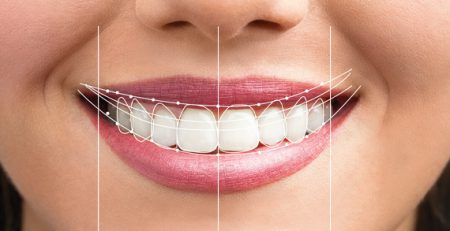
- Applications such as clear aligners and digital smile planning can be facilitated.
For general information about Melsadent’s digital applications in this field, you can visit our Digital Dentistry page.
Is Digital Impression advantageous for patients with a gag reflex?
In traditional dental impressions, the impression tray and material may need to be held in the mouth for several minutes. Patients, especially those with a strong gag or nausea reflex, may find this procedure challenging.
In intraoral scanning, since large impression trays and fluid impression materials are not used, many patients find the procedure more comfortable.
During scanning, the patient can take short breaks, and if necessary, the procedure can be continued in sections.
How Long Does a Digital Impression Take?
The scanning time varies depending on the treatment to be performed and the size of the scanned area. Scanning a single area does not take the same amount of time as scanning the entire jaw.
In modern systems, intraoral scans are generally quite fast. Furthermore, once the scan is complete, there may be no need for the preparation of a physical impression, model pouring, and some intermediate laboratory stages, as is the case with the traditional method.
Some scientific studies show that intraoral scanning can reduce the impression-taking time, especially in certain prosthetic applications.
Can the Digital Impression Result Be Seen Immediately?
Yes. One of the important features of digital systems is that the acquired impression can be immediately viewed in 3D on the screen.
The clinician can magnify the scan, examine it from different angles, and identify missing areas.
This feature can provide a significant quality control advantage compared to the traditional impression method.
Is Digital Impression Used in Clear Aligner Treatment?
Yes. Clear aligner treatments are one of the most common orthodontic applications where digital impressions are used.
With intraoral scanning, the initial position of the teeth can be recorded in 3D. Using this data, the planned movements of the teeth can be modeled in a computer environment, and the production of patient-specific aligners can be carried out.
In clear aligner treatment, the accuracy of the impression alone is not sufficient. Orthodontic diagnosis, proper planning of tooth movements, and the patient’s use of the aligners for the recommended duration also directly affect the outcome.
You can review our content on this topic: Digital Approaches in Orthodontics: Clear Aligners and Planning and Does Clear Aligner Treatment Really Work?
Can Digital Impressions Be Used with Artificial Intelligence?
Digital dentistry is not limited to intraoral scanners. Today, digital images, three-dimensional models, radiological data, and various clinical records can be evaluated together in software systems.
AI-powered software can be used in some workflows for tasks such as image analysis, identification of anatomical structures, segmentation on digital models, providing helpful suggestions for restoration design, and orthodontic planning.
However, artificial intelligence systems do not replace the dentist’s clinical evaluation. The interpretation of digital data and the decision-making for treatment should be carried out in conjunction with the patient’s examination, radiological evaluation, and a comprehensive clinical analysis performed by the dentist.
Does a Digital Impression Mean a Better-Fitting Veneer?
The precision of digital impressions offers a significant advantage for achieving a well-fitting restoration; however, it is not the only factor determining the success of the restoration.
The main stages affecting the fit of a veneer are:
- Proper preparation of the tooth
- Gum and moisture control
- Accurate impression taking
- Correct CAD design
- The precision of the production device
- Properties of the material used
- Laboratory procedures
- Checking the restoration in the mouth
- Adjusting occlusion and contact points
Therefore, a successful restoration requires the correct management of the entire digital workflow.
Has Digital Impression Completely Eliminated Traditional Impression?
No. Although digital scanning has a very wide range of applications, traditional impression methods have not been completely eliminated.
Especially in some full denture cases where movable tissues need to be functionally recorded, or in certain advanced prosthetic situations, traditional or hybrid techniques may need to be used.
The aim in modern dentistry is not to adopt an approach of ‘always digital in every case’ or ‘always traditional in every case,’ but to choose the most reliable method according to the patient’s needs.
Is the Scanner Brand Important for Digital Impressions?
Yes. Scientific studies show that there can be differences in accuracy values among different intraoral scanners.
The optical systems, image capture technologies, software, and image stitching algorithms of scanners can differ from each other.
Furthermore, software updates of the device can also affect performance.
Therefore, it should not be assumed that all digital systems have the same accuracy based solely on the information that ‘digital impressions are being used’.
Why Might the Risk of Error Increase in Full Arch Scanning?
An intraoral scanner does not record the entire jaw with a single photograph. Numerous small images or optical data are captured sequentially and stitched together by the software.
In a short region, this merging process is more limited. When scanning across the entire entire jaw, a much longer sequence of data needs to be assembled.
Therefore, small geometric deviations can accumulate in long scans, becoming more pronounced in the end regions.
Although current scanner technologies and software have significantly reduced this problem, the importance of scanning strategy continues, especially in full-arch implant cases.
What Do Scientific Studies Say About Digital Dental Impressions?
In recent years, numerous systematic reviews evaluating the accuracy of intraoral scanners have been published.
A study published in 2025, which collectively evaluated various systematic reviews, reports that intraoral scanners generally yield clinically successful results, can reduce procedure time, and enhance patient comfort. However, some limitations persist, particularly in partially and completely edentulous jaws.
In comprehensive scientific evaluations regarding fixed prosthetic restorations, it is stated that in most cases, there is no significant difference between digital and conventional impressions in terms of accuracy and restoration fit for crowns and short fixed restorations.
The results obtained in full-arch implant cases are more heterogeneous. Systematic reviews from 2024 show that in some studies, digital methods provide higher accuracy, in others traditional techniques are better, and in still others, both methods yield similar results.
Another systematic review conducted on completely edentulous jaws stated that intraoral scanning might have limitations, particularly in the vestibular and peripheral regions where movable soft tissues are present.
Academic Sources on the Subject
Readers who wish to examine the accuracy of digital impression technologies in more detail can access the peer-reviewed academic studies below:
- Wang Y. et al. The Accuracy of Intraoral Scan in Obtaining Digital Impressions of Edentulous Arches: A Systematic Review. Journal of Evidence-Based Dental Practice, 2024.
- Joensahakij N. et al. The Accuracy of Conventional versus Digital Impression Techniques in Full-Arch Implant-Supported Prostheses: A Systematic Review, 2024.
- Cai Z-Z. et al. Does Intra-Oral Scan Improve the Impression Accuracy of Full-Arch Implant-Supported Prostheses? A Systematic Review and Meta-Analysis, 2024.
- Evaluation of the Accuracy of Intraoral Scanners for Complete-Arch Scanning: A Systematic Review and Network Meta-Analysis. Journal of Dentistry, 2023.
- Accuracy and Clinical Performance of Intraoral Scanners Compared to Conventional and Extraoral Impressions: An Umbrella Review.
Digital Dentistry at Melsadent
At Melsadent Oral and Dental Health Polyclinic, digital dentistry technologies are used to support intraoral scanning, digital planning, and various restorative or orthodontic workflows.
The determination of which treatment digital impressions will be used for is made by evaluating the patient’s oral structure and the characteristics of the planned procedure.
Since each patient’s anatomy and treatment needs are different, the most accurate decision regarding the impression method can be made after clinical examination and treatment planning.
For detailed information about Melsadent’s digital applications, you can review our Digital Dentistry page.
Frequently Asked Questions
Is digital dental impression truly accurate?
Yes. Current intraoral scanners can provide high accuracy, especially for single tooth, crown, short bridge, clear aligner, and many implant restorations. However, accuracy may vary depending on the scanner model, case type, size of the scanned area, and scanning technique.
Is digital impression or traditional impression more accurate?
No single method is superior in all cases. For single crowns and short fixed restorations, digital impressions can show comparable accuracy to traditional impressions. For full arch, completely edentulous jaw, or complex implant cases, the method selection should be evaluated separately.
Can there be errors in digital dental impressions?
Yes. Errors can occur during digital scanning due to reasons such as incomplete registration, scanning strategy errors, saliva, bleeding, or patient movement. However, many digital systems allow for immediate visualization of missing areas and re-scanning only the relevant region.
Is digital impression reliable for crowns?
Yes. Crowns and short fixed restorations are among the strongest application areas for digital impressions. The ultimate success of the restoration depends not only on the impression but also on the tooth preparation, design, and production stages.
Can digital impressions be taken for zirconium teeth?
Yes. Intraoral digital scans are widely used in the CAD/CAM-based production of zirconium crowns and bridges.
Is digital impression accurate for implants?
Digital impressions can yield highly successful results in single implant and short-span implant restorations. However, in multiple and full-arch implant restorations, the position of the implants, the distance between them, the scanbody used, the scanner system, and the scanning method can affect accuracy.
Can digital impressions be taken for full-arch implants?
Yes, it can; however, full-arch implant scans require higher technical precision. In some cases, intraoral scanning, photogrammetry, conventional impressions, or a combination of these techniques may be preferred.
Does digital impression cause nausea?
Since traditional impression trays and materials are not used, many patients with a strong gag reflex tolerate digital scanning more comfortably.
Does digital dental impression hurt?
Generally, no. The scanner tip is moved over the teeth and intraoral tissues without contact or with gentle guidance. No additional procedures are performed on the teeth to take an impression.
How long does a digital impression take?
The duration varies depending on the size of the scanned area and the treatment. Thanks to modern intraoral scanners, many scans can be completed within a few minutes.
Can a digital impression be retaken?
Yes. Furthermore, one of the significant advantages of these systems is the ability to rescan an incomplete or erroneous area without deleting the entire impression.
Can digital impressions be stored?
Digital records can be stored electronically in suitable systems. This allows for the comparison of a patient’s intraoral records from different times in certain situations.
Is 4D digital impression different from classic digital impression?
Three-dimensional digital impressions primarily record the static geometry of teeth and oral structures. More advanced 4D approaches may refer to digital workflows where time and motion data are also included in the assessment. The characteristics of the system used and the types of data obtained may vary depending on the technology.
Is digital impression used in clear aligner treatment?
Yes. In clear aligner treatment, the three-dimensional record of the initial positions of the teeth is one of the fundamental parts of the digital treatment plan.
Can digital impressions be analyzed with artificial intelligence?
Some modern dental software can utilize AI-powered image processing and analysis tools. However, these systems do not replace the dentist’s examination and clinical decision; they should be considered as auxiliary technologies.
How Accurate Are Digital Dental Impressions?
Digital dental impression is a highly accurate, fast, and clinically valuable technology in modern dentistry. It is successfully used, especially for single tooth crowns, short bridges, zirconia restorations, clear aligner treatments, and many implant-supported restorations.
However, evaluating the accuracy of digital impressions solely with the question “digital or conventional?” is not sufficient. The intraoral scanner used, the scanning strategy, the length of the scanned area, the distribution of teeth and implants, moisture control within the mouth, and the operator’s experience can all influence the outcome.
While scientific research supports the strong results of digital impressions, particularly for short-span fixed restorations, it indicates that a case-by-case evaluation is necessary for more complex situations such as full-arch implants and completely edentulous jaws.
Therefore, the most accurate approach is to ensure the combination of right technology + right case selection + right clinical application rather than seeing technology as a standalone guarantee of success.
To find out if digital impression, zirconium veneer, implant-supported restoration, clear aligners, or digital smile design are suitable for you, a personalized assessment can be made with a dental examination at Melsadent Oral and Dental Health Polyclinic.