




How Many Shades Does Teeth Whitening Whiten Teeth?
How Many Shades Does Teeth Whitening Lighten Teeth?
One of the most frequently asked questions by individuals considering teeth whitening is, “How many shades does teeth whitening lighten teeth?” The short answer is: Teeth whitening is not expected to lighten teeth by the same number of shades for everyone. A noticeable change of several color levels may occur after professional whitening; however, the outcome can vary significantly depending on the person’s initial tooth color, the cause of discoloration, tooth structure, the whitening method used, application duration, and individual response.
Therefore, statements such as “everyone’s teeth will definitely lighten by 6 shades” or “8 shades of whitening are guaranteed in a single session” are not scientifically accurate. In dentistry, color change can be evaluated not only by the concept of “shade” used in everyday language, but also through objective color measurements made with color scales, Shade Guide Unit (SGU) values, and devices like spectrophotometers.
According to the protocol applied in clinical studies, different results have been reported, ranging from approximately a few SGUs to higher color changes. For example, while some controlled studies showed changes of approximately 3-5 shade guide units, higher changes have also been reported in different whitening protocols. Therefore, expressions like “2 shades, 4 shades, 6 shades or 8 shades whitening” encountered online should not be considered a personalized result guarantee.
As stated on Melsadent Oral and Dental Health Polyclinic’s Teeth Whitening (Bleaching) page, the result of whitening may vary depending on the structure of the teeth, the type of discoloration, the bleaching agent used, the application duration, and the frequency of application.
What Does “Shade Lightening” Mean in Teeth Whitening?
In daily use, when asked “how many shades will my teeth whiten?”, it usually refers to how much lighter the tooth color will become compared to its initial state. However, measuring tooth color cannot be reduced to a simple light-dark scale, as it is with wall paint or hair color.
There are different parameters in tooth color. The lightness of the tooth, the yellow-blue balance, and the red-green color components together form the overall appearance. Therefore, color scales or digital color measurement devices can be used in professional evaluations.
One of the commonly used color scales in dentistry is the VITA Classical system. The colors in this scale can be evaluated by ranking them according to their lightness value in whitening research as Shade Guide Unit, or SGU. The difference between the pre-treatment and post-treatment values is expressed as ΔSGU.
Here is an important detail: Each step on the color scale is not at an exactly equal mathematical distance from each other. Therefore, it would not be correct to think that “a 4 SGU change means exactly 4 standard shades of whitening”. Nevertheless, SGU is one of the practical methods frequently used in clinical research to compare the whitening effect.
How Many Shades Do Teeth Whiten in Scientific Studies?
The main reason for encountering quite different results in clinical research related to teeth whitening is that the products, concentrations, application durations, initial shades, and measurement methods used are not the same.
In a randomized controlled study evaluating at-home hydrogen peroxide application, whitening levels of approximately 3.3-4.8 SGU depending on the color scale used, and approximately 3.9-6.9 SGU on a different bleaching scale, were reported. The details of the study can be reviewed in Operative Dentistry journal.
In other clinical studies, higher SGU changes have been observed with different protocols. These results indicate that there is no single “ideal number of shades”. While it is possible for a person with a dark initial shade to advance more steps on the color scale, the change may be more limited for someone who already has quite light teeth.
A recent systematic review and meta-analysis published in 2025 compared home-use and in-office whitening methods and did not show a significant superiority in whitening efficacy measured in color scale units. The study can be accessed via PubMed.
Therefore, instead of just giving the patient the answer to the question “how many shades will it lighten?”, it is a more accurate approach to evaluate the initial color, target color, the reason for the discoloration, and the applicable method together.
How Does the Initial Tooth Color Affect the Result?
One of the most important factors determining the tooth whitening result is the tooth color before the procedure. In dark-colored teeth, the difference between before and after treatment is usually more easily noticeable. In contrast, for teeth that are already naturally light, the range of lighter shades they can achieve may be limited.
For example, if a tooth that initially falls into the distinctly yellow-dark color group and a tooth that is quite light in color are subjected to the same whitening protocol, they may not change by the same number of shade steps.
Therefore, the definitive answer to the question “my friend’s teeth lightened by 6 shades, will mine also lighten by 6 shades?” is no. Even if the same product, the same clinic, and even the same application duration are used, the biological response can vary from person to person.
Do Yellow or Gray Teeth Whiten More Easily?
The shade and origin of the discoloration are very important for the response to whitening. It is generally known that yellow-toned discolorations can give a more predictable response to whitening, while gray, blue-gray, or some developmental discolorations can be more resistant.
Melsadent’s professional tooth whitening information also states that yellow discolorations can respond faster than gray discolorations.
However, it is not sufficient to evaluate only the externally visible color of the tooth. It is necessary to determine whether the discoloration originates from the tooth surface, the enamel-dentin structure, or another problem within a single tooth.
If a single tooth appears significantly darker or grayer than the others, general whitening should not be started directly. Reasons such as past trauma, loss of pulp vitality, or previous root canal treatment should be investigated.
Do Tea, Coffee, and Smoking Stains Affect Whitening Results?
Tea, coffee, tobacco products, and staining foods can cause extrinsic discolorations on the outer surface of teeth over time. When there is heavy plaque, tartar, and extrinsic stains on the tooth surface, the yellowing a person perceives may not be solely due to the tooth’s natural color.
For this reason, even after professional cleaning, teeth may appear significantly cleaner and brighter for some individuals. However, tartar cleaning and bleaching are not the same procedure. Whitening after tartar cleaning occurs by removing surface accumulations, whereas professional whitening aims to chemically lighten tooth color.
Individuals who regularly consume coffee can also review Melsadent’s How Coffee Drinkers Can Keep Their Teeth White guide.
Does the Tooth Whitening Method Change How Many Shades Lighter Your Teeth Will Get?
In professional tooth whitening, the main methods that can be used are in-office whitening, at-home whitening under the dentist’s supervision, and combined applications where these two methods are planned together when necessary.
In-office whitening is performed by a dentist in a clinical setting. It aims for a significant color change in a shorter time with relatively high-concentration whitening agents.
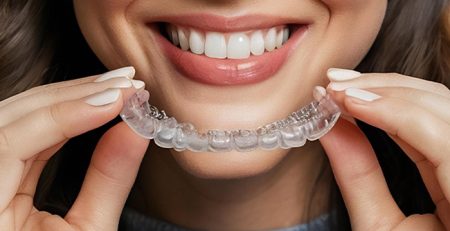
For professional at-home whitening, custom-made trays and a whitening gel determined by the dentist are used. It may involve applying lower concentrations with a longer contact time.
Combined whitening in some patients may be planned as a continuation with dentist-controlled at-home application after clinical application.
A systematic review and meta-analysis published in 2025 found no significant difference in whitening efficacy, measured by SGU, between at-home and in-office applications. This finding demonstrates that the simplistic approach of “higher concentration always yields a much whiter result” is not accurate.
Does High-Concentration Gel Whiten More?
The concentration of the whitening gel can play a role in the outcome; however, it is not possible to predict the final whiteness by merely looking at the percentage. Along with concentration, contact time, number of applications, gel formulation, and the individual’s tooth tissue response are also important.
A comprehensive umbrella review published in 2026, which evaluated 24 systematic reviews/meta-analyses, reported that low-to-moderate concentration in-office hydrogen peroxide protocols, typically in the 25-35% range, could provide comparable whitening results to higher concentrations in some cases and might be advantageous in terms of sensitivity. The summary of the research can be accessed via PubMed.
Therefore, the aim is not to use the highest possible concentration, but to determine a safe and effective protocol suitable for the individual’s needs.
Do Laser or LED Lights Whiten Teeth More?
The question “Does laser whitening lighten more shades?” is one of the questions frequently encountered, especially in internet searches. Although light sources can be used in some professional systems, it is not correct to say that light activation will necessarily provide more whiteness.
In systematic reviews examining light-assisted and non-light-assisted in-office whitening protocols, no strong and consistent superiority has been demonstrated indicating that the use of light significantly increases color change.
The systematic review and meta-analysis on this topic can be accessed via PubMed. The American Dental Association’s scientific information on whitening can also be reviewed on the ADA Whitening page.
Therefore, instead of evaluating the success of the treatment solely by the name of the light, laser, or device used, one should look at the entire whitening protocol.
Does Age Affect Teeth Whitening Results?
The appearance of teeth can change throughout life. As one ages, wear and optical changes can occur in the enamel layer, and the underlying yellower dentin layer can become more prominent. At the same time, the effects of coffee, tea, and other coloring agents consumed over the years can accumulate.
Therefore, the darkening of teeth in middle or older age may not only be due to surface stains. The increased visibility of dentin color can also affect the overall tooth color.
Whitening can still provide a significant improvement; however, due to the initial color, enamel thickness, and depth of discoloration, the result obtained may not be exactly the same as for a younger individual.
Why Are Enamel Thickness and Dentin Color Important?
Natural tooth color is not solely determined by enamel. Since enamel exhibits translucent properties, the color of the underlying dentin also plays an important role in the tooth color visible from the outside.
In individuals where dentin is naturally yellower, or in cases where the enamel layer is more transparent, the tooth may appear in a warmer and yellower tone. Therefore, even if two people’s teeth have similar external staining, they are not guaranteed to reach the same color after whitening.
These biological differences are one of the fundamental factors explaining why the whitening process cannot be considered like a standard paint application.
Do Tetracycline and Fluorosis Stains Whiten?
Some stains are not caused by daily consumption habits but by changes occurring during tooth development. Tetracycline-related stains or some cases of fluorosis can be given as examples.
While improvement can be seen with professional whitening for these types of stains, treatment may take longer, and the results may not be as fast or uniform as with superficial yellowing.
Especially if there are distinct band-like discolorations, brown-gray areas, or differences in enamel structure, it may be necessary to evaluate the entire range of aesthetic treatment options instead of just focusing on how many shades lighter the teeth will become.
Do Fillings, Zirconium, and Porcelain Veneers Whiten?
One of the most important considerations in teeth whitening is existing restorations. Peroxide-based bleaching systems can lighten the color of natural tooth tissue, but composite fillings, porcelain veneers, laminate veneers, or zirconium restorations do not whiten in the same way as natural teeth.
For example, when the neighboring natural teeth of a person with zirconia veneers on their front teeth are whitened, the natural teeth lighten while the existing color of the zirconia largely remains the same. As a result, a color difference may emerge between the restoration, which previously appeared harmonious, and the natural teeth.
For detailed information on the subject, the content Does Zirconia Tooth Turn Yellow? can be reviewed.
Therefore, it is important to perform aesthetic planning before whitening for individuals with numerous anterior restorations. If necessary, the color harmony of natural teeth and existing restorations can be evaluated together within the scope of smile design.
Should Dental Calculus Cleaning Be Done Before Whitening?
If there is heavy plaque, calculus, or extrinsic staining on the tooth surface, professional cleaning may be required first. The reason for this is not that the whitening gel “whitens the calculus,” but rather to allow for a more accurate assessment of the actual tooth surface.
After professional cleaning, when the initial color is re-evaluated, it may be observed that some patients have a lighter natural tooth color than they initially thought.
Furthermore, in the presence of active gum disease, decay, cracks, or other dental issues, it may be necessary to address oral health first rather than proceeding directly to aesthetic whitening.
Should the Result of Tooth Whitening Be Assessed Immediately?
The color observed immediately after the whitening procedure may not always be exactly the same as the long-term result. Temporary dehydration of tooth tissue during the procedure can contribute to teeth appearing lighter initially.
As teeth rehydrate, the color may stabilize somewhat. Therefore, especially if aesthetic restorations are planned, it may be necessary to wait for the period recommended by the dentist to evaluate the final color.
This does not mean that “whitening has completely reversed”. Small color changes that occur in the early period can be part of the biological and optical stabilization process.
Does Sensitivity After Tooth Whitening Mean Over-Whitening?
No. Experiencing more sensitivity during or after the procedure does not indicate that the teeth have whitened more.
Tooth sensitivity is one of the known temporary side effects of professional whitening. Peroxide concentration, application time, and the individual’s initial sensitivity level can affect the degree of discomfort.
The American Dental Association considers temporary tooth sensitivity and gum irritation among the most common undesirable effects in vital tooth whitening. Scientific information can be reviewed through the American Dental Association.
Individuals experiencing tooth sensitivity can also obtain detailed information from Melsadent’s How to Relieve Tooth Sensitivity? content.
Is It Possible to Predict the Whitening Result in Advance?
A realistic prediction can be made with a dental examination, but it is not appropriate to guarantee “exactly B1” or “definitely 7 shades lighter” before starting treatment.
During the evaluation, the following factors can be examined:
- Initial natural tooth color,
- Whether the discoloration is yellow, brown, gray, or of another character,
- Whether the discoloration is superficial or internal,
- Enamel and dentin characteristics,
- The amount of calculus and tooth stains,
- Fillings and crowns located in the anterior region,
- Tooth sensitivity,
- Gum health,
- Whether teeth whitening has been done before,
- The patient’s aesthetic expectations.
Recording the initial shade with a photograph or a shade guide can help to more objectively evaluate the actual change at the end of the treatment.
Can Everyone Achieve a B1 Tooth Shade?
B1 is one of the very light shades on classic shade guides and is often encountered on social media as the goal for “ideal white teeth”. However, it is not always possible or necessary for everyone’s natural tooth structure to reach a B1 level with bleaching.
Some individuals may achieve a significant amount of whitening from a darker initial shade but may not reach the B1 level. Nevertheless, a very noticeable and natural-looking aesthetic change can occur compared to before the treatment.
The aim of successful whitening is not to bring every patient to the same shade code; but to achieve a brighter appearance suitable for the individual’s natural tooth structure, face, skin tone, and smile.
Are Very White Teeth Always More Aesthetic?
No. Aesthetic evaluation is not solely dependent on how white the teeth are. The form of the teeth, their harmony with the face, the gum line, lip support, the proportion of the teeth to each other, and smile symmetry also determine the overall appearance.
Therefore, instead of aiming for the lightest possible color, a natural and balanced result may be preferred. Especially in patients with comprehensive aesthetic expectations, it may be more appropriate to evaluate color, form, and smile line together with an aesthetic dentistry approach.
How Long Does Teeth Whitening Last?
The color achieved with whitening does not remain unchanged for a lifetime. Over time, teeth may darken again due to aging, dietary habits, and external staining.
Durability can be affected by the following factors in particular:
- Frequency of coffee and tea consumption,
- Cigarettes and other tobacco products,
- Coloring foods and beverages,
- Oral hygiene,
- Need for professional cleaning,
- Initial tooth color,
- Whitening method used,
- Individual tooth structure.
For more detailed information on durability, Melsadent’s How Long Does Teeth Whitening Last? guide can be reviewed.
What Should Be Done to Maintain the Teeth Whitening Result?
To maintain the result obtained after whitening for as long as possible, attention should be paid not only to the first few days but also to long-term oral care.
- Teeth should be brushed regularly and with the correct technique.
- Cleaning between teeth should not be neglected.
- Drinking water after coffee and tea can be beneficial.
- Avoiding tobacco products is important for both tooth color and general oral health.
- Regular dental check-ups should be done for tartar and surface stains.
- Kontrolsüz biçimde arka arkaya beyazlatıcı ürün kullanılmamalıdır.
- Hekimin önerdiği bakım veya destek protokolüne uyulmalıdır.
İlk Beyazlatmada İstenen Sonuç Alınmazsa Ne Olur?
İlk uygulama sonrasında hedeflenen renk elde edilmediyse daha fazla ürün uygulamak her zaman doğru çözüm değildir. Öncelikle rengin neden yeterince değişmediği değerlendirilmelidir.
Dirençli renklenmelerde ek uygulamalar veya hekim kontrollü farklı protokoller düşünülebilir. Ancak kişinin dişleri biyolojik olarak belirli bir seviyeye ulaştığında daha fazla peroksit uygulamak sınırsız beyazlama sağlamaz.
Eğer sorun yalnızca renk değil; aynı zamanda dişlerin şekli, yüzey yapısı, kırıklar, aralıklar veya kalıcı gelişimsel renklenmeler ise farklı estetik seçenekler değerlendirilebilir. Uygun vakalarda laminate veneer gibi restoratif yöntemler gündeme gelebilir.
Burada amaç hastayı mutlaka kaplama tedavisine yönlendirmek değil, problemin kaynağına uygun ve mümkün olduğunca koruyucu çözümü belirlemektir.
Evde Karbonat, Limon veya Benzeri Yöntemlerle Daha Fazla Ton Açmak Güvenli mi?
İnternette karbonat, limon, sirke, aktif kömür ve çeşitli ev karışımlarıyla dişlerin hızlı şekilde beyazlatılabileceğine yönelik çok sayıda içerik bulunmaktadır. Ancak daha fazla aşındırma veya daha yüksek asit maruziyeti daha iyi beyazlatma anlamına gelmez.
Kontrolsüz aşındırıcı kullanım diş yüzeyinde aşınmaya; asitli maddelerin tekrarlayan kullanımı ise mine yapısının zarar görmesine katkıda bulunabilir. Mine inceldikçe alttaki daha sarı dentin tabakası daha görünür hale gelebileceğinden uzun vadede amaçlananın tam tersine daha sarı bir görünüm bile oluşabilir.
Regarding how whitening toothpastes work and what to consider in terms of abrasiveness, the content Do Whitening Toothpastes Abrade Tooth Enamel? can be reviewed.
Is Professional Teeth Whitening Safe?
Professional whitening, applied with appropriate patient selection, the right product, correct concentration, and under dental supervision, is one of the commonly used methods in modern aesthetic dentistry.
However, before the procedure, it should be assessed whether there are cavities, cracked teeth, gum problems, extreme sensitivity, or inappropriate restorations. Although whitening is a cosmetic application, a healthy tooth and gum foundation is always a priority.
A comprehensive scientific review from 2026 indicates significant differences in whitening efficacy and sensitivity among different in-office protocols and that the protocol should be optimized for each individual. The study can be accessed via National Library of Medicine – PubMed.
How is the Teeth Whitening Result Planned at Melsadent?
It is not correct to evaluate a successful teeth whitening result solely by “how many shades lighter” it is. At Melsadent Oral and Dental Health Polyclinic, when making an assessment, the individual’s current tooth color, the source of discoloration, tooth and gum health, existing fillings and crowns, sensitivity status, and aesthetic expectations can be considered together.
First, it is evaluated whether oral and dental health is suitable for whitening. If necessary, superficial stains and calculus are managed. Then, a professional teeth whitening treatment can be planned by evaluating the current color and the appearance the patient wishes to achieve.
The aim is not to artificially bring everyone to the same level of whiteness; but to achieve a cleaner, brighter, and face-harmonious smile by preserving the person’s natural tooth structure as much as possible.
What Should Be a Realistic Expectation in Teeth Whitening?
The most important point to know before teeth whitening is this: The amount of whitening is individual-specific. The observation of different results in clinical studies, ranging from a few color scale units to higher changes, is a clear indication of this.
The change can be quite significant in individuals with a dark initial color, especially those with yellowish discolorations, and whose natural tooth tissue responds well to whitening. Conversely, in cases of grey discolorations, developmental stains, a very light initial color, or mouths with numerous restorations, the result may be different.
Therefore, the most accurate question should not just be “How many shades will my teeth lighten?” but “How much safe and natural color change can be achieved in my teeth?”
Frequently Asked Questions
On average, how many shades does teeth whitening lighten?
There is no fixed number applicable to everyone. Different results have been reported in clinical studies, ranging from a few SGU (Shade Guide Units) to higher color changes, depending on the method and color scale used. Therefore, numbers like 2, 4, 6, or 8 shades cannot be guaranteed without a personalized examination.
Can teeth whiten 6-8 shades in a single session?
In some individuals, a quite significant color change can be observed depending on the initial shade and the system used. However, there is no standard outcome such as “every patient’s teeth whiten by 6-8 shades in a single session”.
Is an 8-shade lightening possible in teeth whitening?
High SGU changes have been reported in color scales used in some clinical studies. However, the term “shade” used in everyday language is not exactly the same concept as color scale units. Therefore, an 8-shade lightening should not be presented as a treatment guarantee.
Is teeth whitening noticeable after the first session?
In professional in-office whitening, color change is noticeable in most cases after the procedure. However, the color observed initially may appear slightly lighter than the final stable color due to temporary dehydration of the teeth.
How much whitening can be done at most?
The lightness teeth can achieve is limited by an individual’s natural enamel and dentin structure. More gel or longer application does not provide unlimited whitening. Safe application limits must be adhered to.
Do yellow teeth whiten more easily?
Generally, yellow-toned discolorations may respond to whitening more predictably than gray-toned discolorations. However, the outcome varies depending on the cause of the discoloration and the tooth structure.
Can gray teeth be whitened?
Yes, improvement can be achieved in some gray discolorations, but the treatment may be more difficult or take longer compared to yellow discolorations. Especially if a single tooth is gray, the underlying cause should be investigated first.
Does in-office whitening or at-home whitening lighten teeth more?
Both methods can be effective. Current systematic research has not shown one method to be superior to the other in all cases, when evaluated by color scale units. The choice should be made according to the individual’s needs and sensitivity.
Does laser tooth whitening whiten more?
There is no strong scientific evidence to suggest that light or laser activation provides additional color lightening in all cases. In terms of whitening results, factors such as the gel, concentration, contact time, and the individual’s tooth structure are more fundamental.
Does tooth whitening whiten fillings?
No. Composite fillings do not whiten like natural teeth. When the color of natural teeth is lightened, a color difference may occur, especially with old fillings in the anterior region, and they may need to be re-evaluated aesthetically.
Can zirconium teeth be whitened?
No. The classic bleaching process does not lighten the color of an existing zirconium restoration in the same way it lightens natural teeth. The current color of the zircons should be taken into account when planning whitening.
Do teeth turn yellow again after whitening?
Some color regression may occur over time. Coffee, tea, tobacco products, oral hygiene, and the individual’s natural tooth structure affect this process. Regular maintenance can help preserve the whitening result for a longer period.
How long does it take for the tooth whitening result to stabilize?
The appearance immediately after the procedure may be affected by temporary dehydration. The color stabilizes as the teeth rehydrate. For the final color evaluation, the control time recommended by the dentist should be taken as a basis.
Can everyone achieve B1 shade?
No. B1 is a very light shade level, and not everyone’s natural tooth structure may reach this shade with bleaching. It is not absolutely necessary to achieve B1 for a successful result; a significant and natural color improvement compared to the starting shade can also be considered aesthetically successful.
Does sensitivity after whitening mean it whitened more?
No. Such a direct relationship cannot be established between the amount of sensitivity and the amount of whitening. Sensitivity is usually a temporary side effect and depends on the protocol used and the individual’s sensitivity.
Does whitening toothpaste whiten teeth as much as professional whitening?
Generally no. A significant portion of whitening toothpastes help remove superficial extrinsic stains. Professional bleaching, on the other hand, acts chemically on the color-forming molecules in the tooth structure, aiming to lighten the natural tooth color.
Does dental scaling whiten teeth?
Dental scaling can make teeth appear cleaner and brighter by removing plaque, tartar, and some surface stains. However, it is not a procedure like professional bleaching that aims to chemically lighten the natural tooth color by several shades.
The Most Important Point in Tooth Whitening: Not Shade, But Proper Planning
Regarding how many shades tooth whitening will lighten, it is possible to encounter many exact figures on the internet. However, scientific studies show that the actual outcome depends on too many factors to be expressed by a single number. The initial shade, the type of discoloration, enamel and dentin characteristics, the whitening protocol used, application duration, existing fillings and restorations, age, sensitivity, and the person’s lifestyle collectively determine the final result.
Therefore, the goal in professional teeth whitening is not to achieve the highest possible ‘number of shades’; but to obtain a noticeable and sustainable color change that is compatible with the person’s natural appearance, while preserving tooth and gum health.
To find out how your current tooth color might respond to whitening, a personalized professional teeth whitening plan can be created after a dentist’s evaluation at Melsadent Oral and Dental Health Polyclinic.