How Can Frequent Coffee Drinkers Keep Their Teeth White?
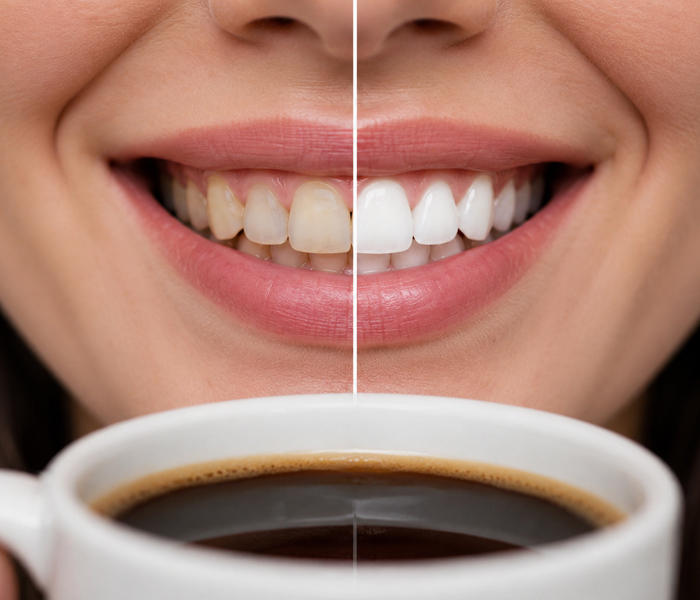
Coffee is one of the most common habits in daily life. Although coffee consumed to start the day in the morning, during work, or during a break with friends is an enjoyable routine, regular consumption can contribute to yellow, brown, or dull discolorations becoming more prominent on the tooth surface over time. Therefore, one of the most frequently asked questions by people who consume coffee every day is “How can frequent coffee drinkers keep their teeth white?”
The short answer is: It is possible to reduce external discolorations that may occur on teeth without completely giving up coffee. However, using only whitening toothpaste is not enough for this. How and how often coffee is consumed, oral hygiene, the amount of plaque on the tooth surface, the toothpaste used, professional dental cleaning, and professional teeth whitening procedures applied when necessary, should be evaluated together.
Moreover, not every coffee may cause the same degree of staining. The type of coffee, its preparation method, temperature, roast level, and some pigments it contains can affect the discoloration that occurs on the tooth surface. Therefore, for frequent coffee drinkers, the goal is not only to remove existing stains but also to reduce the rate at which new stains form.
Does Coffee Really Stain Teeth Yellow?
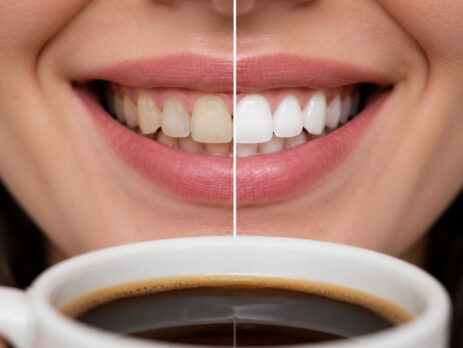
Yes. Regular coffee consumption can contribute to the formation of extrinsic stains on teeth. The pigments and various polyphenolic compounds found in coffee can interact with the thin organic layer on the tooth surface called pellicle. Over time, these stains can accumulate, causing teeth to appear yellower, brown, or dull.
However, not everyone who drinks coffee experiences tooth discoloration at the same rate. This is because tooth color and proneness to staining vary from person to person.
Factors that can affect the degree of coffee-related staining include:
- Amount of coffee consumed per day,
- Duration of coffee’s contact with teeth,
- Habit of sipping coffee frequently throughout the day,
- Coffee preparation method and type,
- Roast level,
- Adequacy of oral hygiene,
- Amount of plaque and tartar on the tooth surface,
- Cigarette and tobacco use,
- Consumption of other coloring products such as tea and red wine,
- Surface properties of tooth enamel,
- Dry mouth and amount of saliva
In an experimental study published in 2024, examining the effect of different coffee characteristics on tooth staining; it was shown that characteristics such as coffee temperature, bean type, and chlorogenic acid content can affect color change. The study reported that hot coffee could cause more color change than cold coffee under experimental conditions. You can access the details of the study via PubMed.
Why Does Coffee Stain Teeth?
Although teeth appear completely smooth from the outside, the enamel surface has a complex structure at a microscopic level. Additionally, the tooth surface is covered by a thin pellicle layer formed from salivary proteins in the mouth. Coloring compounds found in coffee can interact with these surfaces, contributing to extrinsic staining over time.
The staining left by coffee on teeth is not only due to the dark appearance of the beverage. The chemical composition of coffee is also important. A scientific study investigating the relationship between coffee types and chlorogenic acids with staining has shown that color change can vary according to the type and chemical properties of coffee. The relevant research was published in PubMed.
How Much Does Drinking Coffee Every Day Stain Teeth?
There isn’t a single answer that applies to everyone. While one person who drinks a cup of coffee a day may experience significant staining on their teeth, another person may experience less color change despite consuming several cups.
One of the important points here is not only the total amount of coffee, but also the frequency and duration of exposure.
For instance, consuming a cup of coffee quickly is not the same form of exposure as sipping the same coffee at a desk over two to three hours. In the latter case, teeth are exposed to coffee for a much longer and more repetitive duration.
Therefore, it is beneficial for frequent coffee drinkers to consider not only the question “how many cups do I drink?” but also “how long does it take me to consume the coffee?” when evaluating their daily habits.
How Can Frequent Coffee Drinkers Keep Their Teeth White?
For individuals who wish to maintain a cleaner and brighter tooth appearance without completely giving up coffee consumption, the most effective approach is to minimize stain formation as much as possible and to control existing stains with the right methods.
1. Don’t Sip Coffee for Hours
Sipping a cup of coffee over a long period causes repeated contact between teeth and coffee pigments. Especially people working at a desk might consume a large coffee prepared in the morning over several hours.
To reduce the duration of teeth contact with coffee, consuming coffee within a reasonable timeframe might be a more suitable habit.
The goal here is not to drink coffee quickly, but to reduce all-day-long coffee exposure.
2. Rinse Your Mouth with Water After Coffee
One of the simplest methods that can be applied is to drink water or rinse your mouth with water after drinking coffee.
Water can help remove residual coffee and pigments left in the mouth. It also helps the oral environment return to normal.
Especially if you consume multiple coffees throughout the day, making it a habit to drink a few sips of water after each cup can be a practical protective approach.
This method is not a tooth whitening procedure and does not remove existing stains. However, it is a simple daily care habit that helps clean residues left in the mouth after coffee.
3. Do Not Brush Your Teeth Vigorously Immediately After Drinking Coffee
People who want to prevent tooth discoloration after drinking coffee sometimes feel the need to brush their teeth immediately. However, brushing teeth aggressively immediately after consuming acidic foods and drinks, in particular, may not be the correct approach.
Therefore, after coffee, it may be more appropriate to first drink water or rinse your mouth with water, and wait a while before brushing.
Additionally, brushing too hard with the aim of making teeth appear whiter is a significant mistake. Hard brushing does not mean “cleaning teeth better.” In the long term, it can contribute to problems such as gum recession and tooth surface abrasion.
If you experience sensitivity in your teeth while drinking hot or cold coffee, you can find more detailed information about causes and solutions for tooth sensitivity.
4. Brush Your Teeth Twice a Day with the Correct Technique
Regular oral hygiene is fundamental to preventing coffee stains. When the plaque layer on the tooth surface is not sufficiently removed, the accumulation of staining agents can become more pronounced.
In general oral care, it is important to brush teeth twice a day with the appropriate technique and a fluoride toothpaste.
What is important here is not applying excessive force with the brush to the tooth surface, but systematically cleaning all surfaces.
It is not enough to only brush the visible front surfaces of the front teeth. The back surfaces of the teeth, the gum line, and the chewing surfaces should also be cleaned.
5. Don’t Neglect Your Tooth Gaps
In individuals who consume coffee, discoloration is not only seen on the flat surfaces of the front teeth. Dark discolorations can also become more pronounced in the spaces between teeth and in areas with excessive plaque accumulation.
The bristles of a toothbrush cannot always adequately reach the narrow spaces between teeth. For this reason, in suitable individuals, dental floss or interdental cleaning methods recommended by a dentist can be used.
If you are unsure how to use dental floss, you can check Melsadent’s guide to proper dental floss usage.
6. Don’t Expect Miracles from Whitening Toothpastes
“Which toothpaste removes coffee stains?” is one of the frequently asked questions.
Some toothpastes marketed as whitening can help remove superficial extrinsic stains. However, these products should not be evaluated in the same way as professional bleaching procedures.
A study conducted in 2024 on enamel samples stained with coffee reported that some whitening toothpastes could be more effective in superficial color restoration than traditional toothpastes. However, the study also evaluated enamel surface characteristics and abrasion parameters. You can access the full research via PubMed.
Therefore, instead of continuously using highly abrasive products, it would be more appropriate for individuals, especially those with sensitivity, enamel abrasion, or gum recession, to consult a dentist.
7. If You Add Sugar to Your Coffee, Think Beyond Discoloration
The effect of coffee on teeth is not limited to aesthetic discoloration. Frequent consumption of sugary coffees can provide fermentable carbohydrates to bacteria in the mouth.
Especially sugary coffees consumed repeatedly throughout the day can turn into a habit that affects not only the color of the teeth but also the risk of cavities.
Syrup coffees, coffees with added sugar, and some ready-to-drink coffee products containing sugar should be evaluated from this perspective.
Therefore, while trying to maintain white teeth, one should not neglect dental health. Aesthetically white but carious or gum-diseased teeth do not signify a healthy mouth.
8. Does Using a Straw Prevent Coffee Stains?
Using a straw, especially when consuming cold coffee, can reduce direct contact of the beverage with certain surfaces of the front teeth. However, using a straw does not completely eliminate contact between coffee and teeth.
Therefore, a straw should not be considered a method that 100% prevents coffee stains.
Furthermore, consuming very hot beverages with a straw is not suitable as it can pose a risk of burns to oral tissues.
For people who consume cold coffee and are particularly bothered by discoloration on their front teeth, it can be considered a helpful method to reduce contact time.
9. Which Stains Teeth More: Hot Coffee or Cold Coffee?
This question has also been scientifically investigated in recent years.
In an experimental study published in the American Journal of Dentistry in 2024, the effects of hot and cold coffee samples on tooth discoloration were compared, and it was reported that under experimental conditions, hot coffee showed a higher discoloration potential.
However, this result should not be interpreted as “cold coffee does not stain teeth.” Cold coffee also contains coloring compounds and can contribute to tooth discoloration when consumed regularly.
In daily life, the total amount consumed, contact time, oral hygiene, and the individual’s tooth structure also play an important role in the outcome.
10. Does Light Roast Coffee Stain Teeth Less?
The effect of coffee’s roast level on discoloration has also been investigated.
A study published in the Journal of Oral Science in 2025 examined the effects of different light, medium, and dark roasted coffees on experimental tooth discoloration. The study stated that discoloration was not solely dependent on the darkness of the coffee; the complex interaction between chlorogenic acids, melanoidins, pigment density, and roast level was significant.
In the samples examined in the study, medium roast caused the most color change, while light roast was associated with less discoloration. However, these laboratory findings do not mean that a specific coffee will definitively cause less staining for everyone in daily life.
You can review the relevant academic study via PubMed.
11. Don’t Neglect Regular Professional Dental Cleaning
Not every yellowing observed on teeth is a darkening of the actual tooth color. Some color changes may appear more pronounced due to plaque, tartar, or extrinsic stains on the tooth surface.
During professional oral care, the dentist first assesses the cause of discoloration. Surface stains and color changes originating from the tooth’s internal structure are different, and the approach to be applied varies accordingly.
It is possible for the tooth surface to appear cleaner and brighter after professional cleaning, especially in individuals who consume a lot of coffee and tea.
However, dental calculus cleaning and teeth whitening are not the same procedure. While professional cleaning helps remove plaque and some extrinsic stains from the tooth surface, the bleaching process aims to chemically lighten the tooth color.
12. Consider Professional Teeth Whitening if Necessary
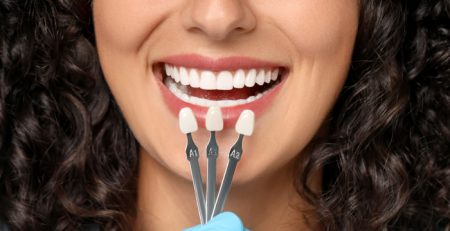
For individuals who have regularly consumed coffee, tea, or coloring beverages for many years, daily oral hygiene alone may not provide the desired aesthetic results.
In this case, professional whitening options can be considered after a dental examination.
The teeth whitening (bleaching) methods applied at Melsadent Oral and Dental Health Polyclinic can be planned by evaluating the individual’s current tooth color, oral and dental health, sensitivity status, and expectations.
Professional whitening commonly utilizes hydrogen peroxide or carbamide peroxide-based systems. These substances create an oxidative effect on the molecules causing discoloration, thus lightening the tooth color.
You can find a systematic review comparing the efficacy and sensitivity of carbamide peroxide and hydrogen peroxide via PubMed.
Are Coffee Stains and Natural Tooth Yellowing the Same Thing?
No. This distinction is crucial for determining the treatment.
Superficial stains related to coffee are generally considered part of the extrinsic staining group. This means the discoloration is primarily associated with the outer surface of the tooth.
Conversely, a naturally dark tooth color, the dentin becoming more prominent with age, certain developmental conditions, some medications used in the past, or dental traumas can lead to deeper color changes.
Therefore, saying “my teeth are yellow, it must be from coffee” is not accurate.
Especially if there is a sudden color change, a grey appearance, or localized dark staining on a single tooth, it should not be assumed that it is merely a coffee stain, and a dentist’s evaluation should be sought.
Can Coffee Stains Be Removed with Dental Tartar Cleaning?
Some superficial discolorations can be reduced with professional cleaning and polishing procedures. However, if the color change is related to deeper areas of the tooth tissue, cleaning alone may not be sufficient.
At this point, the difference between two procedures is important:
- Professional dental cleaning: Aims to remove plaque, tartar, and, where appropriate, superficial extrinsic stains.
- Tooth whitening (bleaching): A chemical procedure aimed at making the existing color of the tooth lighter.
Which procedure is necessary should be determined after a clinical examination.
How Often Should Coffee Drinkers Get Their Teeth Whitened?
There is no standard whitening interval, such as “every 6 months” or “once a year,” that applies to everyone.
The need for whitening depends on:
- the individual’s initial tooth color,
- the amount of coffee consumed,
- other staining factors such as tea and smoking,
- oral hygiene,
- to the previously applied whitening method,
- to tooth sensitivity,
- to the condition of enamel and gums
may vary depending on.
Therefore, it is not correct to repeatedly use whitening products uncontrollably, solely thinking that the tooth color has darkened.
Can Coffee Be Drunk After Teeth Whitening?
This is one of the most frequently wondered topics by coffee lovers who have had professional whitening.
After whitening, it is important to follow the care instructions provided by the dentist. Especially in the period following the procedure, recommendations regarding coffee, tea, red wine, and other intensely pigmented food and beverages may vary depending on the individual and the method used.
Therefore, instead of applying standard durations seen on the internet, it is necessary to follow the recommendation of the dentist who performed the procedure.
Additionally, temporary hot-cold sensitivity may be observed after whitening. For detailed information on this topic, you can review our content on sensitivity and gum reactions after teeth whitening.
Can Teeth Whitening Be Done While Drinking Coffee?
Coffee consumption is not an automatic impediment to planning professional whitening. However, it is important for the individual to share their consumption habits with the dentist before treatment.
There are also experimental studies investigating the effect of coffee exposure on tooth color during home whitening. For example, a study evaluating coffee exposure during home whitening using carbamide peroxide can be accessed via PubMed.
In the whitening process, which foods and drinks should be restricted and for how long should be determined by the dentist according to the system used and the patient’s clinical condition.
7 Common Dental Care Mistakes Made by Coffee Drinkers
While worrying about discoloration caused by coffee, applying incorrect practices can lead to bigger problems for dental health.
- Brushing teeth too hard immediately after coffee,
- Using abrasive substances uncontrollably for the purpose of whitening teeth,
- Applying acidic products like lemon to the tooth surface,
- Using substances like baking soda frequently and aggressively without professional advice,
- Applying whitening products for longer than recommended,
- Continuing to whiten despite the onset of tooth sensitivity,
- Mistaking every dark area on the teeth for a coffee stain
can be counted among these mistakes.
Is it Right to Remove Coffee Stains at Home with Lemon or Baking Soda?
To make teeth appear whiter, lemon, vinegar, baking soda, and various mixtures may be suggested online. However, applying uncontrolled acid or abrasives on tooth tissue should not be considered a safe whitening method.
Repeated application of acid-containing products to the tooth surface, in particular, can negatively affect the mineral structure of the enamel tissue. Aggressive use of abrasive substances can also contribute to surface wear and sensitivity issues.
Moreover, as enamel loss progresses, the underlying yellower dentin tissue may become more visible, so while whiter teeth are expected, it’s even possible for them to appear yellower in the long term.
Therefore, uncontrolled methods should not be applied at home for the purpose of “quick whitening”.
Coffee Stain or Cavity? How to Tell?
Not all brown or black spots seen on teeth are coffee stains.
Dark areas observed especially in the grooves of molars, between teeth, or near the gum line can be extrinsic staining, or they can be related to decay.
If the discoloration is accompanied by;
- pain,
- hot-cold sensitivity,
- aching with sweets,
- pitting on the tooth surface,
- dental floss getting caught or breaking,
- pain while chewing
a dental examination is especially important.
For more detailed information on this topic, you can review the Melsadent content titled how to distinguish between tooth sensitivity and decay?
Sample Daily Dental Care Routine for Coffee Drinkers
If you frequently consume coffee, you don’t need a complex care program. A regular and sustainable routine is more important.
Morning: Brush your teeth with fluoride toothpaste using the correct technique.
During coffee: Instead of sipping coffee in small sips for hours, try to finish it within a reasonable amount of time.
After coffee: Drink some water or rinse your mouth with water.
During the day: Avoid the habit of continuously sipping sugary coffees.
Evening: Brush your teeth again and perform appropriate interdental cleaning.
Regular intervals: Do not neglect the check-up and professional care program recommended by your dentist.
This simple approach not only helps control coffee stains but also contributes to maintaining overall oral and dental health.
Is Teeth Whitening Permanent for Frequent Coffee Drinkers?
No professional teeth whitening procedure guarantees keeping teeth the same color for life. After whitening, teeth can become discolored again, and coffee is one of the factors affecting this process.
How long the result is maintained is closely related to the individual’s lifestyle.
The duration of results may vary between individuals with high consumption of coffee, tea, and tobacco, and those who maintain regular oral hygiene and have lower exposure to coloring agents.
For detailed information about teeth whitening methods and how the procedure is performed, you can review Melsadent’s Teeth Whitening (Bleaching) page.
Are Veneers, Fillings, and Zirconia Teeth Affected by Coffee?
This topic is particularly important for coffee consumers with aesthetic restorations.
The surface properties of composite fillings, porcelain restorations, and zirconia restorations differ from natural tooth enamel. Over time, discolorations may appear around or on the surface of restorations, depending on their surface properties, oral hygiene, and consumption habits.
More importantly, classic whitening procedures do not change the color of existing fillings, crowns, or veneers in the same way as natural teeth.
Therefore, when planning whitening for individuals with aesthetic fillings or veneers in the anterior region, the color of existing restorations must be evaluated.
When Should Coffee Stains Be Shown to a Dentist?
Although only minor superficial discolorations are often seen as an aesthetic problem, some color changes require professional evaluation.
It is especially important to consult a dentist in the following situations:
- If a single tooth suddenly darkened,
- If a brown or black spot is gradually growing,
- If the discoloration is accompanied by pain,
- If sensitivity to hot or cold has started,
- If there is gum bleeding,
- If tartar buildup is prominent,
- If at-home whitening products have caused sensitivity,
- If professional whitening is being considered.
It should be remembered that not every brown area on the teeth is a coffee stain. Cavities, old restorations, tartar, enamel development disorders, and other reasons can create similar appearances.
Coffee Stains and Teeth Whitening at Melsadent
If you consume coffee frequently and believe your teeth are gradually yellowing, the first step should not be to start whitening directly. First, the source of the discoloration should be evaluated.
During the examination at Melsadent Oral and Dental Health Polyclinic, factors such as the current color of the teeth, extrinsic stains, presence of tartar and plaque, fillings and veneers, gum health, and sensitivity can be evaluated.
Thus, a discoloration requiring only surface cleaning can be distinguished from a discoloration that would benefit from professional whitening.
If a whiter smile is desired, a teeth whitening treatment suitable for the individual’s oral and dental health and aesthetic expectations can be planned.
Frequently Asked Questions
Does drinking coffee yellow teeth?
Yes. Regular coffee consumption can contribute to the formation of extrinsic discolorations on the tooth surface. However, the amount of discoloration may vary depending on the frequency of coffee consumption, contact time, coffee characteristics, oral hygiene, and the individual’s tooth structure.
Does one coffee a day yellow teeth?
Even consuming a single cup of coffee a day can contribute to superficial discoloration in the long term, but not everyone is affected equally. Drinking water after coffee and maintaining regular oral hygiene can help reduce the accumulation of stains.
Do the teeth of those who drink 3-4 coffees a day definitely yellow?
It cannot be said for certain. However, increased frequency of coffee exposure can increase the likelihood of discoloration. Especially sipping coffee throughout the day prolongs the contact time of teeth with pigments.
Should teeth be brushed after drinking coffee?
Instead of aggressively brushing teeth immediately after coffee, it may be more appropriate to rinse with water first and wait for a while. Brushing with the correct technique should be continued daily, in the morning and evening.
Does drinking water after coffee prevent teeth from yellowing?
Drinking water can help remove coffee residues from the mouth and is one of the simplest protective habits that can be adopted. However, it does not completely prevent discoloration on its own.
Does drinking coffee with a straw protect teeth from yellowing?
Using a straw, especially with cold coffees, can reduce the drink’s contact with the front teeth. However, it does not provide one hundred percent protection as it does not completely prevent coffee from coming into contact with the teeth.
Does hot coffee or cold coffee cause more stains?
An experimental 2024 study reported that hot coffee caused higher staining than cold coffee under the examined conditions. However, numerous factors such as consumption amount, duration, type of coffee, and oral hygiene affect the result in daily life.
Does coffee with milk yellow teeth?
Although adding milk lightens the color of coffee, it does not completely eliminate the beverage’s contact with coffee-derived pigments. Therefore, lattes, cappuccinos, and milky coffees can also contribute to staining.
Does sugar-free coffee also yellow teeth?
Yes. The primary cause of coffee-induced staining is not sugar. Sugar-free coffee can also contribute to extrinsic tooth staining due to its pigments. Sugar is also important in terms of cavity risk.
Can coffee stains be removed from teeth?
Some superficial coffee stains can be reduced with professional cleaning and polishing. In cases of more prominent staining or those related to the tooth color itself, professional whitening may be necessary. The appropriate method is determined by examination.
Does whitening toothpaste remove coffee stains?
Some whitening toothpastes can help reduce superficial extrinsic stains. However, they do not have the same effect as professional teeth whitening, and the uncontrolled use of abrasive products is not recommended.
Does baking soda remove coffee stains?
Due to its abrasive properties, baking soda can reduce the appearance of some superficial stains. However, it should not be considered a routine alternative to professional whitening, as frequent or aggressive application to teeth can lead to surface abrasion.
Is whitening teeth with lemon good for coffee stains?
Direct application of acidic substances, such as lemon, to the tooth surface is not recommended. Repeated acid exposure can contribute to mineral loss and sensitivity in the enamel tissue.
Can a coffee drinker undergo professional teeth whitening?
Generally, yes. Coffee consumption alone does not prevent professional whitening. However, tooth and gum health should be evaluated before the procedure, and the dentist’s care recommendations should be followed after the procedure.
When can coffee be consumed after teeth whitening?
Since this period may vary depending on the whitening method used and the patient’s clinical condition, the recommendation of the dentist performing the procedure should be taken as a basis. It is especially important to follow the instructions given regarding staining foods and beverages in the period after the procedure.
Will the whitening be ruined if I continue to drink coffee?
Regular coffee consumption can contribute to re-staining over time. However, good oral hygiene, water consumption after coffee, professional check-ups, and the maintenance program recommended by the dentist can help preserve the whitening result for a longer period.
Is it Possible to Maintain White Teeth Without Giving Up Coffee?
Yes, it is possible to reduce external staining on teeth and maintain a cleaner appearance without completely giving up coffee. For this, daily habits need to be regulated together instead of relying on a single “miracle product”.
Not sipping coffee throughout the day, drinking water after consumption, regular brushing and interdental cleaning, avoiding uncontrolled at-home whitening methods, and getting professional teeth cleaning when necessary are essential steps.
If a significant color change has occurred on the teeth, it needs to be determined whether this is due to coffee stains, tartar, natural tooth color, old restorations, or another dental reason.
After an evaluation at Melsadent Oral and Dental Health Polyclinic, if needed, professional cleaning, oral care recommendations, or personalized tooth whitening applications can be planned. Thus, the aim is not only to have whiter-looking teeth but to achieve a natural and aesthetic smile with healthy teeth and gums.