2026 Dental Filling Prices: How Much Do They Vary Depending on the Situation?
2026 Dental Filling Prices: How Much Do They Vary in Which Situations?
Understanding why dental filling prices vary from one patient to another in 2026 is important not only for budget planning but also for choosing the right treatment. This is because dental filling is not always a “one-size-fits-all” procedure. Two fillings applied in the same session can be priced differently based on many factors, from the material used and the depth of the cavity to the location of the tooth in the mouth and any additional procedures.
When tooth decay is caught at an early stage, it can often be treated with a simpler, faster, and more economical filling. However, when the decay deepens, it can approach the nerve tissue of the tooth, in which case root canal treatment, temporary fillings, special isolation techniques, or more extensive restorative procedures may become necessary. This directly changes the total cost.
The current filling and restorative treatment content at Melsadent indicates that the key factors influencing prices in 2026 are still valid: material selection, tooth condition, need for additional treatment, clinic technology, and the dentist’s planning. Therefore, before asking “how much does a dental filling cost?”, one should ask “which filling, for which tooth, under what conditions will it be performed?”.
The Most Basic Criteria Determining Dental Filling Prices
The main reason for the change in tooth filling prices in 2026 is the personalized planning of the treatment. Each tooth has a different type of decay, structure, location, and load it bears. Especially, teeth in the posterior region exposed to chewing forces and teeth in the anterior region with high aesthetic expectations are not evaluated in the same way.
The type of filling is one of the most important factors determining the price. Composite fillings, amalgam fillings, porcelain fillings, or more advanced restorative options require different application times and material costs. Furthermore, the number of surfaces the filling covers is also important. The treatment duration and labor required for a small, single-surface cavity are not the same as for a large cavity extending over two or three surfaces.
Another important factor is whether the vitality of the tooth is preserved. If the decay is only at the enamel and dentin level, a filling is often sufficient. However, if it has approached the pulp, additional procedures may be required. Such situations can increase the total cost of treatment.
How Does the Depth of Decay Affect the Price?
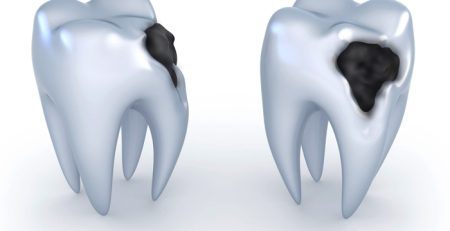
The depth of the decay is one of the most critical variables determining the filling price. A superficial cavity is often cleaned quickly and completed with a standard composite filling. However, for deep cavities, the dentist may have to remove tooth tissue more carefully and controlled. In some cases, a treatment plan extending to root canal therapy may be made instead of a direct filling.
At this point, more conservative approaches are now gaining prominence in modern dentistry. Recent academic studies show that complete excavation is not always the best option for deep cavities; selective or stepwise caries removal approaches can reduce the risk of pulpal exposure. This can affect both treatment success and, in some cases, the cost structure.
The earlier a cavity is detected, the more limited the restoration needed to resolve it. A small filling done early can prevent root canal treatment, post-core, crowns, or additional restorative procedures that might be necessary at a later stage. Therefore, the price should be considered not just as the cost of today’s procedure, but as an investment that prevents potential future treatments.
Why Does Filling Material Make a Difference?
Filling material directly affects the price. Composite filling is one of the most frequently preferred options today. It is very common due to its tooth-colored appearance, aesthetic advantages, and ability to be applied in a single session. However, the technical precision, isolation, and layering method used in applying composite fillings can affect the price.
Although amalgam fillings are less preferred today, they can be economical in some cases. In contrast, porcelain or laboratory-supported restorations are in a different price range as they offer higher durability and aesthetics. Especially for teeth with significant substance loss, options like inlays, onlays, or crowns might be considered instead of direct fillings.
What is important here is not to confuse “cheap filling” with “correct filling.” Choosing the right material can reduce the need for retreatment in the long run. In short, the factor influencing the price in 2026 is not just the label of the material used, but how well that material suits the tooth’s function and aesthetics.
Tooth Position: Are Front Teeth and Back Teeth Priced the Same?
No, it is usually not the same. In front teeth, aesthetic expectations are much higher, so the dentist works more meticulously in terms of color harmony, surface form, and translucency. In back teeth, durability against chewing forces comes to the forefront. Therefore, while aesthetic composite applications are preferred in the anterior region, more durable and well-managed restorations may be required in the posterior region.
Even a small filling in the front teeth is very visible, so the dentist sometimes performs additional steps such as color layering, polishing, and surface refinement. This extra work can affect the cost of the treatment. In back teeth, the accessibility of the area, saliva control, and difficulty of isolation can change the price.
The location of a tooth in the mouth is important not only aesthetically but also technically. In hard-to-reach areas, the procedure time may be extended. As the duration increases, the clinical planning, the amount of material used, and the dentist’s time change, which can lead to a price difference.
Difference Between Single-Surface Filling and Multi-Surface Filling
Another factor that most patients overlook but which has a significant impact on the price is how many surfaces the filling covers. A single-surface filling typically treats a smaller cavity area. Two-surface or three-surface fillings, on the other hand, restore a larger loss of tooth structure. As the area increases, both the application time and the amount of material used also increase.
This difference is important not only for the filling itself but also for the durability of the restoration. In a larger filling area, marginal adaptation, contact point, and resistance to chewing forces become much more critical. Therefore, extensive restorations are evaluated with a higher pricing logic compared to smaller fillings.
Most patients only think, “Is there a filling or not?” However, what truly determines the treatment in the clinic is the question, “How much tissue loss is there?” As tissue loss increases, the treatment ceases to be a simple filling and approaches the field of restorative dentistry.
How Do Additional Procedures Increase the Price?
During a dental filling, sometimes simply performing a filling is not enough. X-ray imaging may be required beforehand. In some cases, additional steps such as local anesthesia, isolation, gum contouring, interdental cleaning, or a temporary filling are applied. If the decay has advanced significantly, root canal treatment may also become necessary.
Particularly in deep cavities, the need for root canal treatment before or after a filling is one of the main factors that increase the total cost the most. This is because the goal here is not just to fill the void, but to clean the infected tissue and save the tooth. This makes the treatment more comprehensive.
In some cases, the tooth’s structure is so weakened that a crown may be needed instead of a filling. In such a case, the price rises to a different level than the standard filling fee. Therefore, the initial examination is vital for understanding the treatment budget correctly.
Why Are Clinic Technology and Dentist Experience Important?
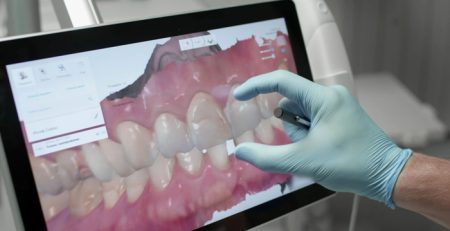
One of the factors affecting filling prices in 2026 is the technology used in the clinic and the dentist’s experience. Digital X-rays, intraoral scanners, precise isolation systems, and modern restorative materials can improve treatment quality while also affecting the price structure. More experienced dentists aim for more controlled and long-lasting results, especially in complex cases.
In Melsadent’s restorative treatment approach, there is a strong emphasis on examination, X-rays, and personalized planning. This approach ensures planning according to the tooth’s actual needs, rather than providing a one-size-fits-all solution to every patient. Consequently, the price is shaped according to the scope of the procedure performed.
Here, not only the cost of the procedure but also treatment safety is important. Sterilization protocols, correct material selection, and controlled application can reduce the risk of refilling, sensitivity, or fracture. A procedure with a lower initial cost but a short lifespan may turn out to be more expensive in the long run.
Does Artificial Intelligence-Assisted Dentistry Affect the Price?
Artificial intelligence alone does not determine the price; however, it can indirectly affect the price by influencing diagnosis and treatment planning. Current academic publications show that artificial intelligence can be helpful, especially in caries detection, radiographic evaluation, and the identification of early lesions. This can contribute to a clearer understanding of the stage of the cavity.
A cavity detected early can usually be resolved with a smaller restoration. A cavity noticed late, however, poses the possibility of a larger filling, root canal treatment, or crown. Therefore, although AI-supported image analysis does not directly determine the price, it can have an indirect effect on the cost by defining the scope of the treatment.
Nevertheless, the most accurate decision is made by evaluating clinical examination, patient complaints, X-ray findings, and the dentist’s experience, along with the data generated by artificial intelligence. So, AI is a powerful assistant in modern dentistry; however, it does not replace the final treatment plan.
Why Might Filling Prices Vary from City to City in 2026?
Dental filling prices are not solely dependent on the treatment; the city and district where clinics are located can also affect the price. In large cities like Istanbul, rents, personnel expenses, equipment costs, and general operating expenses are higher, so treatment fees may vary accordingly. Therefore, it is not surprising to see price differences in Tuzla, Kadıköy, Bakırköy, or another district.
Besides this, there can also be differences between clinics in the same city. This is because some clinics offer advanced technology, longer examination times, detailed follow-up, and aesthetically-focused restorations. Others operate with a more basic treatment approach. These differences are reflected in the prices.
Therefore, making a decision based solely on a single number seen on the internet can be misleading. The most accurate approach is to learn the personalized plan and clear treatment scope after an examination.
How is the Dental Filling Process Planned at Melsadent?
In Melsadent’s restorative treatment approach, the functional and aesthetic repair of decayed and fractured teeth is prioritized. In the initial stage, an an examination is performed, X-rays are taken if necessary, and the extent of the decay is evaluated. Subsequently, the appropriate material, restoration type, and additional procedures, if required, are determined.
For small cavities, a quick solution can be provided with a composite filling. For larger losses, porcelain or laboratory-supported restorations may be considered. In lesions approaching the tooth’s nerve, it is evaluated whether root canal treatment is necessary. This planning avoids unnecessary costs and preserves the tooth’s lifespan.
In 2026, the best outcome doesn’t come from the cheapest option; it comes from the right treatment performed at the right time. Therefore, when evaluating filling prices, the question “which procedure is truly right for me?” should always be at the forefront.
Related Content
Melsadent pages related to the topics in this article:
- How Much Are 2026 Dental Filling Prices? Current Filling Fees
- Decayed and Fractured Tooth Repair | Restorative Dental Treatment
- What is Root Canal Treatment and When is it Needed?
- Filling or Crown?
- What to Do if a Dental Filling Falls Out?
Frequently Asked Questions
What are the biggest factors influencing dental filling prices in 2026?
The biggest factors are the depth of the decay, the filling material, the tooth’s location, how many surfaces need to be restored, and whether additional procedures are required. Additional steps such as root canal treatment, X-rays, and anesthesia can increase the total cost.
Why aren’t front tooth fillings and back tooth fillings the same price?
For front teeth, aesthetic harmony is paramount. For back teeth, durability and resistance to chewing forces are important. Therefore, the procedure technique and the material used may vary.
Why do prices increase for deep cavities?
As the decay deepens, the procedure becomes more extensive. Sometimes a filling alone is not enough, and root canal treatment or more advanced restorative procedures may be required.
Is a composite filling or a porcelain filling more expensive?
Generally, laboratory-supported porcelain restorations are more costly. However, the exact price varies depending on the tooth’s condition and the scope of treatment required.
Does artificial intelligence directly affect dental filling prices?
It does not directly determine the price. However, it can help with early detection of decay and more accurate treatment planning. This can indirectly affect the scope and cost of treatment.
Might a crown be needed instead of a dental filling?
Yes. If the tooth tissue is severely weakened, if there is significant substance loss, or if the tooth is at risk of fracture, a crown might be a more appropriate option.
Is further treatment necessary after a filling?
With the right material and correct application, it can be used problem-free for a long time. However, factors such as oral hygiene, nighttime clenching habits, and chewing load can affect its lifespan.
What should be done to find out the exact filling price?
The most accurate method is a clinical examination. Because providing an exact price without an X-ray or seeing the condition of the tooth is often not advisable.
Academic Resources
- Artificial Intelligence in Dental Caries Diagnosis and Management
- Management of deep caries and the exposed pulp
- Selective removal of dental caries in permanent teeth
- Diagnostic performance of artificial intelligence-aided caries detection on bitewing radiographs